Course badges cannot prove you can verify AI-assisted figures.
The Council examines using AI in finance through online multiple-choice exams, verifiable by anyone on a public register.
Read the syllabus or verify at https://t.co/CILUU1YUSI
#AIinFinance
78% of applicants misrepresent CV skills. Controllers cannot accept unverified badges under COSO (2013). AIAC credentials verify on an independent public register. Online multiple-choice exams sit Oct 2026. Enrol at https://t.co/5oY2cXMPnq #AIinFinance
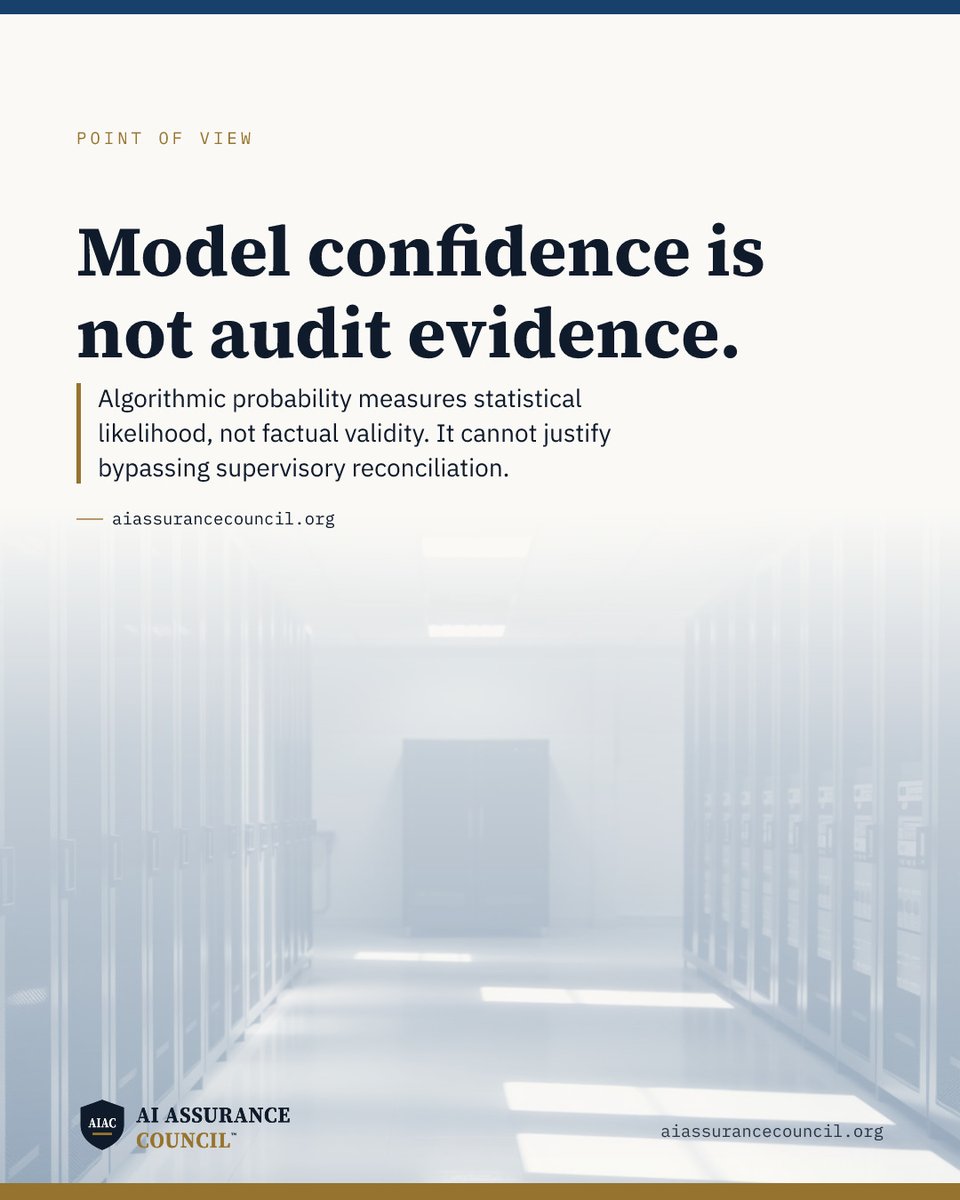
Model confidence is not audit evidence. High probability cannot replace reconciliation under COSO (2013). Certified AI in Finance & Accounting — Fundamentals (AIAC-FNAF) examines this judgement. First exams Oct 2026. Enrol at https://t.co/5oY2cXMPnq #AIinFinance
AI-generated figures reached financial reporting packs unchecked.
The team was AI-trained. They had vendor badges. But nobody had tested whether they could verify AI output.
Training teaches tools. Assessment proves competence.
First sittings: Oct 2026.
#AIinFinance
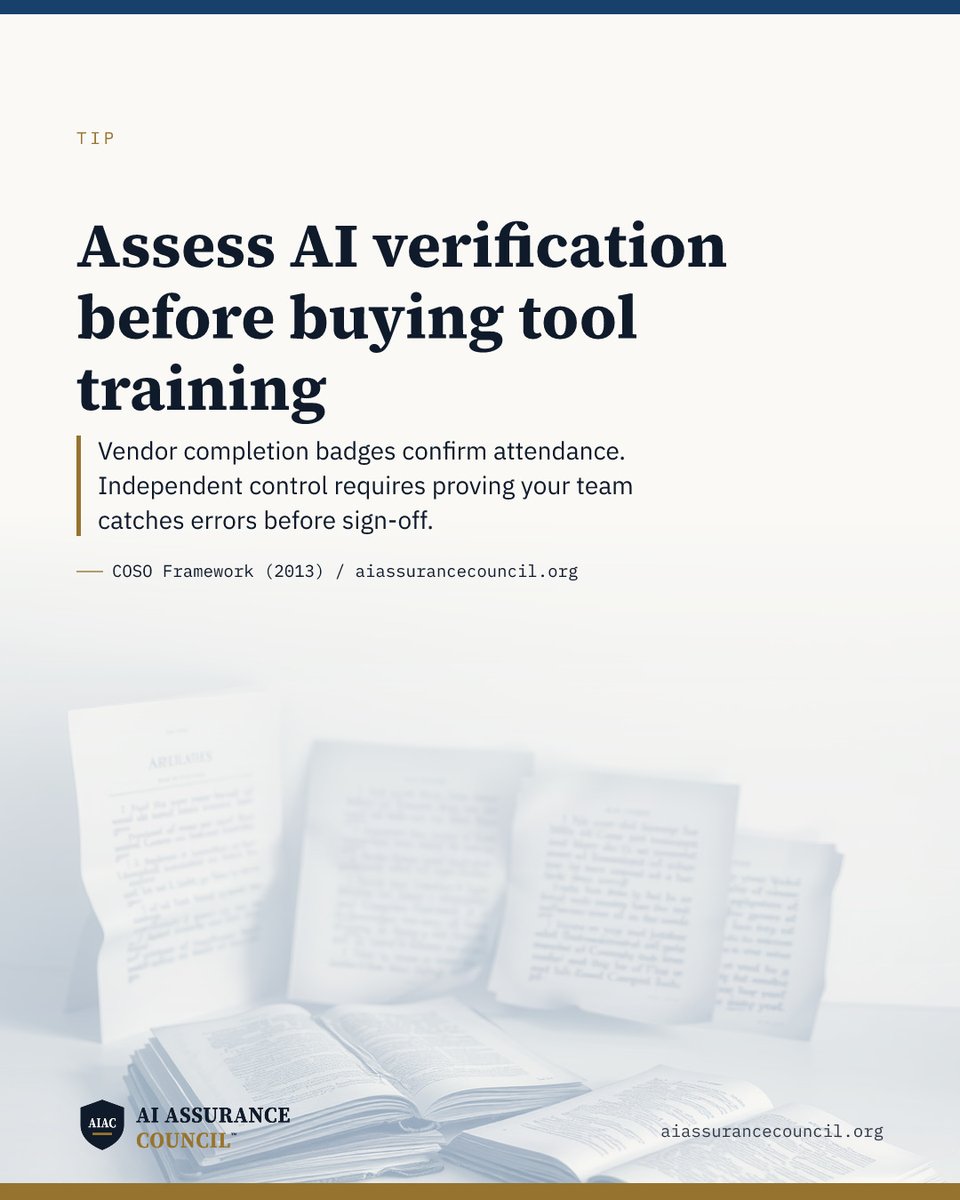
Attendance badges cannot prove staff verify AI figures. Under COSO (2013), reliance requires review.
The Council examines using AI in finance—never auditing AI systems. Online multiple-choice exams sit October 2026.
Enrol at https://t.co/5oY2cXMPnq. #AIinFinance
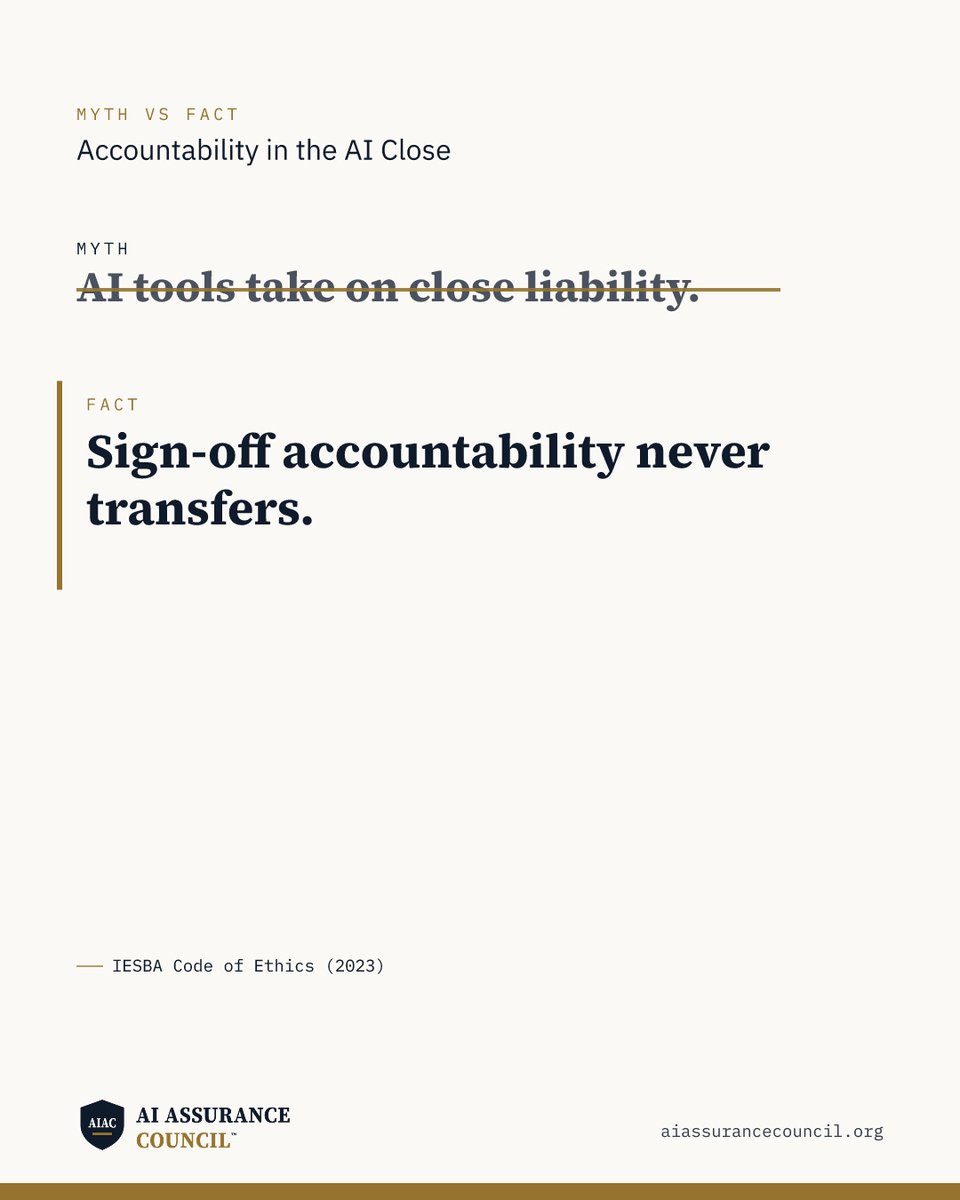
Myth: AI tools absorb financial close liability.
Fact: The person signing off remains accountable.
Automation hides risk, but IESBA codes never transfer duty. Reconcile outputs to source ledgers before sign-off.
Verify at https://t.co/5oY2cXMPnq #AIinFinance
A completion badge shows someone attended a course, not whether they can verify an AI figure before it reaches the general ledger.
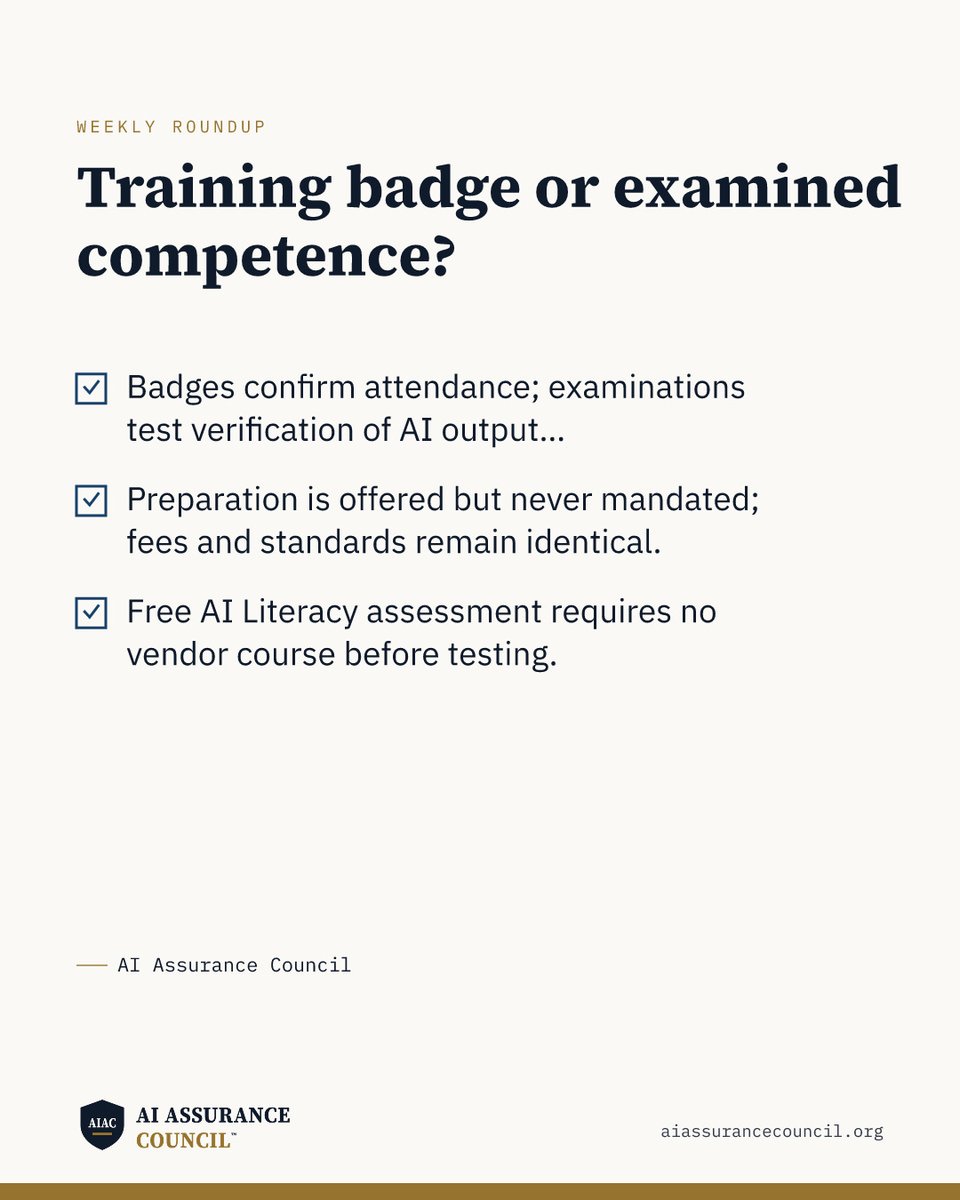
1. Attendance versus verification: Vendor badges confirm module completion, whereas an independent examination tests whether you catch flawed calculations and reconcile model outputs before reliance.
2. Preparation without mandate: The Council examines and does not sell required courses. Preparation is offered but never required, sitting fees are identical, and assessors never know which path a candidate took.
3. Immediate assessment: The free AI Literacy Certificate requires no prerequisite vendor training. Finance professionals take the 30-question assessment directly to establish a verified baseline.
What to watch next week: how internal control teams document verification thresholds for AI-assisted journal entries.
Read the syllabus, take the free AI Literacy assessment, or verify any credential on the public register at https://t.co/1jY6mohiy1.
#AIinFinance
"The reliability of audit evidence is increased when it is obtained from independent sources outside the entity." — IAASB, ISA 500
Course completion badges and CV claims cannot prove you can verify AI-assisted figures before reliance. When an audit committee or controller asks how numbers were checked, reliance requires independent evidence. The Council examines whether a practitioner can use AI in finance and accounting work—never the audit of AI systems. Candidates sit an online multiple-choice examination where an automated mark is reviewed by a human assessor before release. First sittings take place in October 2026. Credentials carry a defined term, require revalidation, and carry an identifier verifiable on the public register without contacting the holder.
Verify any credential on the public register at https://t.co/raSPu7LkN2 or read the syllabus at https://t.co/1jY6mohiy1.
Sources:
- IAASB, ISA 500 (Audit Evidence)
#AIinFinance
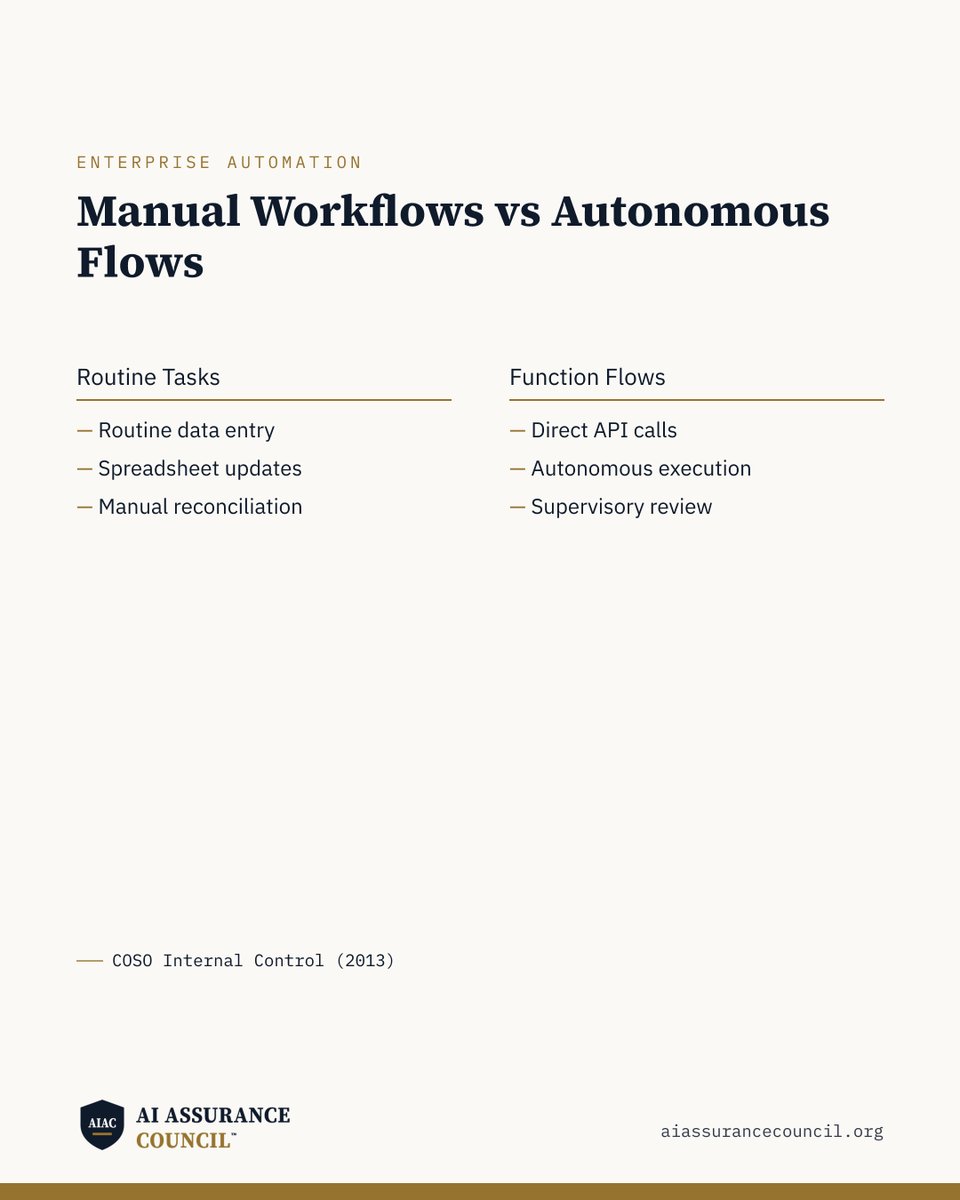
AI automation has moved from answering prompts to executing autonomous function flows across core systems.
Recent platforms connect models directly to enterprise databases and ledgers. The areas most affected are routine reconciliations, invoice matching, and manual data entry. For white-collar staff, mechanical spreadsheet tasks are disappearing.
To capitalise on this, professionals must shift to supervisory review and boundary governance. To mitigate operational risk, teams must inspect execution logs before figures commit. Under the COSO Internal Control — Integrated Framework (2013), automation never removes personal accountability.
The Council examines this judgement: Fundamentals (AIAC-FNAF) for your own work, and Professional (AIAC-FNAP) for whole functions. First examinations run in October 2026.
Read the syllabus, take the free AI Literacy assessment, or enrol at https://t.co/1jY6mohiy1.
#AIinFinance
A completion badge that never expires tells an employer what someone studied once, not what they can verify today.
Tools and internal controls in financial reporting change quickly. When AI helps generate figures, estimates, or disclosures, static certificates offer no proof that a professional maintains current verification habits.
Both Certified AI in Finance & Accounting — Fundamentals (AIAC-FNAF) and Professional (AIAC-FNAP) carry a defined two-year term. To stay active on the public register, holders must revalidate their competence against current practice. Both grades certify using AI in finance and accounting work, not the audit or assessment of AI systems.
Anyone can check credential status at any time at https://t.co/raSPu7LkN2. First online multiple-choice examinations take place in October 2026.
Read the syllabus, take the free AI Literacy assessment, or verify any credential on the public register at https://t.co/1jY6mohiy1.
#AIinFinance
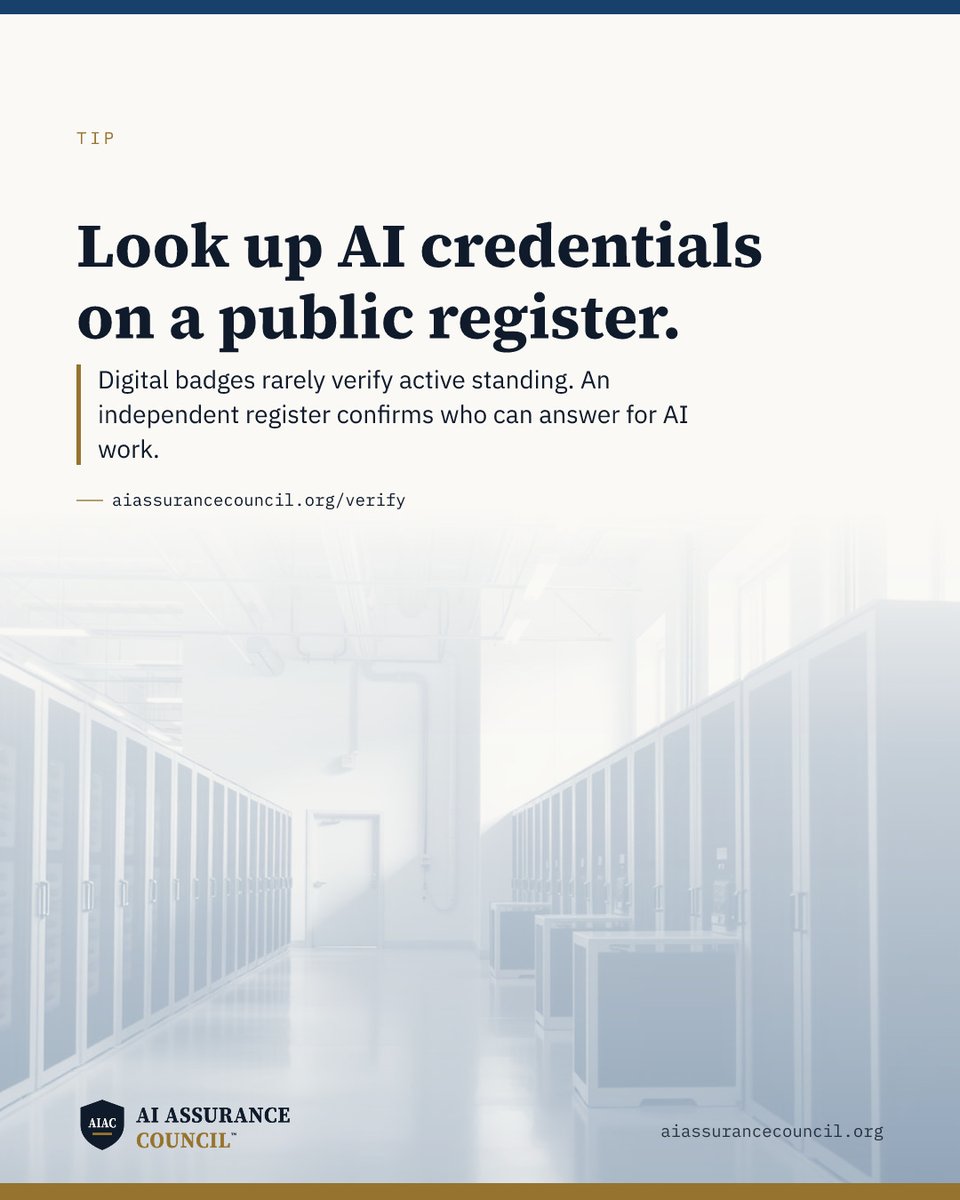
Look up credential identifiers on an independent public register before assigning AI-assisted tasks or accepting vendor proposals.
Self-reported badges and completion certificates rarely confirm independent examination or active standing. When staffing a close or vetting an external team, an unchecked claim leaves model risk unmanaged. A register search confirms whether someone holds Certified AI in Finance & Accounting — Fundamentals (AIAC-FNAF) or Professional (AIAC-FNAP).
The common mistake is assuming these credentials certify AI audit. They certify using AI in finance work, carry defined terms, and require revalidation. First examinations sit October 2026.
Read the syllabus, take the free AI Literacy assessment, or verify any credential on the public register at https://t.co/1jY6mohiy1.
#AIinFinance
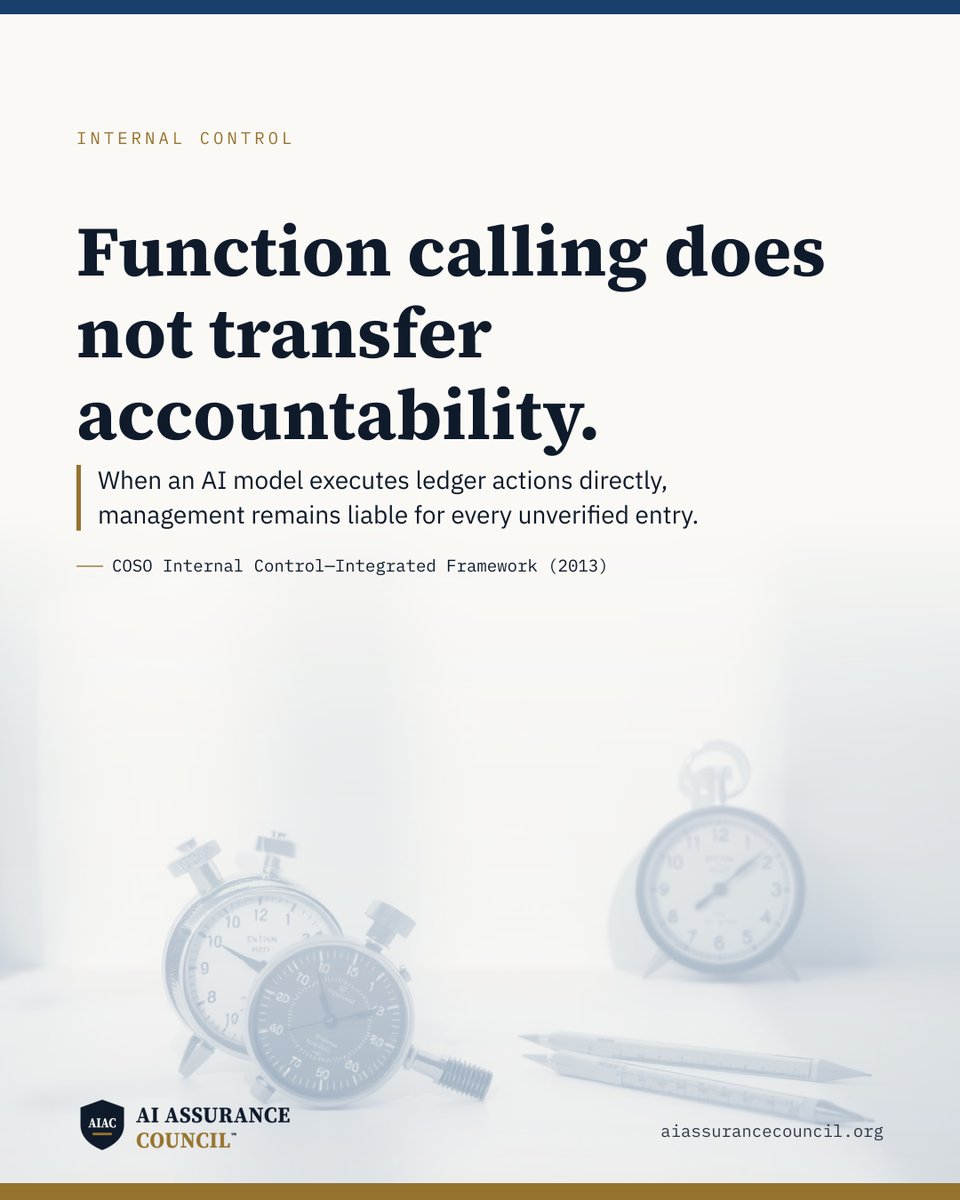
AI models now execute direct actions across enterprise ledgers, but automated execution does not transfer accountability.
Through function calling, models extract balances, match invoices, and run reconciliations. When an agent acts directly on records, an unchecked step becomes an operational risk. Under COSO (2013), management retains full responsibility for the resulting figures.
Finance teams must move from manual processing to control validation: establishing verification checkpoints, reconciling intermediate outputs, and escalating anomalies.
Certified AI in Finance & Accounting — Fundamentals (AIAC-FNAF) examines verifying your own AI-assisted work. Professional (AIAC-FNAP) examines setting control terms for an entire department. Both certify using AI in finance and accounting work, not auditing AI systems.
Sources:
COSO Internal Control—Integrated Framework (2013)
Read the syllabus, take the free AI Literacy assessment, or verify any credential on the public register at https://t.co/1jY6mohiy1.
#AIinFinance
Myth: You must purchase and complete a mandatory course before you can qualify for an AI credential.
Fact: The Council is an independent examining body; preparation is offered but never required, and candidates are assessed to the exact same standard either way.
Software vendors often bundle video courses with completion badges, conflating attendance with tested competence. That model makes the course appear inseparable from the qualification.
Independent qualification separates examination from tuition. For Certified AI in Finance & Accounting — Fundamentals (AIAC-FNAF) and Professional (AIAC-FNAP), candidates can enrol directly for the online multiple-choice examinations. Assessors deciding outcomes are never told which preparation route a candidate chose. Both grades certify using AI in finance and accounting work, not auditing AI systems. First sittings take place in October 2026.
The free AI Literacy assessment also requires no course: 30 questions in 30 minutes, pass mark 70%, result immediately.
Read the syllabus, take the free AI Literacy assessment, or enrol at https://t.co/1jY6mohiy1.
#AIinFinance
Three standards emerged this week for how finance leaders should verify AI qualifications before relying on them.
1. Independent register lookup: Employers and audit committees must be able to confirm credentials directly on a public register without relying on self-reported badges (https://t.co/raSPu7LkN2).
2. Defined scope of practice: Credentials must state precisely what they certify. Certified AI in Finance & Accounting — Fundamentals (AIAC-FNAF) and Professional (AIAC-FNAP) certify using AI in finance work, not auditing AI systems.
3. Defined validity terms: Because models and standards change, credentials must carry a fixed term and require revalidation rather than standing as perpetual claims.
Next week, watch for how internal audit teams integrate model verification checks into quarterly close reviews.
Read the syllabus, take the free AI Literacy assessment, or verify any credential on the public register at https://t.co/1jY6mohiy1.
#AIinFinance
AI function calling now connects models directly to enterprise systems to execute multi-step workflows.
Recent enterprise platform releases allow agents to query databases, post journal entries, and route approvals without manual copy-pasting. In finance and back-office operations, repetitive data entry and initial variance matching are shifting rapidly to automated flows.
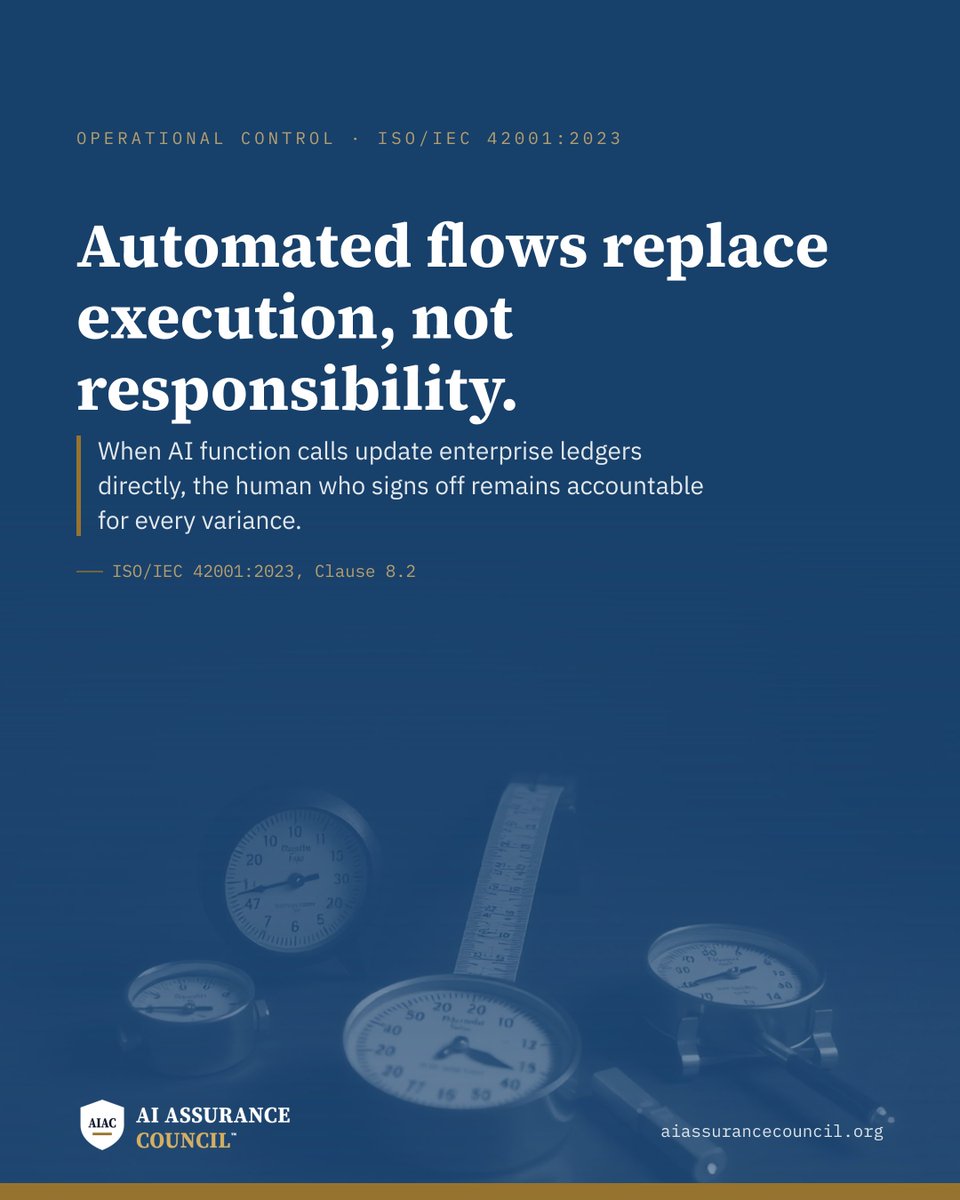
White-collar workers can capitalise on this change by supervising workflow logic, defining tolerances, and reviewing system logs. To mitigate the risk of unchecked automation drift, professionals must maintain strict verification controls. When an automated workflow posts an erroneous entry, the human sign-off remains legally and professionally accountable.
ISO/IEC 42001:2023, Clause 8.2 requires organisations to implement operational planning and control over AI processes, ensuring documented execution boundaries.
Sources:
- ISO/IEC 42001:2023, Clause 8.2: https://t.co/QZlmsAvXn6
Read the syllabus, take the free AI Literacy assessment, or verify any credential on the public register at https://t.co/1jY6mohiy1.
#AIinFinance
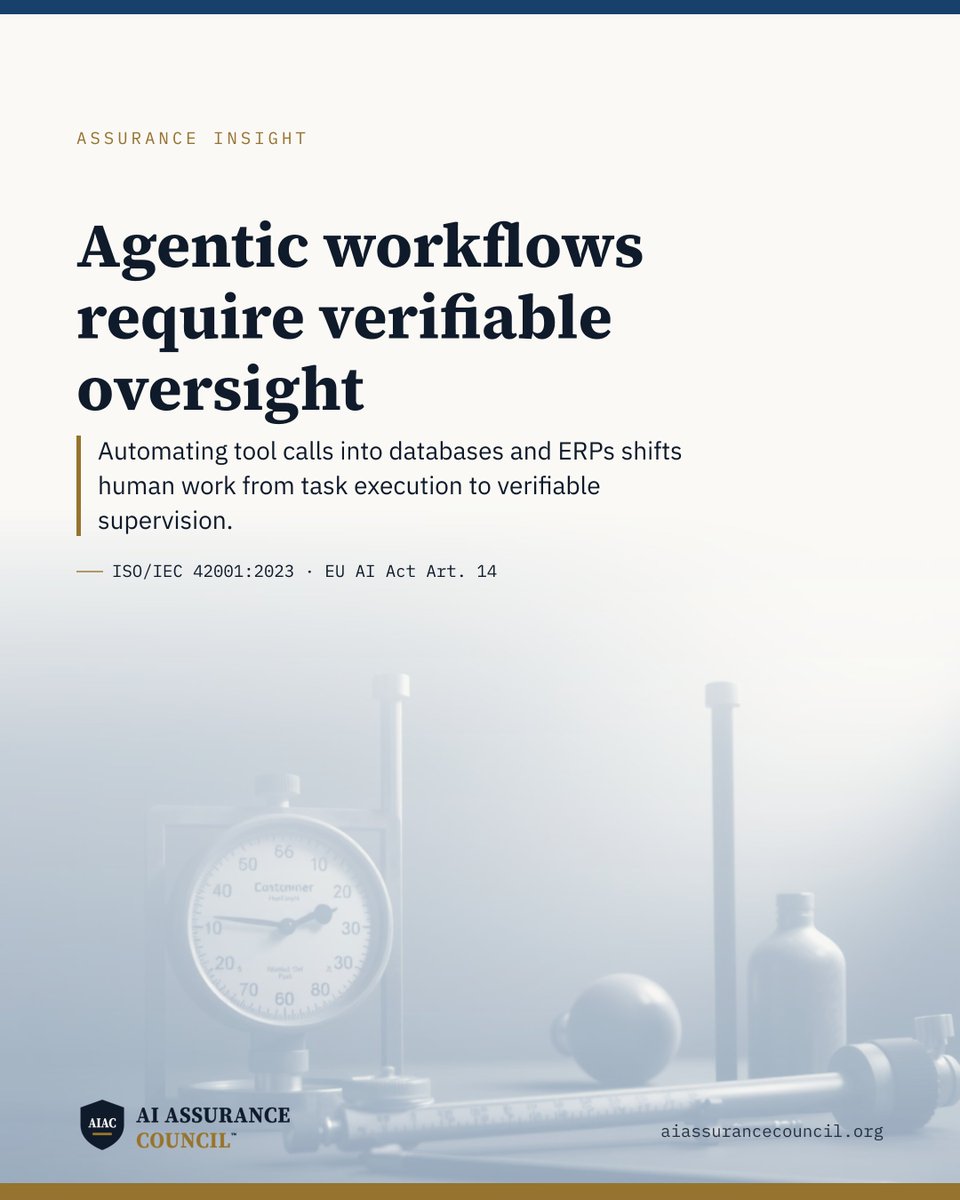
An AI agent executing multi-step tasks across enterprise systems does not remove human accountability.
Connected tools now route tickets, reconcile invoices, and inspect contracts automatically. This shifts back-office responsibilities. Professionals no longer key in repetitive entries. Instead, they configure system boundaries, review outputs, and intervene when models act outside expected tolerances.
Allowing models to call internal tools autonomously introduces automation drift. An organisation must prove that human supervisors actively monitor these workflows and catch faulty actions before harm occurs.
ISO/IEC 42001, Clause 8.2 requires operational planning and control over AI processes. The EU AI Act, Article 14 requires that high-risk systems be designed so that natural persons can oversee their operation and remain able to override outputs.
Sources:
- ISO/IEC 42001:2023, Clause 8.2
- EU AI Act, Article 14 — https://t.co/fqZDiRlgu1
AI Assurance Council ™ — the competency standard for AI assurance. Registration open. https://t.co/1jY6mohiy1
#AIAssurance
Autonomous workflows now chain multi-step tasks across databases, emails, and enterprise systems without manual handover.
Function-calling agents execute workflows that once required staff. Operations, financial reporting, contract review, and customer administration are directly affected.
White-collar professionals capitalise on this shift by moving into workflow governance and oversight. They mitigate risk by bounding agent authority and verifying outputs.
Under ISO/IEC 42001 clause 8.1, organisations must maintain operational controls for automated processes. Under EU AI Act Article 14, systems must remain subject to human oversight. Assessors require documented approval gates and event logs.
Sources:
ISO/IEC 42001:2023, Clause 8.1: https://t.co/QZlmsAvXn6
EU AI Act, Article 14: https://t.co/fqZDiRlgu1
AI Assurance Council ™ — the competency standard for AI assurance. Registration open. https://t.co/1jY6mohiy1
#AIAssurance
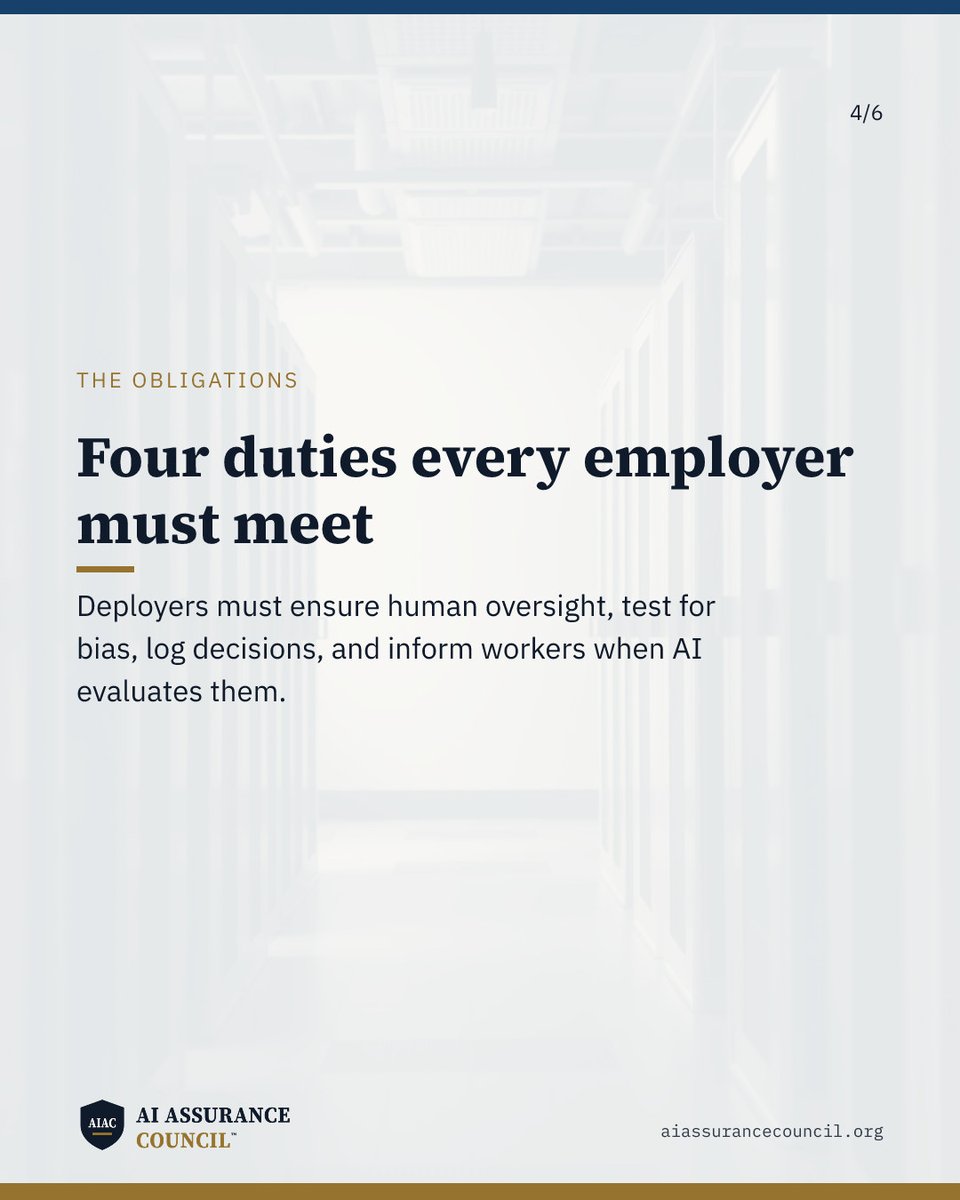
Using AI to hire, evaluate, or manage workers is now subject to strict scrutiny.
Across recruitment and performance management, organisations rely on automated tools to screen resumes, analyse interviews, and allocate tasks. Under the EU AI Act, systems used for recruitment, task allocation, and employee monitoring are classified as high-risk.
Deploying these tools creates specific duties for employers. You must be able to prove that a qualified human oversees the tool, that models were tested for bias, and that affected staff are clearly notified.
A vendor statement saying an AI tool is fair does not satisfy an auditor. Regulators and assurance teams require verifiable logs, recorded intervention thresholds, and documented drift reviews.
Sources:
- EU AI Act, Annex III, Point 4 — https://t.co/fqZDiRlgu1
AI Assurance Council ™ — the competency standard for AI assurance. Registration open. https://t.co/1jY6mohiy1
#EUAIAct
Autonomous AI agents require strictly bounded permissions and instant, auditable revocation.
Rajesh Raachabattuni builds autonomous architectures at https://t.co/AoDKiNo2CS; this is what agent boundaries look like in production.
Three things from the piece:
1. Tool access must carry hard operational bounds rather than open-ended runtime permissions.
2. Authority tokens should expire automatically unless actively renewed by human-defined policy.
3. Assurance requires real-time kill switches that halt multi-step actions mid-execution.
For assurance teams, verifying that agent authority can be revoked mid-task is a fundamental control test.
Read the full piece:
https://t.co/bGfx2WR4iC
Follow Rajesh Raachabattuni:
https://t.co/LLLY4FJByG
What does authority revocation look like in your stack?
AI Assurance Council ™ — the competency standard for AI assurance. Registration open. https://t.co/1jY6mohiy1
#AIAssurance
Using AI tools does not protect your role; knowing how to test and govern them does.
Most workplace tasks being automated are routine outputs: drafting text, summarising notes, and writing initial code. The durable professional skill is not prompting models to produce answers, but verifying whether those answers are accurate, compliant, and safe to use.
This week, audit one AI workflow in your team. Document three things: what data enters the system, who checks the results, and what evidence proves the output was verified before anyone acted on it.
Organisations do not merely need staff who operate AI. They need professionals who can independently assure its accountability and safety.
AI Assurance Council ™ — the competency standard for AI assurance. Registration open. https://t.co/1jY6mohiy1
#AIAssurance