Our groundbreaking project to build narrow AI bots to decode the mysteries of our ancient past now has a name.
The AI Argo.
And just like Jason and the Argonauts, we too are on a voyage to discover the truth behind the myths and legends of our Ancient Past.
#TheAIArgo
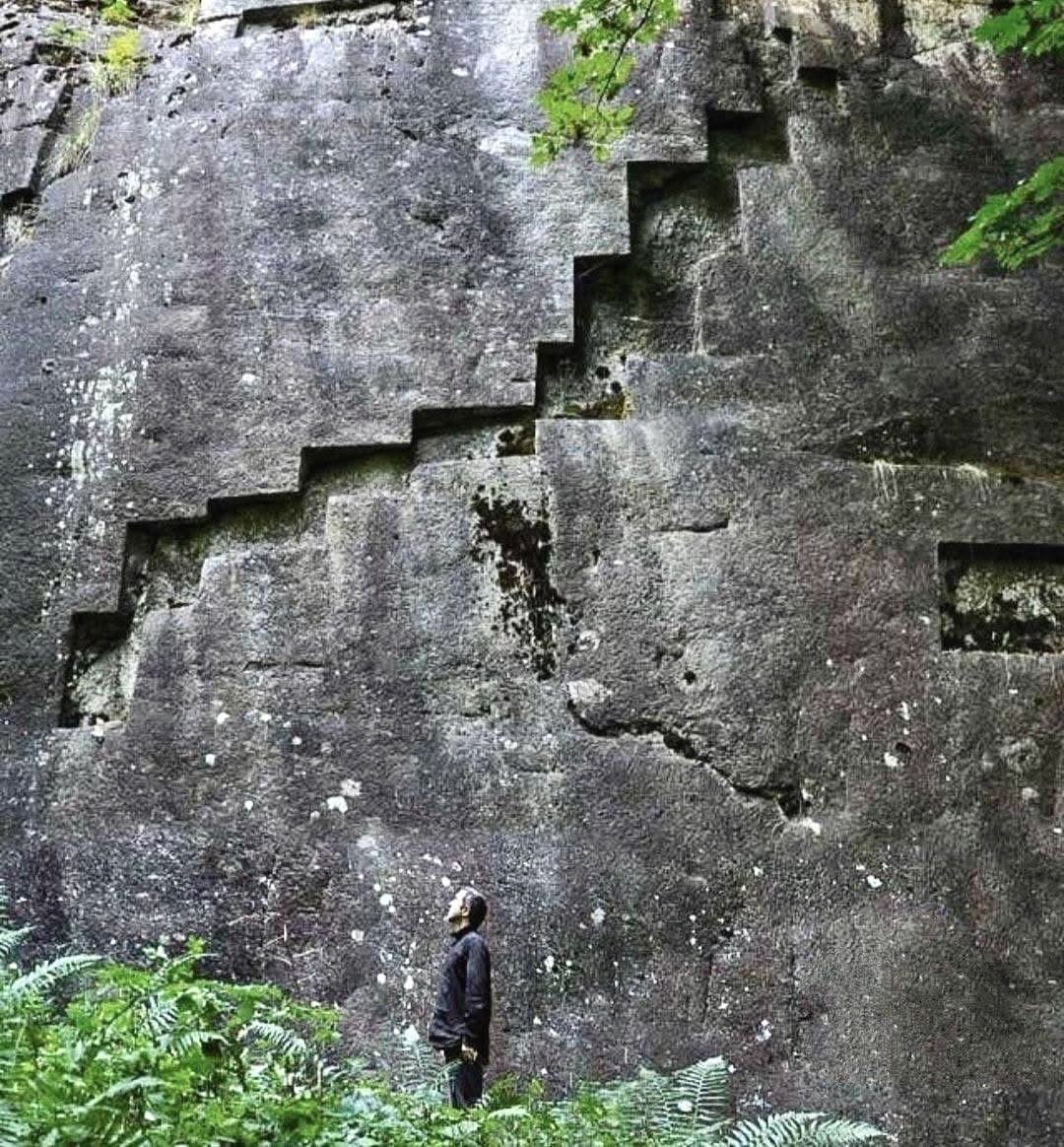
Why This Ancient Stairway Only Lets One Person In 😳
High in the cloud-covered mountains of northern Peru stands Kuélap — a stone fortress that doesn’t just look powerful, it feels intimidating. The stairway leading inside is narrow, steep, and unforgiving. Only one person can climb at a time. No crowds. No rushing. No easy attack. This wasn’t poor design — it was brilliant strategy.
Kuélap was built by the Chachapoya people long before the Inca arrived. Its massive limestone walls rise higher than a six-story building, leaning inward as if the fortress itself is watching you. Every step upward tightens the space, slows your movement, and puts you at a disadvantage. If enemies came, they would be forced into single file — trapped, exposed, and easy to stop.
This place wasn’t just about size or beauty. It was about control. Control of movement. Control of access. Control of power. The Chachapoya understood their land, their enemies, and human behavior with stunning precision. Long before modern military theory, they turned architecture into a silent weapon.
Standing at Kuélap today, you don’t just see stone walls — you feel a message carved into the mountain itself: Not everyone is meant to enter. And no one enters on their own terms.
Baalbek Lebanon the megalithic marvel of the world well known for is unimaginable construction.
Perhaps has had clues staring us in the face for several millennia?
How were the blocks laid in place? A closer look may tell the story. Rectangle holes in the stone like a punch card.
Did a mechanical device called a Lewis Clamp known for its ability to increase its load as 6x allow man or beast to pull the stones into position?
Mainstream history insists this was built entirely by pounding river rocks against a wall for years.
Look closely at the impossibly tight joints on the 12-angled stone in Cusco.
It feels like we are missing a massive piece of the technological timeline.
Göbekli Tepe stands as a monumental testament to the depths of our past, challenging established historical narratives. With its origins dating back 12,000 years, it unveils an era of enigmatic prehistoric ingenuity. This site, predating any recognized civilization, urges us to reconsider the very foundations of human history.
Look at the precision of the stone channel guiding the water at Su Tempiesu in Sardinia.
The people who built this spring 3,000 years ago possessed a grasp of engineering that feels strangely out of place for the Bronze Age.
We might be vastly underestimating what the Nuragic civilization was actually doing on that island.
Sometimes ruins speak louder than the monuments ever did.
From the air, Nemrut rises like a beacon. a man‑made summit built to touch the sky.
Here we see the scale of the builder’s ambitions.
On the ground,
before the fallen heads, the aura of over 2,000 years still speaks.
The gods may have crumbled,
but their majesty survived the collapse.
Our groundbreaking project to build narrow AI bots to decode the mysteries of our ancient past now has a name.
The AI Argo.
And just like Jason and the Argonauts, we too are on a voyage to discover the truth behind the myths and legends of our Ancient Past.
#TheAIArgo
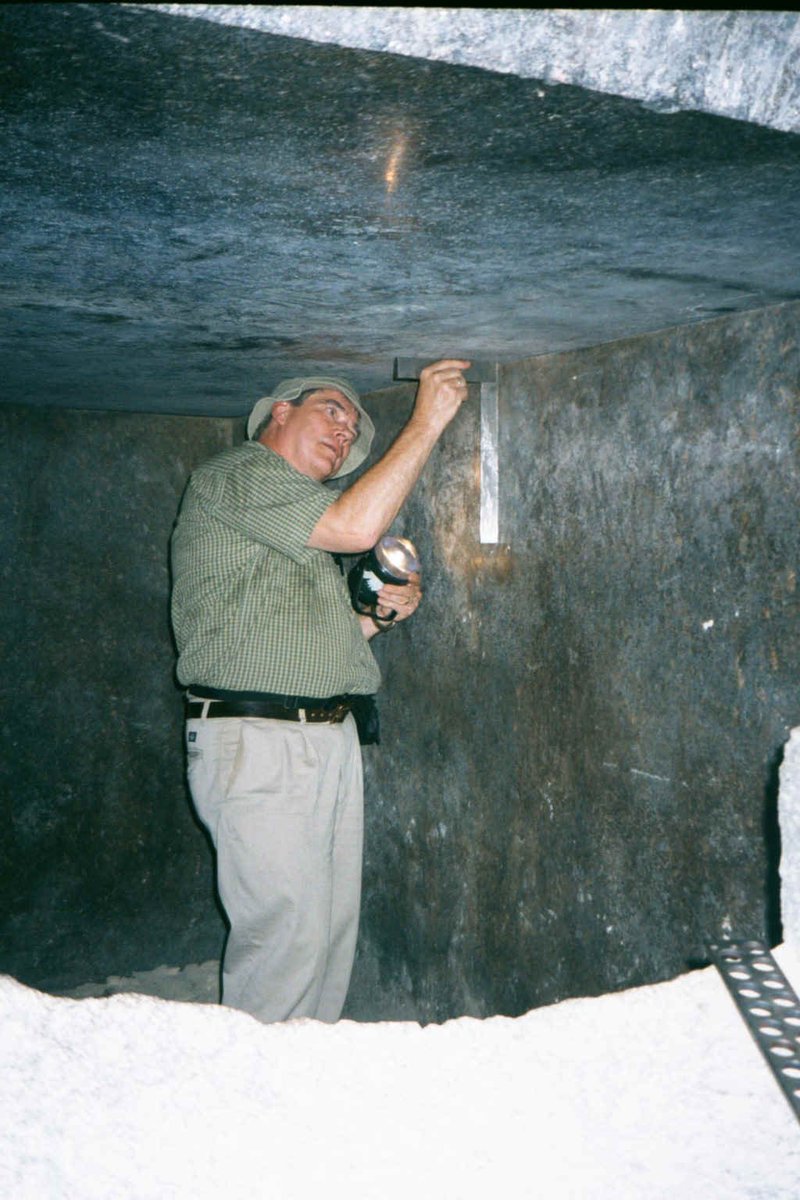
🚨 Christopher Dunn spent 40 years in precision manufacturing. Then he measured the Serapeum boxes in Egypt.
His results continue to shock engineers around the world.
🔹Squared to 0.00005 inches
🔹That's 1/20th of a human hair
🔹Flat to 0.0001" across 10 foot faces
🔹Repeated across multiple 100 ton boxes
His conclusion: this required either tools so advanced they couldn't produce anything less than perfection, or a civilisation far beyond what we accept.
We're told these were bull coffins made with copper chisels. Does that sound right to you?
The Incas Temple of Venus and the Stars 🌟
⏳ Built during an expansion phase in 1400 CE this room is part of the larger Qoricancha complex which originated in 1200 CE
📍 It sits in the historic center of Cusco at what is now the Church and Convent of Santo Domingo complex.
🔹The complex exemplifies Inca stone masonry so aesthetically pleasing its otherworldly.
🚪 The false door with its meticulously drilled holes has many hypotheses; one being they were filled with gems.
🌅Glory to the Spring Equinox from Ancient Sites Across the Globe 🌍🌎
🐍 El Castillo, Chichén Itzá, 900 CE
🔺Sphinx & Khafre Pyramid, Egypt, 2500 BCE
🏦 Mnajdra Temple, Malta, 3000 BCE
🕛 Intihuatana Stone, Machu Picchu, 1450 CE
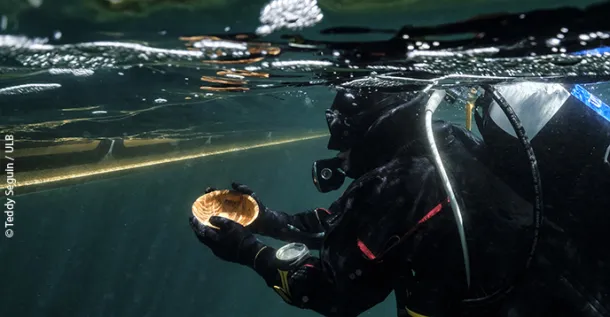
🚨 There is a 200 metre stone complex sitting at the bottom of Lake Titicaca.
An 800 metre wall, a paved road, agricultural terraces, and over 10,000 artefacts pulled from the lakebed.
All linked to a civilisation that predates the Inca by over a thousand years.
🔹Paved road on the lakebed
🔹200m x 50m stone complex
🔹800m underwater stone wall
🔹24 submerged sites confirmed
🔹Over 10,000 artefacts recovered
The Inca creation myth says their gods emerged from this lake.
Cousteau dived here in the 1960s and found limited remains. Decades later, a Belgian team with modern equipment identified 24 sites and recovered thousands of artefacts from the bottom.
Bolivia is now building a $10m underwater museum with UNESCO.
What else is hidden beneath the highest navigable lake on Earth?
The most outdated idea about prehistory is that these people were primitive.
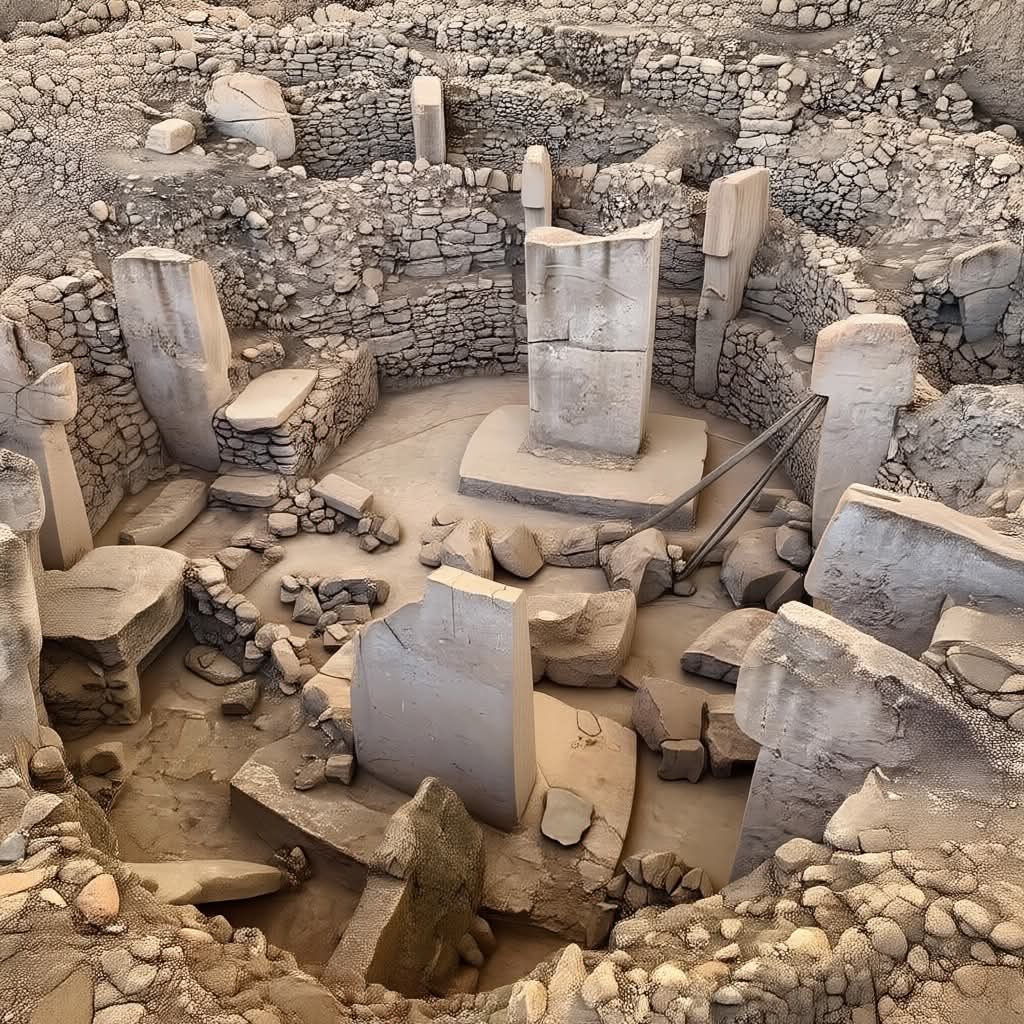
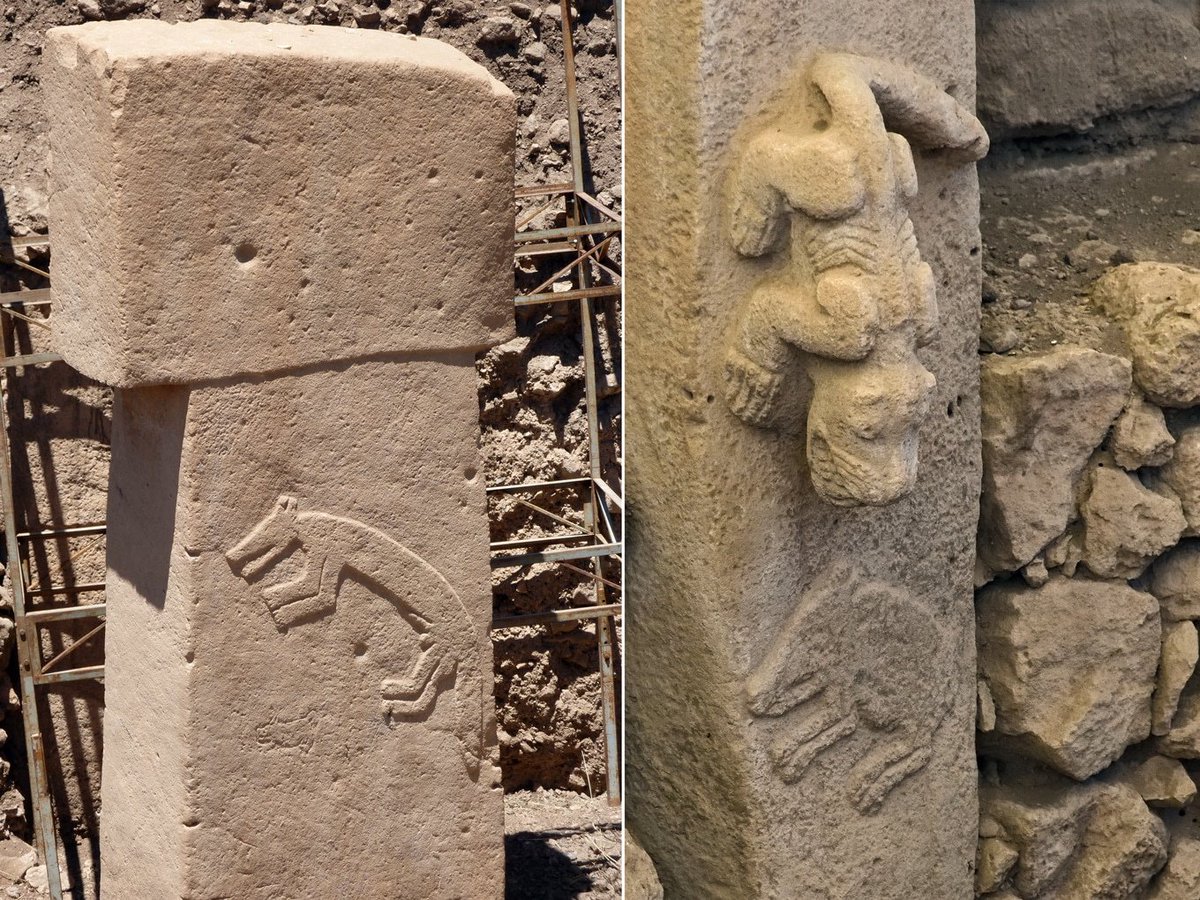
At Göbekli Tepe, hunter-gatherers more than 11,000 years ago were already building symbolic architecture where animal imagery was structured, repeated, and probably meaningful. Foxes dominate Enclosure B. Boars dominate Enclosure C. On Pillar 27, the predator and boar are not just animals. They look like a scene.
Did civilization begin with farming, or with belief powerful enough to organize memory, fear, and ritual first?
They Built This 11,000 Years Ago… But WHY? 🤯
Standing among the massive T-shaped pillars of Göbekli Tepe feels almost unreal. These giant stones were carved and placed over 11,000 years ago—long before cities, farming, or even the wheel existed. Think about that for a second. How did people, who were still hunting and gathering, create something this advanced? And more importantly… why?
In the quiet stillness, the carvings seem to come alive. Foxes, vultures, and scorpions are etched into the stone as if they carry a hidden message. It doesn’t feel like just an ancient site—it feels like a place with a purpose we still don’t fully understand. Some believe it was the world’s first temple, built not for survival… but for belief.
Now imagine the past. Hundreds of people working together, lifting enormous stones without modern tools. The sound of stone hitting stone echoes through the air. Dust rises. Voices call out. This wasn’t just construction—it was something bigger. A shared vision. A mystery unfolding.
And here’s the most shocking part: sites like this may have come before farming, not after. It suggests that humans didn’t first settle to survive… they settled because they believed in something greater.
So the question remains… what drove them?
Was it faith? Fear? Or something we’ve completely forgotten?
Whatever the answer is, Göbekli Tepe still stands… silent, powerful… and full of secrets waiting to be uncovered.
The Mysterious Figure Riding a Turtle — A Secret from the Ancient World 🐢
Under the soft lights of a museum gallery, a small yet captivating artifact rests quietly behind protective glass. At first glance, it may seem simple—but the longer you look, the more mysterious it becomes. The sculpture shows a strange mythical figure with a creature-like face, seated confidently on the back of a turtle. The figure wears an ornate headdress, and one arm is raised as if giving a command or performing a sacred gesture. Every detail, from the carefully carved patterns on the turtle’s shell to the delicate shapes of the figure’s body, reveals the incredible skill of ancient artisans.
But this object is more than just a piece of art. Centuries—perhaps even thousands of years ago—it may have held deep spiritual meaning. In many ancient cultures, turtles symbolized the earth, stability, and the foundation of the world itself. A figure riding a turtle might have represented power over nature, divine protection, or a mythical story now lost to time. Was it used in sacred rituals? Did priests place it in temples? Or did it represent a forgotten god that people once worshipped?
Today, museum visitors stop in front of this tiny sculpture with curiosity and wonder. They imagine the hands that shaped it, the civilization that created it, and the beliefs that once gave it meaning. Though the voices of that ancient world have faded, artifacts like this continue to whisper their stories.
This mysterious figure riding a turtle is not just a museum object—it is a silent messenger from a distant past, reminding us that long before modern cities and technology, humans were already creating powerful symbols, myths, and stories that still spark fascination today.
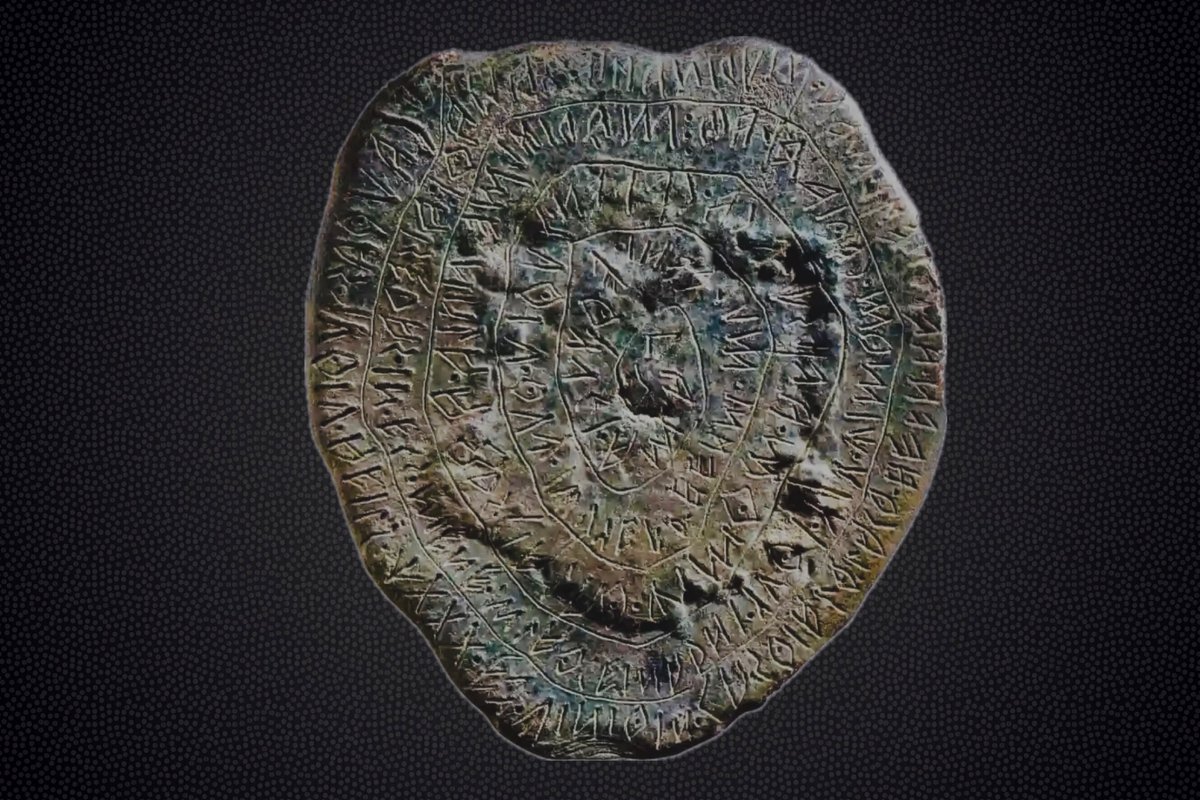
2,500‑year‑old Etruscan ritual disk
Recovered near Magliano in Toscana, this 191‑gram lead plaque preserves one of the longest Etruscan texts ever found!
70 words carved in a single spiral across both faces. The inscription records strict sacrificial protocols for deities like Tinia, Maris, Calu, and Canthas, written right‑to‑left in inverted characters.
A compact liturgical engine from the 5th century BC, capturing a ritual sequence that would have vanished without this disk’s survival.