Australia's AI compliance calendar is real now:
APRA CPS 230 AI vendor expectations: in force
Privacy Act automated-decision transparency: 10 Dec 2026
NSW psychosocial WHS duty covers AI work systems
Free, plain-English explainers for WC / GRC / HR / WHS practitioners:
https://t.co/5gyFalgYgE
No sponsored content. Australian focus.
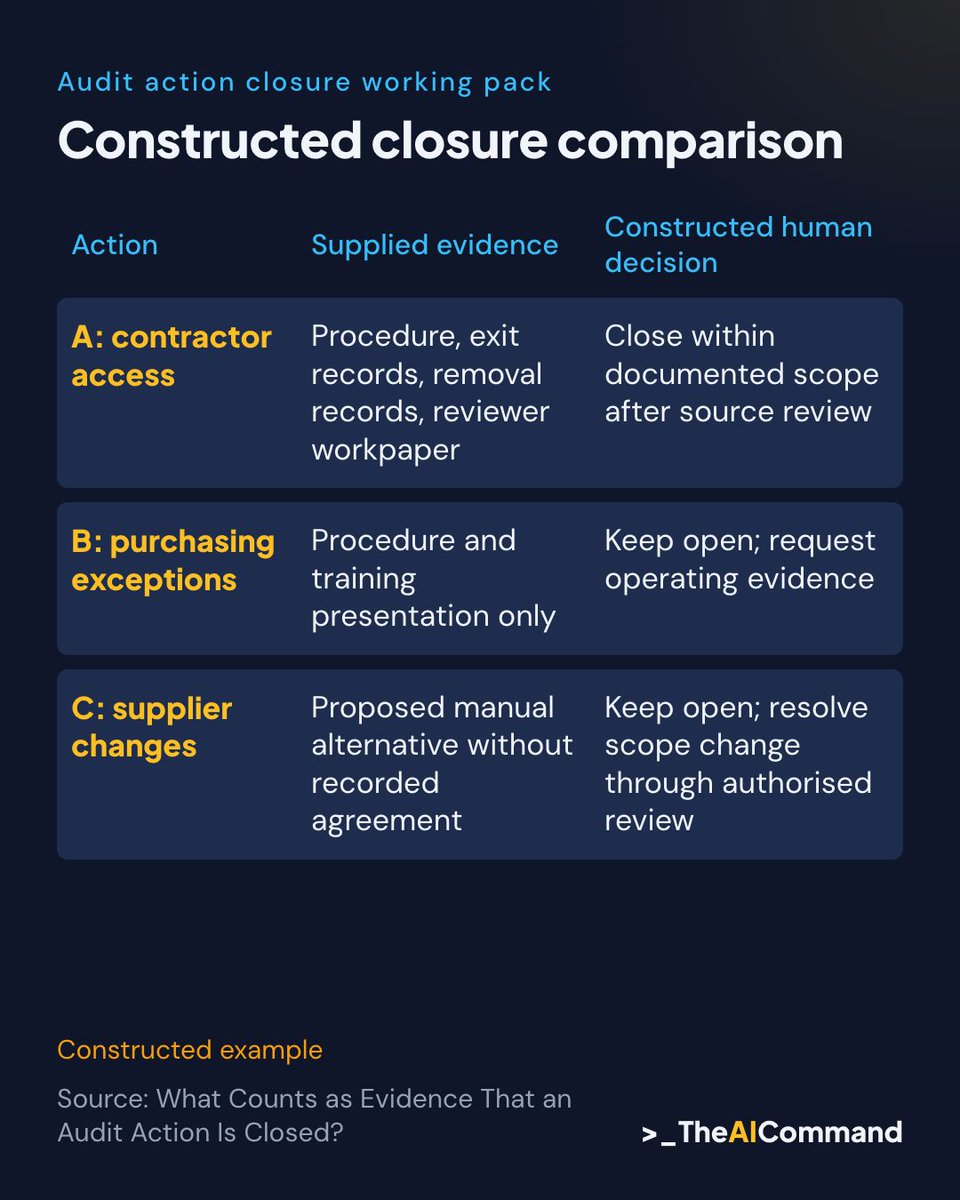
A revised procedure can support implementation without showing operation. Match evidence to the agreed action, period and scope. This constructed graphic separates scoped closure, missing operating evidence and an unapproved change. The human reviewer decides.
Your Monday claims summary, drafted before you start, by a scheduled task in Claude Code.
The catch: it drafts, a person decides. And when the first draft is wrong, fix the instructions, not the output.
What the video shows, in an example scenario with placeholders only:
- Describe the job once, in plain words: every Monday at 8 am, read the claims team's weekly actions file and draft what is due this week. Drafts only. Send nothing.
- Claude Code sets it up as a scheduled task. You find it under Scheduled.
- Click Run now and watch the first run. In Manual mode it asks before it writes the draft.
- Read the first draft closely. Here, two claims were merged into one line.
- Edit the instructions, add the rule it missed, and run it again.
Why it matters at work: Monday mornings go on chasing, not sorting. A draft of what is due this week, what is overdue and what is waiting on others gives the team a head start.
It only runs while the app is open and the computer is awake. A person checks the draft and sends it. A delegate still decides liability.
Automate the draft, never the decision.
TheAICommand. Intelligence, At Your Command.
General information only, not advice.
Write the week of work before choosing an AI subscription. For each task, name the permitted inputs, required output and human acceptance check. The graphic is a constructed weekly inventory with results marked Not tested. Buy additional access only against a specific unmet need.
Three teams' survey comments, read at once, and every quote checked before a leader sees a single theme.
The method in Claude Code: one subagent per team, then ask Claude to check each quote against its file.
What the video shows:
• Each team's comment export sits in one folder, with names already removed.
• One prompt asks for one subagent per team to pull the top themes, with quotes.
• The subagents work in parallel, and each sends back only a short report.
• Claude then reads the three files itself and checks every quote, as the prompt asked.
• A theme with no supporting comment is left out and listed, not quietly kept.
• The result is a one-page brief: a theme and a question for each team, plus the pattern shared by all three.
• Ask where a quote came from and it shows the exact comment, word for word.
Why it matters at work: leaders need the pattern, not every comment. The checking is what makes the brief worth trusting.
The takeaway: share out the reading, never the judgement. The leader still decides what happens next.
#ClaudeCode #AIatWork
Example scenario with invented comments.
TheAICommand. Intelligence, At Your Command.
General information only, not advice.
Before building a follow-up register, write three invented records and the expected result for each. Retain source references and expose unknowns. This constructed video lesson proposes checks; it does not demonstrate a tested Codex build or a safety assessment.
Let Claude Code plan before it touches anything. In Plan mode it reads your files and proposes the changes first. Nothing is edited until you approve. Then make it check its own work.
The example: a bank's obligations register needs updating for a new operational risk standard.
What the video shows, in the Claude desktop app:
- The mode is set to Plan in the footer, and the change is asked for in plain words.
- The plan comes back first. It lists what will change and what is missing.
- The plan is approved with the choice to review each edit, so every change is checked before it lands.
- The last request asks it to check every changed row against the source.
Why it matters: registers drive audits. One wrong row costs more than one extra minute of review.
The summary of the new standard did not name an owner for one obligation. The draft left that owner blank and flagged it instead of guessing. Blank beats made up. A person picks the owner, not the model.
Plan first for anything a regulator will read.
#ClaudeCode #GRC
TheAICommand. Intelligence, At Your Command.
General information only, not advice.
Define the form before drafting its code: request type, invented team role, fictional equipment details and an optional delivery note. The graphic maps that constructed brief to fields. The local exercise sends or saves nothing and does not establish accessibility compliance.
Typed the same onboarding request again? Make it a skill.
Ask for a new-starter pack in two fresh sessions and the layout changes each time. Save the steps once as a skill, run it with a slash, and every pack comes back with the same sections. HR still checks each one.
What the video shows:
- The same request, word for word, comes back as a day-by-day table, then as a welcome email.
- Claude Code turns it into a skill: a file in the project's .claude folder holding the steps, a template and the limits. It asks before it writes.
- Type a slash, the skill's name and the role. A contact-centre starter and a lending assistant both get a first-week plan, required training and who to ask.
Why it matters at work: onboarding is not meant to depend on who wrote the email. The skill keeps the layout consistent and stays with the project for the next session.
A limit in a skill is written guidance, not a lock. This one says never set pay or contract terms. The AI drafts, and a person checks every pack.
If you keep typing it, make it a skill.
Example scenario. Role titles only.
#ClaudeCode #AIatWork
TheAICommand. Intelligence, At Your Command.
General information only, not advice.
Claude and Grok now watermark AI text. Grok's API starts 7 Nov. The mark shows a model was involved, not who wrote the work. Also: ChatGPT and Codex share one allowance from December, and Cursor pulled a fake Claude Code add-on. https://t.co/l3498JCf1B
In this constructed leave-cover matrix, preparing a payment batch has proposed cover. Releasing it remains uncovered: no substitute authority was supplied. Keep that gap visible and confirm capacity, access and delegation before using the plan. People approve assignments.