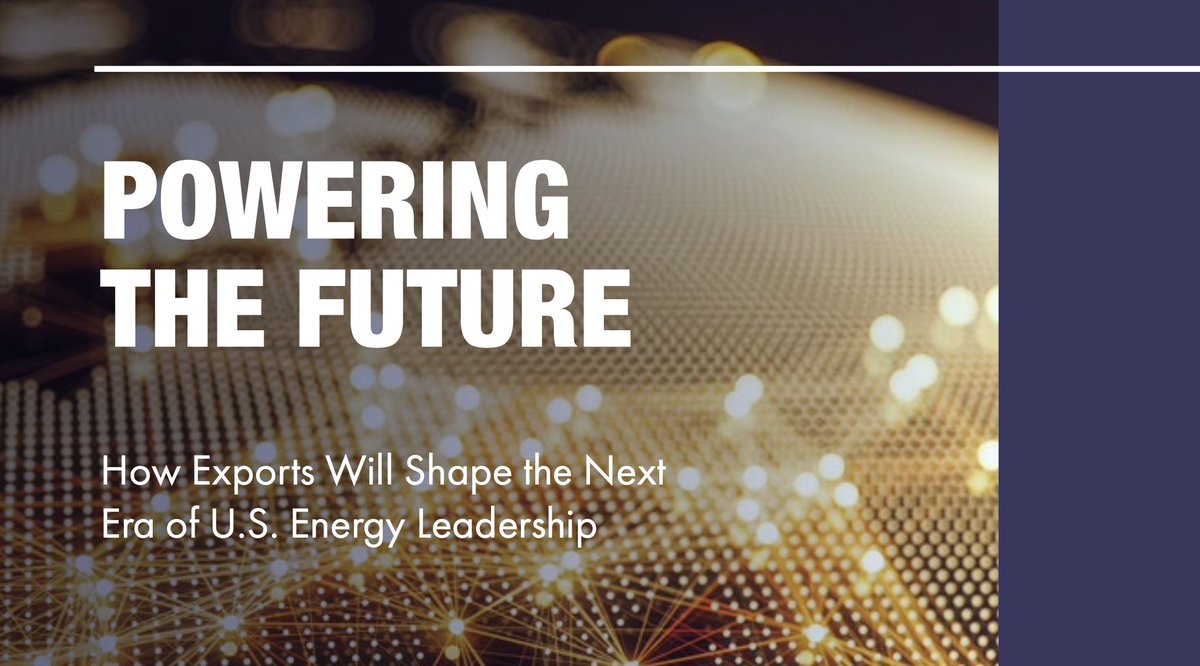
Out now: The Council’s new report “Powering the Future” makes the economic, geopolitical, and climate case for a stronger government role in commercial diplomacy, international investment, and export strategy. Read more:
https://t.co/8O9hoSv7t6
https://t.co/WOkEKHjqiW
The Council’s CEO @Greg_Bertelsen has been appointed to USTR’s Trade and Environment Policy Advisory Committee. Greg's seat on the committee is an opportunity to help level the playing field and driving better outcomes for Americans and the environment.
https://t.co/cC11IXtOlD
SCOOP in Morning Energy: Prominent Republicans active on climate policy have joined a Trump admin environment trade advisory committee, USTR's TEPAC: George David Banks, a longtime House GOP aide & adviser & Greg Bertelsen of @TheCLCouncil. Both support fees on polluting imports
Securing critical mineral supply chains takes coordination across trusted partners. That’s why we just released our Trade Tool Menu, outlining 4 goals for trade agreements: https://t.co/HeA0GIT7v1
Other countries' export credit agencies are building programs to back strategic sectors at home and abroad. France's Bpifrance is one worth understanding.
Our latest blog unpacks the ECA competitive landscape.
https://t.co/eHumQPLQfL
We were featured in @insidetrade today on our 3 recommendations to @USTradeRep for reforming AGOA. Our priority: securing critical mineral supply chains.
https://t.co/NSPKFhjFsG
Country-specific default values are the key to a fair, effective Carbon Border Adjustment Mechanism. We submitted comments to the UK on their CBAM, laying out why this design choice matters for environmental integrity and carbon leakage.🇬🇧
https://t.co/3EdpMu8H5s
AGOA modernization is an opportunity to strengthen U.S. critical mineral supply chains. We submitted comments to USTR on how to get it right.
https://t.co/5Ut786lkCX
The UK CBAM takes effect in 8 months, but global default values could penalize cleaner producers while rewarding high emitters.
Country-specific defaults would be fairer, more accurate, and set better precedent.
https://t.co/1VSERn0ZB0
The G7 is moving in the right direction on critical mineral supply chains—targeted trade measures with allies are key. U.S. leadership here matters for economic, climate, and national security. https://t.co/6tmqOtcaQZ
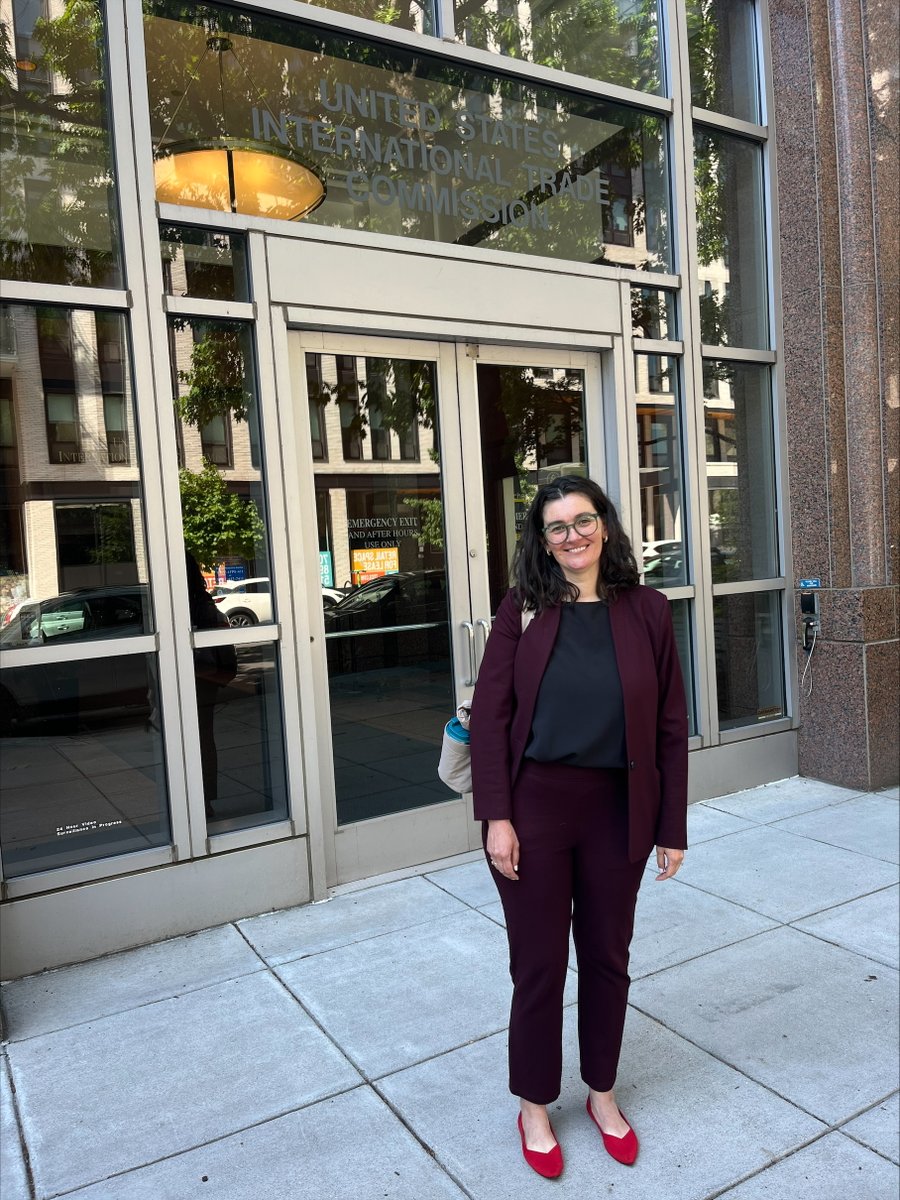
The Council's Catrina Rorke testified before USTR today on Section 301 investigations into excess capacity, presenting our findings on the role of environmental standards.
Congratulations to the Council’s CEO @Greg_Bertelsen for once again being recognized as one of @washingtonian's Most Influential People Shaping Policy in climate. 🎉
https://t.co/4vJFloYVnq
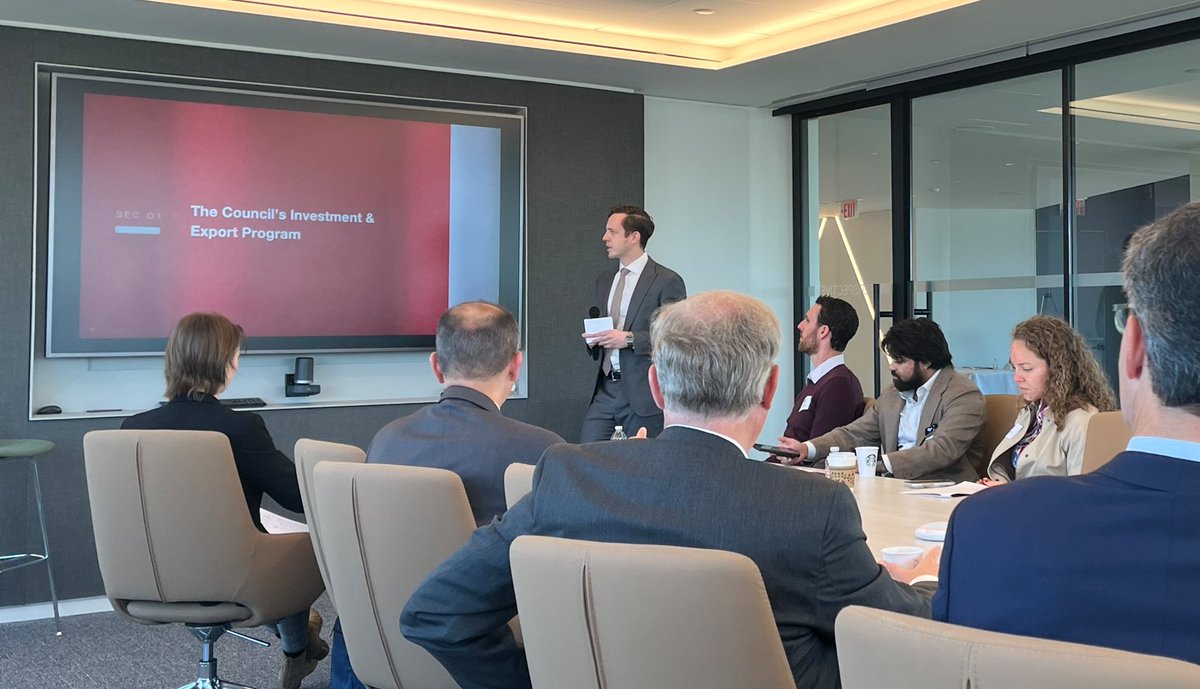
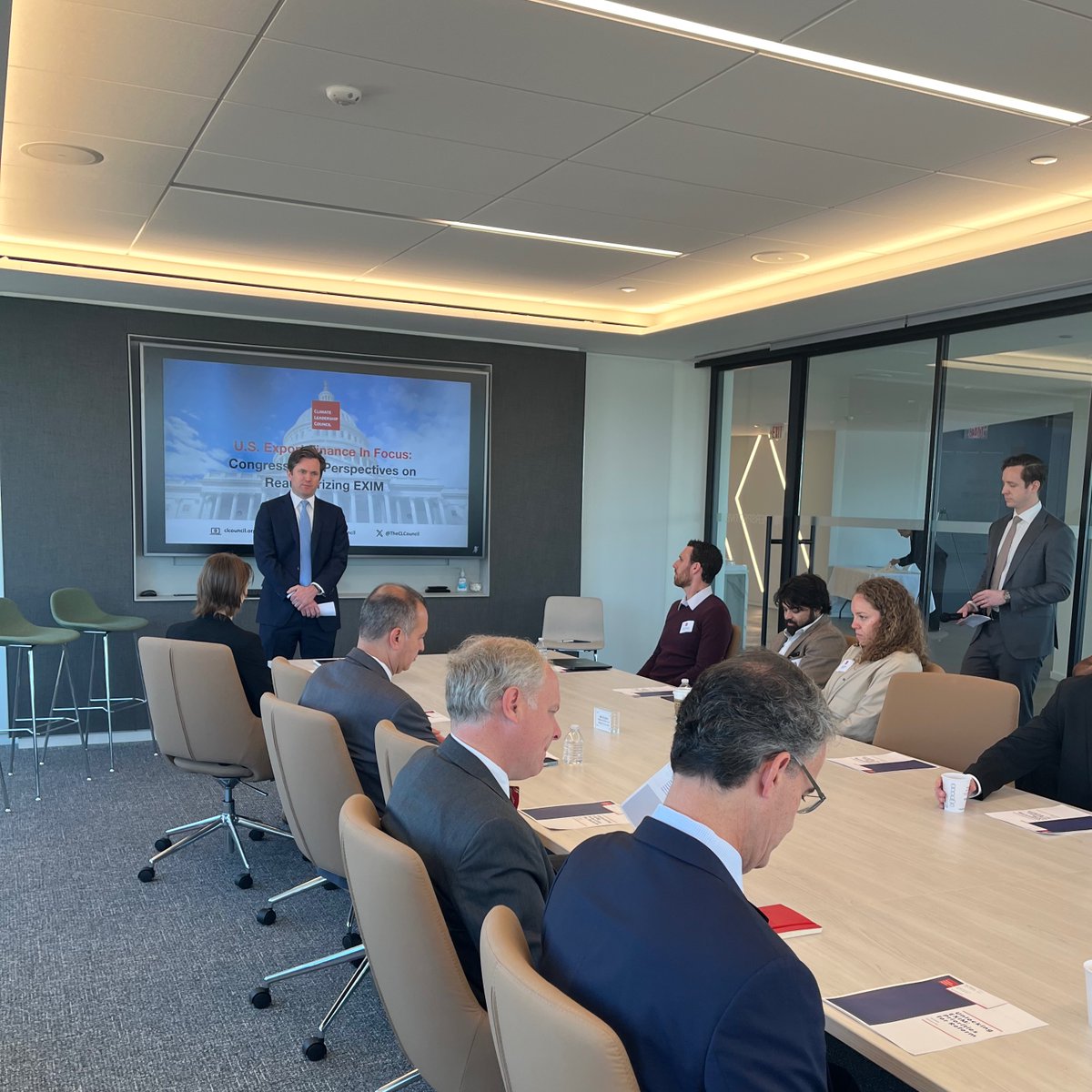
Yesterday, we hosted congressional staff for an event to discuss EXIM reauthorization, key priorities driving the process, and how Congress is thinking about the future of U.S. export finance.
EXIM's Project Vault offers a model for tackling the U.S. grid equipment shortage. The Council's Dan Giamo makes the case for Project SURGE in @RealClearEnergy.
https://t.co/R6WLcO27cI
China controls ~60% of critical mineral production & 85% of processing capacity. To address these supply chain vulnerabilities, we make the case for a plurilateral Agreement on Trade in Critical Minerals in our latest blog.
https://t.co/ZfV8GRAUvV
Can advanced energy policy boost the whole U.S. industrial base? New modeling from @CambridgeEcon shows it can—driving gains across metals, chemicals, utilities & more.
Read our analysis: https://t.co/bxYM4C8JUO
We submitted comments last week on a new plurilateral critical minerals trade agreement which covered 4 key recommendations: transparency, member protections, tariff harmonization, and market stabilization.
Read more 👇
https://t.co/lAt3nkSkhV
The U.S. and Japan just signed a Critical Minerals Action Plan to counter China's supply chain dominance. We’re working on this issue closely, and we just submitted public comments this week on how to design an effective plurilateral agreement: https://t.co/4QUQ5ag6i7
Ahead of Wednesday's hearing on the oversight of EXIM, the Council submitted the following statement for the record to the Subcommittee on National Security, Illicit Finance, and International Financial Institutions. https://t.co/bzmcB3zCoY
U.S. advanced energy innovators are ready to lead—but they need a level playing field. The Council’s EXIM priorities show how strategic reforms can strengthen the economy, secure supply chains, and deploy U.S. advanced energy tech.
https://t.co/43lsUc1WNO