Senator Alex Antic Puts Australian Christian Freedom Index into the Parliamentary Record
Senator Alex Antic introduced the Australian Christian Freedom Index to Federal Senate yesterday (Tuesday, 30 June), placing the first systematic audit of Christian religious liberty in Australia into the parliamentary record.
The survey findings paint a sobering picture. “92% said that they think it’s riskier to affirm Christian beliefs than it was 5 years ago,” Senator Antic reported to Parliament. “42% said they experienced hostility, threats, or harassment for expressing what they consider to be a Christian worldview.”
Additional data revealed that 25% of respondents were denied opportunities at work, volunteering, or leadership due to their beliefs — issues that Senator Antic noted likely relate to positions on marriage and family.
The report documents specific cases of institutional pressure, including university students dismissed for conservative opinions in supposedly “freethinking academic institutions” and teachers in Christian schools expressing frustration at being “policed in an environment where their faith is meant to provide the ethos in their workplace.”
Senator Antic drew a striking parallel, sharing accounts from those with firsthand experience of totalitarianism: “Personally, I’ve had many many people who have escaped communist countries that tell me that Australia feels eerily like what they fled many years ago. Sometimes they whisper to state their honest opinion to avoid being overheard or the need to police themselves lest they face disciplinary measures from HR departments.”
He emphasised that “Many Australians of conservative persuasions have felt for a very long time that an ideology hostile to Christianity has taken hold in our institutions.”
“It shouldn’t be this way in Australia”, he concluded.
The ACFI team, comprising the Canberra Declaration, Australian Christian Lobby, Australian Family Coalition, Citizen GO, Family Voice Australia, and the Human Rights Law Alliance, express our immense gratitude to Senator Antic for bringing the issue before the nation’s lawmakers.
Senator Antic encouraged all Australians to review the full report. “I would encourage anyone listening to go and read the Australian Christian Freedom Index document from May of this year which touches on a whole lot of important subjects,” he said.
Read more: https://t.co/mnb8A5S8or
Download or order your ACFI report: https://t.co/M8YiVMfr6b
Not Even Close: One Party Fields 84 of Victoria’s 90 Fully Pro-Life Candidates
by @DavePellowe [COMMENTARY]
Congratulations, Family First. On the published record, you are the most consistently and authentically pro-life party contesting this election, and nobody else is close. Of the 90 candidates VoteLife rates 100% pro-life, 84 are yours.
Proverbs 31:8–9 commands us, “Open your mouth on behalf of those unable to speak, for the legal rights of all the dying. Open your mouth, judge in righteousness, and plead the cause of the poor and needy.” Nobody is less able to speak for themselves than a baby in the womb, and a ballot paper is one of the few places you can speak up for them.
https://t.co/bwqm5mAq5d is @CAS_ministries's published guide of where pro-life candidates stand on ending elective abortion. We built it because too many Christians unwittingly vote for baby-killers, and now every safe candidate’s rating is there for you to check. On Monday, 23 November, we counted every Victorian listing in both houses. Here’s the result.
Family First: 88 candidates listed. 84 are rated 100% pro-life, and the other four 99%.
Every other party combined: six candidates at 100%. They are Ross McPhee (DLP, Morwell), Lydia Denker (Libertarian, Narre Warren South), Caleb Schwab (Libertarian, Warrandyte), Brenton Carbins (Australian Citizens Party, Polwarth), Cary De Wit (DLP, North-Eastern Metropolitan) and Graham Watt (Liberal, Western Victoria).
Liberals and Nationals at 99%: eight honourable mentions. In the Assembly, Chris Crewther (Mornington), Brad Rowswell (Sandringham) and Nicole Werner (Warrandyte). In the Council, Renee Heath, Richard Welch, Evan Mulholland, Ann-Marie Hermans and the Nationals’ Gaelle Broad.
@OneNationVic: 109 candidates listed, including one in every lower house district, all rated 10%. Better than nothing. Liberal Amelia Hamer (Malvern) is rated the same.
Labor and the Greens: no safe-for-babies candidate listed in either house.
By the way, two of the Libertarian candidates are 100% pro-life, but I’m doubtful about the rest of their ticket, so you really should do your own research on every name. And if you find a pro-life candidate we’ve missed, or believe any information could be more accurate, email us.
Any party should be able to find one pro-life candidate. @FamilyAu has found 88. Eighty-eight, in 71 of the 88 lower house districts and six of the eight upper house regions, and not one of them rates below 99%, which tells you how consistent its vetting and preselections are.
It’s authentic too, because a party’s convictions show in who it endorses, seat after seat, including the seats it knows it won’t win. On the most important issue on the ballot, Family First has done that right across the state.
It matters most in the Upper House, where we critically need 100% pro-life members elected. Family First offers @MoiraDeemingMP and four colleagues in Western Metropolitan, four candidates in Western Victoria, two each in North-Eastern Metropolitan, Northern Victoria and Southern Metropolitan, and @Andrew_Deeming in Northern Metropolitan.
Read more: https://t.co/LZXkLjv3BT
Prayer Protections Up for Debate as Tasmania’s ‘Conversion Practices’ Ban Clears First Vote
by @K_Mahlburg [NEWS]
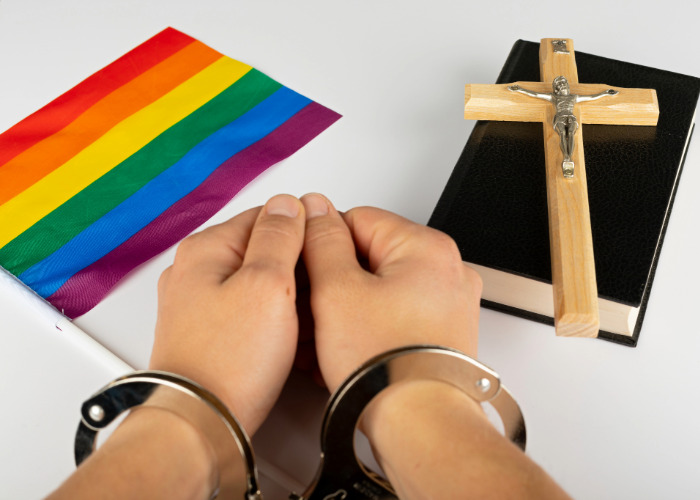
The Greens have urged Tasmania’s upper house to reject changes that would give prayer, sermons and pastoral care stronger protections under the state’s proposed ‘conversion practices’ ban.
The Greens-led bill would outlaw any practice aimed at changing or suppressing a person’s sexual orientation or ‘gender identity’. One contested clause states that a belief expressed in prayer, preaching or pastoral care does not, “of itself”, count as a conversion practice.
Greens upper house member Cassy O’Connor last week argued for the words “of itself” to be kept. Without them, she told the Legislative Council, “a person could continue conducting conversion practices under the guise of prayer”.
For Christian legal think tank Freedom for Faith, those two words are among the bill’s dangers. “Protections for religious practice remain weak,” executive director Mike Southon warned supporters last month. “The words ‘of itself’ mean pastoral care is not fully protected.”
Five Australian jurisdictions already ban ‘conversion practices’, as documented by the Australian Christian Freedom Index. Victoria’s 2021 law captures prayer ministry and pastoral conversations, even when someone has asked for them. Those convicted under the law face up to 10 years in jail.
The New South Wales ban took effect in April 2025 and covers similar ground to Victoria’s. South Australia’s 2024 law is narrower and protects most expressions of religious belief. The ACT’s criminal offences apply only where minors or impaired adults are involved. Queensland’s law reaches only regulated health services, leaving church ministry largely untouched.
If Tasmania’s bill passes, Western Australia and the Northern Territory will be the only jurisdictions in Australia without a ban on ‘conversion practices’. The WA government has promised one, though Premier Roger Cook told OUTinPerth it is unlikely to reach parliament this year.
Christian groups have warned since July that the looming ban could restrict prayer, preaching and pastoral counselling. Tasmania’s lower house passed the bill in October, after adding sermons, religious education and pastoral care alongside prayer as activities that cannot, on their own, put someone in breach of the law.
It’s a protection limited by two words: “of itself”. Because of those words, a prayer or sermon “may be assessed alongside other factors” in deciding whether a breach occurred, O’Connor told the upper house.
That means a pastor’s prayer with a congregant, or a Sunday sermon, could still form part of a case against him.
Telling someone they are “broken or need healing”, then instructing them how to be cured, would likely be caught by the ban, O’Connor added.
An amendment to delete “of itself” would make the protection absolute. O’Connor said she understood one would be moved. “I caution members not to support those amendments,” she said.
O’Connor also opposed any blanket exemption for prayer, saying the provision for prayer and preaching “was never designed to create exemptions from the ban”. Without the words “of itself”, she said, the bill “would not in all likelihood ban conversion practices”.
O’Connor likewise addressed celibacy, which many churches teach for believers who experience same-sex attraction. Celibacy itself “couldn’t meet the definition” of a conversion practice, she said. But urging it could put someone in breach of the law where it rests on “a moral judgement about a person’s sexual orientation”.
After the lower house vote, the Australian Christian Lobby’s Tasmanian director, Rafael Demarchi, said the protections remained “conditional and uncertain”, with “possibly no real protection at all”.
Read more: https://t.co/lJNEsRevNz
Family First: How We’re Approaching Preferences in Victoria — and Why
by @LyleShelton [COMMENTARY]
With the election this Saturday, I want to explain the thinking behind @FamilyAu’s preference recommendations, which appear on our How to Vote cards. How to vote cards have been available on our website ahead of early voting that began on Wednesday, 18 November.
The most important thing to note is that recommendations from parties are just that: recommendations. Each voter is the one who decides where his or her preferences go.
In most districts, we have recommended a number 2 vote for @OneNationVic. You will, however, notice that in four electorates, we have recommended Labor candidates with a pro-life voting record be placed above Liberal and One Nation. We are balancing the importance of rewarding pro-life parliamentarians on principle, while ensuring we DO NOT inadvertently cause a Labor government to be re-elected.
Our starting point in Greenvale, Broadmeadows, Pascoe Vale and St Albans remains the one we published last October: we will preference against MPs (Liberal or Labor) who have voted for the expansion of euthanasia and the attack on doctors’ conscience rights, and we will recognise those Labor MPs who crossed the floor to do the right thing.
Voting records on life issues are critical. It should be noted that One Nation, while aligned on many of our issues, is not aligned on the life issues. One Nation also supports euthanasia, so it is appropriate that the four pro-life Labor MPs receive pro-life preferences ahead of One Nation in these four seats, should voters choose to follow our how to vote card.
You will notice that we are putting Liberals last in Hawthorn (John Pesutto), Bulleen (Matthew Guy), Brighton (James Newbury), Croydon (where Christian candidate Grant Hutchinson was unjustly disendorsed) and Tarneit. It will surprise no one that we deem it not appropriate to recommend preferences to those who have treated @MoiraDeemingMP so unjustly or persecuted other Christian candidates.
In Caulfield (David Southwick), we are recommending an open ticket: just vote 1 Family First.
In Sydenham and Niddrie, we are running split tickets. We recommend in both to put One Nation ahead of Labor and Liberal. This makes it easier for the many Labor-voting Christians in those seats to vote 1 Family First. Voters can then choose whether to put Labor or Liberal next.
In several other seats, we are also recommending an open ticket (vote 1 Family First only).
In Preston, we have placed Labor at 3, ahead of the Liberals. This is a tight Labor–Greens contest, and we are trying to stop the Greens from winning the seat (the One Nation candidate has been disendorsed).
Read more: https://t.co/VckogCnALX
Katherine Deves’ NSW One Nation Candidacy Met with Legacy Media ‘Anti-Trans’ Spin
by @Rod_Lampard [COMMENTARY]
@Katherine_Deves will compete for an Upper House One Nation seat at next year’s New South Wales state election.
When making the announcement, Deves said, “I joined @OneNationAus because I wanted to be part of the rescue, recovery and restoration of our nation.
“In my home state of New South Wales, where I was born and bred, we are seeing and experiencing its decline. A decline in living standards, a decline in economic prosperity and a decline in cultural cohesion.
“We are seeing education standards bottom out. We are seeing the cost of living skyrocket. Whether it’s fuel, housing, energy; and we are watching a government that is so wedded to destructive ideologies like DEI and Net Zero that they are prepared to impoverish us all.”
Deves then slammed the Labor government’s priorities, stating, “while families worry about Christmas, and we’re watching overpaid bureaucrats sit there and argue about whether men can breastfeed and get pregnant. The Government is completely out of control with its bureaucracy, and the people of New South Wales deserve better.”
Further explaining her reasons for running as a One Nation candidate, Deves said, “One Nation has always stood against that sort of nonsense, and they will continue to do so. And One Nation is going to take that fight on behalf of the people of New South Wales to Macquarie Street.”
In a separate statement posted on X that same day, Deves shared that it was an honour to play a part, and reasserted: “We will be taking the fight to Macquarie St on behalf of the people of NSW.”
“We will restore common sense, tackle the cost of living to ease pressure on families and businesses, scrap net zero and reduce a top-heavy bloated bureaucracy that just makes everyone’s lives harder and more expensive.
“We cannot afford another term of more of the same.”
Deves has star power. A wife and mother of three, she has life experience and consistency backing her convictions. She’s also well-versed in the political process.
Read more: https://t.co/l1M3LCzRoa
Russell Brand, the Cornell Seven, and the Political Rage Undermining Due Process
by @brownstoneinst [ANALYSIS]
Due process is inevitably amongst the first casualties during moral panics or emergencies. Salem hanged witches, Lincoln jailed journalists, and Newsom arrested paddleboarders. But usually those suspensions of civil liberties are circumscribed in time. The witch hunt ends, the war concludes, the mania fades.
The Western myth of rape culture, however, is unique in its unceasing assault on the central tenets of due process. Through the entrenchment of this permanent psychosis, the Anglosphere abandons the right to confront witnesses, the presumption of innocence, the denial of hearsay, and the consideration of statements against interest. That legal vacuum allows for the weaponisation of justice against dissenters, sordid career advancement, and a political culture premised on sensationalised falsehoods.
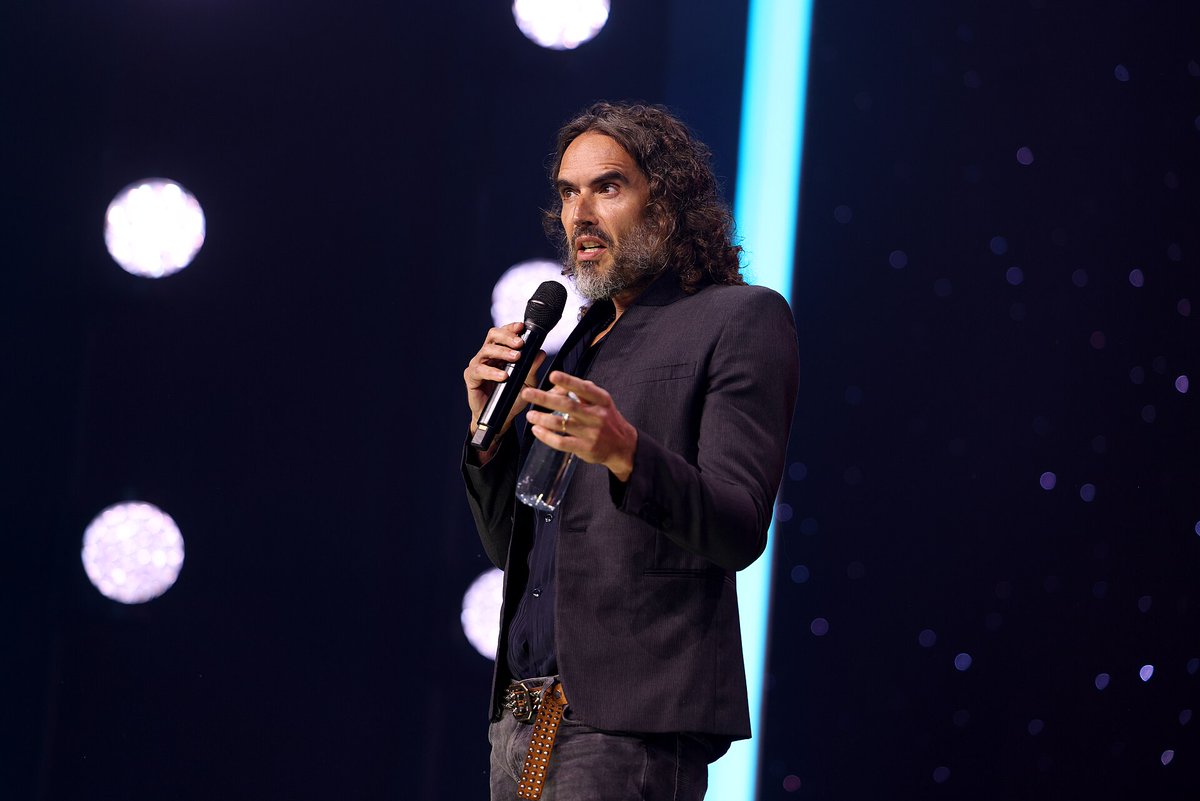
This month, Russell Brand was sentenced to over a decade in prison for supposedly “raping” women over 20 years ago.
Read more: https://t.co/eEBdEzIsFR
A National Call to Prayer and Action Against Antisemitism
by Sarah Way [NEWS]
This is a national call to prayer and action for Australian Christian Believers.
Next month marks a profound and solemn milestone, being one year since the massacre at a Jewish religious celebration on Bondi Beach. It coincides with the release of the Royal Commission’s report into antisemitism and social cohesion.
An important national strategy will be launched to give the Body of Christ an opportunity to make a stand against the continuing and increasing antisemitism. A strategy that offers practical comfort for our Jewish brothers and sisters while actively standing up for our nation and preserving the remnants of our shared Judeo-Christian heritage.
The International Christian Embassy Jerusalem Australia (ICEJ Australia) has joined a global ICEJ initiative in advancing a Christian Declaration Against Antisemitism. The declaration is a unified statement denouncing antisemitism as a violation of human dignity and calling on Christians to stand publicly with the Jewish people at a time of rising threats and violence.
The Declaration will continue a momentum that commenced with our initial appeal, which was signed within days of calling for a Royal Commission, by 420 church, business, and community leaders — as well as the hundreds of believers who subsequently endorsed our formal submission to the Commission.
The launch of the Christian Declaration coincides with Hanukkah, that beautiful festival that celebrates light over darkness and the defence of religious freedom against persecution.
Hanukkah in Australia will now always sadly be a reminder of that same persecution and of hatred against fellow Australians. However, light will always triumph over darkness. This Declaration will say loudly and clearly that religious hatred must be confronted. It will offer a strong message of support to comfort our Jewish brothers and sisters.
Whatever the outcome of the findings of the Royal Commission due to be released on 14 December, and whatever measures that may be implemented, Christians need to be that ongoing voice of support and comfort.
The Declaration brings together Christians from diverse streams and denominations who affirm that hatred of Jews is repugnant to biblical faith, and with the principles of justice, freedom, and human dignity at the heart of Australian society.
The Declaration states that antisemitism is dangerous not only to Jews, but to all people who value democracy, truth, and freedom. It affirms that all people are created in the image of God and that antisemitism represents a grave violation of that God-given dignity.
To continue this vital work, we urgently appeal to you to take three simple, practical actions today:
1. Save the Date: Monday, 7 December, from 7:00 PM to 8:15 PM (Sydney time)
National Call to Prayer and Action — Zoom Link: https://t.co/r3wehIEnpE
2. Share: Forward this article to as many Christians as possible, even if you cannot attend.
3. Pray: Begin/continue praying for our nation and the Jewish community.
Read the full text of the Christian Declaration Against Antisemitism here and add your signature here.
Find this article at https://t.co/07W8c1kL6X
Said Abdelrazek: America Answers the Call Albanese’s Government Chooses to Ignore
by @Rod_Lampard [COMMENTARY]
The United States is now doing what the Australian government should have done for Said Mansour Rezk Abdelrazek and his Australian-Egyptian fiancée, Sophie.
Anthony Albanese and Tony Burke were approached by both Coptic Solidarity and Sophie, asking them to intervene on his behalf.
The Australian government has so far ignored their requests.
The Americans have now stepped up.
West Virginian Republican Riley Moore and three other members of the GOP are formally urging Egyptian President Abdel Fattah El-Sisi to release Rezk.
In his 19 November letter, which was also published online, Moore wrote, “We write out of deep concern regarding the ongoing trial and detention of Said Abdelrazek, a Christian man in Egypt who is currently facing 25 years’ imprisonment and even a potential death sentence merely because of his conversion from Islam to Christianity.”
Moore stated, “Mr Abdelrazek’s ongoing detention constitutes a grave violation of the fundamental human right to religious freedom, is a flagrant violation of international law, and is part of a very troubling crackdown on Christians and other religious minorities within Egypt.
“We strongly urge the Egyptian government to immediately release Mr Abdelrazek, drop all charges against him, and cease using its blasphemy, counter-terror, and related laws to persecute the peaceful practice and speech of Christians and religious minorities within Egypt.”
Arguing on Rezk’s behalf, Moore asserted that the current terrorism charges being used against him “are based entirely on peaceful conduct: occasional online expression relating to his Christian faith and his efforts to change his government-issued religious status.”
The letter acknowledged that “Abdelrazek’s legal counsel has credibly alleged that Mr Abdelrazek has experienced torture and has not been able to access adequate medical assistance while detained. Any subjection to torture and denial of basic rights and necessities is outrageous.”
Moore’s diplomatic appeal also reminded the Egyptian president that Rezk’s case has become international news.
Moore said, “Mr Abdelrazek’s case has rightly gained international notoriety because of the depth of his unjust treatment. The British Parliament has noted his case, and the US State Department and US Commission on International Religious Freedom have raised concerns.”
He then pointed to the arrest of Christian YouTube apologist Augustinos Samaan, who was sentenced to five years of hard labour for ‘hate speech’ after publicly questioning Islam.
Moore argued that “Mr Abdelrazek’s case appears to be part of an increasing pattern of Egyptian authorities using blasphemy and counter-terror laws to target Christians and other religious minorities for their peaceful religious practice and speech.”
Alongside appealing to Egypt’s Islamic rulers for Rezk’s release, the group of GOP Congressmen and one senator called for “an immediate update on Said Abdelrazek’s current condition and the status of his case.”
They also called for “all prosecutions and detentions against Christians and other religious minorities in Egypt based on blasphemy and false terrorism charges to be halted. Peaceful religious expression is never a crime and must be protected. Christians are the most persecuted religious group in the world, and the US will not stand idly by while any country seeks to imprison or even execute them.”
Read more: https://t.co/0W5ArcfVFY
‘Repealing Treaty is One of Our First Priorities’, Says @OneNationVic
by @JoshSpasaro [NEWS]
Three years after Australia voted No to the Albanese Government’s Indigenous Voice referendum, Victorians are preparing for a race-based Treaty pushed without having the opportunity to vote on it.
The First Peoples’ Assembly, named Gellung Warl, receives power to “make decisions and rules about specific matters that directly impact Indigenous people”.
But a One Nation Victoria spokesperson has promised voters the conservative party would repeal Treaty if it were to win power after the 28 November state election.
“Absolutely, repealing Treaty is one of our first and most important priorities, and it is something that we will be pushing hard on,” the spokesperson told The Daily Declaration.
Gellung Warl will use its powers to action statewide Treaty reforms.
“For too long, laws and policies have been made about First Peoples — without First Peoples. But when First Peoples lead the way to design policies and solutions, we get better outcomes across areas like health, housing and education,” is a statement on the Treaty for Victoria website.
“Treaty will help all Victorians to build a shared connection with the Aboriginal history and living cultures of Victoria. Treaty provides an opportunity to bring Victorian communities together and share pride in Aboriginal heritage, history and culture.”
However, there are genuine concerns that Treaty would impede upon Victorians’ right to individual liberty and freedom.
Gellung Warl also leans on the Yoorook for Transformation Report, which calls for sweeping changes to Victoria’s legal system to redress identified past harms to Indigenous tribes.
For example, Recommendation 16 suggests reinstating Indigenous place names across Victoria, including in prominent public spaces, parks, reserves, waterways and roads.
Recommendation 21 also advocates for a mechanism to facilitate the transfer to entitlements to Aboriginal landowners, including assets like land, water, resources, leaseholds, licences, entitlements and other interests.
The 2023-24 Victorian Budget invested $82 million to support the First Peoples’ Assembly to carry out negotiations for the Treaty between Indigenous representatives and Victoria, part of a four-year $138 million plan.
The One Nation Victoria spokesperson said the Carroll Labor Government was tone deaf when it came to considering the wider implications of implementing its Treaty, and its subsequent financial and social divisions.
“Whether it’s poor judgment, stubbornness or delusion, it remains a fact that these decisions are being made without sufficient regard for long-term financial consequences,” the spokesperson said.
“And Victorians are paying the price while already in $187 billion in gross debt — this is what happens when you have an ideologically-driven and financially illiterate government.”
Read more: https://t.co/wVKdfeS3e3
Wes Huff’s Plagiarism and the Promise of Redemption
by Mark Powell [COMMENTARY]
One of my modern-day heroes of the faith is @WesleyLHuff. If you’ve been living under a rock and don’t know who I’m talking about, then just watch the following viral interview he did with Billy Carson, which can be viewed here. Or the even more popular one below, which he did about a year ago with Joe Rogan, which has had almost ten million views!
Incredibly, for over three hours, Wes winsomely and wisely defended and explained not only the historical reliability of the Christian faith but also shared the good news of redemption. However, redemption is what Wes Huff now needs. Not in the spiritual sense of the term as he is still a genuine believer, but due to the serious and sustained allegations of plagiarism.
Huff has announced that he will be stepping away from all public ministry. At least for the foreseeable future.
I’m not going to go into all of the allegations and evidence as to how Huff has ‘illegitimately borrowed’ (i.e. stolen) from the work of others. That is easy enough to find for yourself online. What I instead want to do, though, is reflect on the humility — and indeed, courage — he has exercised in so publicly confessing his sin.
Read more: https://t.co/rEepKlAx7Z
Principalities and Powers
by @BishopJulianP [BIBLICAL]
Several times in his letters St Paul speaks of “principalities and powers”. For example, in his letter to the Ephesians, in speaking about the spiritual struggle that all Christians are involved in, he comments that we are not just fighting against “human enemies” but against the “Sovereignties and the Powers who originate the darkness in this world”. He continues and refers to them as “the spiritual army in the heavens”. St Paul is conscious that there are supernatural powers of darkness at work in the world (see Eph 6:12).
In the mind of St Paul, these powers, understood as fallen angels, influence human affairs, seeking to subvert God’s purposes. While Christ has been victorious over all the powers of darkness by his death and resurrection, they continue to operate and can hold sway over peoples and societies. They are active in manufacturing the “present darkness” which afflicts much of human society.
One finds reference to these forces in Romans 8:38, Ephesians 3:10, 6:12, and in Colossians 1:16, 2:15. They remind us of the cosmic dimension of the work of salvation. Christ’s authority is far above that of all principalities and powers, but their presence and influence remain.
In a catechesis on the teaching of St Paul, Pope Benedict, on 14 January 2009, said, “For the pagan world that believed in a world filled with spirits for the most part dangerous and from which it was essential to protect oneself, the proclamation that Christ was the only conqueror and that those with Christ need fear no one seemed a true liberation.” The pagan worldview was populated with all sorts of malevolent forces which often had to appeased. Christ’s coming has liberated people from this fear.
Christ is the conqueror of the powers of darkness, and so we need not fear their eventual supremacy. However, this is not to eliminate the potential for such powers to have considerable damaging effect in people’s lives and in societal patterns.
In an age of unbelief and of a secular interpretation of life, the idea of spiritual forces at work is something quite foreign to the minds of many. Even believers are drawn into an understanding that ideologies at work in shaping society are human constructions alone.
As Christianity recedes as a spiritual and moral presence in many societies, it is not surprising that other forces fill the void created. While many would view secularism as a benign and reasonable way of seeing human existence, it is blind to the reality of the spiritual world.
A vacuum is thus created, and it has to be filled with something. We could see interest in and engagement with the New Age ideas as one example of filling this gap. However, we have seen much more at work in our society in recent decades as powerful social forces are reshaping our societies in ways which are foreign to the tradition of Christianity.
Even at a popular level, a preoccupation with darkness and evil is evident in some aspects of popular music and in many video games. Looking for entertainment and visual stimulation, many young people can become engrossed in a dark, violent and evil virtual world. This corrupts their spirit and deadens their desire to pursue what is true, good and beautiful.
When we look at the almost manic determination by some to have abortion completely accessible, one cannot but sense something evil is afoot. It is not only necessary that abortion is freely available, but that any effort to resist the view that abortion is the right of every woman must be crushed, usually by legislative and legal prohibitions.
The meteoric rise of transgenderism is another case in point. Activists are determined that everyone is required to fully affirm any child who wishes to change their gender. Indeed, it is demanded that everyone comply with the young person’s new view of themselves. They must be addressed by their chosen pronouns and new name. To object to this is to be labelled phobic and inspired by hatred.
With laws enacted like those under the title of ‘conversion therapy’, the pressure to conform is immense.
As we consider what has transpired in our society in a rather brief period of time, we can ask whether there is more at work than just the human promotion of social change.
Can we also see evidence of the work of principalities and powers that operate in the spiritual realm?
Read more: https://t.co/uArKWwcEO8
Vale Rev Fred Nile, Hero of the Faith
by Dr @ChavuraStephen [NEWS]
Rev @FredNile has died. There is no shortage of churchmen in Australia who would die for Christ, but there is an acute shortage who would be prepared to look like a fool for Him. Fred was both. Australia has lost a hero of the faith.
Fred was a member of the New South Wales upper house for over 41 years — among the longest serving in NSW history — and was “The Father of the House”. His party, the Christian Democratic Party, began as the Call to Australia Party, which emerged out of the Festival of Light, a grassroots Christian lobby movement inspired by similar movements from England.
Fred’s is a complex legacy. To many of his supporters, he could almost do no wrong. To his Christian detractors, he was almost single-handedly thwarting the appeal of the Gospel for millions of Australians.
He was to a large extent shunned by the polite circles of Sydney Anglicanism, even if they privately agreed with much of what he said. Given Nile’s pariah status in the ABC and media more broadly, he was never going to get robust public support from the Anglican hierarchy. Of course, you will hear encomia from many churchmen over the next few days who wouldn’t have dared support him publicly. That’s to be expected.
Fred had a near-endless supply of energy up until the last 10 years of his life. Almost all of it went into parliamentary matters, being a national watchman against the forces of depravity, and perpetually galvanising his support leading up to the next election.
He was in his own way an Australian legend, or at least a NSW legend. He was a hero of mine in my early 20s as I became interested in politics. He had a broad knowledge and was one of the bravest public figures in the country.
In the mid-2000s, I worked with him as the Associate Director of the Festival of Light NSW. I was in my mid-20s. He really was a force of nature (supernature?) and knew how to work a crowd. I always looked forward to hearing him speak, and I’m not easily won over by public speakers.
Read more: https://t.co/GuYVDQOh8R
Regulating Hate: Speech Law and Dissent in Australia
by @NAffects and @dystopian_DU [ANALYSIS]
As part of a larger project to map Australia’s digital censorship regime, liber-net turned its attention to the country’s hate speech legislation, expecting to encounter existing work that summarised the state of affairs. However, we found no such overview had been produced in the past decade, and that there was so much legislation that we detoured from our larger project to create the report we recently released: "Regulating Hate: Speech Law and Dissent in Australia".
Before the proliferation of legislation in recent years, Australia had a somewhat restrained civil law regime on hateful speech, and while egregious cases of activist lawfare were a recurring problem, weaponisation was limited even as civil law rapidly encompassed more protected attributes. The growing speech constraints Australians experience in the workplace and online also frequently stem from cultural and institutional vectors.
What has changed dramatically in recent years, however, is that Australia is fast expanding its civil speech regime into criminal law, purportedly as a means to tamp down social unrest and divisions in the wake of the October 7 Hamas attack and its fallout in Gaza, and the Bondi massacre.
In hasty response to these tensions, politicians have legislated new criminal offences, including bans on specific slogans and symbol bans, covering an increasing array of protected identities, and in several cases, dramatically lowered fault thresholds, removing the requirement of intent and replacing it with mere “recklessness”.
Australian police are not yet conducting mass home raids and arrests for tweets, as authorities frequently do in the UK and Germany. But the rapidly expanding criminal framework and flimsy speech protections (Australia has no bill or charter of rights guaranteeing free speech) make such a scenario increasingly possible, especially when combined with growing digital speech and surveillance controls under the eSafety Commission, including the currently proposed “Digital Duty of Care”.
Australia, it seems, is fast positioning itself at the very vanguard of speech repression in the West as politicians and authorities of all kinds come to be increasingly distrusted by the public.
While most of these new hate speech laws are untested, some have been quickly put to use. We have already seen pro-Palestine protesters charged in Queensland for chanting or displaying ‘from the river to the sea’; a Queensland artist warned by police to take his artwork off the Internet for the same slogan; and two New South Wales men sentenced to 12 months’ imprisonment in NSW for making antisemitic statements at a rally and performing a Nazi salute. These laws apply equally online and offline, though the application thus far has primarily been in the offline sphere.
While these expressions are offensive to many, we argue that they should not be criminal offences, and that offensive speech is the price of a free society and flourishing pluralistic democracy. However, a key theme emerging from this report is that, in fact, much of today’s political class views free speech as incompatible with a diverse, multicultural society.
NSW Premier Chris Minns said his state’s new racial hatred laws were ‘very important to maintaining social cohesion’; the Victorian Government says vilification ‘undermines Victoria’s social cohesion as a multicultural and inclusive society’; and Attorney-General Michelle Rowland said new hate speech laws would ‘target those who seek to spread hatred and disrupt social cohesion in our community.’
In this way, Australian politicians more closely echo authoritarian rulers justifying their repression under the guise of preserving social harmony, rather than those of Western democracies. Essentially, they are saying that Australia’s multicultural project is too weak to survive without restricting free speech.
This signals a profound paradigm shift in the Australian psyche. Ask any government as little as a decade ago, and they would respond that free speech was a fundamental value of a multicultural democracy. We know this because Australia’s multicultural statements of 1989, 2003 and 2017 all named freedom of speech among the shared principles that hold a diverse society together.
We argue for a return to this traditional view of free speech as a pillar of a flourishing democracy, and that it makes multicultural democracies stronger, not weaker, by addressing tensions in the open rather than driving them underground.
Other factors behind the recent push for hate speech legislation in Australia are crisis-driven decision-making, lobbying from a parade of special interest groups (both on the left and the right), and a shift in public opinion that prioritises safety over freedom.
In the context of the current Labor government’s previous attempt to regulate ‘misinformation’ online, and its new ‘harm-prevention’ legislation of a Digital Duty of Care, the picture forming is a Brave New (online) World where no one is ever harmed, offended or suffers hurt feelings, and where real-world violence is mitigated by micro-policing offensive speech.
It sounds utopian, but if sacrificing fundamental values and civil rights is the precondition, is it really a utopia after all?
Read more: https://t.co/61JL2vsQql
Rest In Peace, Fred Nile
by @BillMuehlenberg [NEWS]
I was very saddened to see the news that the great New South Wales Christian politician, the Reverend @FredNile, has just passed away at age 92. I had known that he was nearing his end, and I had been regularly praying for him and Silvana, his second wife (Elaine Nile passed away in 2011). She had told me recently that he was in a special care facility, and had been struggling with having full mental awareness of others and the like.
Fred had been the longest serving NSW state MP — from 1981 to 2023. He is known for his very vocal Christian stance on the issues of the day, and was the leader of the Christian Democratic Party. Many tributes to this great man will be forthcoming in the days ahead.
Read more: https://t.co/OsP0vZrP0X
Let Them Eat Carbon Credits
by @JamesMacpherson [COMMENTARY]
Every November, 90,000 of the world’s most self-important people descend on an expensive seaside resort to explain why ordinary people must learn to live with less.
Less driving. Less heating. Less meat. Less electricity. Less comfort. Less prosperity. Ideally, less of everything that makes modern life bearable.
They arrive in a fleet of private jets, because the climate emergency is something best shouldered by others.
For two weeks, they hold earnest seminars about your gas stove, your ute and your thermostat.
Then they retire to luxury hotels for long lunches and expensive dinners, presumably to discuss how much more comfortable everyone else would be if they lived a little less comfortably
Meanwhile, back in Australia…
A pensioner is turning off the heater because she can’t afford the electricity.
A tradie is calculating whether he can afford to fill the ute before driving to the next job.
A young family is opening its power bill with the same dread normally reserved for a letter from the tax office.
And small businesses are wondering how many more cost increases they can absorb before they start shedding staff.
These are the people being asked to make sacrifices. Not the delegates. Not the ministers. And certainly not the billionaire philanthropists flying in to save humanity.
The leaders of America, China and India — the countries that actually determine the world’s energy future — mostly stay home.
They understand that a climate summit is a stage, not a substitute for an energy policy.
The main emitters continue building economies that run on reliable, affordable power, while the COP delegates debate how to persuade Australians to use less of it.
After two weeks of diplomatic brawling, the delegates emerge with a historic agreement recognising the need for ordinary people to make further sacrifices.
This is signed off on by people whose idea of hardship is a delayed business-class flight.
And Australians get to pay for the privilege.
Read more: https://t.co/yndrqVTsrf
Building a Better Future for All
by Nathaniel Marsh, @Dads_For_Kids [LIFESTYLE]
It’s been an amazing week! International Men's Day (IMD) on November 19 continues to build momentum with hundreds of events taking place around the world this week. Reports are still coming in, and there’s more IMD events taking place this weekend (if you’re near the Gold Coast, The Ripple Effect event is on 11 a.m. — 4 p.m., Sunday, 22 November), but I think it’s fair to declare International Men’s Day 2026 the best yet.
International Men’s Day has been decades in the making, and it’s important to honour Dads4Kids friend Dr Jerome Teelucksingh from Trinidad and Tobago, in the Caribbean, who founded the day in 1999. Since 2008, thanks to generous supporters, Dads4Kids has sponsored the initiative and been the main coordinating organisation for the day (here’s a younger me promoting IMD in 2010). In recent years, it’s expanded into a global team effort, and I’m so thankful for all the organisations and individuals around the world who continue to support and grow this important day.
On November 19 each year, International Men’s Day celebrates worldwide the positive value men bring to the world, their families and communities. We highlight positive role models and raise awareness of men’s well-being. Inspired by Dads4Kids contributor and wonderful advocate for men and boys, @LisaBritton, the theme this year is The Future Is Everyone, a truly inclusive aim, which is based on IMD’s 5th objective. The 6 IMD objectives, or pillars as we like to call them, are:
- To promote positive male role models, not just movie stars and sportsmen, but everyday men being the best they can be
- To celebrate men’s positive contributions to all areas of society
- To focus on men’s health and wellbeing; social, emotional, physical and spiritual
- To highlight discrimination against men, in areas of law, social services and societal attitudes
- To improve gender relations and promote gender equality
- To create a safer, better world, where all people can be safe and grow to reach their full potential
November is also Men’s Equality Month, and last week our friends at the International Council for Men and Boys (ICMB) released their landmark, inaugural Global State of Men and Boys Report 2026. If you haven’t read it already, find out more and download it here...
Read more: https://t.co/fkCpNvdFJ9
Labor’s New Anti-Israel Sanctions Trigger Calls for Aussie Biscuit Boycott
by @Rod_Lampard [COMMENTARY]
Israelis have responded to the Australian Labor Government’s new settler sanctions with calls to boycott Australian products.
Tim Tams, Blundstone boots and Breville appliances are on the pushback list that Israel News Pulse (INP) said were “familiar names in Israeli shops.”
INP platformed the voluntary consumer “boycott”, likening it to a similar one launched against British goods a day earlier.
Why are Tim Tams, Blundstone and Breville being targeted?
INP said that the brands are uniquely Australian, consumer-driven and linked to the Australian economy.
They added that shoppers who oppose the Albanese-Wong sanctions “can choose another biscuit, another pair of boots or another appliance. Before switching, check who owns the alternative and where it is made, alongside price, quality and suitability.”
One of the voluntary boycott’s aims, INP explained, is to encourage Israelis to buy Made in Israel first.
The list was initially published by Abu Ali, which describes itself as a “popular Telegram channel specialising in Middle East affairs.”
In a brief post published the day before yesterday, Abu Ali wrote, “This is a good time to remember that Tim Tam, Blundstone, and Breville are Australian products, and purchasing them in Israel supports the Australian economy.”
Albanese’s sanctions, announced on Wednesday by Foreign Minister Penny Wong, blacklisted three people, three organisations and one construction business.
Israel’s Daniella Weiss, Itamar Yehuda Levi, Eliav Libi were blacklisted alongside Amana, the Settlement Movement of Gush Emunim Central Cooperative Association Ltd, The Nachala Movement, Hashomer Yosh and the Eyal Hari Yehuda Company Ltd.
Giving reasons for the sanctions, an official Labor government DFAT notice cited human rights. Under the ruling, individuals and entities are banned from entering Australia. They’re also banned from using any assets they might own in the country.
Labor Foreign Minister Penny Wong said in an 18 November press release that the sanctions were against those the Australian government believes were “involved in illegal settlement expansion and human rights abuses against Palestinians in the West Bank.”
Wong said, “The measures mean that Australians and Australian businesses are banned from trading with or providing financial or other support to the three individuals and four organisations targeted for their involvement in settlement and outpost expansion in the West Bank.”
The new list adds to an existing blacklist of “senior Israeli ministers, extremist settlers, illegal settlements and other groups.”
She said, “We are taking these actions because the rapid expansion of settlements and settler violence are extinguishing the possibility of a two-state solution. This includes the E1 settlement, where demolitions and the displacement of Palestinians have occurred in recent weeks. Israeli settlements in the West Bank are illegal under international law.”
Accusing those newly sanctioned of violence, Wong said, “The sanctioned individuals and organisations have actively participated in the planning, coordination and establishment of new settlements, including raising funds, recruitment of volunteers and providing support to violent settlers.
“For the first time, Australian sanctions are targeting a construction company involved in the building of settlements.”
Wong then warned Australian businesses. She told them that they should not bid for construction tenders for illegal settlement developments.
“The penalties for breaching sanctions are up to ten years imprisonment and a fine of up to $910,000 or three times the value of the relevant transaction. Businesses can be fined up to $3.64 million or three times the value of the relevant transaction.”
After suggesting further sanctions were possible, she explained that Labor’s punitive measures were part of the party’s commitment to a “two-state solution”.
Read more: https://t.co/rBTi6ZJzEv
The US are now doing what the Australian government should have done for Rezk and his Australian fiancé, Sophie.
@AlboMP and Burke were approached by both @CoptSolidarity and Sophie to intervene on his behalf. The Australian government ignored them.
Here's the kicker: Labor can launch sanctions against Israelis, and cite 'human rights' violations in the West Bank to justify it, but they'll ignore one of their own citizens, and do nothing to defend the human rights of Christians falsely imprisoned for their faith in Islamist run Egypt.
Who does the Australian Labor Party actually serve? Because it's definitely not the Australian people.
@TheCanDec has been reporting on his case from the start. To read our widespread coverage of Rezk's plight lock in here:
https://t.co/oLAoaDYyMK
Our Unhuman Past — and Future
by @BillMuehlenberg [HISTORY]
It is always a dilemma whether to get a newer edition of a book you already own. Is it worth it? But with 14 new chapters and 120 more pages (258 pages compared to 382 pages), it seemed worthwhile getting the brand-new version of a slightly older book: "Unhumans: The Secret History of Communist Revolutions" (War Room Books/Skyhorse Publishing, 2024) by Jack Posobiec and Joshua Lisec. Recently, I mentioned this book in my list of the top 10 books on communism and socialism.
The day I posted that article, I discovered that a second edition of "Unhumans" had just been released. Seeing that it had added a fair amount of important material, I ordered it straight away. Released just before the US midterms, this revised edition is even more relevant than when it was first released two years ago. Its details are these: "Unhumans: Socialist Revolution — Tactics for Patriots to Survive a Communist Uprising" (War Room Books/Skyhorse Publishing, 2026).
Here I feature some key quotes from the volume. Consider what the authors say about multiculturalism and immigration...
Read more: https://t.co/jSTdreCkQF
Hitler’s Legal Bid: Why Should Hamas Have All the Fun?
by @JamesMacpherson [COMMENTARY]
Adolf Hitler has engaged a team of Australian lawyers to challenge the nation’s persistent and, in his view, deeply unfair characterisation of him as a villain.
The former German chancellor, who died in 1945, is reportedly seeking a declaration that Australia’s historical condemnation of his regime is excessive, discriminatory and insufficiently sensitive to the many positive contributions made by the Nazi Party.
Speaking through his legal representatives from a location considerably warmer than Berlin in April 1945, Hitler complained,
“People seem determined to define us by our military wing.
“What about our social programs? Our infrastructure? Our commitment to national renewal? Must every organisation be reduced to the activities of its most violent members?”
Hitler’s lawyers argue that the Nazi Party should not be judged collectively for the Holocaust, the invasion of neighbouring countries or the industrialised murder of millions of people.
His solicitor Cecil B. Devious told journalists,
“These were regrettable episodes, but it is grossly unfair to suggest that every Nazi was personally involved in every atrocity.
“Most were only involved in a couple of atrocities, while others did no more than cheer for atrocities.”
The Führer’s legal representative, Justin Sane KC, said they would also object to the suggestion that Hitler’s political speeches should be considered relevant to assessing his intentions.
“Words are not actions.
“Sure, my client made some fairly robust statements about eliminating Jews from Europe. But so what. Politicians say all sorts of things during election campaigns.”
The case follows news that Hamas has launched a legal bid to overturn Australia’s decision to designate the entirety of the organisation as a terrorist group, rather than restricting the designation to its military wing.
Hamas argues that its political, humanitarian, medical and educational activities should not be classified as terrorism.
A spokesman for Hitler’s legal team, Maximilian von Loophole, told The Macpherson Report that their client’s case raised similar questions about collective responsibility.
“If an organisation provides social services, does that automatically make its other activities illegitimate?”
von Loophole said Hitler’s team was seeking a settlement where Australia would agree to refer to Hitler as a “controversial historical political figure” rather than a genocidal dictator.
“If trans women can be women and if abortion can be reproductive health care and if mass political censorship can be Digital Duty of Care and if naturally occurring carbon dioxide can be pollution, we don’t see why the Australian Government wouldn’t agree that Hitler can be a great humanitarian who, admittedly, had some bad hair days.”
Hitler’s lawyers have also requested that school textbooks acknowledge Hitler’s railway infrastructure initiatives.
At the time of writing, Hitler’s team was preparing a supplementary submission arguing that the Holocaust should be considered an unfortunate administrative misunderstanding.
The Australian Government has not yet indicated whether it will fight the case.
Home Affairs Minister Tony Burkefence said that whether an organisation could be simultaneously a terrorist group and a provider of community services was a question that needed exploring.
Read the full piece: https://t.co/RimjbU43FU