When I do these sit-downs, I get peppered with questions, and sometimes I miss the core of what the questioner is actually asking. I thought he was asking if America's form of government, as outlined in the Constitution, would be possible in a nation of 90% Christian Indians. My point was that, as John Adams famously said, "Our Constitution was made only for a moral and religious People. It is wholly inadequate to the government of any other." I was focusing on the religious and moral character aspect of the hypothetical question. And presuming they were a moral and upright group of Christian Indians, then yes, the American form of government could serve them well.
But watching this back, it's clear he's actually asking if America would still be America if you could snap your finger and change America to 90% Christian Indians. The correct answer is, of course, not. America is a PEOPLE with shared history, values, and geography. You cannot replace Americans with non-Americans and have it still be America. Which is why getting our immigration system in order is fundamental to our country's future well-being. When we allow people into our country who do not share our values, we fundamentally corrode the nation. Our foundations—legally, spiritually, philosophically, and culturally—are from the West. That's Common Law, the Magna Carta, Christianity, etc. But adding anyone has risks, just like adding Canada to America as the 51st state could negatively impact the country (namely by adding a bunch of liberal Canadians), even while it's majority white westerners.
The ideas and values of America are big enough and strong enough for other groups to assimilate into them (key word is assimilate, and if done orderly and slowly over time), but I am not convinced that a 90% Indian Christian country would resemble America at all. That hypothetical country could perhaps use the Constitution successfully, but it would be something entirely different than America. We are a great people with great ideas, not a great idea with people.
As Mark Twain aptly noted, "There are three kinds of lies: lies, damned lies, and statistics."
Back in 2024, we examined headlines such as "56% of the Most Highly Valued Tech Companies Founded by 1st and 2nd Generation American immigrants" and found the facts didn't support the claim.
What we found then, and what is almost certainly still true today is this: you can say a company was founded or co-founded by an immigrant, but what goes unexamined is that immigrant's contribution relative to the other founders.
When we weighted actual immigrant contribution against the number of co-founders, the figure dropped from 56% to just 10.69%.
There is also a methodological problem buried in the body of the NFAP report that was absent from the press release that further inflates the headline number and that is the study included companies "founded or co-founded by immigrants or the children of immigrants." The children of immigrants are not immigrants. They are U.S. citizens.
Upstream decision = high-level architectural choices
Systems design is based on the idea that certain up-stream decisions have much larger consequences for what happens down-stream than others. Certain things are much, much harder to reverse.
@ScottMGreer True, but they still largely support open-borders style legal immigration, because their biggest fear is still being called "racist."
They are also largely isolated from the effects of mass-migration.
Towns north of Dallas saw some of the fastest growth in the US thanks to corporate relocations and H-1B visa workers. Now the housing market is seeing cooling demand due in part to higher visa costs and AI disruption https://t.co/NePFFRotjC
You could have 2 engineers, both top 10% talent, back in 2021.
1 takes a job at Google, does well.
1 takes a job at SpaceX, and is about to be worth $15M.
Unclear what the implications of this will be.
Ever since Covid there's been talk of the K-shaped economy.
In the age of AI, the upper end of that K is starting to go parabolic as a few companies create generational wealth: OpenAI, Antrhopic, SpaceX. Nvidia. Micron and Dell are getting huge boosts.
What if the American candidates were seeking a salary>$500K and had leverage to negotiate with competing firms, while the H-1B worker was primarily concerned with securing sponsorship? Or if Nvidia paid a high salary but still benefited from hiring someone less able to switch employers due to visa constraints? High H-1B salaries don't prove Americans weren't available or passed over.
It’s entirely possible that Nvidia genuinely hired the best candidates available. But pointing to a few such examples doesn’t excuse the fact that the H-1B program is entirely corrupt by design.
"What I later found out was that there is significant overseas pressure from the indian government for these big indian names in Silicon Valley to push business away from America and into india."
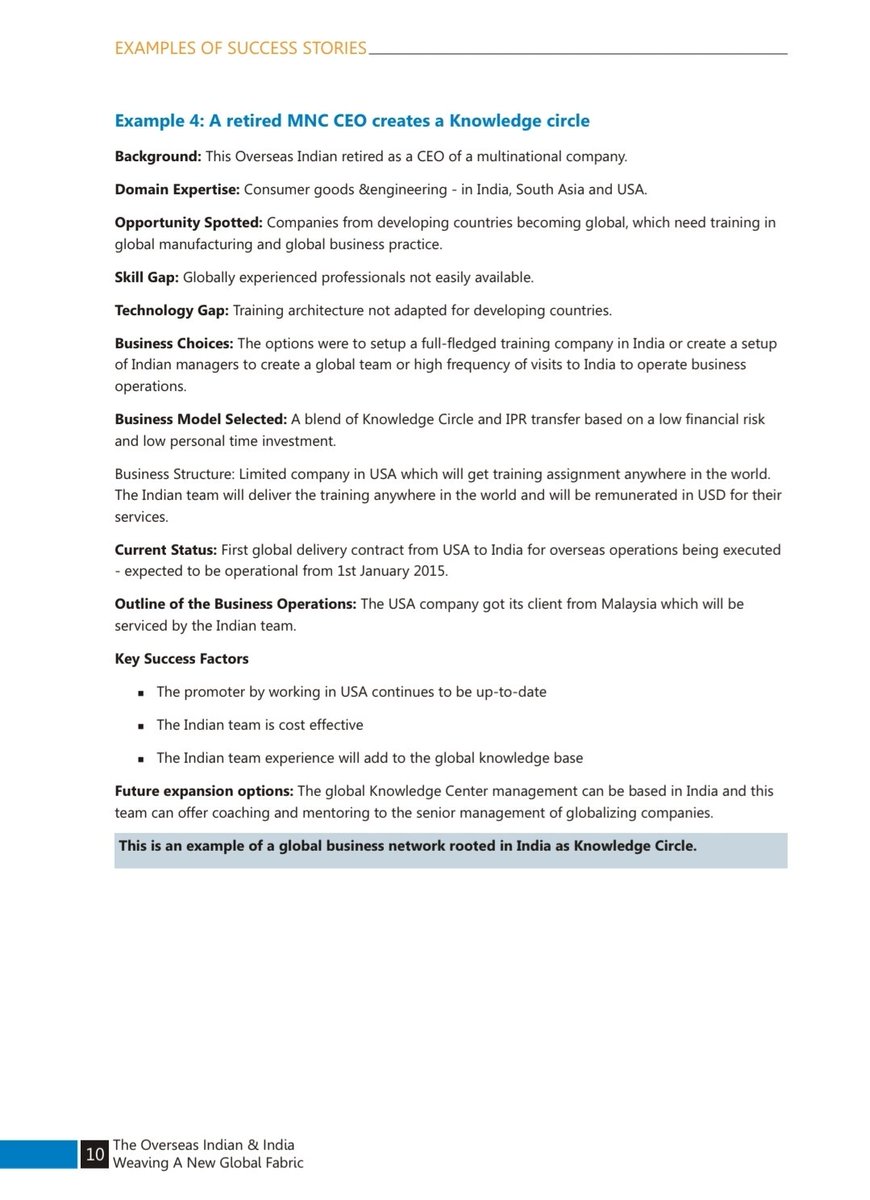
This is true. India's own KNIT Framework published by India's Ministry of Overseas Indian Affairs, explicitly encourages members of the Indian diaspora to use their expertise, business relationships, investment capital, and leadership positions to advance India's economic development through knowledge transfer, sourcing, investment, and technology transfer.
As the United States negotiates trade and economic partnerships, Americans should understand that India has spent decades building a network of Indian-origin executives, investors, and decision-makers throughout American companies and institutions who are encouraged to help advance India's economic interests. America has no comparable network embedded throughout India advocating for American jobs, American investment, and American workers.
I encourage every American to read this document from India's Ministry of Overseas Indian Affairs.
https://t.co/E0Wv9gUPHD
Zach Lahn ran on an anti-H-1B platform, vowing to prohibit state universities from hiring H-1B workers and to ban the state from using H-1B contractors.