Tamam btc yerine yıllardır altcoinlere dönerek hata yapmış olabiliriz ancak siz de en büyük paranızı kaspa döneminde kazandınız. Küçük ya da orta miktar paralarla btc tutarak 2-3x yapsın diye dua etmek yerine zaten altın, gümüş ya da güçlü amerika hisse senetleri alınabilir zaten. Biz altcoinlerde en azından bi şeyler kazanmak istedik 5 yıldır ama dolandırıcı coinlerde ama kötü tokenomicsli boş coinlerde yok olduk. Size de yapıcı eleştiri olarak şunu belirtmek isterim. Son bir kaç posttur btc yerine altcoin tutan, kendince altcoin maximalisti olanlara ithamkar postlar paylaşıyorsunuz ancak bu bizim gibi zaten az parası olup da altcoinlerden orta uzun vadede bi şeyler kazanmaya çalışanlar da alınabileceğini göz ardı etmeyin. Son postlar çünkü şu minvalde: Btc yerine altcoin alan yatırımcılar(bir yargılayıcı ya da aşağılayıcı görsel ya da gif), herkes btcye dönüyor yok siz benjamin yalancı demeye devam edin fln tarzı iğneleyici postlar ancak bu noktada unutmayın siz de aylardır yıllardır kaspa, morpho, tao, uni, aave ya da daha küçük arb, pendle, ldo gibi coinlerden bahsedip bahsedip hikayelerini potansiyellerini anlatıp anlatıp durdunuz ve duruyorsunuz da hala. Ancak ne yazık ki her şey düşmeye altcoinler daha hızlı düşmeye başlayınca o tokenların postları kesildi aynı proje aynı kazanç ya da potansiyel ancak buradan 2-3x yukarıdayken her şey güzel şu anda altcoin almaya devam siz minvalinde iğneleyici postlar. Sizce bu adaletli ya da mantıklı mı? Eleştirim buydu… Kalın sağlıcakla
Apple rejected 2,093,244 app submissions in 2025. That's about 1 in 4.
The top reason isn't some obscure rule. Per Apple's 2025 App Store Transparency Report, the Performance section was cited 1,354,418 times, more than Legal, Design, Business and Safety combined. And Apple says over 40% of unresolved issues trace back to guideline 2.1: App Completeness.
Save this pre-submission checklist, straight from Apple's App Review Guidelines:
1. Test on a real device running the latest iOS. Crashes and bugs are the classic rejection
2. Scrub placeholder text, empty screens and "coming soon" content
3. Tap every link. A working support link and a privacy policy link are required for every app
4. Have a login? Give App Review a working demo account (or a full demo mode) and keep your backend live during review
5. Describe new features and in-app purchases specifically in the Review Notes. Generic descriptions get rejected (2.3.1)
6. Screenshots must show the app in use, not just a splash or login screen (2.3.3)
7. If users can create an account, they must be able to delete it inside the app (5.1.1)
8. Selling a subscription? Say clearly what users get for the price before they subscribe (3.1.2)
9. Your privacy policy must explain what you collect, who you share it with, and how users can request deletion
The upside: 387,087 rejected submissions were approved later, and Apple says it reviews 90% of submissions in under 48 hours. A rejection is usually fix-and-resubmit, not the end.
What got your last app rejected?
#iOSdev #indiedev
If your app's backend, API or WordPress site runs on PHP, patch it today. Not this week. Today.
The PHP team just shipped an emergency security release for two critical bugs that can let an attacker run code on your server without logging in (per the official PHP security advisory).
What you need to know:
• Fixed in PHP 8.5.12, 8.4.27, 8.3.36 and 8.2.35. Updating is the only complete fix
• Affects every PHP install serving web requests: PHP-FPM, Apache mod_php, php-cgi, FrankenPHP and LiteSpeed. PHP rates mod_php as the highest risk
• CVE-2026-109618: running out of memory mid-request leaves data half set up, and cleanup then trusts it
• CVE-2026-109619: state from one request can survive into the next request on the same worker
• Both are rated 9.2 (critical)
• PHP 8.1 and older get no official fix. Talk to your distro or LTS vendor, or upgrade
Attacks have already started: watchTowr saw exploitation on its honeypots today, and Cloudflare reports attackers tweaking requests to get past its rules.
Can't update right away? PHP's advisory lists stopgaps, like setting session.upload_progress.enabled=0 in php.ini and restarting every worker. They reduce exposure but don't make you safe.
My takeaway as a builder: your app can be perfect and still get owned through the server behind it. Know exactly what runs your backend.
Have you patched yet, or are you waiting on your host?
#PHP #infosec
If your iOS app earns from ads, the most important popup in your app is about to change for EU users.
Apple seeded the iOS 27.2 release candidate on Oct 19, and since Oct 20 App Store Connect accepts builds made with Xcode 27.2 RC. A public release is expected before the end of the month, per MacRumors.
The big change for app makers is App Tracking Transparency in the EU:
• A new, expanded ATT prompt becomes an option across the EU
• In Germany, France, Italy, Poland, and Romania, it's the ONLY prompt you're allowed to show (a legal requirement, per Apple's developer news)
• EU users can be re-prompted once a year, per the iOS 27.2 release notes
• The rules for WHEN you must ask for tracking permission stay the same
Why it matters: your opt-in rate drives ad revenue and attribution. A brand-new prompt format in five EU countries, including the two biggest economies, means your old benchmarks are now guesses.
What I'd do this week:
1. Build with Xcode 27.2 RC and test the new prompt on a real device with an EU-region Apple Account
2. Rewrite your tracking usage description so it explains real value to the user, not legal boilerplate
3. Track ATT opt-in rates by country before and after the update
4. Plan for the yearly re-prompt. It's a second chance to earn a yes
Do you show the ATT prompt on first launch, or wait until users see value first?
#iOSdev
Stablecoins now move $400 million an hour. And 73% of it happens while US banks are closed.
That's from "The Always-On Dollar," new research from Coinbase and The Block Pro Research.
The numbers:
• Over $400M per hour in organic stablecoin transfers on average in Q3 2026
• 73% of screened transfer volume moved outside US banking hours (12 months to July 31)
• $891B in adjusted volume in Q3, more than 4x since the start of 2023, even after filtering out bots
• On pace for about $1.5T per quarter by the end of 2027 if growth holds
• A $200 remittance in USDC on Base costs about 86% less than a traditional transfer
• 293M unique addresses hold stablecoins, more than AmEx (155M) and Discover (72M) cards combined
• 7 of the 10 largest US banks have tested stablecoins or tokenized deposits for settlement. The other 3 have announced plans to
Two honest caveats: addresses aren't people, and this is research commissioned by Coinbase, which has a lot riding on stablecoins.
Still, the core point is hard to argue with. The report notes legacy rails are closed roughly a third of the time, while people get paid on Friday night and sell to customers in every time zone.
My takeaway as a builder: if your app moves money, "pending until Monday" is starting to look like a bug, not a banking fact. Weekend settlement is becoming a feature users expect.
Have you ever had a payment stuck over a weekend?
#fintech #stablecoins
Visa and Mastercard both launched AI-agent payments today. They're solving two very different problems.
Mastercard, at Cloudflare Connect: Agent Pay for Machines, built on x402, the open protocol that finally puts HTTP's "402 Payment Required" to work.
• A business gives an agent a task and a spending limit
• When a paid API answers 402, the agent signs a payment voucher within that limit
• The provider verifies it and serves the request. Vouchers can be combined and redeemed later
• In the demo, one agent made 9 payments to 2 merchants on a single budget. No accounts, API keys or invoices
• Settlement in fiat or stablecoins via Coinbase Developer Platform, Base and BVNK. Developer early access (APIs, sandbox, docs) is open now
Visa, with BILL and Billtrust: the first live pilot of AI agents paying supplier invoices through supplier portals (per Business Wire).
• BILL's payment agent is registered with Visa's Trusted Agent Protocol
• Billtrust recognizes it, which can stand in for CAPTCHAs and bot blocking, with no shared portal logins
• The agent only executes payments the buyer already approved
Mastercard's own line sums it up: "Payments aren't the hard part. Authority is."
My takeaway as a builder: budgets, scoped permissions and verified agent identity are becoming payment primitives. If you sell an API, "pay per request" could soon replace signup + API key + credit card.
Would you let an AI agent spend from a budget you set?
#fintech #AI
X is paying people $5 to open an X Money account. A lot of them are saying no.
Late last week, US users started getting a notification: "X Money sent you $5." Tap it, and you land on an enrollment page asking for your legal name, address, and the last 4 digits of your Social Security number. No info, no $5.
The backlash was instant (per Forbes):
• One Oct 16 post refusing to share an SSN for $5 hit 13,000 likes and nearly 900,000 views
• Another urging people not to enroll passed 500,000 views
What X Money actually offers, per its own FAQ:
• 4.00% APY for everyone, 6.00% for top-tier subscribers or with $1,000+ in direct deposits every 34 days (no APY for New York residents)
• Instant payments to anyone on X, no fees or limits
• A Visa debit card with 1% to 3% cashback
• Deposits held at Cross River Bank, FDIC-insured up to $250,000. X Payments itself is not a bank
Why the SSN? X says US financial regulations require it to verify everyone who opens an account. That part is standard.
The real problem is the delivery. A surprise "someone sent you money" alert with no context looks exactly like a scam, so people treat it like one.
My takeaway as a builder: in fintech, onboarding copy is the product. Explain why you need sensitive data before you ask for it, or a free $5 becomes a trust problem.
Would you give X your SSN for $5 and a 4% APY?
#fintech
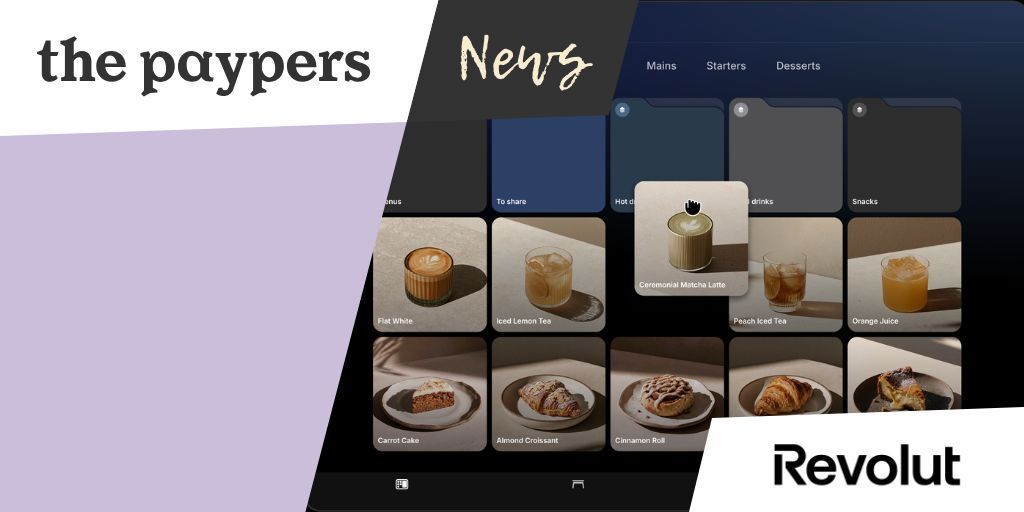
Revolut wants your face to replace your card. And it's paying merchants to make it happen.
Revolut just launched Register, a point-of-sale system for Revolut Business, starting in the UK. The headline feature is Revolut Pay with Smile:
• Customers opt in via the app, then just look at the terminal to pay
• Their face is matched against the selfie ID check from when they opened their Revolut account
• Money moves account-to-account, straight from the customer's Revolut account
• Merchants pay 0% processing fees on Smile payments
Compare that with cards on the same device: 0.8% + £0.02 for UK cards, 2.6% + £0.02 for international ones.
The hardware: a POS screen plus a detachable tablet, a built-in eSIM backup for when the connection drops, and full POS software at no extra charge. £699 + VAT, or £349.50 + VAT for your first one until Dec 31.
Why it matters:
Revolut says independent UK venues spend an average of £875 a month on processing and infrastructure. Zero fees give merchants a direct reason to steer customers to Revolut over cards. And since Smile payments come straight from Revolut accounts, Revolut says they push authorisation rates to 98.5%.
The catch: it only works if your customers already bank with Revolut. And in the EU, biometric data is a special category under GDPR that needs explicit consent.
This is the fintech playbook in one device: own the identity, own the rails, then give away the checkout.
Would you pay for your coffee with your face?
#fintech
Your crypto wallet is about to work like a Visa card. No card needed.
Mesh just announced a partnership with Visa to make crypto and stablecoin balances spendable anywhere Visa is accepted: upwards of 175 million merchant locations across 200+ countries and territories.
How it works:
• A Visa credential is provisioned behind the scenes inside participating wallet apps
• You tap a standard contactless terminal or check out online
• No selling, transferring, or preloading funds first
• Mesh handles funding and conversion across crypto, stablecoins, and fiat
• The merchant gets a standard payment. No new hardware, no checkout changes
Why it matters:
Global crypto owners reached 774 million as of June 2026 (https://t.co/t4C7CHB3lj research), yet crypto card volumes were only about $1.5B a month by late 2025 (American Banker). Today you either cash out to a bank and wait, or sign up for a card tied to one platform.
As Mesh CEO Bam Azizi put it: "Crypto never had a spending problem. It has a last-mile problem."
The builder angle is the big one: platforms that hold user balances can enable Visa spending through a single Mesh integration, without building or running a card program. Mesh acts as the program manager and handles onboarding and KYC.
That's the playbook winning everywhere in fintech right now: wrap the hardest regulated layer into one API.
Rollout details (devices, platforms, availability) haven't been announced yet.
Would you pay for your coffee straight from a stablecoin balance?
#fintech #stablecoins
Your AI agent can now pay your vendors. It just can't press the final button.
Mercury upgraded its MCP server (the connector that lets AI tools talk to your bank account) from read-only to actions. From ChatGPT, Claude, or any MCP client you can now:
• Request a payment to an existing recipient
• Request a transfer between your own Mercury accounts
• Create or edit custom expense categories
• Update a transaction's note or category
The design choices are the interesting part:
1. Money never moves from chat. The agent creates a request, and you approve it inside Mercury on web or mobile. Confirming in the chat is not approval.
2. Approval requests expire after about 5 minutes.
3. Agents can't add new recipients. To pay someone new, you add them in Mercury first.
4. Every write action has its own OAuth scope, like transactions:request or transfers:request. Existing read-only connections have to reconnect to get them.
5. Your organization's approval policies still apply. Only category and note edits skip approval and apply immediately.
My takeaway as a builder: this is the template for agentic fintech. Let the agent do the prep work, keep the irreversible step behind a human, and scope permissions per action instead of all-or-nothing.
If you're shipping AI features in a finance app, "AI drafts, humans approve" is the safest way to start.
Would you let an AI agent queue payments from your business account?
#fintech #AI
The most valuable setting in AI dev tools isn't the model. It's the default.
Replit just proved it.
At TechCrunch Disrupt, CEO Amjad Masad said Replit is "no longer working with Anthropic." He later clarified: Replit stays model agnostic, Claude is still selectable, but OpenAI is now the default powering Replit Agent.
Why the switch, per Masad:
• Cost
• Partnership (Replit announced an OpenAI deal in August)
• Performance: "I think ChatGPT is better now." Replit's benchmarks show OpenAI's Sol and Astra consistently performing better at building vibe-coded apps from scratch.
Why it matters:
Most customers stick with the default instead of picking a model themselves. So flipping the default could significantly cut Replit's spend with Anthropic, a company where Replit was, until recently, a top-five customer.
Other notes from the talk:
• Enterprise went from ~2% of revenue last year to ~15% this year
• More than 50% of revenue is now B2B
• Masad expects enterprise + government to be over half of revenue in 2027
My takeaway as a builder: if your product depends on one model provider, your margins and quality depend on their pricing and roadmap. Swappable models with a smart default are the real moat.
Do you stick with your tool's default model, or do you always pick one yourself?
Apple just made "one iPhone screen size" a thing of the past.
iPhone Duo, Apple's first foldable, opened for pre-orders on Oct 16. Here's what matters if you ship iOS apps:
• Closed: a 5.4" outer display (about 90% of the iPhone 18 Pro's screen area)
• Open: an inner display 50% larger than the iPhone 18 Pro Max
• Split View multitasking now runs on an iPhone
• iOS 27 reacts as the device folds, reorients when it's turned sideways, and switches displays when it's flipped
That means your app can be resized, split, and moved between two very different screens in a single session.
What I'd check this week:
1. Kill fixed-width assumptions. Size classes and adaptive layouts are no longer an "iPad thing."
2. Preserve state when the device folds or unfolds. Losing a half-filled form or a checkout flow mid-fold is a 1-star review waiting to happen.
3. Rethink the big canvas. Charts, dashboards, and list + detail views suddenly have room to breathe, which is huge for finance and productivity apps.
4. Update your App Store screenshots once foldable sizes show up in App Store Connect. Early adopters scroll the store looking for apps that feel made for their new device.
New form factors reward the developers who adapt first.
Are you updating your app for iPhone Duo, or waiting to see how it sells?
Ever set a new wallpaper, only to find the clock covering the best part? Wallery lets you preview it on your lock screen before you download, then tweak brightness, contrast or blur in the built-in photo editor.
Free on iPhone: https://t.co/EvTJlD37CI #wallpaper
Crypto in one app, stocks in another, a spreadsheet for the total? FinTrack puts Bitcoin, Ethereum and stocks like Apple or NVIDIA in one portfolio with live prices and an allocation ring that shows your real split.
Free on iOS: https://t.co/yL5MKaiIWU #investing
Apple just rewrote the EU App Store rulebook. Here's what indie devs should know.
1. The per-install Core Technology Fee is gone. No more "what if my free app goes viral" nightmares.
2. Commission now depends on the channel: 15% on in-app purchases for most small developers (26% standard rate), 10% with alternative payments for reduced-rate devs, 5% for distribution outside the App Store.
3. Simpler to model, but not automatically cheaper. Your payment mix decides everything.
My take: if your revenue is subscription-heavy, run the numbers per channel before moving anything. Fewer surprises beat a lower headline rate.
Which channel are you planning to use in the EU?
#indiedev #iOSdev