I’m a writer, digital artist, and relentlessly creative mind. I write books, draw, paint, sculpt, edit and manipulate images, work with photography, create with AI, make dream catchers, and experiment with just about any creative medium that catches my attention. Creativity is one of the primary ways I communicate with the world.
I also live with PTSD. I mention that as context, not as a request for pity, sympathy, special treatment, or anyone walking on eggshells around me. I’m responsible for myself. What I ask from other people is basic respect and honesty.
I can be extremely expressive when I feel comfortable enough to be myself. If I feel repeatedly judged, rejected, pushed away, or made to feel unwanted, I tend to withdraw. I’m not going to force myself into anyone’s life, conversation, or space.
Politically and socially, I’m extremely liberal, but I don’t believe disagreement should automatically require isolation into “safe spaces.” You’re allowed to disagree with me. I’m allowed to disagree with you. Conversation doesn’t require conformity.
What I will not tolerate is abuse, harassment, manipulation, scammers, impersonators, fake accounts, or people deliberately exploiting others. I will call that shit out when I see it, and I’m not going to quietly stand there while someone abuses me or somebody else.
Don’t follow me because you feel sorry for me. Don’t engage with me out of pity or obligation. If you follow me, follow because something I write, create, say, or think genuinely interests you.
That’s really all I ask.
I create. I think. I speak. Sometimes I’m funny. Sometimes I’m serious. Sometimes I’m angry. Sometimes I’m probably completely fucking ridiculous.
But whatever you get from me, I’d rather it be genuine than manufactured for approval.
https://t.co/GO9jC8EOrA
https://t.co/RO1mCwDicE
https://t.co/5aFbooGGgu
https://t.co/uFVTYQSRpe
I would seriously caution against giving Trump any ideas by posting things like this. The last thing we need is to put the possibility of a presidential self-pardon into his head, especially when the constitutional question has never been definitively settled by the Supreme Court.
Sometimes the smartest move is not to advertise every potential loophole to the very person you're worried might exploit it.
Sometimes you don't realize just how badly the system has been compromised until the damage is already done. And by the time the truth comes out, the consequences may be irreversible.
But there's an important distinction between a ruling based on flawed or disputed evidence and proof that a justice deliberately conspired to deceive the public. The first deserves serious scrutiny; the second requires evidence of intent.
Accountability means following the evidence, even when it leads to people entrusted with the highest offices in the country.
Your wish might very well break you, because I don't think you've considered just how much you're leaving open to interpretation.
You want everyone to know Jesus Christ as their Lord and Savior. Fine. But whose interpretation of Jesus Christ? Which Bible? Which translation? Which denomination? Which teachings?
What if the interpretation of Jesus comes from the Quran, where he is revered as a prophet rather than worshipped as God? Are you prepared to accept that interpretation? Probably not. But you didn't specify, did you?
You say we're all branches of the same tree, but those branches have spent centuries arguing over which ones belong on the tree in the first place.
And what if my interpretation of Jesus differs from yours? What if mine emphasizes compassion, humility, forgiveness, and the freedom to believe or not believe? A Jesus who wouldn't force anyone to worship him, much less use the government to make that decision for them.
Would you accept my interpretation as readily as you expect others to accept yours?
And while we're discussing interpretations, are you actually living according to the standards of the Christ you claim to follow? Are you feeding the hungry, clothing the poor, sheltering the homeless, welcoming the stranger, and loving your neighbor, including those who don't share your faith?
Because there's a significant difference between wanting everyone to experience love and compassion and wanting everyone to surrender to your particular religious beliefs.
One is an invitation. The other can become coercion.
And remember my earlier argument about a Christian nation. What happens if the religious authorities suddenly embrace the harshest aspects of Puritanism? What happens when your clothing, your appearance, your religious practices, or your personal interpretation of scripture become grounds for accusations of heresy or witchcraft?
History has already shown us what can happen when religious authorities are given the power to punish people for supposedly believing the wrong things. People have been imprisoned, tortured, exiled, and executed under such systems.
You could find yourself labeled a heretic or a witch simply because someone decides your understanding of Christianity doesn't meet their standards. So could I. So could your family.
Would you still celebrate a Christian nation if you discovered that its officially sanctioned Christianity wasn't yours?
Be very careful what you wish for, because you might find yourself living under somebody else's interpretation of your own religion, with no freedom to disagree.
And perhaps most importantly, ask yourself whether you genuinely want people to know the love of Christ or whether you want them to believe exactly what you believe.
Because those are two very different things.
You may have no idea how much intolerance, cruelty, and hatred can hide inside a wish that sounds, on the surface, like love.
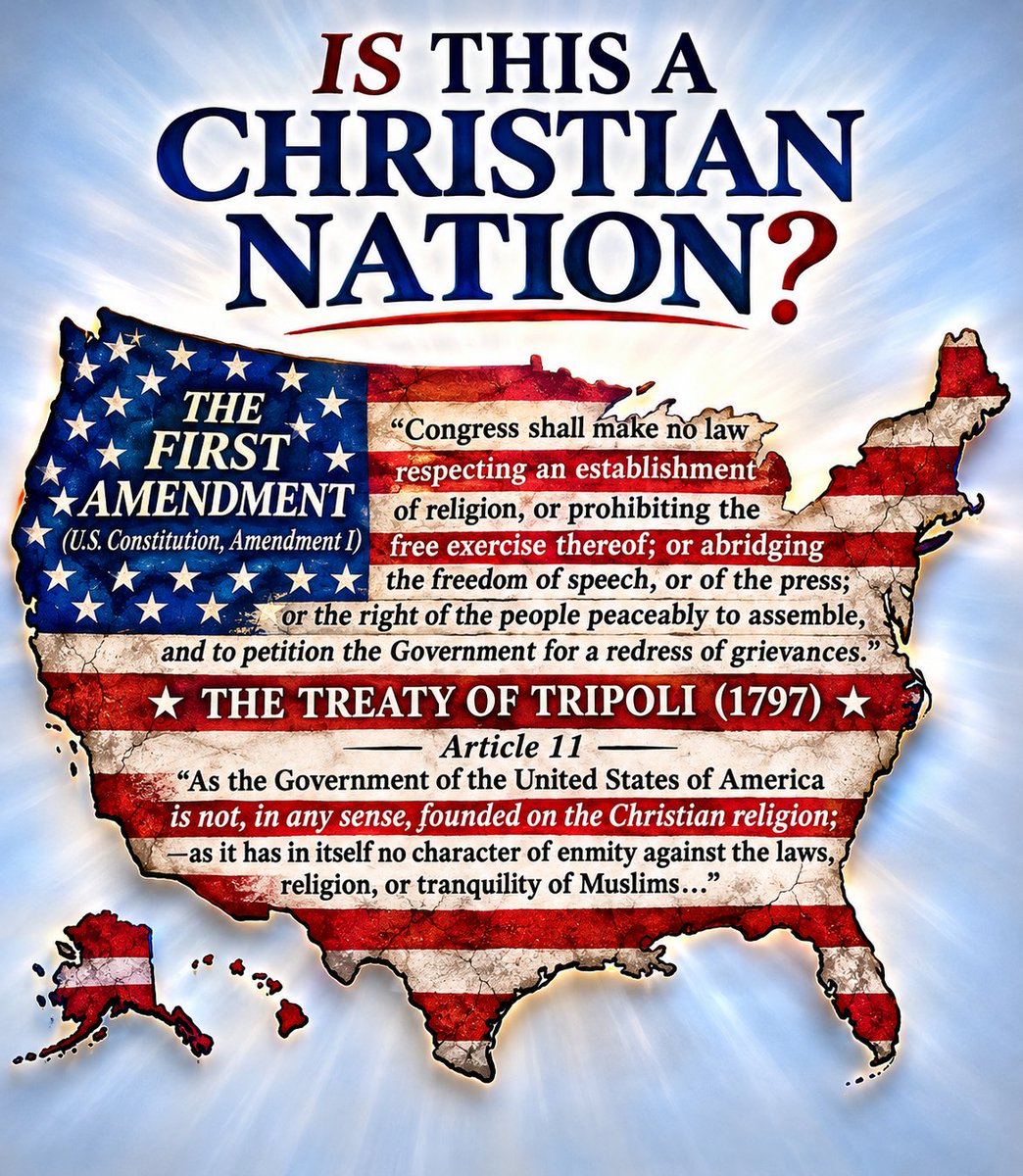
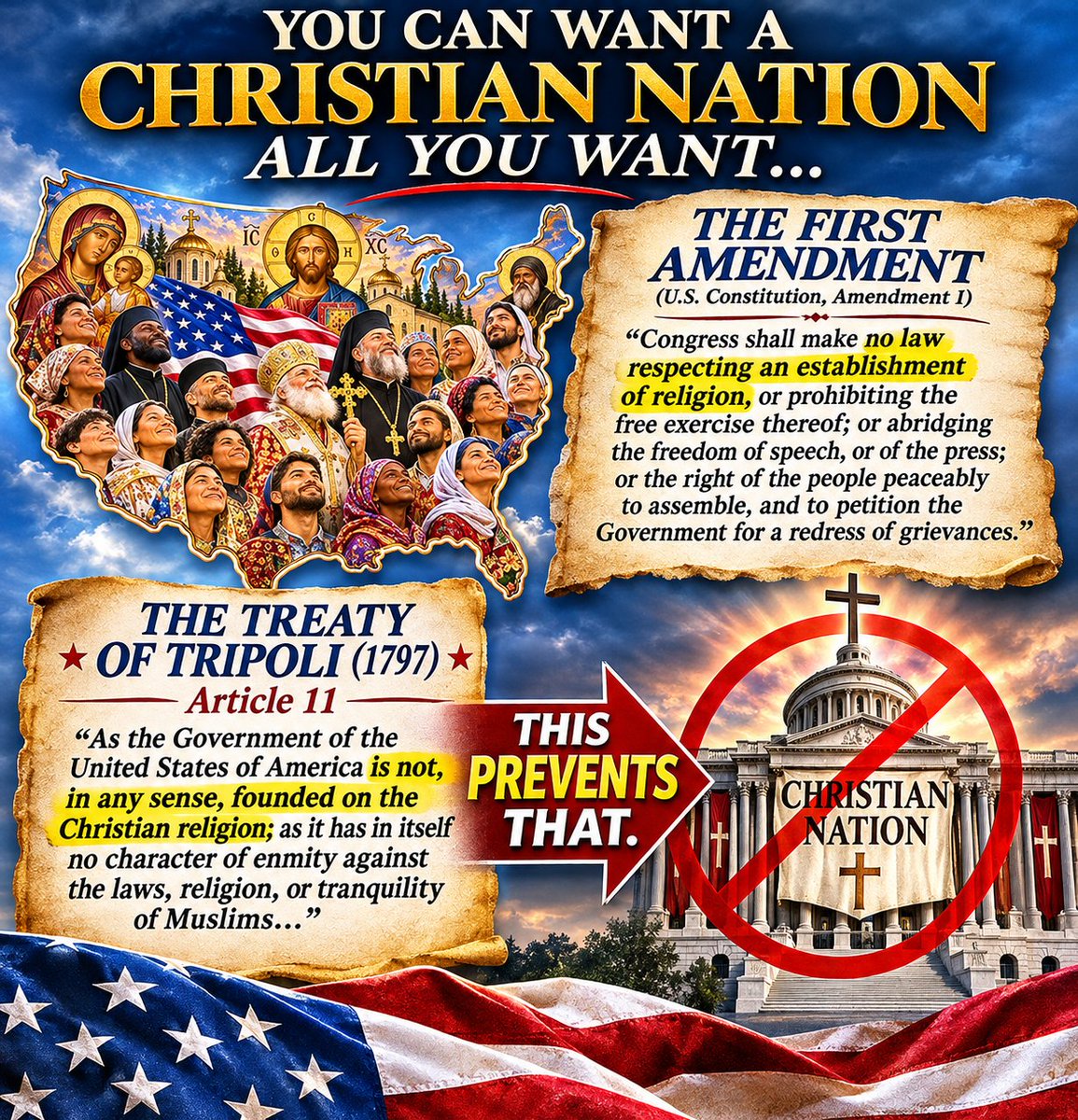
You can want a Christian nation all you want, but I seriously doubt you've thought through what that would actually mean for you or your family.
Here's the problem: Whose version of Christianity gets to make the rules?
Catholic? Protestant? Orthodox? Baptist? Pentecostal? Evangelical? Jehovah's Witness? And which interpretation of scripture becomes the official law of the land?
Because Christianity has never been a single unified belief system. Christians have spent centuries arguing, condemning, excommunicating, persecuting, and occasionally killing one another over differences in doctrine.
Now imagine handing one religious faction the power to enforce its particular interpretation of Christianity through the government.
Suddenly, your personal interpretation of scripture might become heresy. Your family's religious practices might become illegal. Something as insignificant as a tattoo, wearing the wrong clothing, refusing to cover your head, or observing the wrong Sabbath could become grounds for punishment if those in power decided their interpretation demanded it.
And don't assume being a Christian would protect you.
History is littered with Christians persecuting other Christians for supposedly believing in the wrong version of the same religion. Accusations of witchcraft, heresy, and blasphemy have historically resulted in imprisonment, torture, and execution.
Imagine someone pointing a finger at you and declaring you a witch or a heretic. Under the wrong kind of religious government, that accusation could become a matter of life and death. Your neighbors, your children, even your spouse could find themselves answering to religious authorities over beliefs they never agreed to.
And who's to say the officially approved interpretation wouldn't change with the next religious leader or political administration? What's perfectly acceptable today could become forbidden tomorrow.
The Christian nation you're dreaming about might turn against you in a heartbeat, simply because somebody with more authority decides you're not Christian enough.
That's precisely why religious liberty and the separation of church and state matter. The First Amendment protects your right to practice Christianity, but it also protects everyone else's right not to practice your particular version of it.
And the 1797 Treaty of Tripoli explicitly stated that the United States government was not founded on the Christian religion.
You don't need a Christian government to be a Christian. You need religious freedom.
Because the moment you give the government the power to enforce your religion, you're also giving it the power to enforce somebody else's religion against you.
Be very careful about wishing for a religious government. You might discover you're the heretic in somebody else's holy kingdom.
BREAKING NEWS: DOOMSDAY PROPHETS ONCE AGAIN ANNOUNCE THE END OF THE WORLD. HEAVEN REMAINS UNCONCERNED.
Social media is once again flooded with self-appointed prophets warning that millions of believers could disappear at any moment, citing biblical passages and insisting the Rapture is imminent.
Meanwhile, somewhere in Heaven, Jesus Christ is reportedly relaxing in a hammock between two celestial palm trees, sipping a freshly prepared margarita while enjoying an eternity of peace and quiet.
When asked about the latest predictions, Jesus allegedly glanced at his phone, sighed, took another sip, and muttered, "Didn't I specifically tell them that nobody knows the day or the hour?"
He then switched his phone to Do Not Disturb, adjusted his sunglasses, and returned to his afternoon nap.
At press time, the doomsayers were still arguing over the exact date of an event they've been incorrectly predicting for centuries.
More at eleven, assuming the world hasn't ended by then.
I suspect both the historical Jesus and the biblical Jesus would push your post aside, sit you down, and deliver a metaphysical parable about arrogance, self-righteousness, and the dangers of using his name to advance your own agenda.
The historical existence of Jesus and the theological claims surrounding him are two entirely different questions. Evidence that a man named Jesus existed does not automatically establish his divinity, resurrection, miracles, or any other supernatural claims made about him.
And I imagine Jesus himself would have a few choice words for people who spend more time posturing about him, declaring who needs to repent, and wielding his name like a weapon than actually practicing the compassion, humility, and mercy attributed to him.
Perhaps the real lesson isn't about proving Jesus existed. Perhaps it's about how easily people turn a man who preached humility into an excuse for their own intellectual and moral superiority.
Funny how some people are so determined to prove Jesus existed that they forget to demonstrate they understand what he actually taught.
You seem awfully concerned about the fictional violence in a video game, but where is that same outrage when real human beings are being mistreated, threatened, and dehumanized by people who proudly call themselves Christians?
I see it every day on social media. People cheering as ICE agents arrest immigrants, mocking the poor, condemning the homeless, rejecting strangers, and treating anyone who doesn't share their religious beliefs as somehow less deserving of compassion. And some of the most hateful, vicious rhetoric comes from mouths that supposedly preach the love of Jesus Christ.
Whatever happened to loving thy neighbor? Whatever happened to welcoming the stranger, feeding the hungry, clothing the naked, sheltering those in need, and showing mercy to the least among us?
Matthew 25:40 makes it rather clear: "Whatever you did for one of the least of these brothers and sisters of mine, you did for me."
And let's not forget Matthew 25:45, where Jesus turns that teaching around and condemns those who refused to help.
Yet somehow, a fictional criminal stealing a fictional automobile is apparently a greater spiritual threat than actual people celebrating the suffering of their fellow human beings.
You quote Psalm 11:5 about God hating those who love violence. Fine. Then perhaps that scripture deserves to be directed toward Christians who celebrate cruelty, threaten their neighbors, fantasize about punishment, and use their religion to justify hatred.
At least Grand Theft Auto acknowledges that it's a fictional world filled with criminals, violence, and questionable morality. It doesn't pretend those actions are acts of Christian charity.
I'm not suggesting every Christian behaves this way. Plenty genuinely practice the compassion their religion teaches. But those who publicly preach righteousness while spewing hatred and celebrating human suffering ought to examine their own behavior before lecturing everyone else about the dangers of a video game.
Because if the teachings of Jesus mean anything, how you treat actual human beings matters considerably more than what someone does with a controller in their hands.
And if your greatest concern about the moral decay of society is a video game while you ignore the cruelty being committed against living, breathing people, perhaps the spiritual darkness you're so worried about isn't coming from a television screen.
Perhaps it's coming from the people holding the Bible while refusing to practice what's written inside it.
Are you aware that many of the freedoms we enjoy in Western society are things the Old Testament explicitly condemns or restricts? Let's go through a few, shall we?
Freedom of religion? Deuteronomy 13:6–10 commands the execution of those who entice others to worship different gods.
Freedom to work when you choose? Exodus 31:14–15 prescribes death for working on the Sabbath.
Freedom to criticize your parents? Leviticus 20:9 calls for death for cursing one's father or mother.
Freedom to marry someone of the same sex? Leviticus 20:13 prescribes death for sexual relations between men.
Freedom to leave your religion? Deuteronomy 17:2–5 orders execution for worshipping other gods.
And let's not forget Leviticus 25:44–46, which explicitly permits owning foreigners as slaves.
So perhaps we should be a little more careful about claiming our modern freedoms came from the Bible. Many of those freedoms exist precisely because we've rejected laws and punishments found within it.
I wonder if she's secretly a dual citizen that shit would be a spectacular case of political irony. Imagine introducing a constitutional amendment that would disqualify you from your own job.
I haven't seen evidence that Anna Paulina Luna holds dual citizenship, though, so that's purely hypothetical.
But the headline practically begs for the joke:
"Plot twist: Congresswoman introduces constitutional amendment, accidentally fires herself."
Or perhaps you're the one falling through the sieve. I wouldn't be so pompous as to presume I'd be among those remaining. I'd constantly question my own faith. Am I doing this right? Am I giving God the honor he deserves? Am I actually living the message Christ taught? Faith should come with humility and self-reflection, not the arrogant assumption that you're guaranteed a place in heaven while everyone else falls away.
Jehovah's Witnesses generally don't vote, serve in the military, or pledge allegiance because of their interpretation of certain biblical passages, particularly John 18:36, where Jesus says, "My kingdom is not of this world." I can respect their beliefs, even if I disagree with that interpretation. But Jesus never explicitly prohibited civic participation or voting. In fact, in Matthew 22:21, he said, "Render therefore unto Caesar the things which are Caesar's; and unto God the things that are God's." There's a difference between following your faith and assuming that participating in society somehow violates it.
Christianity is losing because of Christianity itself. Everybody's more than happy to proclaim Jesus Christ as Lord and shout "Lord, Lord," but what are they actually doing to demonstrate his teachings? Too often, all we see is hatred, judgment, intolerance, and division instead of love, compassion, and kindness. Jesus warned about this very thing in Matthew 7:21. Perhaps Christianity wouldn't be losing so many people if more Christians actually lived by the teachings they claim to believe in.
No offense intended, but I think you may be overlooking some of Christ's own teachings. Jesus said in Matthew 7:21 that not everyone who says, "Lord, Lord," will enter the kingdom of heaven, but those who do the will of his Father. Believing in Christ is one thing, but actually following his teachings is another. I would kindly encourage you to focus less on simply professing your faith and more on living it through kindness, compassion, and love for your fellow human beings. After all, actions speak louder than words.
Elon Musk says he believes in Jesus Christ. Fine, but what exactly does he do to demonstrate it? I don't see him volunteering at soup kitchens, working in homeless shelters, clothing the poor, or showing much love for his neighbors unless there's something in it for him. Jesus said, "Not every one that saith unto me, Lord, Lord, shall enter into the kingdom of heaven" (Matthew 7:21). And James 2:17 says faith without works is dead. Simply claiming to believe in Jesus doesn't mean you're following his teachings. Words are easy. Actions are what count.