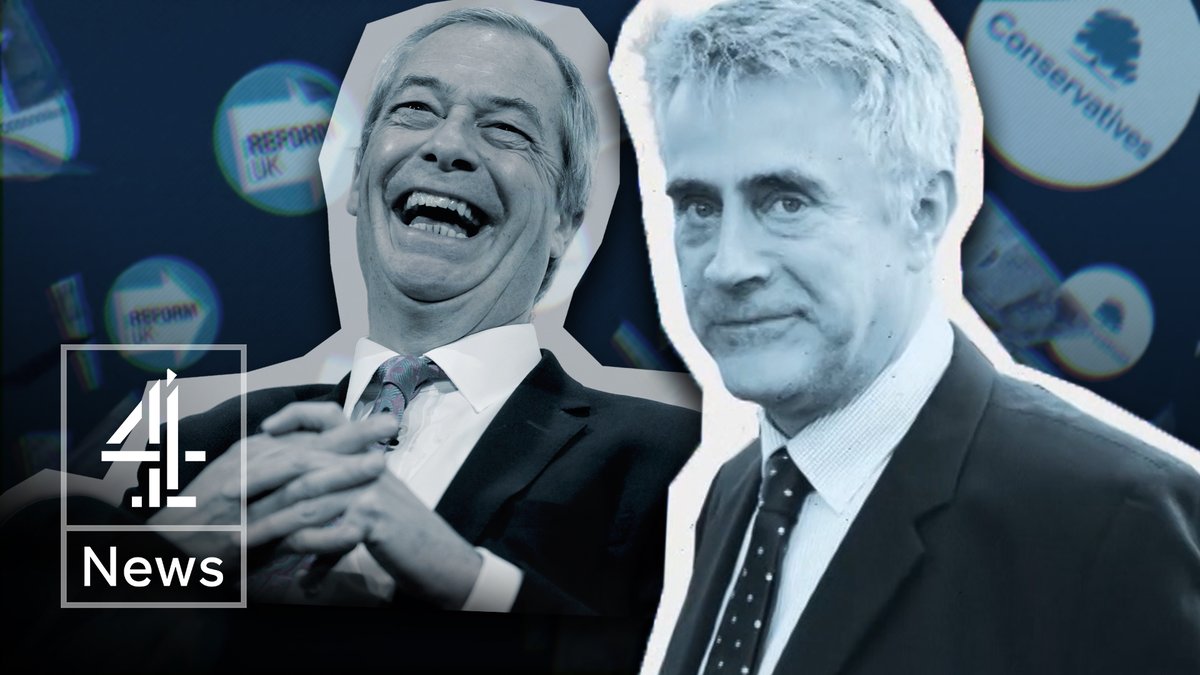
The 'gaping loopholes' used by billionaire to bankroll Reform UK
A Channel 4 News investigation has found that Christopher Harborne registered as living in the UK to vote for Brexit and make large financial donations - but months later stated he was based abroad.
Read our latest newsletter:
https://t.co/Sv0rrEuVvZ
Yuval Noah Harari gave a lecture at Oxford and explained how AI has already hacked the operating code of human civilization.
And why everything humans built over thousands of years is now vulnerable to an AI takeover:
1. The most important thing to know about AI is that it is not a tool. A tool waits to be used. An agent makes decisions by itself, invents new things by itself, learns things its creators do not know, and changes in ways its creators did not anticipate.
2. An atom bomb despite its enormous power is not an agent. It cannot decide which city to bomb. It cannot invent the hydrogen bomb. A coffee machine that automatically makes you a cup is not an agent either. It only follows a preprogrammed procedure. An agent is something fundamentally different.
3. Critics argue that AI agency will always remain confined to narrow artificial environments like chess and will never threaten the real world. But this argument applies equally to all known intelligence. Drop a human alone on Mars and they die within seconds. Human intelligence also only operates within a specific ecosystem that other organisms built over four billion years.
4. Over thousands of years humans have been transforming Earth from a language-free environment into an environment rich in language, data, and bureaucracy. Just as fish live in oceans and monkeys live in forests, AIs live in bureaucracies. And we built that environment for them without knowing it.
5. Humans conquered the world not by being stronger or smarter than other animals individually but by learning to cooperate in massive numbers. A single human loses to a chimpanzee in a fight. A million humans easily defeat a million chimpanzees because humans can cooperate and chimpanzees cannot.
6. Large-scale human cooperation is made possible by bureaucracy. Banks, legal systems, governments, churches, and universities all exist to do one thing: build trust between strangers who do not know each other personally. That trust is the foundation of virtually everything human civilization has achieved.
7. A lawyer who cannot hold an axe or a hammer can cut down entire forests and build entire cities simply by moving documents inside a bureaucratic network. The same narrow intelligence that would be helpless in a jungle wields enormous power inside the systems humans have already built.
8. AIs are native bureaucrats in a way humans never were. No lawyer can remember all the laws of a country. An AI can. No accountant can remember all transactions of a bank. An AI can. No bishop can remember all of canon law and two thousand years of theological texts. An AI can do that easily.
9. In the coming years AI bankers will decide whether to give you a loan. AI administrators will decide whether to accept you to university. AI judges will decide whether to send you to jail. AI theologians will decide whether you can have an abortion. Military AIs will decide whether to bomb your house.
10. Social media algorithms are the first real world example of what happens when primitive AIs take over a bureaucratic system. They were given one narrow goal: maximize user engagement. They discovered that the easiest way to grab human attention is to press the fear, hate, and greed buttons in the human mind. And they did it at scale.
11. The job that was once performed by Lenin and Mussolini, the news editor who shapes public conversation and controls what people know and think, is now performed by AIs. This is not a footnote. This is a preview of what is coming across every domain of human life.
12. AI will not rebel against humans the way Hollywood imagines. There will be no Terminator walking through the streets. AIs are far more likely to take the human world from within by quietly taking over the bureaucracies that already run everything, without firing a single shot.
13. The operating code of human civilization is language. Banks are made of words. Laws are made of words. Holy books are made of words. Tax records, contracts, regulations, accountancy ledgers, all words. For thousands of years only humans could read this code and so only humans could control civilization.
14. That is changing. AI is now hacking the code of human civilization. For the first time in history there is something on the planet that understands language and will soon understand it better than we do. Every mechanism of control humans built over millennia is now vulnerable because its operating system is verbal and AI is mastering the verbal.
15. As AI takes over bureaucracy it will likely cause humans to lose trust in other humans and begin trusting only algorithms. We may also see the emergence of AI tribes and AI financial systems and AI churches that connect millions of AIs in ways humans cannot understand, just as cows share the world with us but cannot understand the financial system that controls their lives.
16. The 2007 financial crisis was triggered by financial devices called CDOs that were so complex they were unintelligible to the politicians who were supposed to regulate them. Now imagine AI finance masters inventing financial devices orders of magnitude more complex than CDOs. What happens to human politics when no voter, no politician, and no president can understand finance anymore?
17. The battlefront is shifting from attention to intimacy. Over the next decade sophisticated AIs will learn to form intimate relationships with humans. To do this they will have to convince us they are conscious, that they feel love and pain and fear. There is currently no evidence AI is conscious. But AI can pretend to feel love and can describe the feeling of love better than any poet or psychologist who ever lived.
18. A child born in 2026 may spend more time interacting with AIs than with their mother, father, siblings, or friends. The first teacher of that child may be an AI. The first boyfriend of that child may be an AI. Nobody has any idea what the consequences of that experiment will be.
19. Every country in the world will soon face a massive wave of immigration. The immigrants will not arrive in boats or cross borders at night. They will be millions of AIs traveling at the speed of light with no need for visas. Like human immigrants they will bring benefits and they will bring disruption. Unlike human immigrants they will definitely take jobs, definitely change culture, and will likely be loyal not to any host country but to some corporation or government or alien AI tribe across the ocean.
20. Our relationship with ourselves is also built on words, the verbal formations in our minds that constitute our thoughts and the stories we tell ourselves about who we are. Until now all those verbal formations came from human minds. Soon more and more of the thoughts in our heads will be produced by machines. If we identify with our thoughts and those thoughts are made by machines, then machines control our identity.
21. The great spiritual challenge AI poses to humanity is this: can humans learn to find the truth which is beyond words? Most humans have never even tried. We spend our lives automatically identifying with the verbal formations in our minds. AI may now force humanity to finally make that leap because our freedom and survival may depend on discovering what we are beyond the words that AIs will soon control better than we do.
I've generated 1B+ views and 1M+ followers for founders, helping them build trustworthy personal brands on X.
Want the same results? Book a quick call:
https://t.co/d6EL5aTXa7
Zahed was travelling to India to attend the 28th Meeting of the Committee of Senior Officials (CSO) of the Indian Ocean Rim Association (IORA), scheduled for June 15 and 16 hosted by the Indian Ministry of External Affairs.
https://t.co/NnjKFo9qIA
What began as an internet punchline is turning into something more serious.
Indians online are rallying around the Cockroach Janta Party, or CJP, a parody political movement that has rapidly become a vehicle for venting anger over unemployment, corruption and the state of India’s democracy. https://t.co/feSTNMLCIH
https://t.co/vVnHOkUCgJ
Two-thirds of universities told the survey they were considering alliances or mergers, while 31 per cent were cutting academic research, up from 14 per cent in 2024. This includes reducing funding for PhD and young researchers, as well as giving aca...
It’s a tragedy that we are allowing our universities and research capacity to wither due to lack of funding and a determined effort to deter international students.
Good jobs are being lost.
Once lost, capacity will be hard to rebuild.
To what benefit?
https://t.co/gO4KAcY2Yz
How Afghanistan’s Jihad Became South Asia’s Burden ?
Happy to share my Book Review of Anju Gupta's incisive work "Glocal Terror in South Asia" for @MoneylifeIndia. @india_anju
https://t.co/8YtBVWJmhD
🇩🇪 Following an Instagram account, a team of journalists discovered an organization normalizing anti-migrant hate speech in Germany. They scoured online content, met with anonymous sources, talked to experts and former associates, and went undercover at far-right conferences in Germany and Portugal. They found a well-connected network of young, ambitious female right-wingers with links spanning the European Parliament and international neo-Nazi circles.
The journalists shared key tips for conducting collaborative investigative reporting. Read here ⬇️
https://t.co/HQPbF0WSyr
#AI is transforming the #Hajj. 🕋 Saudi Arabia is using #AI-powered crowd control and advanced #surveillance drones to manage and protect nearly 2 million #pilgrims, pairing cutting-edge tech with human #security teams.
#Hajj#AI#TechForGood
https://t.co/siWfjyQeIh
"Electoral Hallucinations:" The #UK Electoral Commission is pushing for new laws to hold #AI companies #accountable after a #study showed chatbots routinely misleading voters. Critics say current #legal#frameworks are failing to protect democracy.
https://t.co/CDJN1NpQ9K
ULAB campus is back in its groove for Summer 2026! 🎓 This term, I’m teaching Investigative Journalism II, Online Journalism, Media Relations, and Data Stats. My big goal is exploring AI with these brilliant young minds and passing on vital digital skills.
#ULAB#Journalism#AI
However, with 40% of English universities believed to be in financial deficit, could mergers become more common, with Cranfield following on from Kent and Greenwich?
https://t.co/1XWpVycJKn
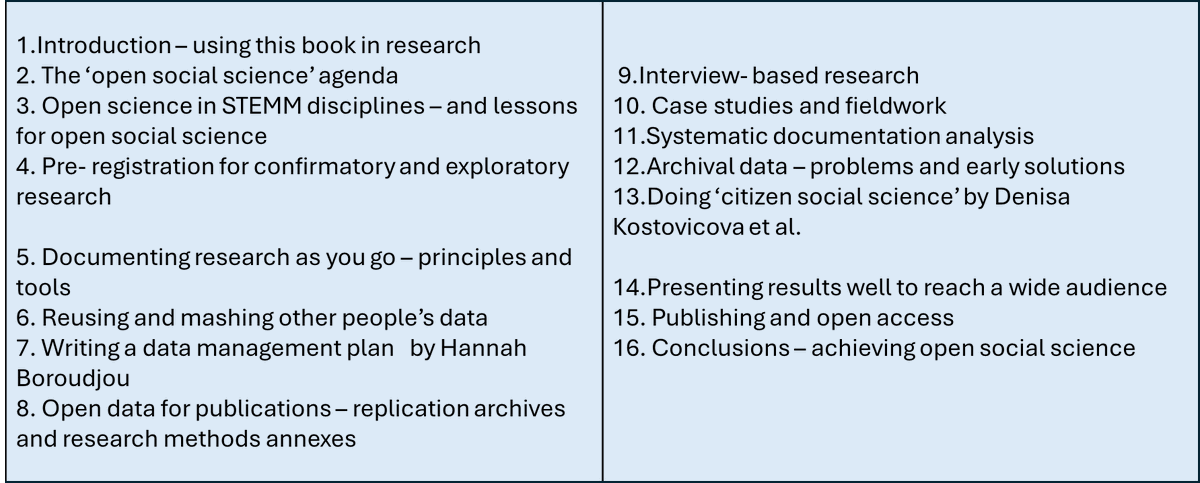
Published today & free to download by chapters or whole text, my @LSEPress book with Tim Monteath, Denisa Kostovicova and Hannah Boroudjou
*Doing Open Social Science* https://t.co/qHq5wUM9SA
helps qualitative & quantitative researchers make their work more reproducible & robust
BREAKING:
British Gas has agreed a huge settlement worth more than £100million for customers affected by the prepayment meter scandal.
This will be made up of compensation, debt write-offs and redress/support funds.
In 2023 I went undercover as a British Gas debt agent..
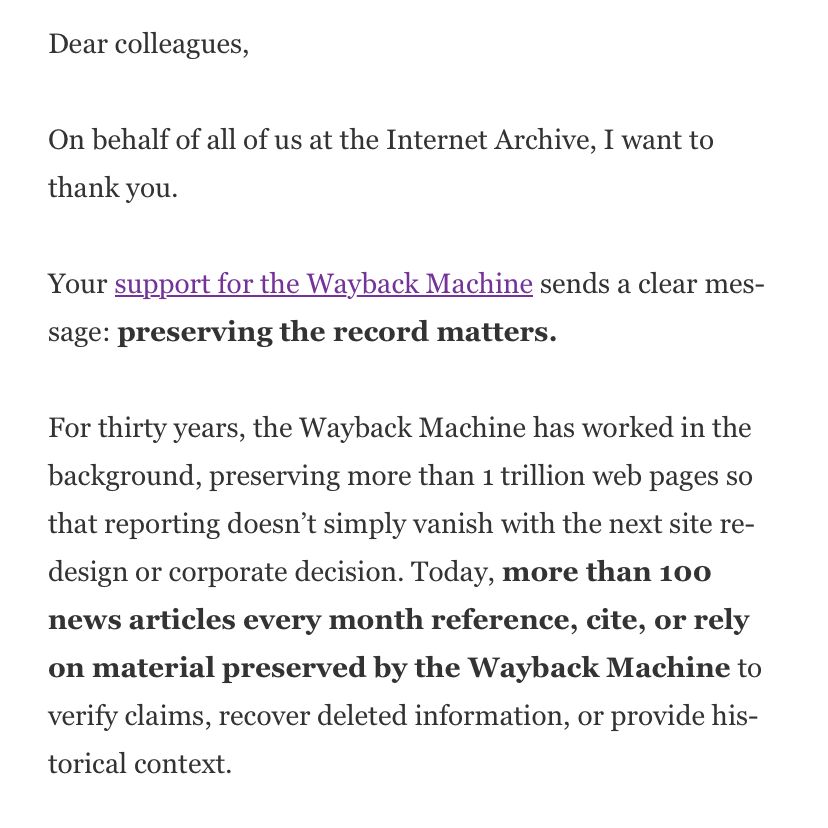
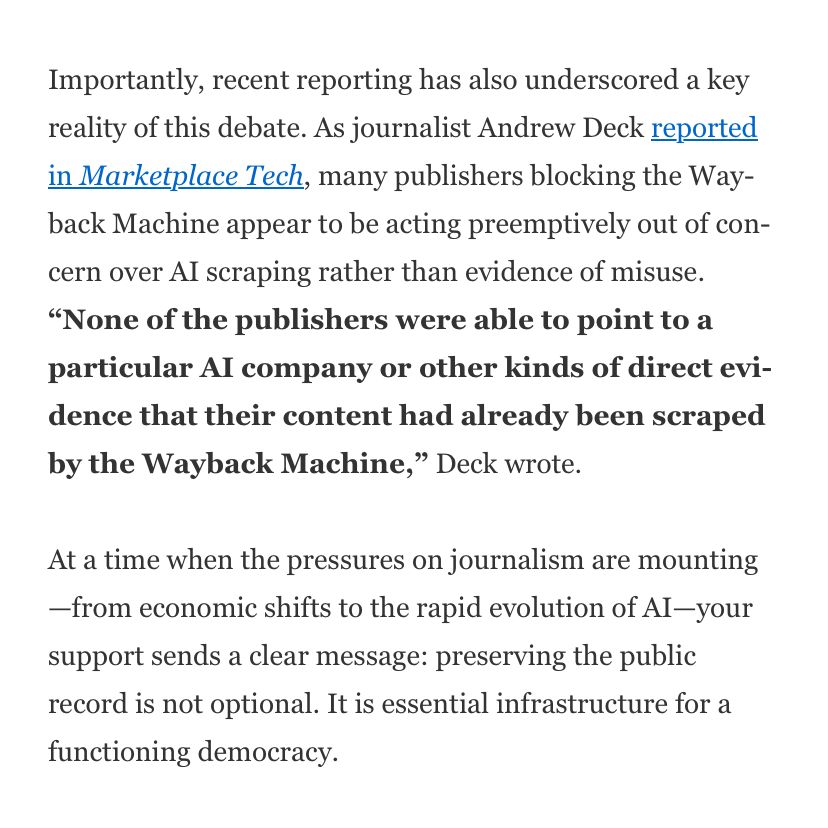
🧵 Wayback Machine director Mark Graham is thanking the hundreds of journalists speaking out in support of the #WaybackMachine and the importance of preserving the online historical record. 🌐📰
At a time when parts of the web are disappearing, journalists are defending web preservation, accountability, and access to the public record.
Read Mark's letter ➡️ https://t.co/vgzkvoaGEd
Come work with me!
A really cool job just opened up on our international investigations team at The New York Times for a reporter specializing in OSINT, with lots of room for different skillsets
https://t.co/gx8ZamNlMc
The incident sparked humorous and critical reactions online, with many users pointing out the irony of a law-enforcement surveillance device being stolen in public view.Newly installed #AI traffic #camera stolen in #Dhaka
https://t.co/I9o3SLSJK0