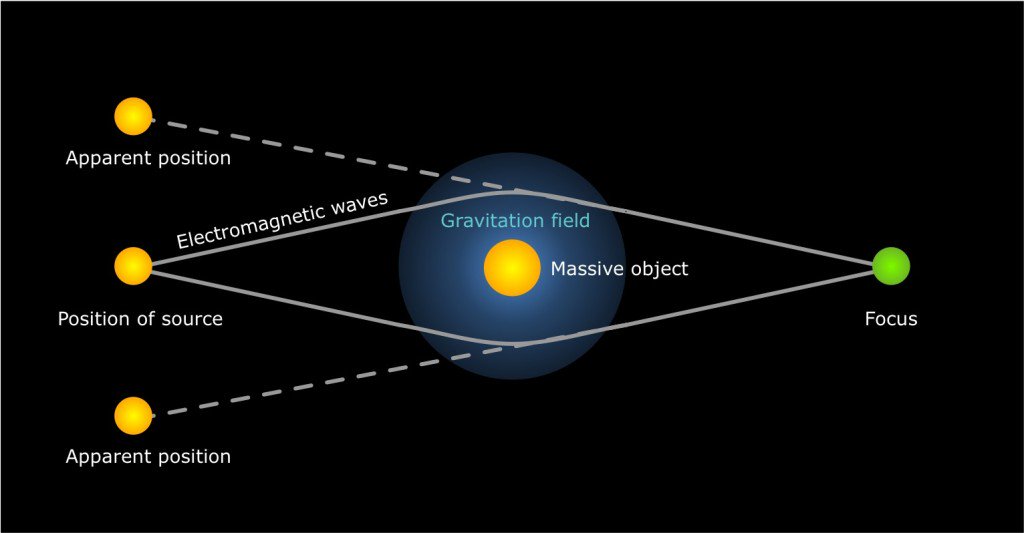
If space really was distorted by gravity, then light passing through it would not travel in a straight line, instead they would follow a curved path and if the force of gravity is stronger, the light bends more. The bending is largest for the light passing close to something huge
Einstein’s Theory of relativity stated that the laws of physics are the same for all non-accelerating observers, and that the speed of light in a vacuum was independent of the motion of all observers
In 1610, Galileo discovered 4 moons on Jupiter. Also introduced the theory that the sun and all the planets move around the Earth. Known of the “Father of Observational Astronomy”, “Father of Modern Physics”, “Father of the Scientific Method”, and the “Father of Science”.
In 1588, Brahe created and introduced his book called “New Astronomy” which included many comets and his systems. Brahe created many astronomical instruments and helped spread the idea of a Heliocentric Universe.
In 140 CE, Ptolemy created the Geocentric theory which said earth is at the center of the universe. He proved that by saying that since everything circles around the center of the universe, Earth must be at the center, otherwise things would not drop toward the center of Earth.
Around 150 BCE, Hipparchus created the first accurate star map which included over 850 stars and their relative brightness. He also developed the epicycles system which meant everything in space moved in perfect circles.
The Anasazi people developed the Anasazi Sun Dagger by placing three slabs of sandstone leaning against a rock wall to create shade and they also carved a spiral on the rock wall behind the sandstone. It told when winter and summer solstices were and when equinoxes occurred.
The Egyptian Pyramids were lined up along the pole star and they created a calendar of 365 with the help the of stars and astronomers to make dates for festivals, special occasions and they marked the usual time when the Nile River floods.
Photons must lose energy in order to escape the gravitational well but they also need to be constantly travelling at the speed of light, so they lose energy through a change in frequency instead of a speed change. This Gravitational Red shift effect helps prove Einsteins theory
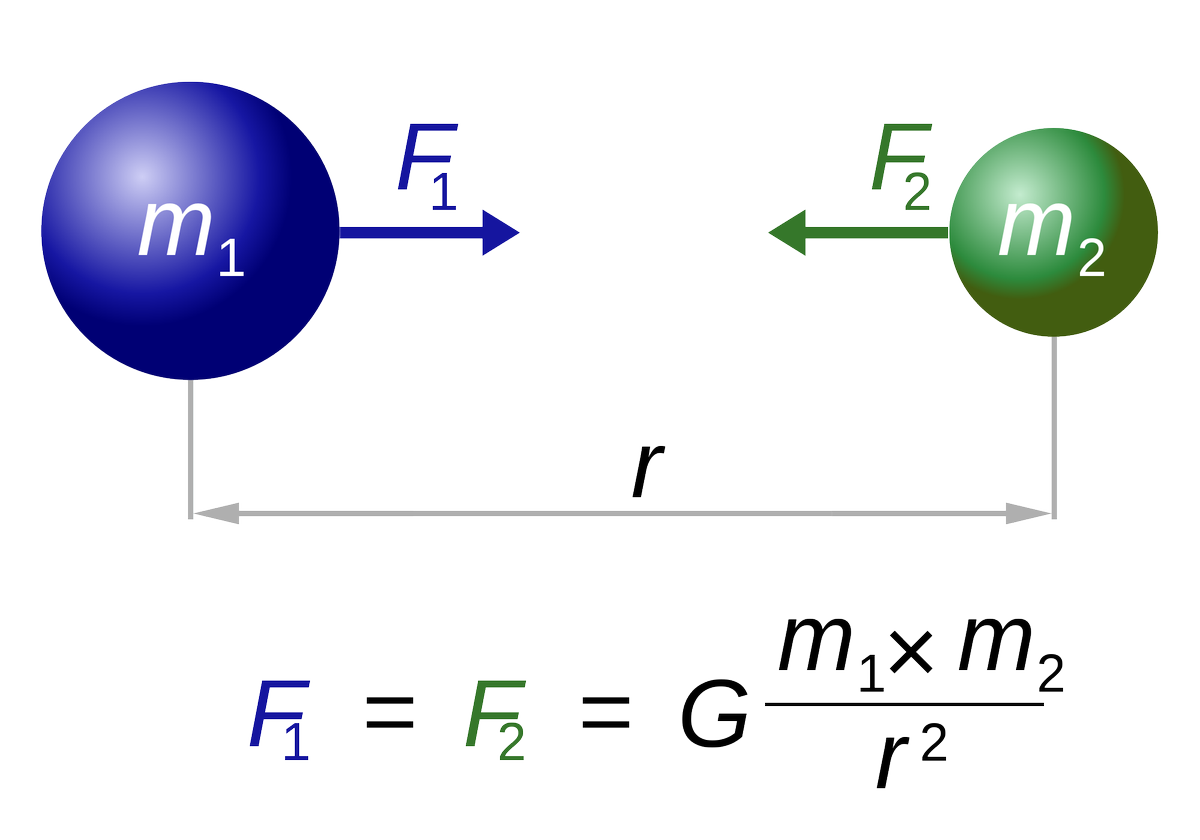
In 1687, Newton created the “Theory of Gravity” “Laws of Motion” made a breakthrough with the invention of the reflecting telescope. Newton formulated law of cooling, made the first calculation of the speed of light and introduced the notion of newtonian liquid.
In 1543, Copernicus made the idea for a Heliocentric System aka a Sun-Centered System. He also listed the planets in the correct order from the closest to the sun to the farthest.
Around 240 BCE, Eratosthenes made the first good measurement of the size of earth. He measured the length of the shadow of a tall tower in Alexandria during the summer solstice and the distance between Alexandria and Syene. He used that to calculate the Earth's circumference
Around 360 BCE, Aristotle created the “Aristotelian” concepts, Principle of Uniform Circular Motion, and he wrote books and contributed to every subject. Aristotle laid the groundwork for many, through his idea of natural science.