A parasite called Cyclospora cayetanensis is spreading across the United States, and health officials are struggling to contain it. The microscopic organism causes cyclosporiasis, an intestinal illness that triggers watery, sometimes explosive diarrhea, stomach cramps, nausea, loss of appetite, and fatigue. Unlike most foodborne illnesses that clear up in a few days, cyclosporiasis can drag on for weeks or even months if left untreated.
Cases have now been reported across at least 17 states. Michigan has been hit the hardest, with nearly 1,000 people affected across 21 counties. The CDC is actively investigating the outbreak, though no specific produce supplier, grower, or food item has been formally identified as the source.
That hasn't stopped Taco Bell from acting. The chain has pulled several fresh ingredients from select locations across the country, including lettuce, guacamole, pico de gallo, and its cilantro-onion blend, citing caution as health officials investigate.
Two 15-year-olds in San Mateo, California, climbed into a driverless Waymo and apparently decided the lack of a human driver meant a lack of supervision. They were wrong.
The teens started drinking alcohol inside the moving vehicle and began shooting Orbeez, water-filled gel pellets fired from a toy gun that had been painted black to look like a real firearm, out of the car's windows at passing vehicles and people on the street.
What they didn't know was that Waymo's fleet of autonomous vehicles is equipped with interior cameras that monitor passengers in real time. A Waymo employee watching the live feed saw what appeared to be a firearm being fired from the car and immediately called 911.
Rather than simply sharing the car's location and hoping the teens didn't bolt, Waymo remotely disabled the vehicle and told the passengers the car was experiencing mechanical trouble and needed to stop. The teens had no idea they were being held in place while five police officers and a K9 unit moved into position around them.
When the car came to a stop in a parking lot near El Camino Real, the teens stepped out expecting a broken-down robotaxi. Instead they found a full high-risk police response waiting for them.
Officers searched the vehicle and found the toy gun and alcohol. The teens were detained and later released to their parents. The case was referred to the district attorney's office for possible charges including underage drinking.
San Mateo Police posted on Facebook. "Parents, do you know where your teens are? Waymo does."
Deputies in rural Ohio weren't looking for this.
They went to a house in Hamden on June 30 with a warrant for one thing: a 36 year old man accused of exposing himself outside his own home four separate times in May.
Then they opened the door.
The smell hit first. Deputies had to put on masks just to go inside. What they found next is something officials say they'll never forget.
Sixteen children. Ages 18 months to 18 years old. Three sets of twins. All living in a house with five rooms and one bathroom, just 1,336 square feet total, for a family of twenty.
Investigators say most of the kids had been confined to a single 12 by 12 foot room for close to four years. Some couldn't speak. One 18 year old reportedly couldn't even write her name. The county sheriff said his own livestock live in better conditions. The Ohio Attorney General said it looked "third world" and that he'd never seen anything like it in his career.
None of the 16 kids had ever been enrolled in school. Neighbors said they never once saw a child in the yard. From the road, the house just looked abandoned.
Four adults lived there with them: the mother, the father, and the father's parents. All four have been arrested and charged with 16 counts each of child endangerment. All four pleaded not guilty. Bond was set at $300,000 apiece.
Investigators believe the family moved around southern Ohio for two decades, avoiding school and medical records the entire time, and that the abuse may date back to at least 2008.
Some of the children are still hospitalized. A few were flown to trauma centers.
22-year-old Rosario, a student pilot, was on a routine training flight in a Cessna C-150 over the countryside near Córdoba, Argentina, with her instructor, 42-year-old Leandro Andrés Bertazzo.
Then, mid-flight, Bertazzo removed his headset, arranged his belongings, and unbuckled his seatbelt. He turned to his student and said, "you know what to do." Then he jumped.
She kept her composure, reached for the radio, and contacted her flight school on the ground. Instructors there talked her through it. She then brought the plane down herself, and by all accounts made a perfect landing.
The flight school director confirmed she had handled the situation with extraordinary calm given the circumstances, describing her landing as flawless. She was shaken but unharmed.
Bertazzo's body was found in a field roughly 15 to 20 minutes later. His father told local media he had been going through a very difficult period and had recently consulted a psychiatric clinic.
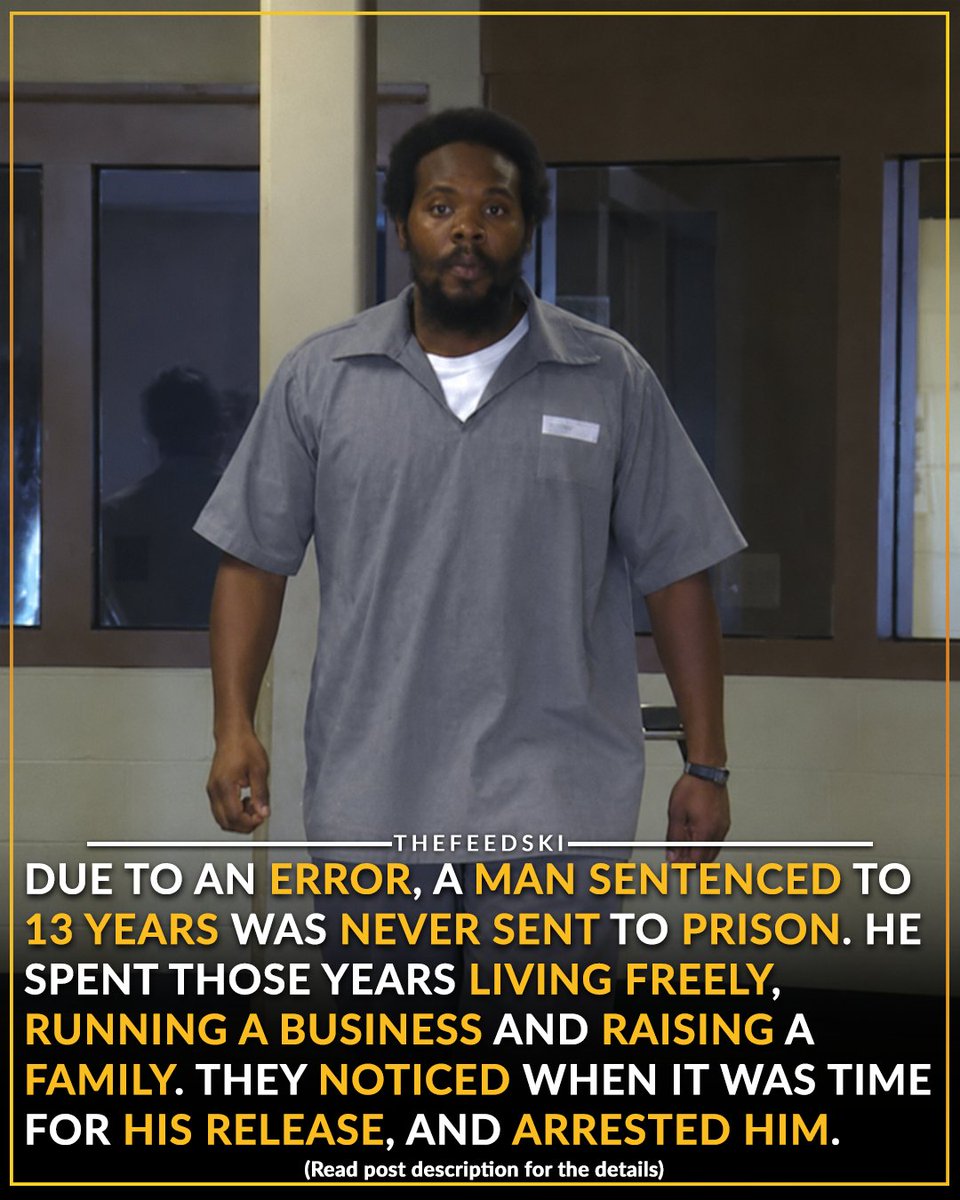
In 1999, Cornealious "Mike" Anderson was convicted of armed robbery in Missouri and sentenced to 13 years in prison. He was released on bond while he appealed the conviction, a normal part of the process, and told he would be summoned to begin his sentence once the appeals were exhausted.
Then the summons never came.
When Anderson lost his final appeal, the Missouri Department of Corrections was supposed to take him into custody. But because of a clerical error, the state's records mistakenly showed he was already behind bars. So no one ever came for him. Anderson, expecting to be arrested any day, waited. And waited. Eventually, he simply moved on with his life.
And he did not hide. Using his real name and home address the entire time, Anderson built a life any community would be proud of. He started his own construction business and registered it with the state. He paid taxes. He voted. He renewed his driver's license. He coached youth football, became a deacon, married, and raised four children. For over a decade, he was a model citizen, hiding in plain sight from a system that had simply forgotten about him.
The mistake was finally caught in 2013, when the state went to process his release, only to discover he had never actually served a day. In July that year, a SWAT team arrived at his home and arrested him in front of his family, 13 years late, right around the time his sentence should have been ending.
The public was outraged. More than 35,000 people signed a petition on his behalf, arguing that the man who had transformed his life should not be punished for the government's error. In 2014, a judge agreed. He credited Anderson with all 13 years as time served and set him free, calling him a changed man and a good father.
If you have ever dreamed of going to Mars but would prefer to keep your feet on Earth, NASA has an opening for you.
The space agency has just put out a call for volunteers for its Moon and Mars Exploration Analog, a yearlong simulation of a deep space mission. Four selected participants will live and work inside sealed, isolated habitats at NASA's Johnson Space Center in Houston, beginning no earlier than August 2027.
For a full year, the crew will live almost exactly as astronauts would on a real mission. They will move from a habitat that mimics the long flight through space to one that simulates life on a planet's surface.
They will carry out mock spacewalks, drive a rover to simulated exploration sites, grow their own vegetables, and maintain their habitat, all while dealing with resource shortages and staged equipment failures designed to test how they cope under pressure.
And the isolation is real. Communication with the outside world comes with a delay of up to 22 minutes each way, just like it would across the vast distance to Mars, meaning no instant contact with home for an entire year.
The catch is that not just anyone can apply. NASA is looking for healthy, non-smoking US citizens or permanent residents between 30 and 55 years old, proficient in English, with a STEM master's degree or equivalent experience, and applicants must pass rigorous physical and psychological screening.
It is also a paid position, though NASA has not publicly said exactly how much this mission pays. A similar earlier program reportedly compensated its volunteers around $60,000 for the year.
So if a year of no fresh air, no real sky, and a 22-minute lag on every message sounds less like a nightmare and more like the adventure of a lifetime, NASA might just want to hear from you.
Two people dressed head to toe in black slipped past an off-limits area, and before anyone could stop them, they were climbing the Empire State Building.
The pair were Angela Nikolau and Ivan Beerkus, a Russian couple famous online for free-climbing some of the tallest buildings on earth without permission or safety gear. They were the subjects of the 2024 Netflix documentary Skywalkers: A Love Story. Now they were scaling the spire of one of the most iconic buildings in the world.
They climbed all the way to the top, nearly 1,500 feet above the streets of Manhattan, and stayed up there for more than 45 minutes. At the peak, they unfurled a large black banner that read, "When the power of love beats the love of power, the world knows peace."
Then, as they began their descent, Beerkus stopped, pulled out a ring, and proposed. Nikolau, perched on the side of the tallest structure for miles, said yes.
She later showed off the ring on social media, where the couple had documented the whole climb.
The romance did not last long before reality set in. NYPD officers from the Emergency Service Unit harnessed up, climbed into the spire to meet them, and took the newly engaged couple into custody as they came down.
If you picture a 96-year-old in a nursing home, you probably do not picture this. Lillian Droniak, known to millions online as Grandma Droniak, is a Connecticut great-grandmother turned full-blown internet celebrity, with more than 15 million followers on TikTok who treat her as their adopted grandma.
She is also, apparently, too much of a party animal for her own nursing home.
Recently, Droniak posted a video reading a formal warning letter she said she received from the facility. The complaint was simple: too many parties, too much noise, and one rule she had broken in particular, serving alcohol to other residents. Security footage, the letter noted, had caught people leaving her room at 1 in the morning.
Her reaction was not exactly contrite. On camera, she ripped the letter to pieces. "I can do what I want," she said while fixing her hair. "I pay $12,000 a month to live here. I can party if I want to. My girlfriends are coming over tonight. We're gonna drink and gossip."
Then she proved her point. The very next day she posted a follow-up video declaring she was hungover from the night before, with a caption saying her nursing home could not stop her from partying through the last chapter of her life.
The standoff has since cooled off. A representative confirmed the letter was real but said the matter has been resolved. Droniak can keep having friends over late into the night. She just is not allowed to be the one supplying the drinks.
In 1965, in the French town of Arles, a 90-year-old woman named Jeanne Calment made a deal that looked like a gift to the other side.
She had no living heirs, so she sold her apartment to her lawyer, André-François Raffray, under a common French arrangement called a viager. The terms were simple. Raffray would pay her 2,500 francs every month for the rest of her life, and in return he would take ownership of the apartment when she died. She got to keep living there until the end.
For Raffray, it seemed like a brilliant investment. He was 47, half her age, and buying a home at a discount from a woman already in her nineties. The math looked easy. Pay for a few years, then move into a nice apartment he had bought for a fraction of its value.
He had no idea who he was dealing with.
Jeanne Calment was no ordinary 90-year-old. As a girl she had met Vincent van Gogh in her father's shop and found him dirty and disagreeable. She took up fencing at 85 and rode her bicycle until she was 100. The years rolled on, and she simply kept going.
Raffray paid her every month for 30 years. Then, in 1995, he died at the age of 77, never having spent a single night in the apartment. And the contract did not die with him. His family was legally bound to keep sending Jeanne her monthly payments.
She finally died in 1997, at 122 years and 164 days old, the longest verified human life in history. By then, Raffray and his family had paid more than double the apartment's worth.
Calment, sharp to the very end, summed it up perfectly. "In life," she said, "one sometimes makes bad deals."
In the Mexican city of Lagos de Moreno, in the state of Jalisco, motorcycle theft had become a constant problem. So someone decided to do something about it, in the most comic-book way imaginable.
Over the course of about ten days, suspected motorcycle thieves started turning up duct-taped to lampposts and utility poles around the city. At least five men have been found this way. In some cases, the stolen motorcycle was left sitting right next to the bound suspect, like a receipt showing exactly why he was there.
Locals quickly gave the anonymous figure a nickname. The Batman of Lagos de Moreno.
The internet ran with it, cheering him as a real-life vigilante finally doing what they felt the authorities would not. The legend grew with every photo, an unseen man stalking thieves after dark and leaving them strapped up in public for everyone to see.
But the story has a complication. Some of the men were found with their mouths taped and signs that they had been beaten, and police are not treating this as heroism. Authorities in Jalisco have opened investigations and are classifying the tied-up men as assault victims, not charging them as thieves.
Which leads to the twist. The masked man the public is calling a hero is now the one being hunted. The Batman of Lagos de Moreno is officially wanted by police, while the suspects he tied up are being treated as the victims.
There is even a question of whether "Batman" is a single person at all, or a group working together. For now, his identity is a mystery, and the debate rages on over whether he is a criminal, a hero, or a little of both.
A short clip of bodycam footage from Claremore, Oklahoma has been making the rounds online, and it shows no fight, no threat, and no scene. It shows a man asking whether he could turn in some documents. An officer answers in two flat words: "Arrest him."
The man is Darren Blanchard. His offense? Speaking a few seconds past the three-minute timer set for public comments. The meeting in question, held February 17 by the Claremore City Council, centered on a proposed data center campus spanning roughly 270 to 300 acres of his community, a project known as Project Mustang.
Residents filled the room that night to weigh in. Blanchard went over the clock. Officers told him to leave, and when he asked to present his paperwork first, the cuffs came out. The whole exchange landed on tape, and getting that tape was its own ordeal. One local who requested the footage was first told it would cost $1,750, then ended up paying $120.
Blanchard's attorneys have reportedly moved to dismiss the trespassing charge. They also want the city attorney to step aside, pointing out that he was in the room and witnessed the arrest himself. That detail hasn't been confirmed in court records yet.
The legal question underneath all this is genuinely unsettled. Public comment exists so residents can speak directly to the officials who represent them. Whether blowing past a timer by a handful of seconds rises to the level of a trespassing arrest is far from clear.
Project Mustang may get built or it may not. Either way, comment clocks will keep ticking at council meetings everywhere. What happened in Claremore is recorded now, and footage like that tends to travel a lot further than any official statement.
In Flint Township, Michigan, two parents are facing serious legal charges after the loss of their young child. The case came to light when emergency responders were called to the family's home for a child in distress. The 7-year-old, who was roughly 50.5 inches tall and weighed 255 pounds, was taken to a local hospital but did not survive.
The county prosecutor described the situation as severe neglect, noting that the child's health had been seriously affected over time. Officials said the boy had not been seen regularly by a doctor and was not enrolled in any kind of schooling, which meant the family had largely gone unnoticed by local agencies. The medical findings pointed to a heart condition as the primary factor, with the child's overall health listed as a contributing cause.
The prosecutor also pointed to other troubling details, including the condition of the home and the family's circumstances. The parents have a younger child as well, who was not in the same situation. Both adults are currently being held without bond and are scheduled to return to court in early July.
In the rainforests near Cooktown, in Queensland, Australia, scientists have found a spider that hunts in a way no one had documented before. They have nicknamed it the ballista spider, after the ancient catapult, and the name is well earned.
Most spiders wait for prey to get stuck in a web. This one built itself a weapon.
The spider's target is the green tree ant, an aggressive insect that bites hard and is dangerous to take on directly. So instead of grappling with them, the spider engineered a trap. It rigs a cone of silk into a spring-loaded sling, holds it under tension, and waits.
When an ant comes to investigate and bites the trap, the whole thing releases. The ant is violently slingshotted off its feet and flung into the center of the web, where the spider is waiting to finish the job.
The launch hits roughly 140 times the force of gravity. For comparison, a fighter pilot can withstand around 9 times the force of gravity before blacking out, meaning this spider hits its prey with about 15 times the g-force a trained human could ever survive.
It is one of the only known animals to hunt using stored mechanical energy like this, building and loading a tool rather than relying on its own body.
Paul Powlesland loves the River Roding so much that he lives on it, aboard a narrowboat in East London. He is also an environmental lawyer, and for years he watched a tributary called Alders Brook choke under sewage, silt, and dumped garbage.
He says he asked the Environment Agency again and again to clean it up. Nothing happened.
So this past winter, he stopped waiting. Powlesland gathered volunteers from his River Roding Trust, hired a digger, and spent ten days clearing the brook by hand. They hauled out roughly 200 bags of rubbish, including needles, household appliances, and even weapons.
It worked. Within weeks, he says, the water was flowing freely again and the wildlife came back. Fish returned to stretches where they had not been seen in years, along with herons, dragonflies, irises, and reed beds.
Then the letter arrived.
Within a week of the cleanup finishing, the Environment Agency, the same body he says had ignored him for years, opened an investigation. Not against the utility accused of pumping sewage into the river, and not against the people who dumped the trash, but against Powlesland and his volunteer charity. The charge: doing unpermitted work in a floodplain. The maximum penalty is two years in prison.
The agency says permits exist for good reason, to make sure well-meaning work does not accidentally worsen flooding or harm the wider environment.
Powlesland sees it differently. After decades of ignoring the real polluters, he said, the authorities finally sprang into action, against the one group trying to bring the river back to life.
For the first time in 28 years, Scotland's men's team reached the World Cup. So their fans did what the Tartan Army does best. They booked flights and turned a host city into one giant party.
More than 20,000 Scottish supporters poured into Boston for their group matches at nearby Gillette Stadium. Then they went looking for a drink.
What followed broke records all over the city. From Thursday to Sunday, the Sam Adams Boston Taproom sold four times the beer it normally moves during a holiday stretch like the Fourth of July, and still ran completely out of its own flagship Boston Lager. Staff had to call in an emergency delivery on Saturday morning just to keep up.
They were not alone. Hennessy's Bar tripled its St. Patrick's Day sales and sold out of beer entirely on Sunday night. The White Bull Tavern ran so dry that one Scottish fan said the only thing left on tap was Bud Light.
After watching their team beat Haiti 1-0, the fans poured back into the streets and even marched on Fenway Park to take in a Red Sox game, kilts and bagpipes and all.
Boston has thrown a lot of parties in its time. As one bar manager who had worked there for over 30 years put it, they had never seen anything like this.
In 2009, a knife-wielding burglar named Gregory McCalium broke into a home in Oxfordshire, England.
He found the homeowner, a 72-year-old man, and lunged at him with the blade, clearly expecting an easy victim.
He could not have picked a worse house.
The man was Frank Corti, a former boxing champion who, decades earlier, had served with the Royal Engineers in North Africa. At 72, he was still very handy with his fists.
Corti threw two right hooks. That was all it took.
The burglar crumpled, his face wrecked. When the case reached court, the damage was so severe that McCalium's own defense lawyer admitted the photos of his client looked like he had been in a car accident.
McCalium was convicted of aggravated burglary.
In June 1994, Colombia arrived at the World Cup as one of the tournament favorites.
Pelé had picked them to win it. Between 1991 and 1993 they had won 25 of 26 matches, including a stunning 5-0 demolition of Argentina. The squad was filled with talent. The expectations were enormous.
Then everything unraveled.
They lost their first match to Romania 3-1. A death threat arrived by fax to one of the players. The mood inside the camp was deteriorating fast. The country back home was watching with the intensity only football can produce in Colombia, where the sport had become deeply entangled with narco money and the violence that came with it.
On June 22nd they faced the United States. In the 34th minute, American midfielder John Harkes sent a cross toward the Colombian goal. Defender Andres Escobar, 27 years old and one of the most respected players in the squad, moved to cut it off. His outstretched leg redirected the ball past his own goalkeeper.
Colombia lost 2-1. They were eliminated.
Escobar flew home knowing what he was returning to. Friends urged him to stay in the United States while tensions cooled. He refused. He had written a column for a Medellin newspaper before leaving for the tournament. Its final line read: "Life doesn't end here. We have to go on."
On the night of July 2nd, ten days after the own goal, Escobar went to the El Indio nightclub in Medellin with friends. An argument broke out with a group of men linked to the Gallon brothers, powerful narco-traffickers who had reportedly lost significant money betting on Colombia to advance.
As Escobar walked to his car in the parking lot he was shot six times.
Witnesses said the gunman shouted "goal" after every shot.
Humberto Munoz Castro was convicted of the murder and sentenced to 43 years in prison. He served eleven. The Gallon brothers, who were believed to have ordered the killing, served a few months each for attempting to cover up the crime.
Escobar's funeral drew tens of thousands of Colombians. They followed his coffin on a ten-mile walk to the cemetery. The second round of the World Cup was still being played in the United States when he was buried.
This morning, Elon Musk became the first person in recorded history to be worth $1 trillion.
The milestone was triggered by SpaceX pricing its initial public offering at $135 per share on Thursday, valuing the company at $1.77 trillion. Shares begin trading today on the Nasdaq under the ticker SPCX. The offering raised $75 billion, making it the largest IPO in history by a factor of three. The previous record was Saudi Aramco's $29 billion debut in 2019.
Musk owns approximately 42% of SpaceX. At $135 per share his stake alone is worth around $648 billion. Add his Tesla holdings, xAI, X, and other assets and his total net worth crosses $1 trillion for the first time.
Before today he was worth an estimated $813 billion. That figure was already more than twice the net worth of the second richest person on earth, Google co-founder Larry Page, who is worth $288 billion.
To understand what $1 trillion actually means, consider this. If you earned $1 every single second, around the clock, every day of the year, it would take you 31,688 years to accumulate what Musk is now worth. That is longer than the entirety of recorded human civilization.
Approximately 4,400 SpaceX employees are expected to become millionaires when trading opens this morning.
No individual in modern history has ever held this much wealth. The word billionaire was coined in 1844. The word trillionaire did not need to exist until today.
Kiyomasa is 13 years old and lives at the Higashiyama Zoo in Nagoya, Japan.
On June 9th, 2026, Kiyomasa got into a disagreement with his female partner inside the enclosure. She chased him out. He wandered off and found a quiet spot to sit by himself.
A zoo visitor filmed what happened next.
Kiyomasa sat alone, completely still, his chin resting in his hand, staring into the middle distance with the expression of someone working through something very difficult. He scratched his head slowly. He gazed at nothing in particular. He did not move for a very long time.
The video was posted online and spread immediately.
The Higashiyama Zoo confirmed the footage was genuine.
Kiyomasa has since been spotted back with his partner.