A GUI that seamlessly integrates FLEXR electron density based multi-conformer model building into Coot1's modeling and validation tools.
https://t.co/c45ELvSv2l
Selective CK1α degraders exert antiproliferative activity against a broad range of human cancer cell lines. Exemplifies the power of collaboration at @StJudeResearch by CBT Chemistry Centers, @KlcoLab and @TheFischerLab funded by @AlexsLemonade.
https://t.co/hRX6ZSYoUC
The opus magnum of our PhD student Fatemeh, now @KymeraTx, is out in @BloodJournal in collaboration with the @CMullighan lab: The orally bioavailable GSPT1/2 degrader SJ6986 exhibits in vivo efficacy in acute lymphoblastic leukemia. https://t.co/FlqEPjVr2v
We're at it again, but even better! Please join us virtually or in person at St. Jude for 2023 Bringing Chemistry to Medicine! @StJudeResearch https://t.co/rmz8PWOGbV
Like comparing apples to apples, comparing similar proteins can be challenging. Scientists in @TheFischerLab developed a tool to help, which garnered new insights into the chaperone protein HSP90—an essential target in cancer. Read about their work. https://t.co/pWiu29mKLO
FLEXR uses Ringer-based electron-density sampling to build explicit multi-conformer models for refinement, capturing conformations in ligand-binding sites that were undetected using other methods. #CrystallographicRefinement#ModelBuilding https://t.co/AbvmeTrrLY
Interested in water in ligand binding sites? Our newest paper applies RE-EDS to study the thermodynamics of water networks in protein cavities.
https://t.co/MLKqkoxrvi
New research from @TheFischerLab published in the Journal of Medicinal Chemistry has revealed distinct targetable hotspots on #HSP90, an important target in cancer. https://t.co/fqhyVe3bj6 @ACSBioMed
Thrilled to see @TheFischerLab's latest work on how "Water Networks Repopulate Protein-Ligand Interfaces With Temperature" out in @angew_chem. https://t.co/fk1UjJxDGy
Excited to see our collaborative work on the “Degradation of Janus kinases in CRLF2-rearranged acute lymphoblastic leukemia” appear as a Plenary Paper in @BloodJournal with @CMullighan and #stjuderesearch CBT Chemistry Centers. https://t.co/swBfzXbFAE
The Nabet lab @fredhutch is recruiting a highly motivated postdoc to join our supportive/collaborative team! Interested in developing targeted protein degradation technologies and advancing proximity-induced therapeutic strategies? Please RT & apply here: https://t.co/mhO6DDzfbD
Phenyl-Glutarimides improve PROTAC stability. Another great collaboration with the CBT ChemistryCenters @StJudeResearch and @TheFischerLab (and many others) just appeared in @angew_chem.
https://t.co/gM24XYyQVa
💥Enhanced sampling strikes again: we used aMD to see a buried apolar cavity open up to solvent, feeding this thermodynamic info to DOCK3.7 we saw some really cool new chemistry that also showed up in the beautiful crystals from Isha Singh 🎉🎉
#compchem#cadd@PNASNews
Expanding the chemical toolbox for bromodomain PHD finger transcription factor BPTF in a fun whirlwind collaboration with @fewill26 and @TheFischerLab.
https://t.co/JSj0RMoF9O
New research suggests that sampling only at cryogenic temperatures could be making things murky for structural data, leading to irritating cryo-artifacts
https://t.co/VUU7s38cwP
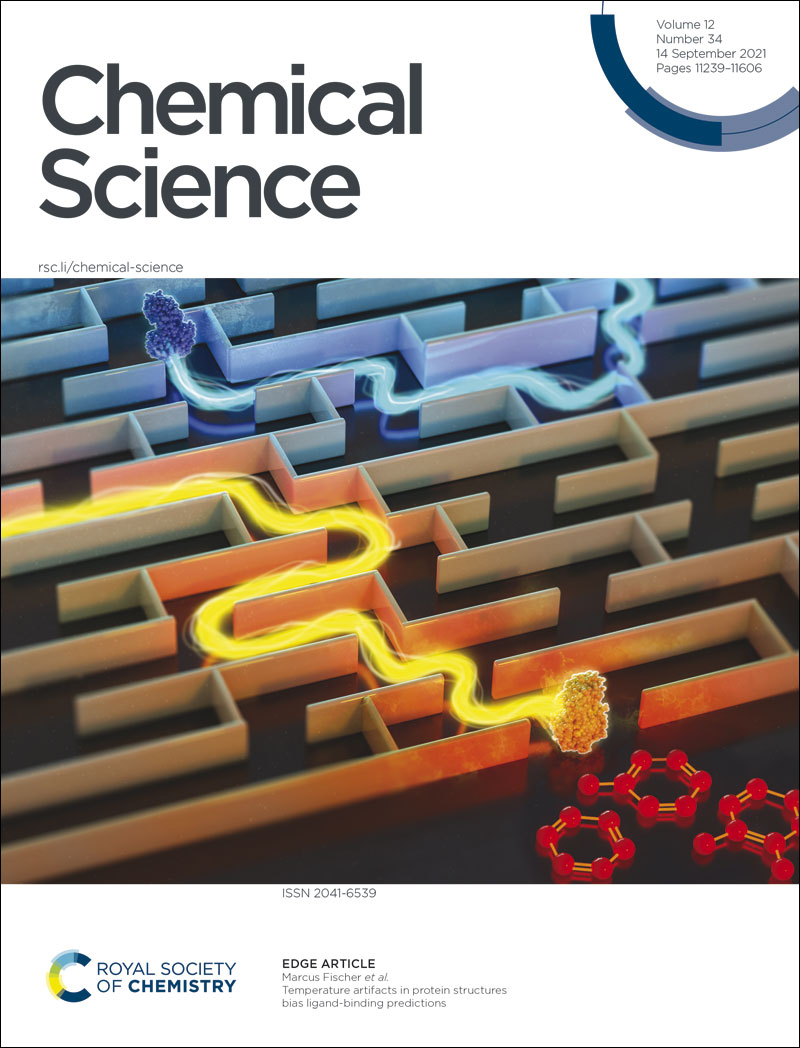
🎉 Issue 34 is here! 🎉 Marcus Fischer (@TheFischerLab) et al.'s recent #ChemSciPicks article is featured on the front cover 😍
Read it here ➡️ Temperature artifacts in protein structures bias ligand-binding predictions 🔗 https://t.co/dYE77siteg
📍 @UCIrvine | @StJudeResearch