Hey, I’m Shane Dowd! 👋🏻
Founder of GotROM and creator of the TSR System that’s helped over 30,000 people fix injuries, get flexible, and build strong, resilient bodies.
Thanks for joining me on this journey! Hit follow for all things recovery, flexibility, and strength! 💪🏻
The best training is not the flashiest. It is the kind that prepares you for the life and activities you actually want to do.
Follow GotROM for strength and mobility education that carries over into real life.
But your version of functional is personal. It is being able to carry your kid, play your sport, lift in the gym, travel comfortably, or simply move through your day without overthinking every task.
Did an MRI show a labral tear in your hip? In one study, people with FAI pain in one hip had both hips scanned. On the pain-free side, 41 to 43% also had a labral tear (Vahedi et al., Clin Orthop Relat Res, 2019). A tear on a scan does not always explain your pain.
Pain deep in your butt from ischiofemoral impingement? Weak hip abductors can be part of the problem. Their job is to keep your hip and thigh bone in their own corners. Give them work: side-lying leg lifts, side planks with a top-leg lift and single-leg step-ups on a low box.
Glute bridges and bird dogs can be a starting point for hip rehab. My mentor taught me not to stop there. Getting back to sport meant gradually building strength with careful technique and coaching. The starting exercises were a foundation, not the finish line.
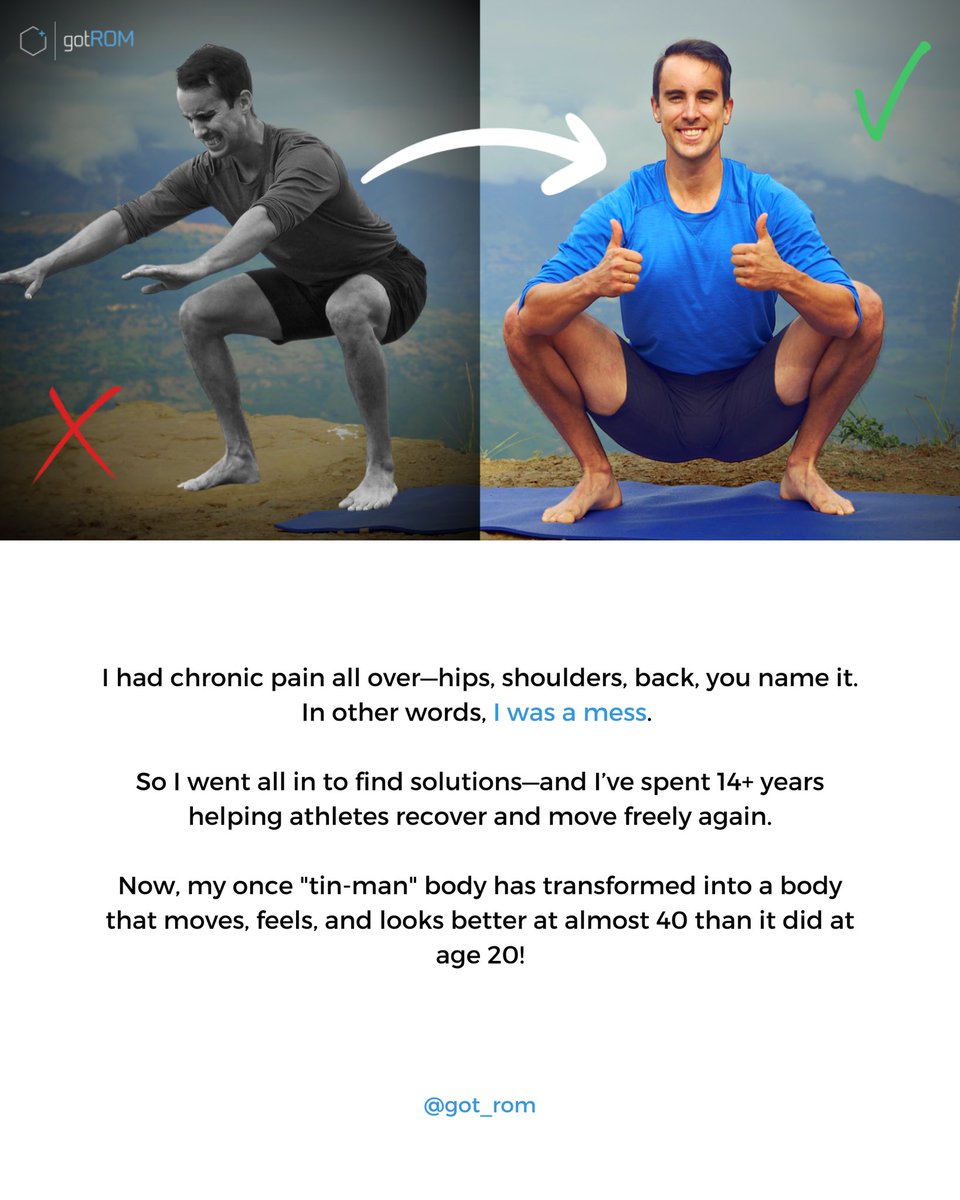
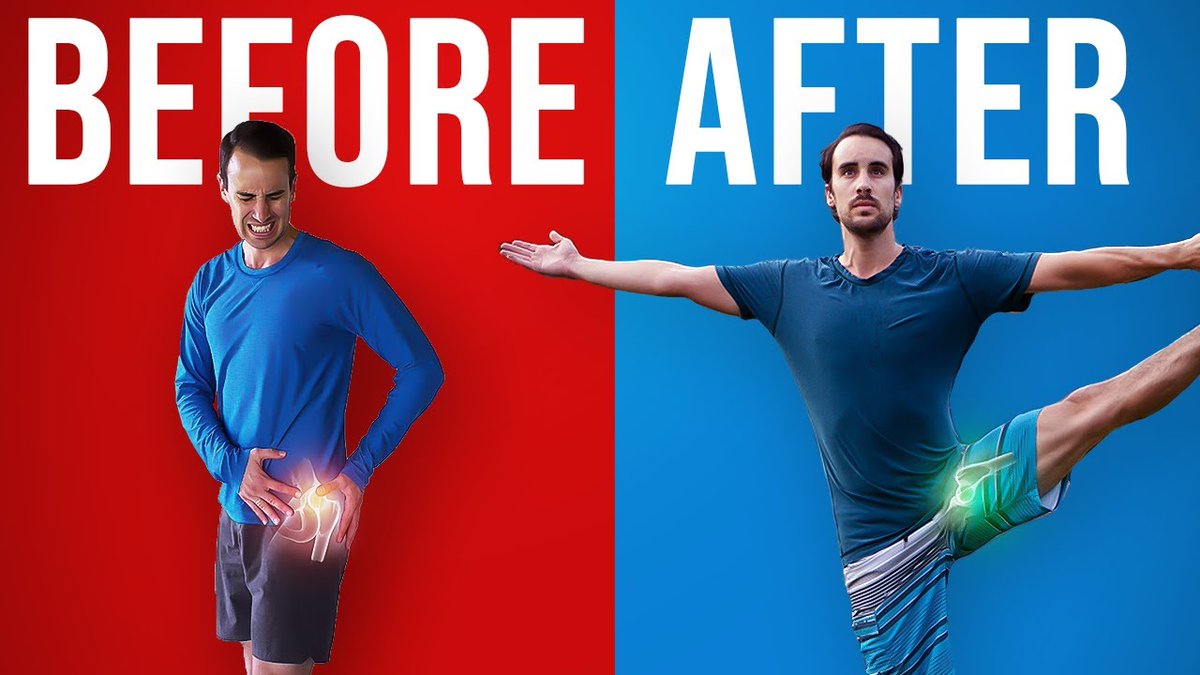
14 years ago, my mentor coached me through simple pelvic control exercises with almost obsessive attention to detail. It felt slow. But that phase is a big reason I never had surgery for my hip impingement, labral tear and bone cysts. Boring basics, done really well, add up.
Worried your "bad" hip bone shapes will give you arthritis? Researchers X-rayed 547 senior athletes (average age 67) with well-functioning hips. 83% of the hips had FAI-type shapes. Those shapes did not predict arthritis (Anderson et al., Clin Orthop Relat Res, 2016).
Build your core, save your hips. With hip impingement, more core strength and endurance means less pain and more range of motion. Four essentials to start with: planks, side planks, deadbugs and Pallof presses. Together, they help stabilize your trunk and your hips.
A popular hip stretch is not automatically the right stretch for you. When my hips hurt, generic yoga classes were not enough. My mentor helped me choose stretches for my specific hip problems. The goal was not to copy a pose. It was to find what my hips needed.
Sometimes the biggest shift isn't what you do to your body. It's how well you understand it.
A diagnosis can make you feel like your body is broken. But learning what influences your movement can give you a lot more options.
That’s a big part of our approach: understand the problem, build mobility, get stronger, and improve how you move.
And when it comes to surgery, the decision should be based on your individual situation, not fear around a sound or a diagnosis alone.
In 2012, I got a stabbing pain in my hip every time I lay on my back and opened my leg out to the side. Then I tried 2 to 3 minutes of deep, targeted massage on my glutes with a tool called the Jack Knobber. The pain disappeared. Never underestimate targeted tissue work.
Still using one foam roller for every tight spot around your hips? Match the tool to the job. A roller covers larger muscles like your quads. A massage ball targets smaller areas. More pressure is not always the answer. Sometimes you need a different tool.
Notice what changes when you slow down, alter the angle, reduce the load, or give yourself more support.
Follow GotROM for practical education that helps you move with less fear and more confidence.
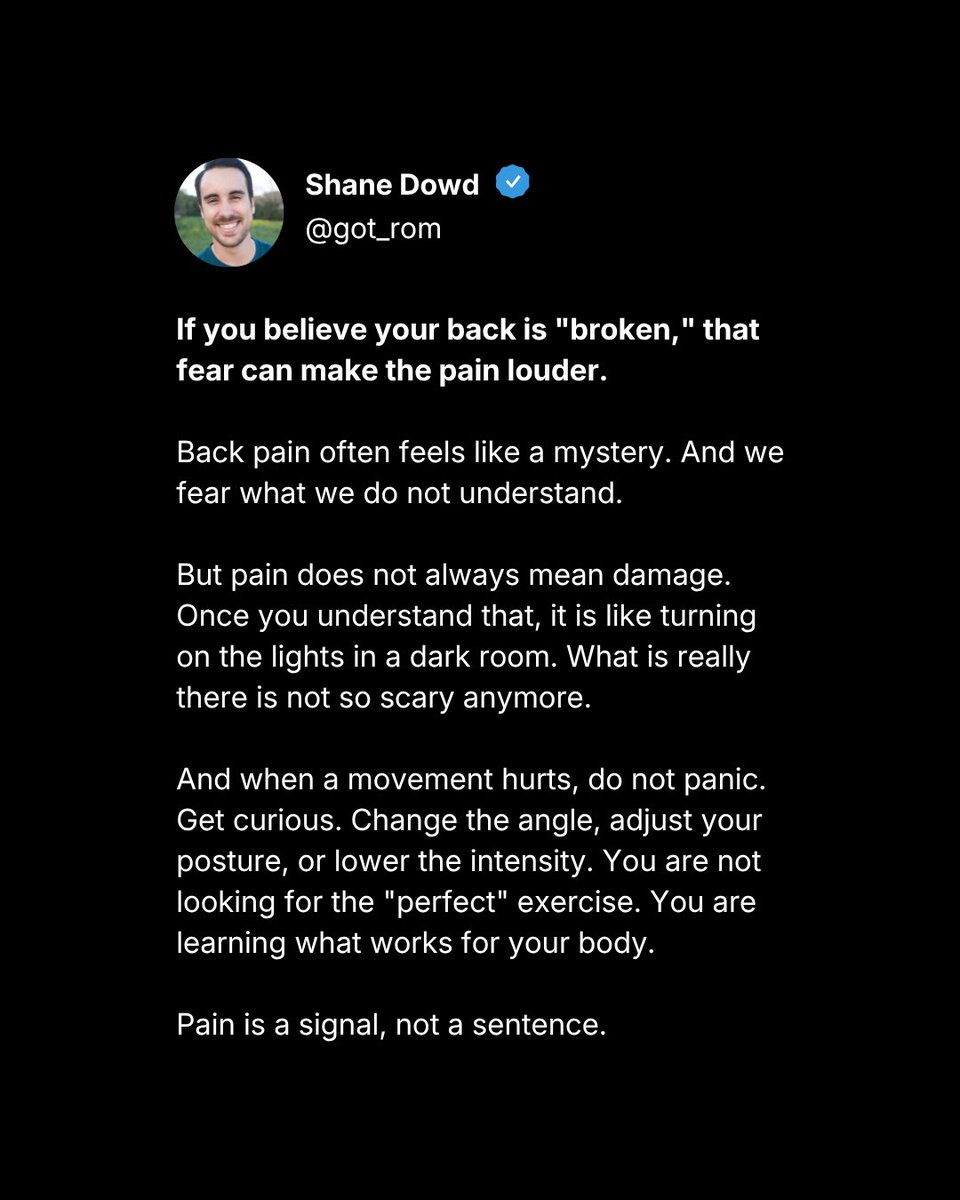
Back pain can send your mind straight to the worst-case scenario.
You feel one sharp movement, and suddenly you are wondering if you should stop lifting, stop bending, or stop doing the things you enjoy.
Ever had a deep pain in your butt that feels like something is pinching you from the inside? It could be ischiofemoral impingement: a small muscle squeezed between your pelvis and thigh bone. Long strides and long periods of sitting often make it worse. Runners, take note.
Think of your hip joint as a king on a throne. The muscles around it are the knights who protect the king. The stronger the knights, the safer the king. That's why strength work matters so much with hip impingement. Stronger muscles give the joint better support.