Learning to fly doesn't have to cost six figures out of pocket.
Military flight school, GI Bill, scholarships, airline programs, paid instructing: real paths to free or paid-for training exist. All have strings.
Free guide, fine print included:
https://t.co/4HCfE07fnI
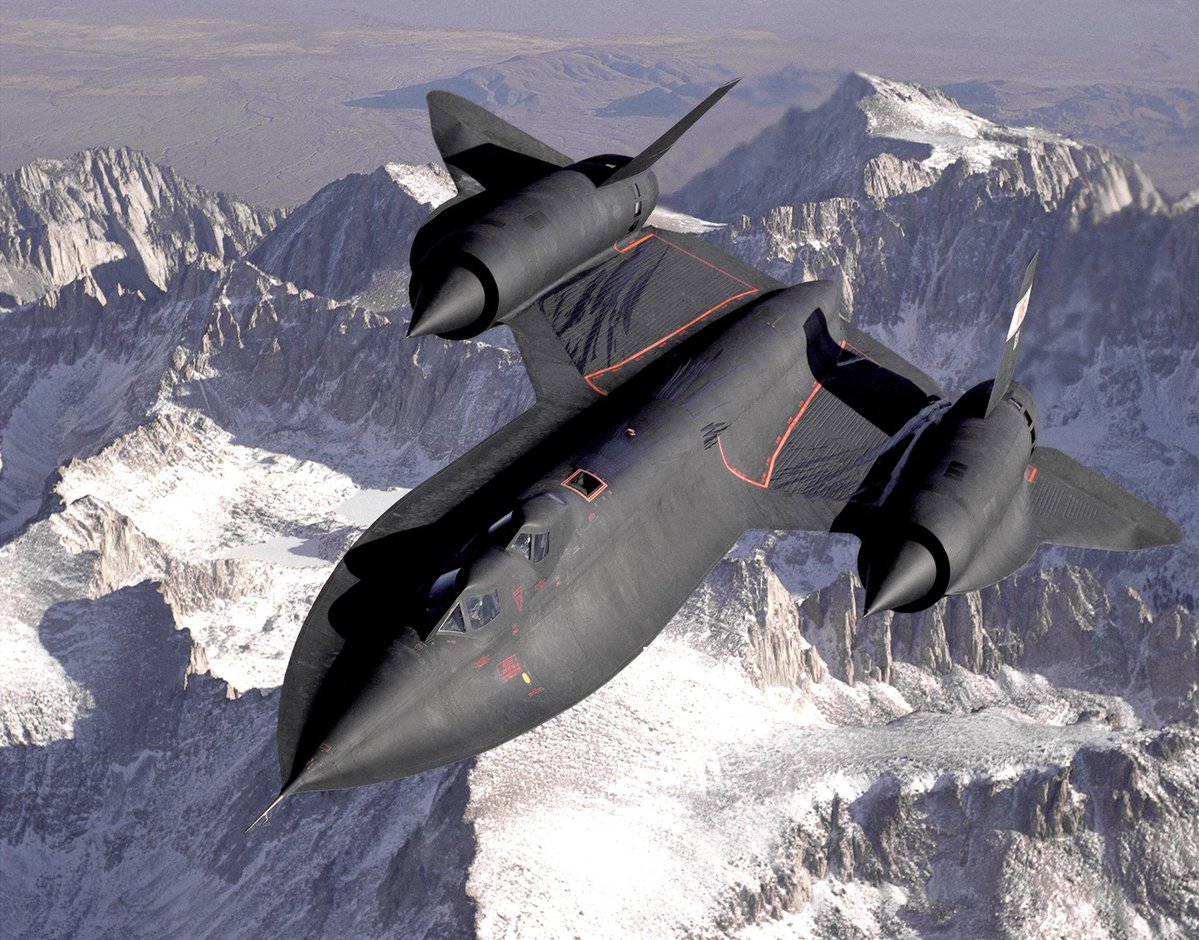
NASA 831 over the southern Sierra Nevada in 1994, just after refueling from a tanker. It was one of only two SR-71B trainers ever built, and NASA flew it for research and crew proficiency through the 1990s.
NASA photo by Judson Brohmer (USAF)
The full breakdown: what that price covers, the cheaper pay-as-you-go route, and how the GI Bill and other funding can help pay for it. https://t.co/eo5dG3jk2f
Is it really $124,000 to become a pilot? That's one big school's sticker price. It's not the only way in, and it doesn't have to come out of your pocket.
@USArmy What stands out to me about Audie Murphy is that he talked openly about his combat stress back in the 1960s, when almost nobody did. That took its own kind of courage, and a lot of folks getting out today could stand to hear it.
@BetsyGain He did exactly what the FAA wants students to do. The AIM even recommends saying "student pilot" on your first call so controllers know to give you extra help. Nothing to be embarrassed about.
@realshannonwong Three crossings in a light aircraft in one year is a lot. What ended up being the biggest planning headache for you: waiting on weather, the survival gear, or the paperwork for every country along the way?
@AirbusHeli@MarineNationale Congrats to the Marine Nationale on 400 years. Putting a helicopter down on a moving deck in open-ocean weather takes a skill set most of us never touch, and the crews who do it every day have my respect.
@TacoPlaneSpots@ABQSunport Love that one random takeoff is what got you into spotting. That's a great shot of a jet you don't see every day. Did you have to wait long for it to come back around?
@birrlad@JFKairport@cathaypacific@Airbus That 80th anniversary livery is a great throwback, and you caught it in really nice light on the climb-out. Was this a planned catch or a lucky one?
One big flight school prices zero time to airline-ready at $123,995, and that's before about $12,000 in checkride and test fees. That number isn't your only option. There are cheaper routes to the same ratings, and real ways to cover the bill, including the GI Bill.
A P-51 Mustang flying a heritage flight at a Langley Air Force Base air show. North American built more than 15,000 Mustangs before production ended in 1946, and the Merlin-powered P-51B was built in Inglewood, California.
U.S. Air Force photo by Tech. Sgt. Ben Bloker
The leading theory among outside pilots is that ice plus a climb in thin air ate up the jet's narrow high-altitude margin, causing a stall and loss of control. Most of the left elevator came off before impact, making recovery nearly impossible. NTSB hasn't named a cause.
NTSB is investigating the Nov 1 Learjet 60 crash near Greenacres, FL that killed all 9 aboard. At 35,000 ft the crew reported clear ice and moderate turbulence near a growing thunderstorm, asked to climb to 37,000, and within about 30 seconds called a rapid descent.
That storm's tops were around 42,000 ft or higher. Tall convective cells lift moisture and ice crystals far above normal icing altitudes and churn the air with strong vertical currents, so a 2,000 ft climb wouldn't have gotten them clear. They reported ice at -47°C.
One big flight school lists about $124K for a zero-to-pilot program. I went through what it really costs, line by line, and it isn't the only way to get there.
@NBAA@APIaviation@Bombardier That applies all the way down to flight schools. When instructors turn over every few months, students lose continuity, and that's a safety issue as much as a business one. Did the panel get into what's actually keeping good instructors around longer?
@srijanpalsingh The 19-seat size makes sense for electric. That's the same class as the Twin Otter and the Beech 1900, which already fly a lot of short regional hops where a 400 km range could actually work.
@Reuters He did the right thing by telling the controller he was a student pilot. New pilots are taught to say that when things get weird, because it tells ATC to slow down and help, and it sounds like that's exactly what happened.