I've a slight suspicion that the Monero ecosystem might be under attack intentionally.
All these hacks and exploits happening in a short time
https://t.co/tkF8GDuvsm
Things you cannot do to Monero/XMR
Arrest the CEO (there isn’t one)
Shut down the servers (they’re everywhere)
Freeze the funds (they can’t see them)
Trace the txs (they’re encrypted)
Delist it to death (73 tried, but went up 120%)
12 years live. No company. No foundation. No off switch
What other crypto can say the same?
L'antifrelonisme n'est pas une opinion, c'est un délit. Et les agressions de rues que subissent les abeilles sont le fruit de bons bourdons bien de chez nous. N'en déplaise aux nostalgiques du IIIème Ruche et adorateurs d'Adolf Beetler.
I think this is kind of bs. If one is only paying attention to benchmarks then they're kind of an idiot. What matters is price relative to actual performance on tasks that matter to that individual.
In that framing models with an osi approved license are far ahead of closed. Is a 3% absolute benchmark gain worth 5x increased price? People who chase benchmarks and use pay-per-token must just hate money since the markup is astronomical.
The rsETH hack really exposed everyone.
- Arbitrum hits the freeze button.
- CoW pauses the whole swap service.
- THORChain stays neutral.
And XMR?
XMR just quietly sits there, laughing in untraceable.
You find out real quick who actually holds the admin keys.
Look guys, it's actually really straightforward, a bunch of people staked their ETH on the Ethereum blockchain to earn yield, except they didn't want their capital to be locked up, so they actually staked with a liquid staking protocol called Lido who provided them a liquid staking receipt token called stETH, except they decided to juice their yield further by depositing their stETH receipt tokens into a restaking protocol called Eigenlayer, except they didn't want to lock up their capital, so they actually restaked with a liquid restaking protocol called KelpDAO who provided them with a liquid restaking receipt token called rsETH, except they decided to juice their yield further by depositing their rsETH tokens into a lending protocol called Aave so that they could open a leveraged looping position that borrows ETH against the rsETH collateral and restakes the ETH into rsETH which is then deposited as collateral, except it turns out rsETH used a cross-chain bridge called LayerZero that was hacked by north koreans causing rsETH to become undercollateralized and now these looping positions are stuck and unprofitable, and everyone is pointing fingers at each other, and also DeFi is a very serious industry
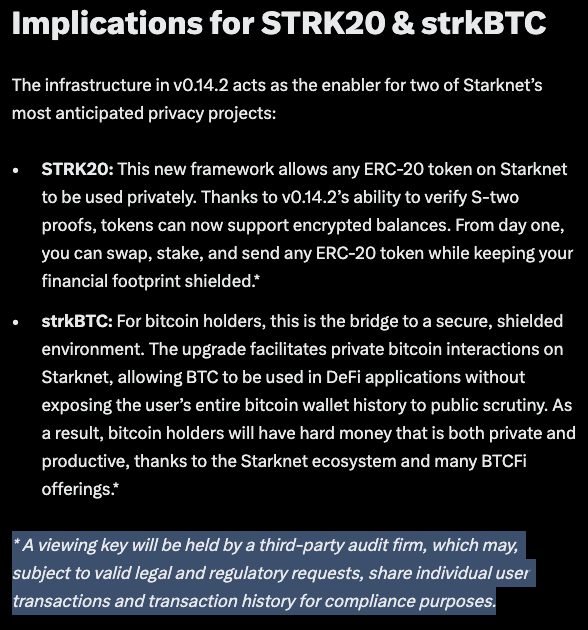
@Starknet What happens when this viewing key gets leaked or a government requests records without a warrant?
It's great that privacy is developing on Starknet, but it isn't great that a user's privacy can be violated without them even being made aware it happened.
viewing key = backdoor
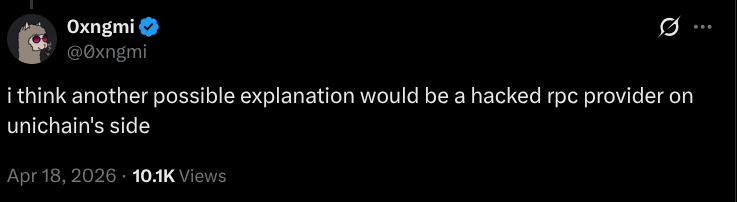
The attack was
1. North Korea figured out which RPC providers LZ was using
2. They compromised two of the providers to make them return fake data
3. DDoSed other providers to shut them down, forcing LZ to use the bad ones
AFAIK I was the only one who actually called it