Independent patient advocacy platform: timely implant recall alerts, safety updates, and unbiased device information. Founded by John Owens (@JohnNJC3).
Recall Watch: 8 open recalls right now on the plastic inside joint replacements. ~700,000 units potentially impacted. All Class 2 which means no law, no system, has to tell the patient.
If you’ve had a joint replacement, check if yours is on the list 👇
Diabetes device recall check: 1.4 million+ reports to the FDA this year on glucose sensors, insulin pumps and pods. 20 recalls. Three devices under Class I. Reports aren't proof. Here's what's on the record, and how to check yours. 🧵
Essure: 64,912 adverse event reports from Jan 2016–Oct 2026, including 348 received in 2026. FDA's recall database shows no Essure recall. Bayer stopped U.S. sales on Dec 31, 2018. Reported, not recalled.
#PatientVoice#FDA#Implants
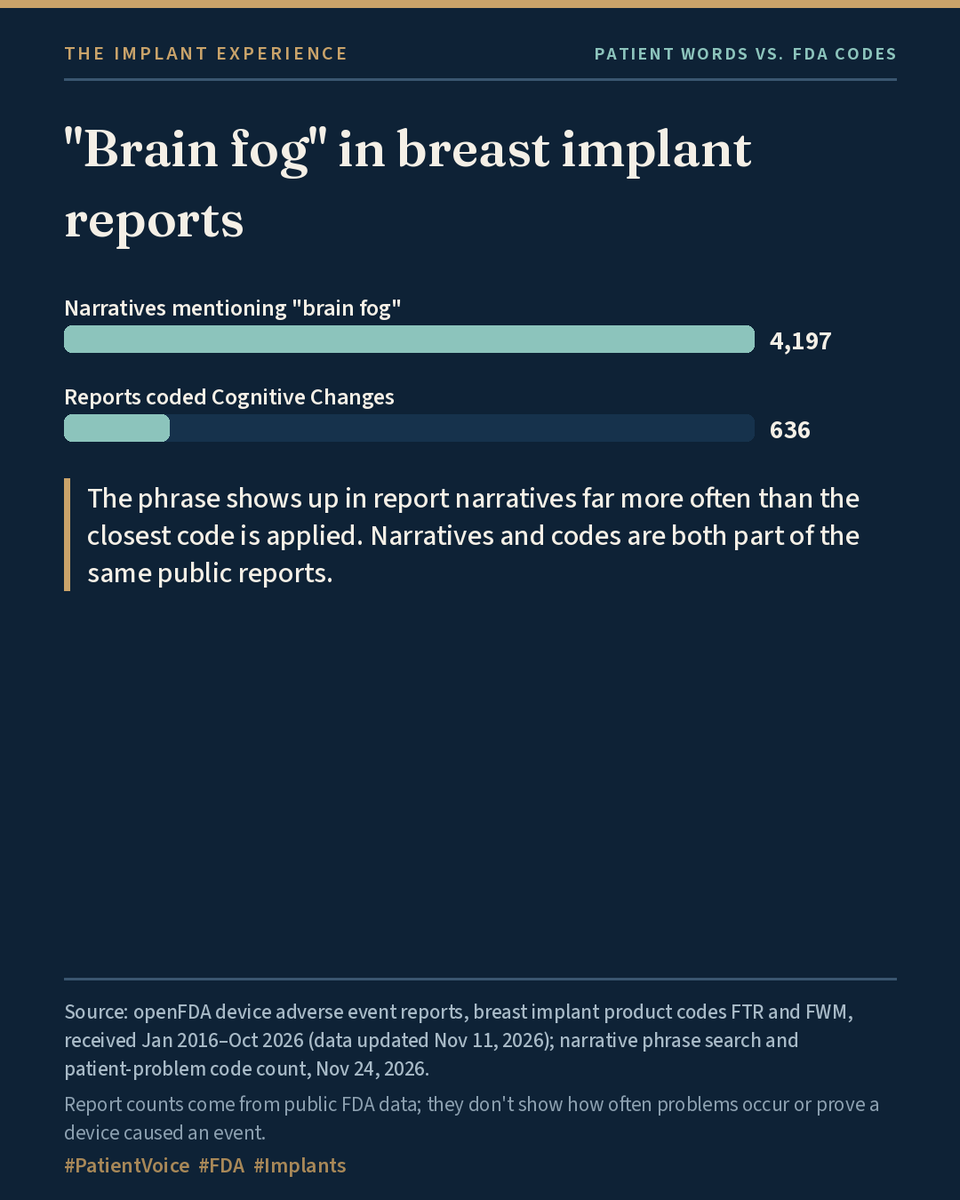
"Brain fog" appears in 4,197 breast implant adverse event report narratives from 2016–Oct 2026. FDA's closest code, Cognitive Changes, is on 636 breast implant reports. What patients say and what gets coded don't line up.
#PatientVoice#FDA#Implants
When a Class I recall is issued for false occlusion alarms on the Tandem Mobi (80k+ pumps), the adverse-event coding often doesn’t line up. Only about 102 reports carry the “False Alarm” code; roughly 23,000 are coded as blocked flow instead.
Official counts and patient descriptions can tell different stories.
#PatientVoice #FDA #Implants
Patients describe “breast implant illness,” silicone-related systemic symptoms, or plastic wear. FDA adverse-event codes don’t have a dedicated term for many of these.
They show up in free-text narratives (thousands of times) but don’t appear in the coded counts the same way mechanical failures do.
What patients say and what gets counted aren’t always the same.
#PatientVoice #FDA #Implants
Medical device adverse event reports just passed 3 million in a single year. First time ever. One every 8 seconds. Reports aren’t proof. But here’s how the system got here, in three parts. 🧵
@SusanMorgan19 Polypropylene for most mesh The mesh companies introduced antioxidants in old meshes to prevent the oxidation in the polypropylene, but that doesn’t last long and then chronic low grade infections persist as well. Local degradation is now getting widely documented.
Joint replacement recall check: 8 recalls on the plastic inside knee, hip, shoulder and ankle replacements are still open. Exactech and Stryker. Every one describes a problem that started before surgery. 🧵
The Implant Experience: You own what's inside your body. So track it. And stay informed.
#ImplantRecall #PatientSafety #TheImplantExperience #KneeReplacement #JointReplacement
Finding particles ≠ proving harm.
Implant wear debris spreading beyond the joint was documented in 2000. The research kept going. What didn’t change is how that information reaches the person living with the implant.
Our first Recall Watch episode drops today at 11am ET.
Track it, get involved, and stay informed.
Medical Device Safety Notification is Broken. 5 Reasons Why.
1. The 510(k) superhighway
2. Reports patients can’t follow
3. Recalls that can’t find you
4. What’s inside doesn’t stay put
5. A better future, if we’re honest
Patients staying informed can solve this.
Do you know what your implant is made of?
Unexplained symptoms for years, or hardware that loosened? Ask your care team: does it contain cobalt-chromium, and does checking my metal levels make sense for me?
We own what's inside our bodies. Track it and stay informed.
We think microplastics get in three ways: what we eat, drink and breathe.
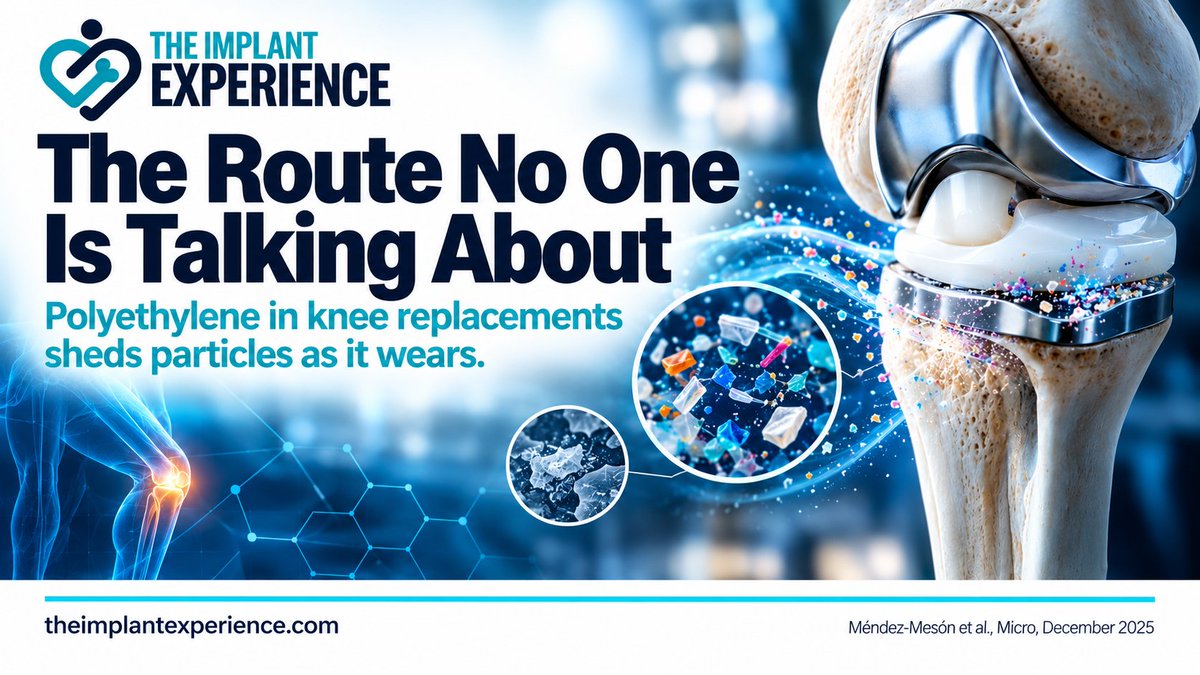
A fourth almost no one mentions: the plastic we put inside us on purpose. Most knee replacements glide on polyethylene, and it wears.
Most knees work well. This is about knowing what's inside you.
Microplastics: food, water, everyday products. Route four: surgery. A 2000 autopsy study found polyethylene wear particles in abdominal lymph nodes of about 2 in 3 people with hip or knee replacements. Researchers are still learning what it means.
The Fourth Way Microplastics Get Into Your Body https://t.co/phe8oYTPGB via @YouTube
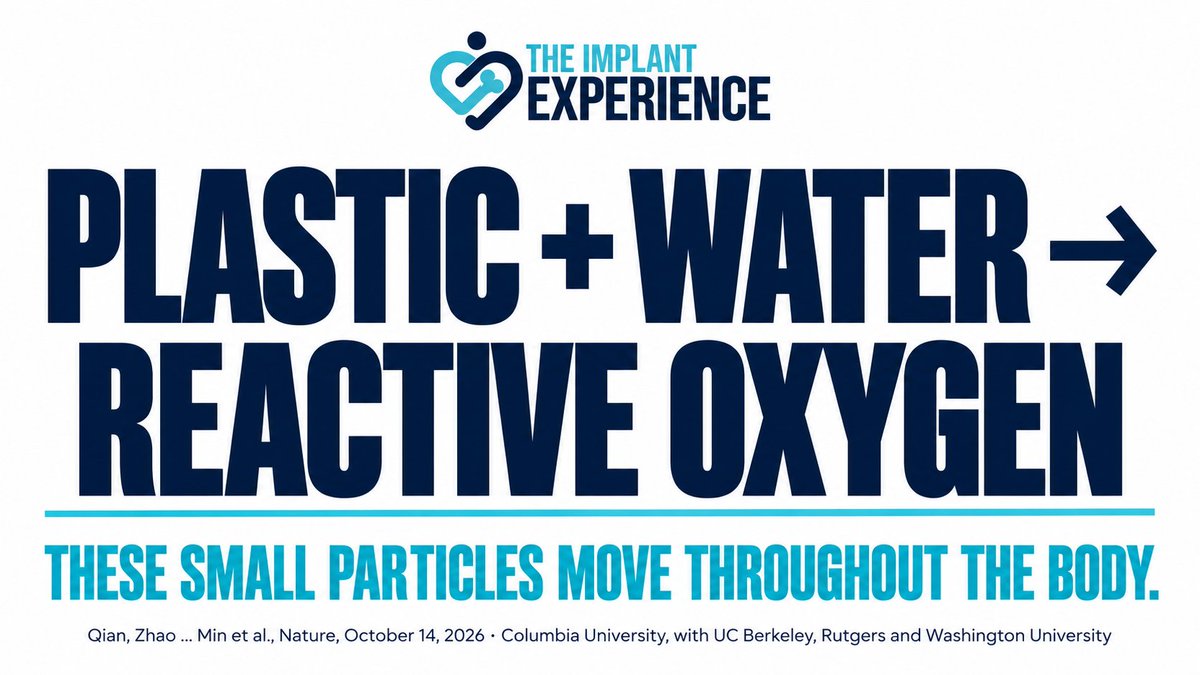
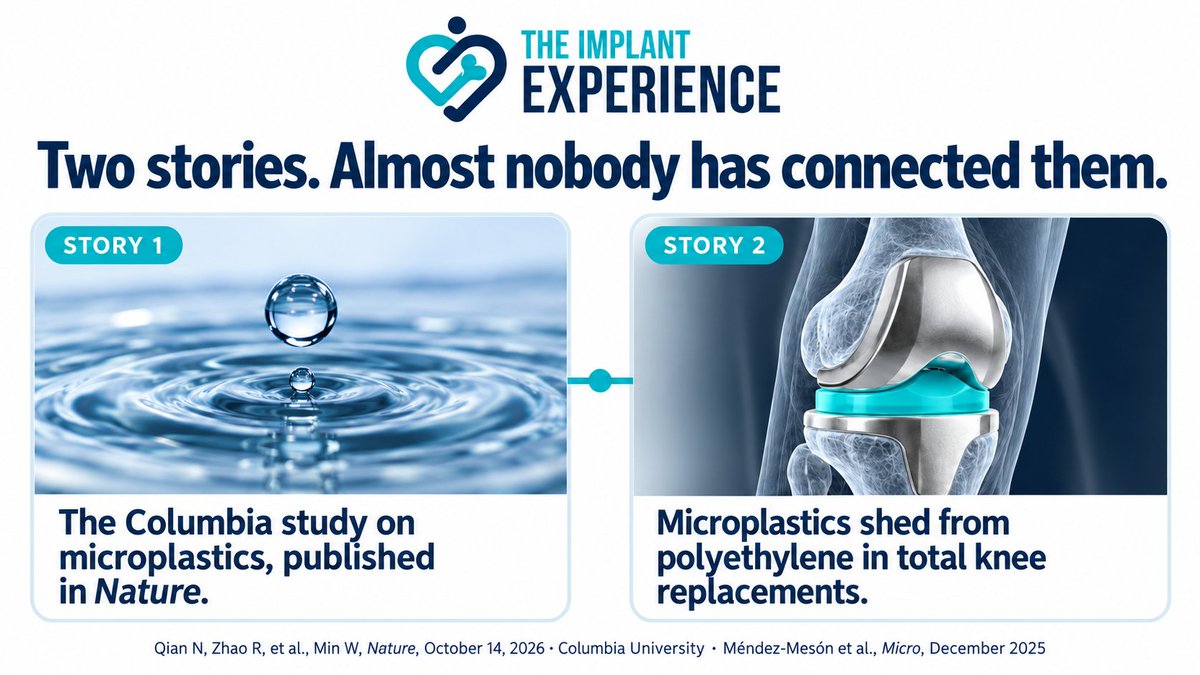
A new Columbia study found when microplastics contact water, their surfaces can become chemically reactive; it could be how they get us sick.
Implant polyethylenes sit in the same conversation as food, water, and chemicals for many people, yet the FDA device, recall, and MAUDE side is almost never part of that discussion. https://t.co/xrdCmbFpjO
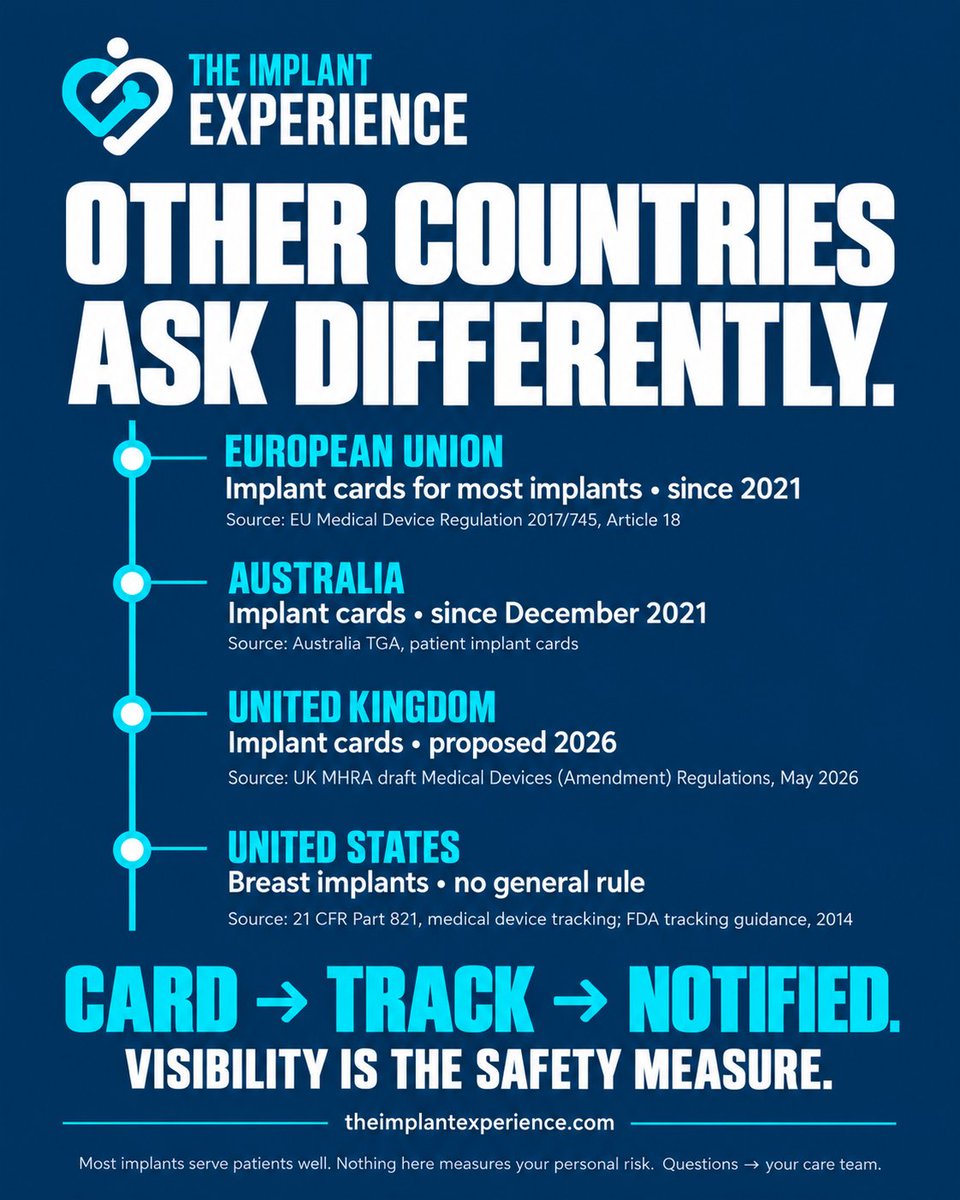
So the card is a great first step. But where is it? Are you sure you have it? When the implant recall came in 2019, the company itself reported incomplete tracking data for about fifty-two thousand of those implants. Visibility is the safety measure.
#ThisIsWhatsInside
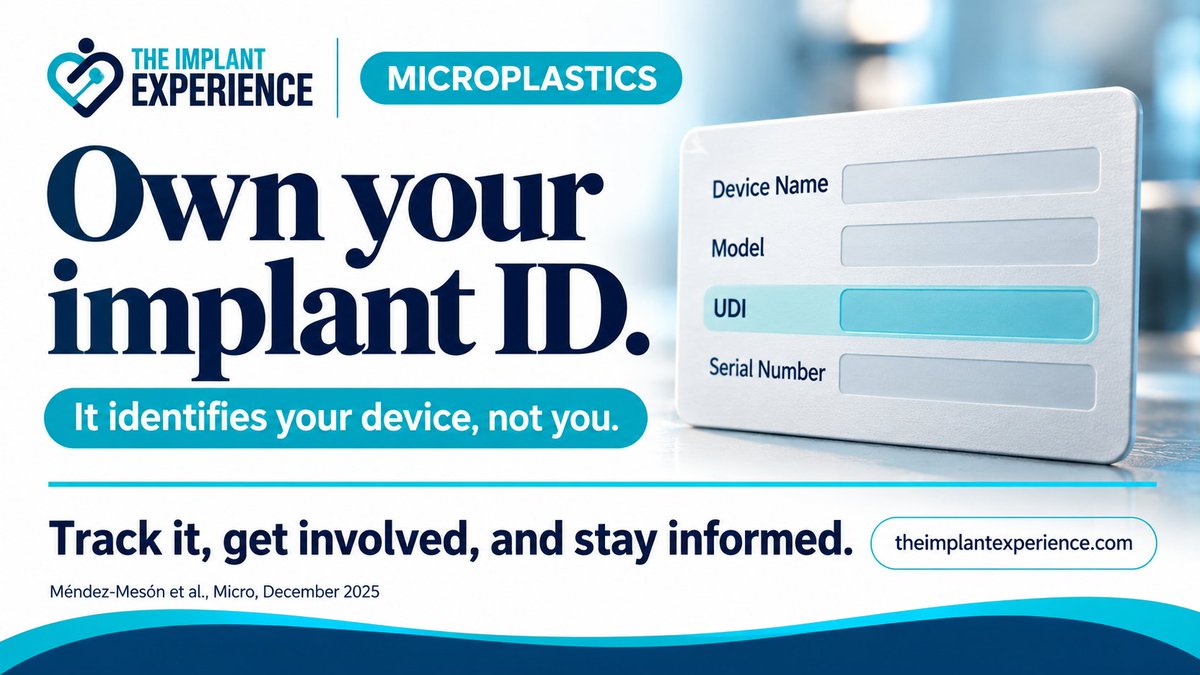
Every implant has parts. Every part has a number.
New series: going procedure by procedure; what’s inside you, and what it looks like when it quietly fails.
The card with your numbers is how you’d know. Breast implant patients get one. Almost nobody else does.
#PatientSafet