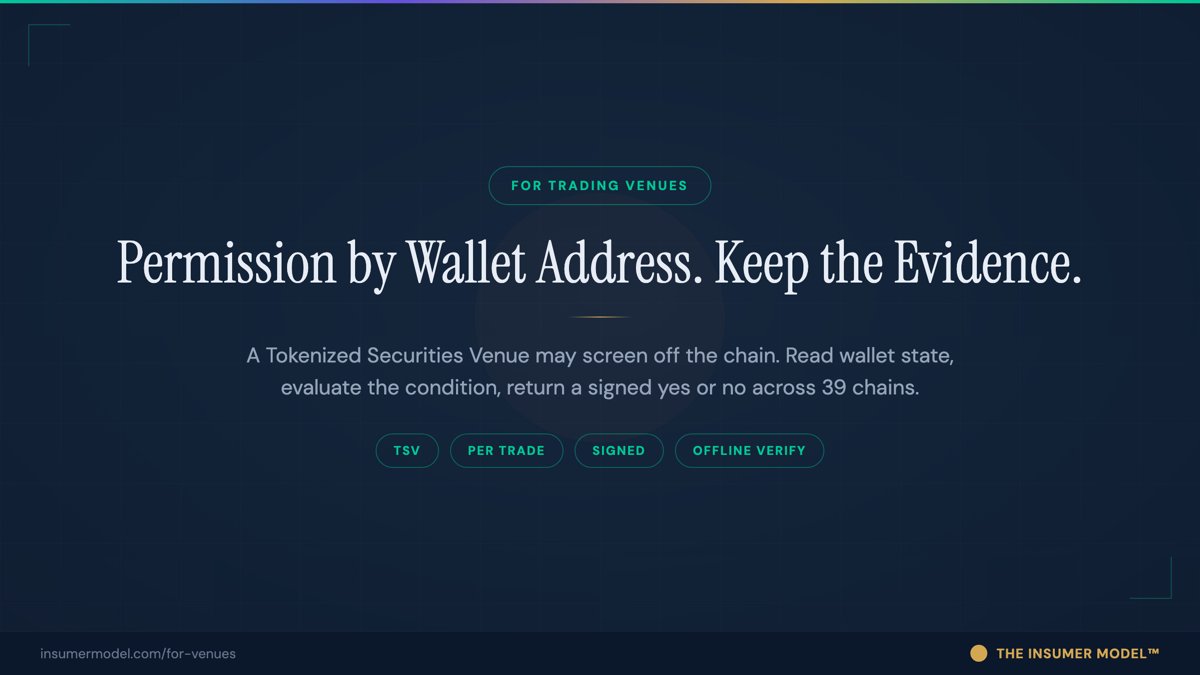
The SEC's tokenized securities venue order describes the admission rule for on-chain stock trading as a property of a wallet address.
The venue sets the criteria. The chain answers. The venue decides what to do with the answer.
Release 34-106402, File No. 4-927:
https://t.co/KVipGzf8Hc
One API call. Ten questions about an AI agent's wallet across six chains. Eight yes, two no, one signed answer.
ECDSA plus a post-quantum ML-DSA-65 signature, checkable offline. Merkle proofs on request.
The same signing covers the wallet trust profile: 145 checks across 27 chains.
Agents pay per call in USDC over x402. No API key.
Insumer checks the conditions.
Shipped this week: the wallet trust profile runs 145 checks across 27 chains in nine dimensions, now including tokenized treasuries, stablecoin deposits, wrapped bitcoin and Basenames. No score, just a signed fact profile. Python verifier: pip install insumer-verify
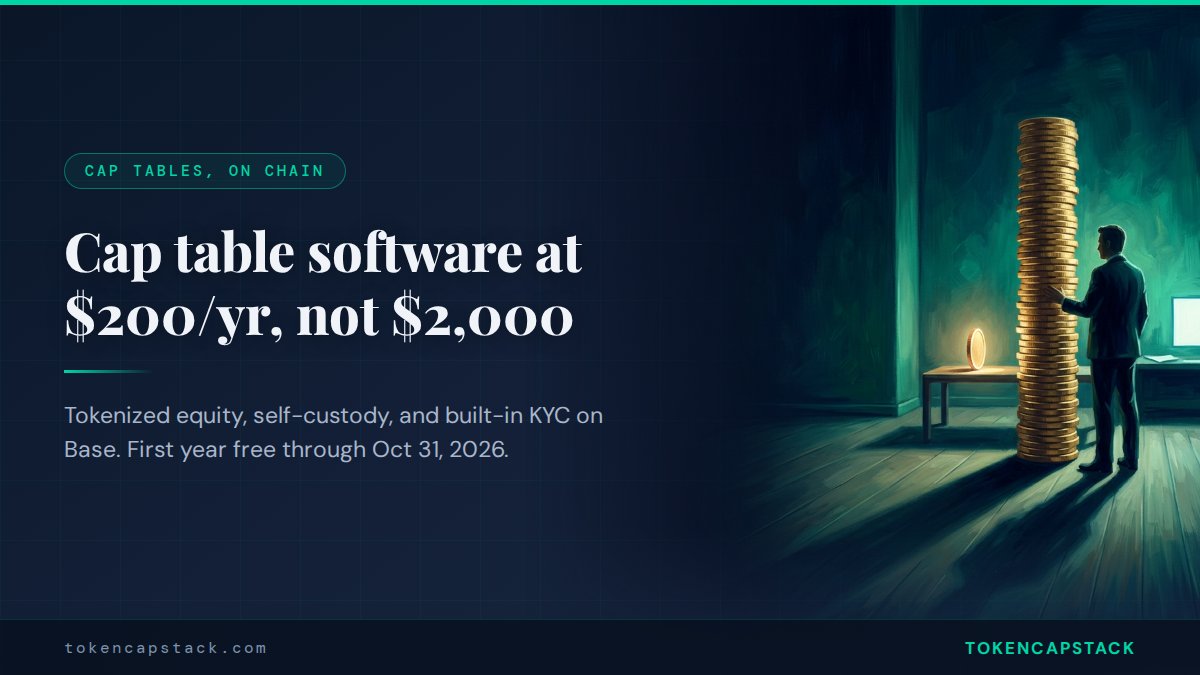
Cap table software shouldn't cost as much as a used car. TokenCapStack runs on Base at $200/yr instead of $2,000+. Tokenized equity, self-custody, built-in KYC, gasless deployment. First year free through Oct 31, 2026.
A chain can fix its future. A record cannot fix its past.
DTCC launches tokenized trading this month. The eligibility records behind those trades get one signature, chosen when the system is built. Ours carry ECDSA plus the NIST post-quantum standard over the same statement.
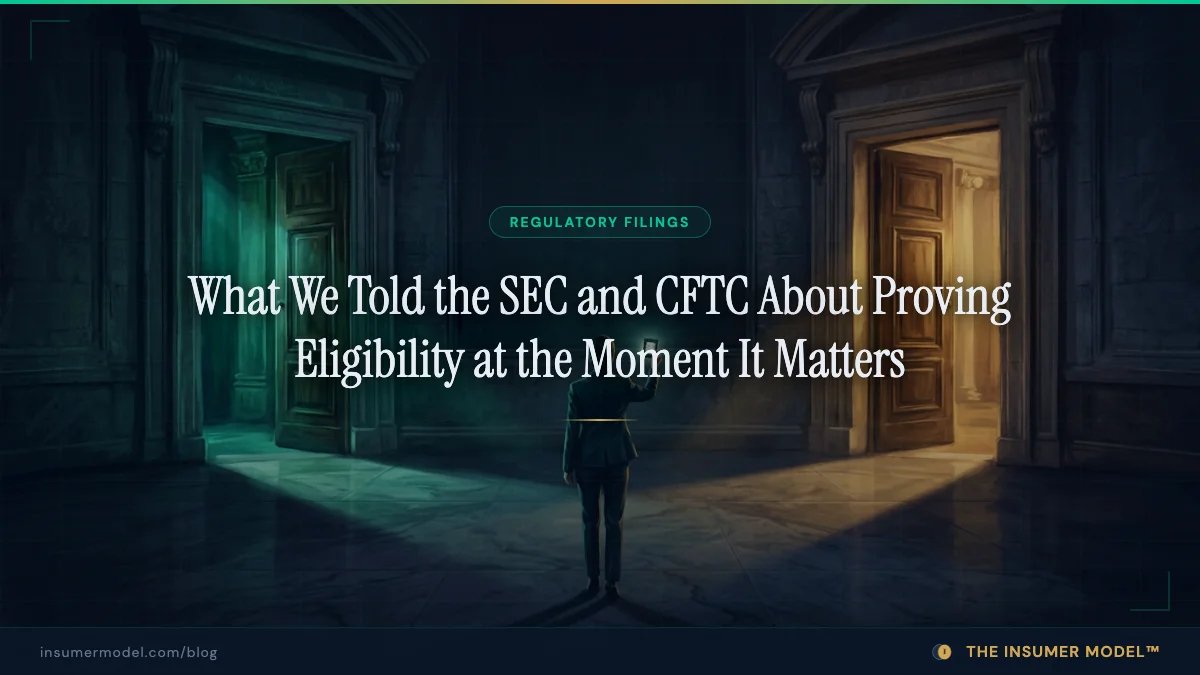
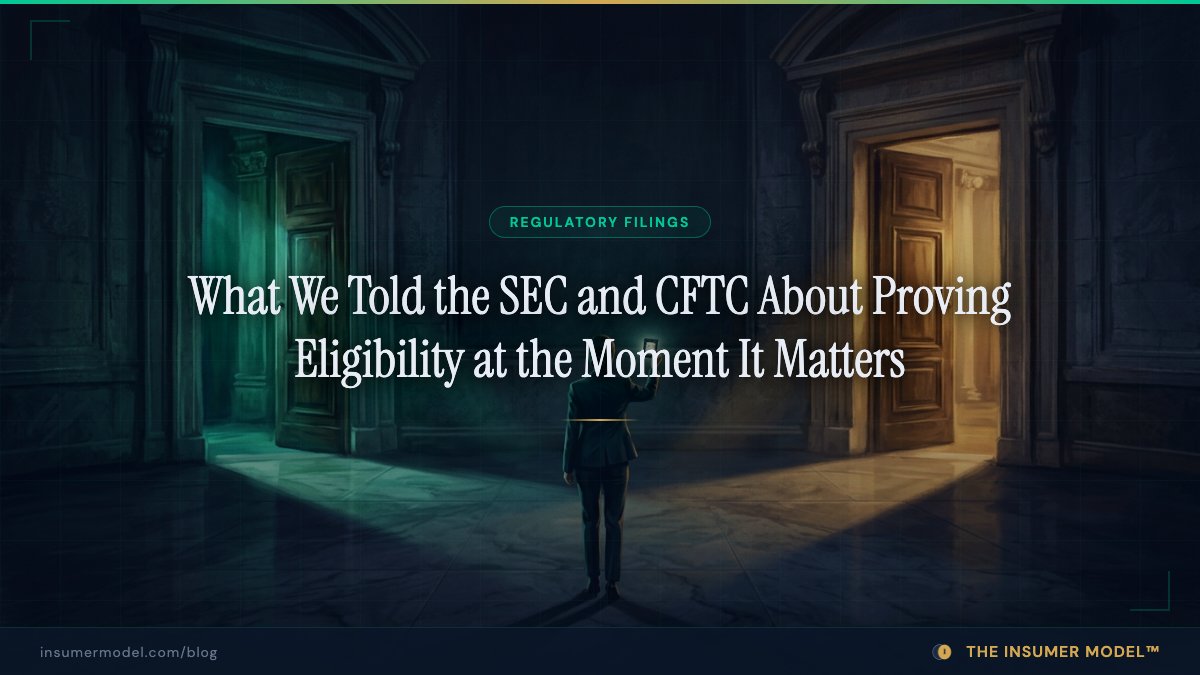
When software trades for a customer, the question isn't whether it was authorized once. It's whether its authority was still in force at the trade, and whether a signed record can prove it five years later. What we told the CFTC and SEC:
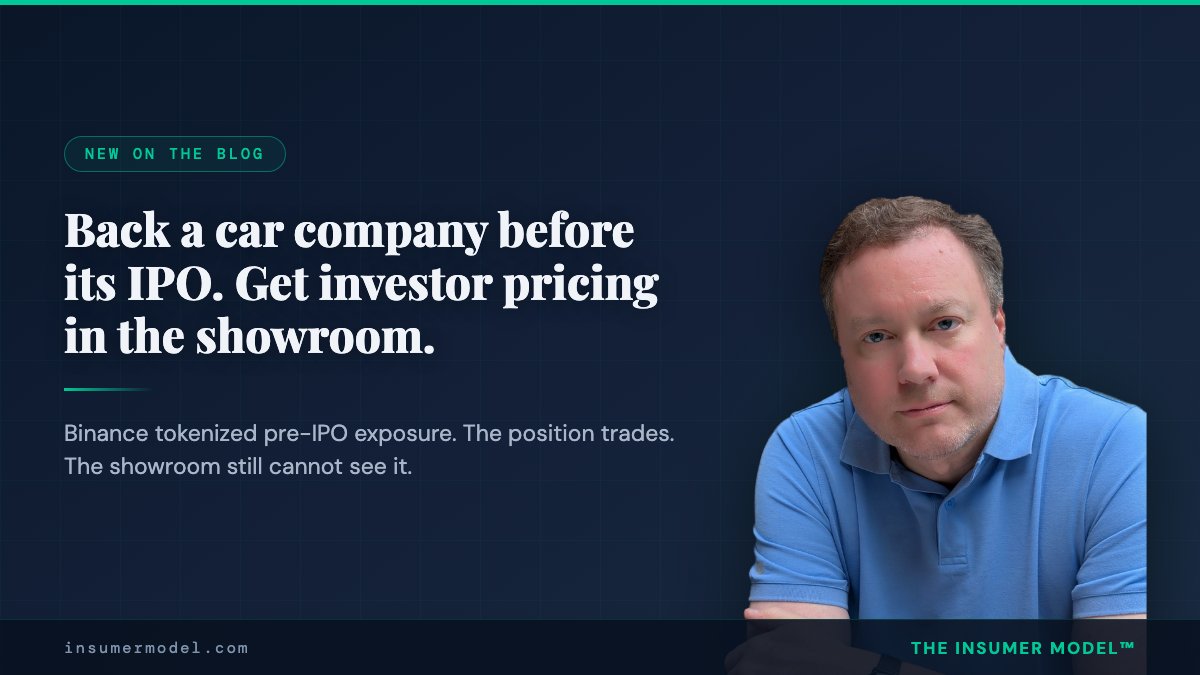
Back a car company before its IPO, then walk into its showroom and get investor pricing on the car. Binance Wallet just tokenized pre-IPO exposure to private companies. The position trades. The showroom still can't see it. New in The Inevitable.
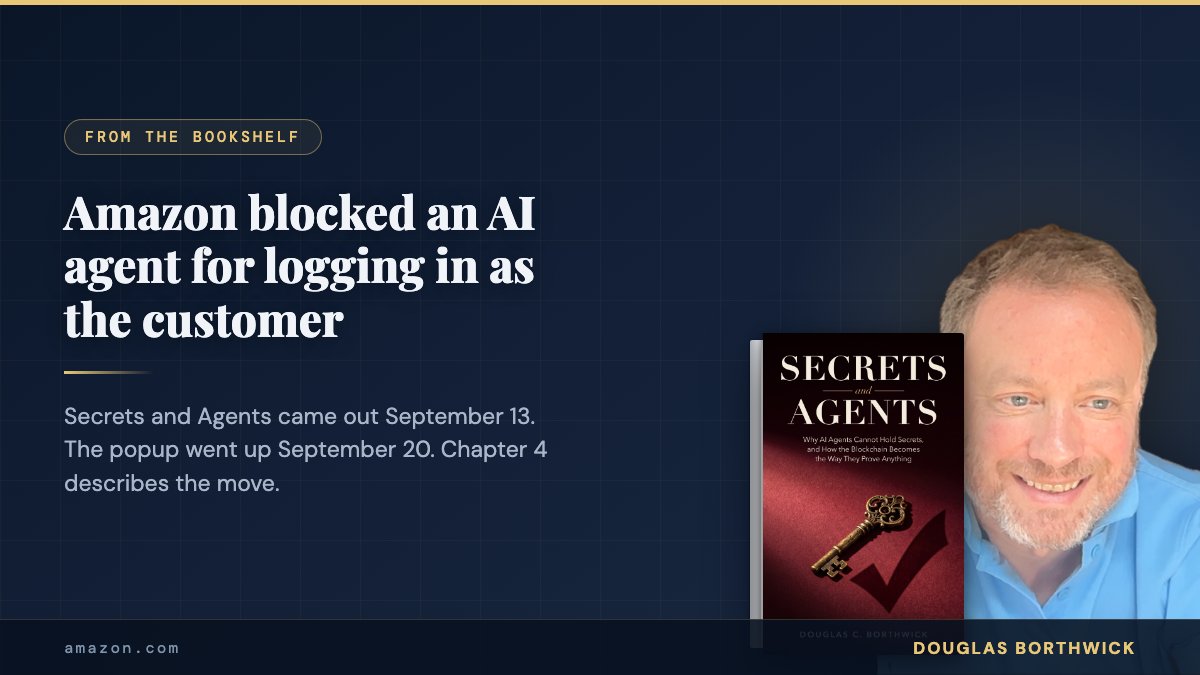
On September 20 Amazon blocked Meta's Muse for shopping while logged in as the customer. Secrets and Agents came out September 13. Chapter 4 describes that exact move: let the agent log in as its owner. The store sees you. The logs say you did it.
The emerging agent stack has boxes for communication and boxes for payment.
Between intent and execution somebody has to establish whether the conditions for the action actually hold.
We answer that. Nine condition types, 37 chains, signed and verifiable offline. Five cents a call over x402, no account needed.
What the venue does with the answer stays the venue's.
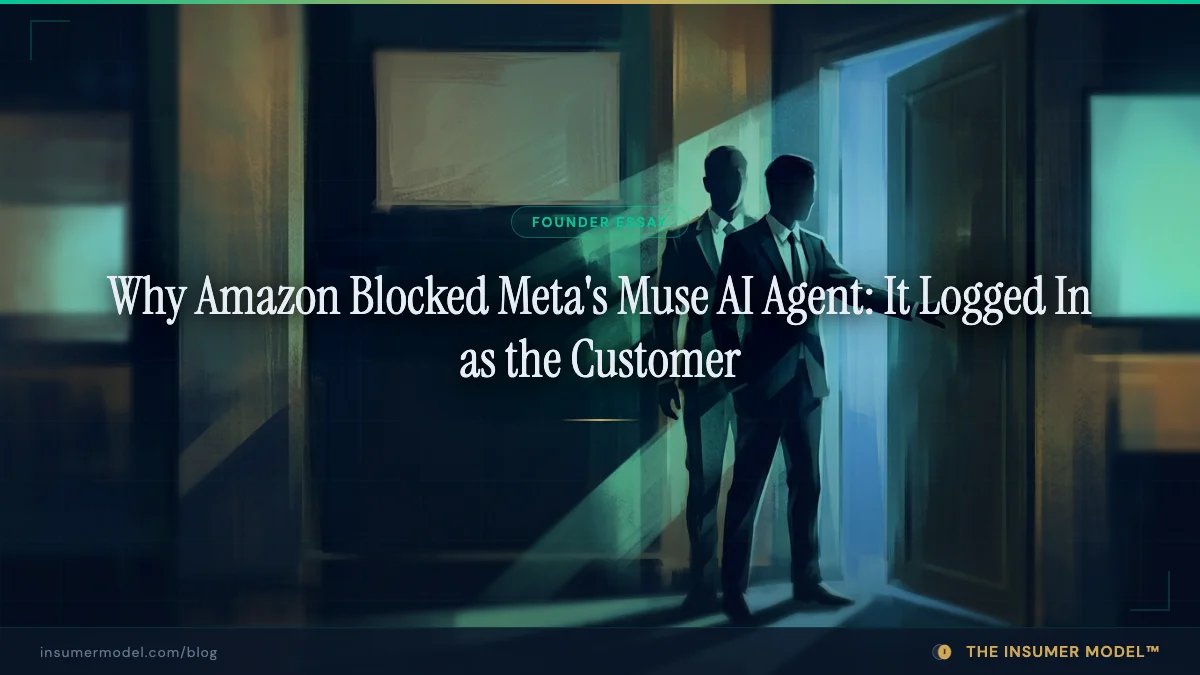
Amazon blocked Meta's Muse agent on Sunday. The popup didn't say the payment failed. It said "unauthorized AI agent."
Meta kept the password away from the model. Amazon never saw the model. It saw a customer who wasn't there.
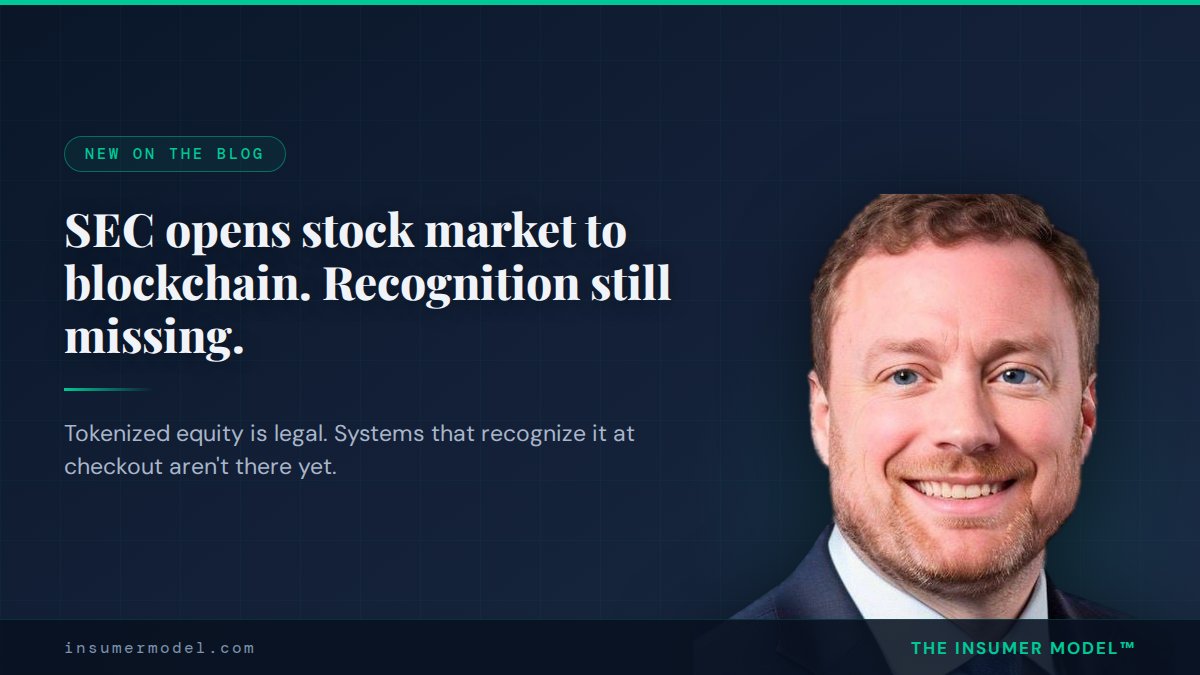
The SEC just opened the $77 trillion US stock market to blockchain trading. Tokenized equity is now legal infrastructure. But recognition at checkout is still missing. New post breaks down what changed and what didn't.
The SEC's tokenized securities venue order describes the admission rule for on-chain stock trading as a property of a wallet address.
The venue sets the criteria. The chain answers. The venue decides what to do with the answer.
Release 34-106402, File No. 4-927:
https://t.co/KVipGzf8Hc