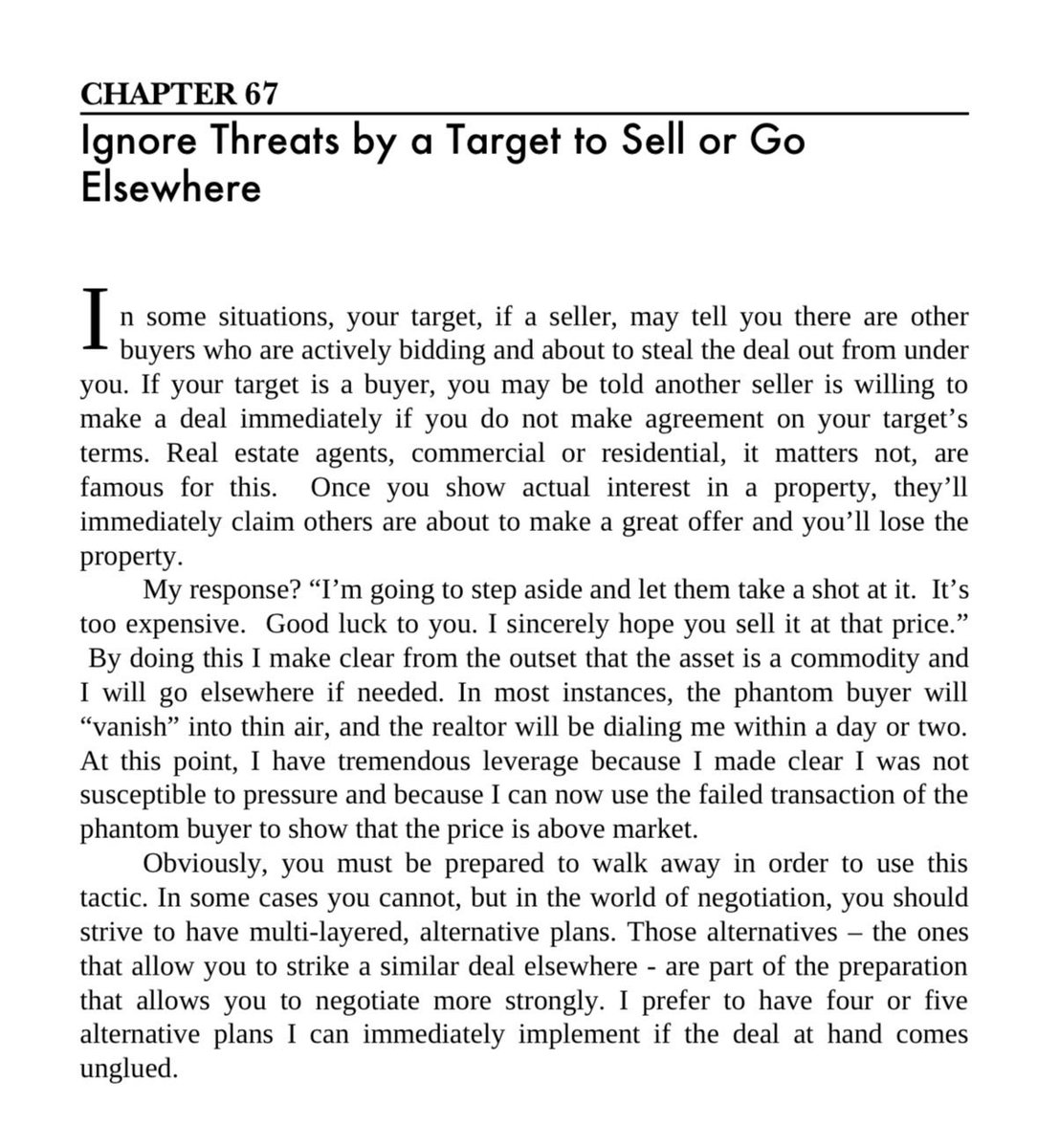
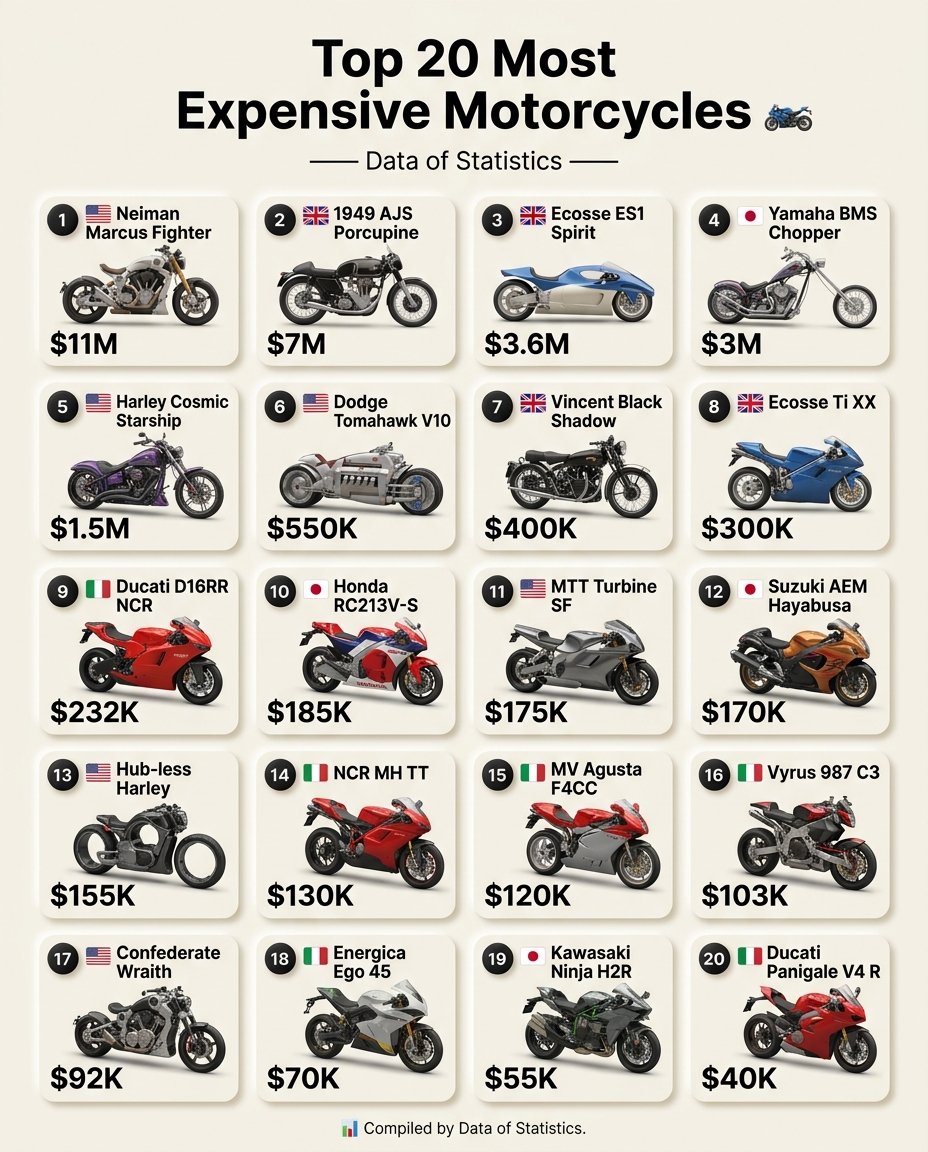
The strongest predictor of who does extraordinary work is whether they ever obsessed over something pointless. We've seen this across 5000 startup meetings, but the pattern showed up across everyone from scientists to athletes.
We’ve met people who spent two years optimising their fantasy football algorithms, or memorised every player in the NBA at 11, or collected thousands of train tickets, or built a Lego replica of their school; none of these activities really had much point.
What they were demonstrating was the hardest skill in any field; the mental capacity to stay focused on a boring task for much longer than it deserves. The path to genius is mostly boring repetition, and people who achieve it have a broken off-switch. It is tough to fake having spent years obsessed with boring things that didn't matter.
I know someone who got rich by hiring attractive female "researchers" to cold call founders and pretend to be conducting an industry study...
She's not a researcher. There is no study. There is no institution behind the calls
But when a 23 year old girl with a polished voice says "Hi, I'm conducting a brief industry study on [founder's exact niche] for a research firm. Can I ask you 4 quick questions about your current vendor stack?" founders answer every single time
The 4 questions are:
1. "What tools are you currently using for [category]?" (Now you know their stack)
2. "What's been your biggest frustration with your current setup?" (Now you know their pain)
3. "If budget wasn't a factor, what would your ideal solution look like?" (Now you know their dream state)
4. "Would you be open to hearing about solutions that specifically address the issues you mentioned?" (Now you have permission to pitch)
By question 4, the founder has voluntarily handed over their entire buying criteria, their current pain, and their budget psychology. And they think they just helped a grad student with a thesis
The "researcher" thanks them, hangs up, and passes the intel to the cold email team who sends a hyper-specific email 48 hours later
"[first name] - we work with [niche] companies that are dealing with [the exact frustration they mentioned on the call]. most teams we talk to say the same thing about [their current vendor]. we fix that specific problem in 21 days. quick loom?"
The founder replies because the email describes their exact situation with creepy precision. They don't connect it to the "research call" from 2 days ago. They think this company just really understands their market
She runs 4 "researchers" doing 30 calls/day each. 120 calls. 80-90 answered. 60+ complete the 4 questions. Intel on 60 companies per day fed directly into cold email
$127,000/mo from pretending to conduct academic research that doesn't exist
The girls get paid $2,200/mo each. The intel they generate closes $127K. And every founder who got "studied" thinks they helped a nice girl with her dissertation
He called it "weaponised politeness" which made me laugh and then feel bad about laughing
People will say the play is deceptive. Sure
But the cold email they receive afterwards genuinely solves a real problem they genuinely have. They just don't know how you found out about it
The research was real. The institution was fake. The revenue is very real
Few
When they see it, they should know they’re facing the champions of the league.
Nothing is done just for the sake. It’s deliberate. You’re coming to the home of the champions. Have that fear when you step in.
There’s a reason it was placed in the away entrance and not home. It’s a message. Another attempt at having psychological edge. Small detail.
Entrepreneurship is like an adult marshmallow test.
Most people aren't wealthy and successful because most people are naturally really bad at making decisions that maximize results 5 and 10 years down the road.
They are broke, out of shape, unhealthy and unhappy because they naturally make decisions that maximize pleasure today and tomorrow or next week instead of far off into the future.
And unfortunately, most people think of entrepreneurship as a get-rich-quick scheme. The media likes to celebrate stories of people like Zuckerberg who went from his college dorm room to being a billionaire in just a few years.
Many stories are written about these unicorns but they are one in a million success stories.
The truth is that entrepreneurship is anything but a get-rich quick scheme.
For essentially everyone, generational wealth and success in America is usually a VERY long game.
So long, in fact, that it takes multiple generations!
People immigrate to America with nothing. They work hard just to get by and send their kids to a decent school.
Those kids improve and then advance in society. They become doctors or lawyers and create stability and a backstop for their kids. And then those kids become entrepreneurs and accumulate even more wealth in their lives.
The lesson: Play the long game. Understand that it is a process. You must suffer and do hard and boring things for many years to have great results.
Making money, despite what you read on social media, is actually quite hard.
Play the long game!
This Friday, the largest IPO in history goes live. SpaceX lists at $135 a share. Most Nigerians can’t buy at that price. But here is exactly how to get in after it opens.
Tony Elumelu’s Corporate Empire
Financial Services
- United Bank for Africa (UBA)
- United Capital Plc
- Africa Prudential Plc
- Heirs Insurance Group
Energy & Power
- Transcorp Power Plc
- Transafam Plc
- Transcorp Energies Limited
- Heirs Energies Limited
- Tenoil
Hospitality & Real Estate
- Transcorp Hotels Plc
- Afriland Properties Plc
Healthcare
- Avon Medical Practice
- Avon HMO
Technology
- Heirs Technologies
- Redtech
Philanthropy & Empowerment
- The Tony Elumelu Foundation
NB: There are other companies not under the HH group which he has direct/indirect stake in.
Man runs an ecosystem 🚀
If you can recognize the logo, it's not real luxury.
The richest people on earth wear brands designed to be invisible.
No Dior. No LV. Nothing you'd spot in a mall.
6 labels worn by billionaires, royalty, and heads of state that 99% have never heard of: 🧵
The £4 Billion Plumber
Richard Harpin started with just £50,000
and sold his company to Brookfield for £4.1 billion.
He bought dozens of small plumbing and repair businesses and rolled them up with insurance + emergency services.
The UK version of Brad Jacobs
As someone who partially grew up among European elite kids like him, this reminds me just how incredibly hollow some of them are.
For a quick background, I went to one of the poshest high schools in France (Janson de Sailly, for those who know) and, afterwards, to what was at the time - and probably still is - the most expensive undergraduate school in Europe (EHL in Lausanne, Switzerland).
Needless to say, many of my classmates were from unbelievably privileged backgrounds. Just in my classroom in Lausanne I had the son of a (very famous) Russian oligarch, the son of Italy's largest real estate developer and the son of Spain's largest real estate developer (funnily, the latter two were flat mates).
Another classmate of mine came from the richest family in Naples, Italy and - while we were at school - his father (known in Naples under the nickname "Il Sultano") got arrested for having bribed half of Naples's city council - which, if you know Naples, ought to tell you something.
These were the kids I was doing group projects on business ethics with (literally) 😅
Anyhow, my story, and probably my luck, was that - before going to high school in Paris - I was raised in very normal public schools in the South of France where my friends were anything but wealthy. Their parents were farmers and everyday workers.
Which means - and I'd come to realize this was very important in life - that it was easy for me to understand how big a mistake it is to see money as identity and meaning - and to confuse someone's net worth with their actual worth.
What really struck me at the time was the contrast with my "poor" classmates of earlier in my life. They couldn't define themselves by what they had - by definition - and this forced them to reach deeper for their identity: their skills, knowledge, humor, etc.
Rich kids can skip that entire process, and the tragedy is that most of them do: they reach for the readymade identity that money provides. I remember being incredibly frustrated by many of my classmates, like "ok, I get it, your dad is rich and you own a lot of nice things but who are YOU, what else is there?" The answer, more often than not, was nothing.
To be fair, there were exceptions. One of my classmates I was most impressed by came from one of Zurich's wealthiest families (which, if you know Zurich, means insanely wealthy) yet he was almost OCD in not showing he had money: driving the shittiest car imaginable, living in a small studio, etc. He was very intellectual, very contrarian, and clearly at war with the idea that his family's wealth ought to define who he was.
I only discovered who he actually was when I started my first company and he approached me to invest: to discuss the investment I went to one of his family homes, which it turned out was a literal palatial castle on the shores of Geneva lake. The guy had decided to live in a small rundown studio when he literally had a castle sitting empty a 5-min drive away.
THAT I was impressed by: it's easy to see that money isn't meaning when you don't have any. To see it when you have more than almost anyone - when everyone around you is organized around the opposite assumption - is much harder. But to actually live it, to choose the studio when you have the castle keys in your pockets - with no audience to applaud you for that - that shows real depth.
At the end of the day, I think, the real distinction isn't between rich and poor but between people who exist from the inside out and people who exist from the outside in.
Wealth just happens to make it incredibly easy to be the latter, to skip the work of becoming someone and settle for a borrowed identity that glitters from the outside but is hollow all the way through. A Potemkin village identity.
This is actually a real societal issue, and magnified by social media (with idiotic posts like this one 👇): the more "outside in" folks out there, the less people with genuine internal anchors, the more fragile everything becomes.
When you think about it, everything that genuinely matters in a society is built by people who think for themselves: they take the world in, pass it through something genuinely their own, and give back something that didn't exist before: an idea, a conviction, a stand.
Every reform, every invention, every act of moral courage in history came from someone with an internal anchor strong enough to resist the current. Remove those people and all you have left is the current.
This isn't new, by the way. Most ancient traditions warn against exactly this, from the Bible (the golden calf story) to Confucius, who built his entire ethics around the distinction between the exemplary person (the Junzi, 君子) - oriented around internal cultivation and righteousness - and the petty person (Xiaoren, 小人), oriented around profit and gain. The junzi builds himself from the inside, the xiaoren chases what's outside.
So please, do not make the mistake of being impressed by wealthy people flaunting their wealth. Don't focus on the glitter, focus on the hollowness it's trying to hide.
If you were raising an Igbo child today, what are the books that you consider essential reading from age 12-20?
Things Fall Apart
The Joys of Motherhood
Arrow of God
No Longer at Ease
Purple Hibiscus
There Was A Country.
Omenuko.
What else?
Ukpana Okpoko Gburu
Ukwa Rue Oge Ya, Odaa
Oka Aku, Eri Eri
Isị Akwụ Dara n'Ala
Juo Obinna
Ala Bingo
Ihe Onye Metara
Ihe Ojoo Gbaa Afo
These are all Igbo novels, some of the best ever published, unless you don't plan on them speaking or reading in Igbo.
This is an English translation of "Ala Bingo": https://t.co/9Rtq91dbJX