खेती अब स्मार्ट बन रही है। गेट्स फाउंडेशन और अन्य साझेदारों के सहयोग से विकसित TerraCroft का KrishiBOT खेतों के दोहराए जाने वाले कामों को स्वचालित बनाता है, ताकि किसान अपनी उत्पादकता बढ़ाने और आय में सुधार पर अधिक ध्यान दे सकेंखेती अब स्मार्ट बन रही है। गेट्स फाउंडेशन और अन्य साझेदारों के सहयोग से विकसित TerraCroft का KrishiBOT खेतों के दोहराए जाने वाले कामों को स्वचालित बनाता है, ताकि किसान अपनी उत्पादकता बढ़ाने और आय में सुधार पर अधिक ध्यान दे सकेंखेती अब स्मार्ट बन रही है। गेट्स फाउंडेशन और अन्य साझेदारों के सहयोग से विकसित TerraCroft का KrishiBOT खेतों के दोहराए जाने वाले कामों को स्वचालित बनाता है, ताकि किसान अपनी उत्पादकता बढ़ाने और आय में सुधार पर अधिक ध्यान दे सकेंखेती अब स्मार्ट बन रही है। गेट्स फाउंडेशन और अन्य साझेदारों के सहयोग से विकसित TerraCroft का KrishiBOT खेतों के दोहराए जाने वाले कामों को स्वचालित बनाता है, ताकि किसान अपनी उत्पादकता बढ़ाने और आय में सुधार पर अधिक ध्यान दे सकें।
An eight-year-old developer has built a voice-controlled artificial intelligence (AI) storytelling device that runs completely offline using an $8 microcontroller.
Laksh, co-founder of Projects by Laksh, developed the device using an ESP32-S3 microcontroller, an INMP441 microphone, an I2S speaker, and a MAX98357A amplifier. The system does not require Wi-Fi, cloud services or APIs to work.
The AI can create short stories, read them aloud, display simple animations and respond to voice commands such as "play", "pause", "resume" and "next story."
Read More: https://t.co/XgqWfqrmwA
#Laksh #AI #ArtificialIntelligence #microcontroller #TechNews
How Japanese have produced wood for 700 years, without cutting down trees.
Daisugi is an ancient Japanese forestry technique developed in the 14th century originally used by people living in the Kitayama region, because the territory was extremely poor in saplings.
They planted cedars pruned in a special way to produce shoots that eventually would become perfect, straight, knot-free lumbers.
The shoots are gently pruned by hand every two years leaving only the top boughs, allowing them to grow straight. Harvesting takes 20 years and old 'tree stock' can grow up to a hundred shoots at a time.
There was actually another reason why the technique was developed: fashion. In the 14th century, a linear, stylized form of architecture known as sukiya-zukuri (数寄屋造り) became popular, and every prominent samurai or nobleman wanted a house built in this way.
There were simply not enough raw materials available to keep up with demand, so daisugi was developed to produce more wood in a shorter time.
The wood produced with this technique has also impressive qualities: it's 140% more flexible than standard cedar and 200% denser and stronger. And, it's extremely durable.
🚨 Luis Enrique wowed on how Manchester United broke Arsenal's low block:
🗣️ Henry:
“You kept pressing and pressing. Did it ever feel like Arsenal weren't going to concede?”
🗣️ Luis Enrique:
“We know Arsenal are one of the most organized teams in Europe. When they decide to defend deep, it becomes very difficult to create chances. Before this match, we studied Manchester United's 3-2 win against Arsenal because we wanted to understand what problems they created.
What we saw was a team brave enough to attack the spaces available and players with the quality to punish mistakes. The goals from Dorgu and Cunha showed that one moment of quality can completely change a game. So when Arsenal scored first against us, we remained calm because we had already seen an example of a team recovering from that situation.
That is why I think Manchester United will be very dangerous next season. If you can find solutions against a team as organized as Arsenal, you can compete against anybody.”
There is a question many footballers never ask when they sign their first professional contract. It is not about salary and it is not about bonuses. It is this: if I get seriously injured tomorrow, what exactly does my club owe me, for how long, and what happens after that runs out?
The answer depends entirely on where you play. And for most players below the top tier, the answer is far less reassuring than they assume.
At top level, In England, the Premier League and EFL Standard Player Contract, Clause 6, sets out the baseline. A player receives full salary for the first 18 months of any injury or illness. After that, the club has the right to reduce payment to half wages for the remainder of the contract.
If an independent medical examination confirms permanent incapacity, the club may serve some months notice to terminate. That is the gold standard in English football and genuinely among the better frameworks in Europe. It is also the ceiling, not the floor.
In larger Europe however, it is a bit different. In Germany for example, Section 616 of the German Civil Code, the BGB, sets the statutory baseline for continued remuneration during inability to work. For footballers, the DFL and players' union collective agreement places the club's obligation at six weeks.
After that the player is on his own unless he has taken out personal insurance.
In France, the Ligue de Football Professionnel collective bargaining agreement requires the club to pay salary for a maximum of three months.
If the injury is career-ending, the club can terminate immediately, with a severance of only 40 percent of monthly salary multiplied by the number of seasons the player served the club.
Italy's FIGC collective agreement between Serie A clubs and the AIC players' union gives six months of full basic salary, after which it can be halved and the contract potentially terminated.
The Netherlands stands apart. Article 7:629 of the Dutch Civil Code requires full salary continuation for the entire duration of the contract, regardless of injury severity. It is the only major European framework that genuinely prioritises the player over the club's financial exposure.
During the 2023/24 season alone, injury costs across Europe's five major leagues reached a combined €732 million in wages paid to players unable to feature due to injury. That figure covers only the top five leagues and says nothing about the thousands of players beneath them.
Which brings us to the part of the story that almost never gets told.
For players who get injured while on international duty, there is one additional layer of protection worth understanding. The FIFA Club Protection Programme, updated under the 2023 to 2026 Technical Bulletin, compensates clubs for salary costs when a player is injured during A-international duty.
The programme covers all players under written professional contracts released for official A-team matches. Compensation is capped at $7.5 million per player per accident, calculated on a daily pro-rata basis and payable for a maximum of 365 days after an initial 28-day waiting period.
The club receives compensation, not the player and the player still relies on whatever their employment contract provides during the recovery period.
But I find this funny. You can balance me if you think my reservation is unfounnded. The most sophisticated protection mechanism in international football compensates the club.
The player's personal financial position during a serious injury, wherever in the world it happens, is almost entirely determined by the contract they signed and what they personally arranged before they got hurt.
Know what your contract says under Clause 6 if you are in England. Know your equivalent provision if you are in Germany, France, or Italy. Know that the Dutch League standard is the best available in European football and still has a ceiling.
THere may be others based on contracts but these are the general provisions.
Hope you have learned something today.
My name is Ajoje. I am a FIFA Licensed Agent and International Sports Lawyer. I write on the Law and Business of Football, a lot. Repost and Follow if you want to read more posts like this.
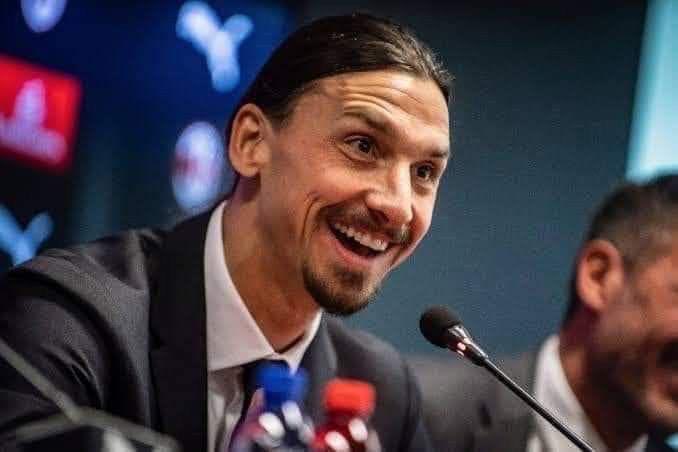
🚨🗣️ Zlatan Ibrahimović on Manchester United;
“No club will ever match Manchester United’s dominance… not at home, not in Europe. Dynasties come and go, but giants remain.
Yes, United have struggled in recent years. But giants do not disappear… they wait.
What Sir Alex Ferguson built was bigger than trophies because he built an identity. That is why Manchester United will always be football’s true giants.”
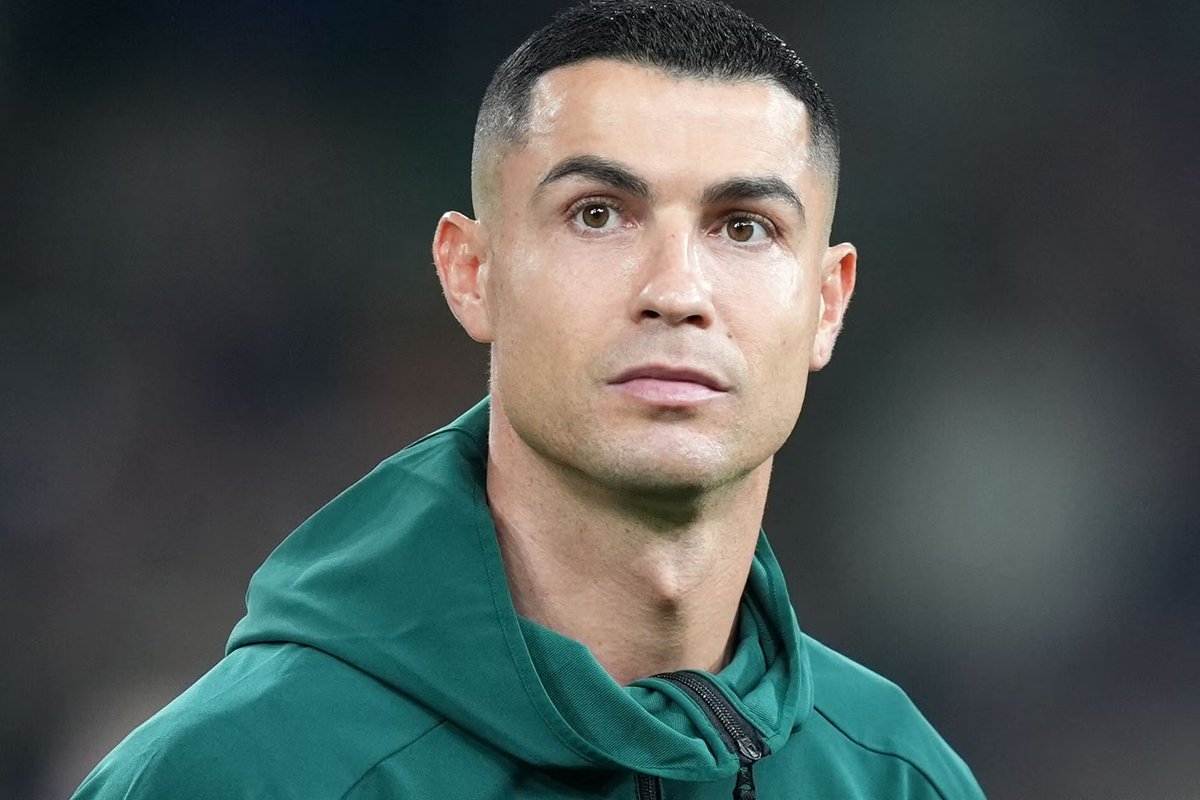
🗣️ Cristiano Ronaldo: "My wife (Georgina) tells me, 'Our kids are going to catch a cold being barefoot.' It's the complete opposite… The body needs discomfort to get stronger.
For years, the cold has been part of my routine. I use cryotherapy, cold showers, compression chambers. All of that trains my body and my mind for high performance. I don't just play football, I also take care of myself like an elite athlete. I sleep well, more than seven hours every night, I move all day, and above all, I'm consistent. That's why, at 40 years old, my physiological age according to Whoop is 28.9. It's not luck. It's daily work.
Of course, I also treat myself. I've eaten a burger, I've stayed up until 2:00 a.m. watching a UFC fight, I've slept poorly. But that's 5% of my life. The other 95% is discipline, routine, recovery. People think being fit means living obsessed, but no. It's about finding the balance between enjoying life and taking care of yourself. And if you ask me what the secret is, I always say the same thing: there isn't one. It's just about being consistent when others aren't. That's the real difference."