He targeted young backpackers traveling across Australia. He offered them rides, gained their trust, and took them deep into the wilderness. For years, people disappeared without a trace. Then investigators discovered something horrifying inside Belanglo State Forest. His name was Ivan Milat, and he became known as Australia’s infamous “Backpacker Killer.”
Ivan Robert Marko Milat was born on December 27, 1944, in Sydney, Australia. He grew up in a family of 14 children and had a history of criminal behavior long before the murders. But between 1989 and 1992, seven young travelers disappeared while exploring Australia.
The first victims were James Gibson and Deborah Everist, both 19, who disappeared in December 1989. In 1991, German backpacker Simone Schmidl vanished. Later that year, another German couple, Anja Habschied, 20, and Gabor Neugebauer, 21, disappeared while traveling through the country. In April 1992, British backpackers Caroline Clarke, 21, and Joanne Walters, 22, also vanished after leaving Sydney.
For years, investigators struggled to connect the disappearances. Then, in September 1992, two people walking through Belanglo State Forest discovered the bodies of Clarke and Walters. Over the following months, five more victims were found in the same forest. Seven young travelers had been murdered and buried in a remote area of New South Wales.
The investigation took a dramatic turn when British backpacker Paul Onions came forward. In January 1990, he had accepted a ride from a man calling himself “Bill.” During the journey, the driver pulled out a shotgun and threatened him. Onions managed to escape and reported the incident to police. Years later, after reading about the backpacker murders, he contacted Australian investigators. He believed the man who had threatened him might be responsible.
In 1994, Onions returned to Australia and identified Ivan Milat. On May 22, police arrested Milat at his home. Investigators discovered weapons, ammunition, camping equipment and personal belongings connected to the murdered travelers. Among the recovered items was a distinctive shirt belonging to Onions.
Milat’s trial began in March 1996. He maintained his innocence throughout the proceedings, but on July 27, the jury found him guilty of all seven murders and the kidnapping of Paul Onions. He received seven consecutive life sentences without the possibility of parole.
But investigators still had one question: were there more victims? Several other disappearances were examined for possible connections to Milat, but no additional murder convictions were secured against him.
On October 27, 2019, Ivan Milat died in prison at the age of 74. He never confessed to the seven murders. Seven young people had left home to explore Australia, but never returned. Paul Onions survived because he managed to escape, and his testimony helped bring one of Australia’s most notorious killers to justice.
Do you believe Ivan Milat was responsible for more murders than the seven he was convicted of?
THE SIX-YEAR-OLD WHO WENT ON TRIAL FOR MURDER
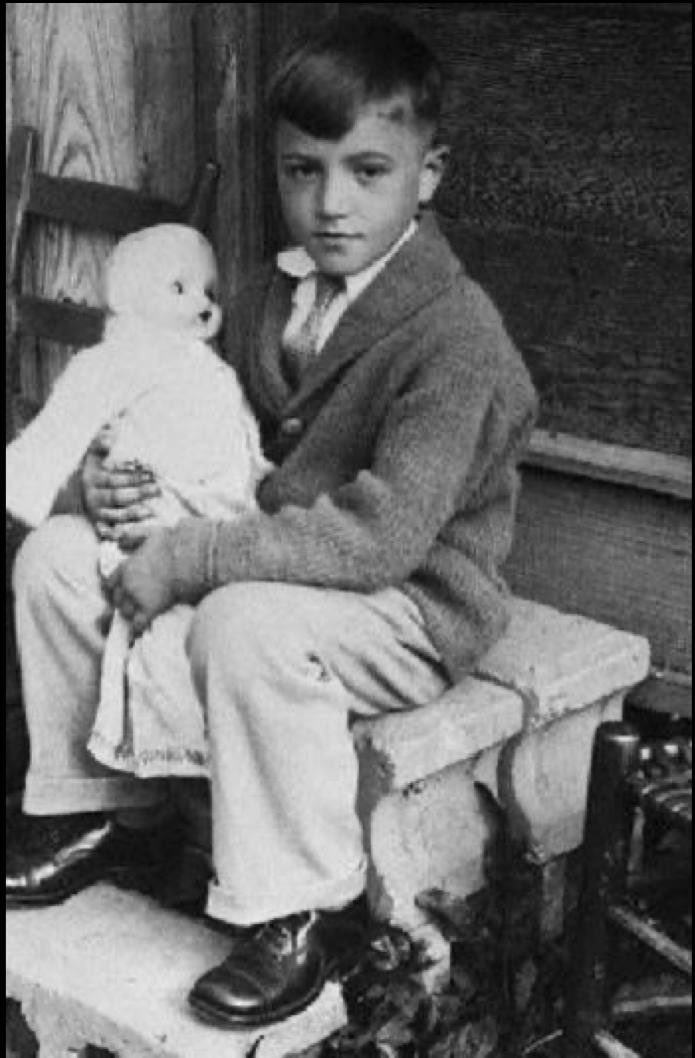
In May 1929, a small town in eastern Kentucky became the center of a national controversy. The case involved two children, a piece of scrap metal, and a shotgun. But what shocked America most was that the person standing trial for the death of an eight-year-old boy was just six years old.
Carl Newton Mahan lived in Paintsville, Kentucky, where many families struggled to make ends meet. Children often collected scrap metal to earn a few cents. One day, Carl was out searching with his eight-year-old friend, Cecil Van Hoose. Carl found a piece of iron, but Cecil took it from him. An argument followed, and according to accounts from the time, Cecil struck Carl. Furious, the younger boy threatened to kill him if he did not return the metal. Then he ran home.
His mother was away. His father’s 12-gauge shotgun hung on a nail behind a door, too high for Carl to reach. He climbed onto a chair, took the weapon down, and went back outside. When he saw Cecil again, he reportedly shouted a warning and pulled the trigger. The shot struck Cecil in the chest. A neighbour helped rush him to hospital, but he died shortly after arriving. The undertaker later reported finding eighteen pellets in his body, three of them in his heart.
Within days, Carl was facing a jury. The trial took place on May 22 and 23, 1929. Carl sat beside his lawyer, John Wheeler, while witnesses described the shooting. His mother testified that her son had told her he did not know the shotgun was loaded. At times, the child played with objects on the table and struggled to sit still, like any six-year-old forced to spend hours in a courtroom.
After approximately thirty-five minutes of deliberation, the jury found Carl guilty of manslaughter. Judge John W. Butcher sentenced him to the state reformatory at Greendale, where he was supposed to remain until the age of twenty-one. A six-year-old had effectively been sentenced to spend most of his childhood behind institutional walls.
The decision caused an uproar across America. Some believed Carl had to face consequences for taking another child’s life. Others considered the sentence cruel and legally questionable. The case attracted the attention of Father Edward Flanagan, founder of Boys Town, who offered to take Carl into his care. The famous defence attorney Clarence Darrow also publicly commented on the controversy.
But there was a problem: the reformatory reportedly did not accept children under ten. Carl’s lawyer challenged the proceedings, arguing that the juvenile court had exceeded its authority. On May 24, Circuit Judge J. F. Bailey intervened and blocked the sentence. Carl was allowed to remain with his family while the legal dispute continued.
The case was later handled by the state’s juvenile authorities. On June 30, Carl was placed under the supervision of the Kentucky Children’s Bureau. On July 9, officials decided he could remain with his parents. The case had exposed difficult questions about how the justice system should deal with children too young to fully understand the consequences of their actions.
Carl eventually left Johnson County and lived a largely private life. Little is known about his later years. He died in 1958, aged thirty-five. A local historical account reports that his death was by suicide.
Cecil Van Hoose was eight when he died. Carl Mahan was barely six when his actions changed both their lives forever. One boy never got the chance to grow up. The other became the centre of a national legal debate before he was old enough to understand what a trial meant.
#TrueCrime
That’s one of the most troubling aspects of Jessica’s case. The early investigation may have missed crucial opportunities to uncover what really happened. Even years later, many questions remain unanswered — and Jessica deserves to be remembered as more than just another cold case.ґ
15 YEARS WITHOUT ANSWERS.
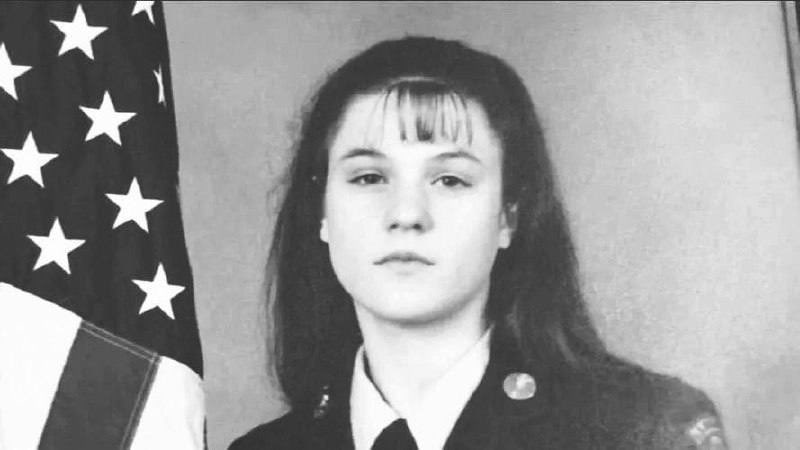
On September 10, 1999, 17-year-old Jessica Dishon disappeared from the driveway of her family home in Bullitt County, Kentucky. When her mother, Edna, returned from work, she noticed something strange: Jessica’s car was still parked outside, but her daughter was gone. Her purse, keys and backpack had been left inside. Part of the plastic trim beneath the driver’s seat was also broken. Jessica had seemingly vanished without a trace.
Her parents immediately contacted the police, but investigators initially suspected she had run away. The family was told to wait for her to make contact. When days passed without any news, Jessica’s parents, Edna and Mike Dishon, contacted the FBI and continued searching for their daughter.
Seventeen days later, on September 27, Jessica’s body was discovered in a wooded area known as the Salt River Bottoms, approximately seven miles from her home. Investigators determined that she had been beaten and strangled. What had initially been treated as a possible runaway case had become a murder investigation.
Attention soon turned toward a neighbor, David “Bucky” Brooks. In 2001, he was charged in connection with Jessica’s murder. However, his trial ended in a mistrial in 2003, and the charges were eventually dismissed. The investigation had suffered from serious problems, including missing evidence and mistakes made during the initial inquiry. Jessica’s family was left without answers, and the case remained unresolved.
For more than a decade, investigators continued looking for new leads. Then, in 2013, the case took a dramatic turn. Two prison informants separately told investigators that Jessica’s uncle, Stanley Dishon, had confessed to killing her. According to their accounts, he had been sexually abusing Jessica and feared she would reveal the abuse to her boyfriend. Investigators also revisited earlier evidence and interviewed witnesses.
Stanley Dishon had already been convicted of sexual offences involving young girls and was serving a prison sentence when investigators brought the new case against him. On October 2, 2013, more than 14 years after Jessica’s disappearance, he was arrested and charged with her kidnapping and murder.
In January 2015, the case finally reached a resolution. Stanley Dishon entered an Alford plea to first-degree manslaughter. This type of plea allows a defendant to maintain their innocence while acknowledging that prosecutors have sufficient evidence to obtain a conviction. He was sentenced to 20 years in prison. He was not convicted of murder, and the plea did not amount to a full admission of guilt.
The sentence also required him to register as a sex offender.
Fifteen years had passed between Jessica’s disappearance and the final resolution of the case. Her family had endured a failed prosecution, years of uncertainty and a long investigation before receiving an answer in court.
One question remains: how different might this case have been if investigators had looked closer at the people closest to Jessica from the very beginning?
He was only 15 when he committed his first murder. For four years, he lured young boys into an abandoned underground bunker, where four of them would never return. His crimes remained hidden until one victim managed to escape. That boy’s testimony would finally expose one of West Germany’s most disturbing serial killers.
His name was Jürgen Bartsch, known as the “Carnival Killer.”
Jürgen Bartsch was born as Karl-Heinz Sadrozinski on November 6, 1946, in Essen, Germany. His biological mother died shortly after his birth, and at 11 months old he was adopted by a childless butcher and his wife, Gerhard and Gertrud Bartsch. His childhood was deeply troubled. His adoptive mother was extremely controlling, while his father treated him harshly. He also experienced sexual abuse during his childhood. These experiences later became part of the psychological investigations into his crimes, although they do not excuse what he did.
On March 31, 1962, when Bartsch was just 15, eight-year-old Klaus Jung disappeared. The boy had been lured to an abandoned air-raid shelter in Langenberg, where Bartsch committed his first murder. Three years later, more children disappeared: 13-year-old Rudolf Fuchs and 12-year-old Ulrich Kahlweiß. In May 1966, 11-year-old Manfred Grassmann became his fourth victim. Bartsch used fairgrounds and public places to approach young boys, gaining their trust before taking them to the isolated bunker.
For years, nobody knew what was happening inside the abandoned shelter. But in June 1966, Bartsch made a mistake that would change everything.
On June 18, he approached 14-year-old Peter Frese and took him to the bunker. He tied the boy up and left him there while he went home. But this time, his victim survived. Frese managed to use a burning candle to weaken the ropes, free himself and escape. He immediately told the police what had happened and described the attacker and the location.
Investigators searched the bunker and discovered evidence connecting it to the disappearances. The remains of four murdered boys were eventually found there. Witness accounts and Frese’s description led police to Jürgen Bartsch, who was arrested on June 21, 1966, at just 19 years old. During questioning, he confessed to the murders.
His trial began in 1967. The court initially sentenced him to life imprisonment, considering him legally responsible for his crimes. However, the verdict was later overturned, and a second trial took place in 1971. This time, the court sentenced him to ten years in juvenile detention, followed by compulsory psychiatric treatment. His case became an important turning point in the debate over criminal responsibility, childhood trauma and psychiatric treatment in Germany.
Bartsch spent the following years in a psychiatric institution. He eventually requested voluntary castration, believing it might help him overcome his violent sexual urges. On April 28, 1976, at the age of 29, he died during the operation after an anesthetic overdose.
Four boys were murdered. A fifth narrowly escaped. And the man responsible died before he could ever return to ordinary society.
Could the four murders have been prevented if the authorities had taken the earlier warning signs seriously?
@Enzoz4bg That’s exactly what makes this case so disturbing. Milat was never convicted of any other murders, but the possibility of additional victims has never stopped raising questions. Paul Onions’ escape may have saved his life — and helped expose a killer
He targeted young backpackers traveling across Australia. He offered them rides, gained their trust, and took them deep into the wilderness. For years, people disappeared without a trace. Then investigators discovered something horrifying inside Belanglo State Forest. His name was Ivan Milat, and he became known as Australia’s infamous “Backpacker Killer.”
Ivan Robert Marko Milat was born on December 27, 1944, in Sydney, Australia. He grew up in a family of 14 children and had a history of criminal behavior long before the murders. But between 1989 and 1992, seven young travelers disappeared while exploring Australia.
The first victims were James Gibson and Deborah Everist, both 19, who disappeared in December 1989. In 1991, German backpacker Simone Schmidl vanished. Later that year, another German couple, Anja Habschied, 20, and Gabor Neugebauer, 21, disappeared while traveling through the country. In April 1992, British backpackers Caroline Clarke, 21, and Joanne Walters, 22, also vanished after leaving Sydney.
For years, investigators struggled to connect the disappearances. Then, in September 1992, two people walking through Belanglo State Forest discovered the bodies of Clarke and Walters. Over the following months, five more victims were found in the same forest. Seven young travelers had been murdered and buried in a remote area of New South Wales.
The investigation took a dramatic turn when British backpacker Paul Onions came forward. In January 1990, he had accepted a ride from a man calling himself “Bill.” During the journey, the driver pulled out a shotgun and threatened him. Onions managed to escape and reported the incident to police. Years later, after reading about the backpacker murders, he contacted Australian investigators. He believed the man who had threatened him might be responsible.
In 1994, Onions returned to Australia and identified Ivan Milat. On May 22, police arrested Milat at his home. Investigators discovered weapons, ammunition, camping equipment and personal belongings connected to the murdered travelers. Among the recovered items was a distinctive shirt belonging to Onions.
Milat’s trial began in March 1996. He maintained his innocence throughout the proceedings, but on July 27, the jury found him guilty of all seven murders and the kidnapping of Paul Onions. He received seven consecutive life sentences without the possibility of parole.
But investigators still had one question: were there more victims? Several other disappearances were examined for possible connections to Milat, but no additional murder convictions were secured against him.
On October 27, 2019, Ivan Milat died in prison at the age of 74. He never confessed to the seven murders. Seven young people had left home to explore Australia, but never returned. Paul Onions survived because he managed to escape, and his testimony helped bring one of Australia’s most notorious killers to justice.
Do you believe Ivan Milat was responsible for more murders than the seven he was convicted of?