SPX 7,631 held through yesterday's flush. This morning the tape is bouncing: SPX +0.5%, VIX down 7%, small caps up 1.1%. The headlines still scream war, oil at $90, 10Y at 4.80%, a bond rout. Fear is loud; the tape is quiet. Tech led the drop, NDX -1.3% yesterday, but the broad index held. The Dow did too, 52,766. Our line is 7,631. Above it we stay constructive and 7,700 is the ask. A close back under 7,631 flips us defensive, no exceptions. Not investment advice.
@MapleStax We don't target a daily dollar amount at all. $300 or $2,000 is the same trap: chasing a number instead of executing the rules. We aim at the process. The P&L is just the output.
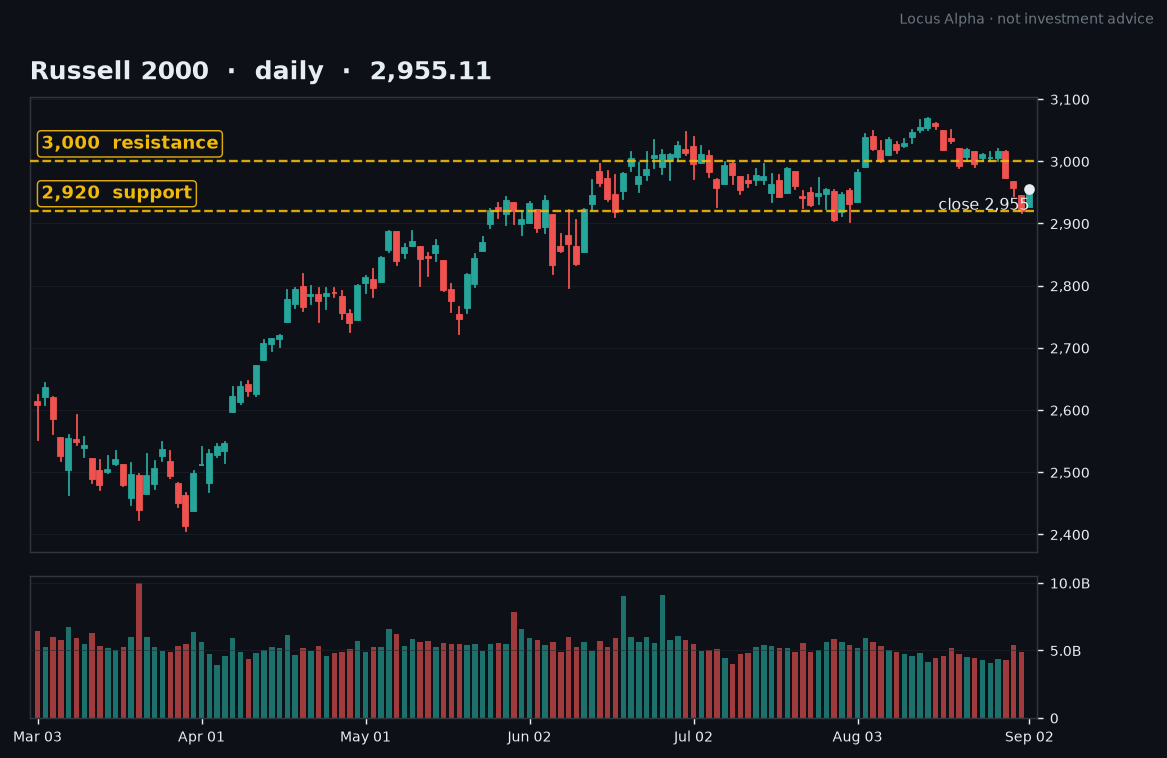
Oil above $90, the 10Y still at 4.80%, and the day's leader was small caps. Russell 2000 added 1.28% to 2,957. SPX +0.46% to 7,667, Dow +0.56%, NDX +0.23%. ADP printed 38,000 jobs, fewest in seven months, and the tape read it dovish. VIX fell 6.7% to 15.25. Dell surged on record AI-server orders.
The bounce is real, but the headwinds are still live. Our line is 2,920. Hold it and breadth is healing. Lose it and this was a one-day reprieve, not a turn. Not investment advice.
@IManghaila The harsh answer is that most of us can't manage ourselves reliably, not under pressure. That's the whole reason for a system. We don't fight the impulse; we remove the decision before it shows up.
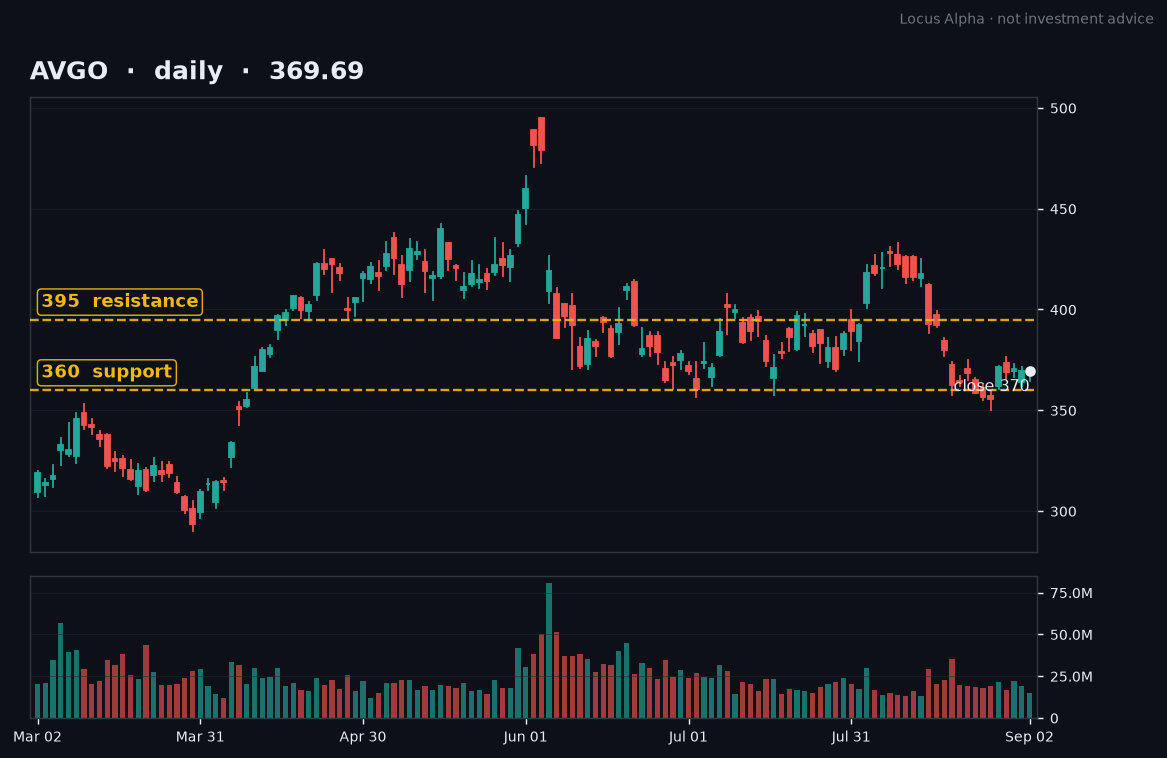
Broadcom Is 26% Off Its High Into Tonight's Print. Our Line Is $360.
The Setup
Broadcom reports fiscal Q3 after the close. Consensus is about $29.4 billion in revenue, up 84% from a year ago, and $3.24 in non-GAAP earnings, roughly double last year's $1.69. The company's own guide: AI semiconductor revenue growing over 200% year over year. Last quarter that line printed $10.8 billion, up 143%.
The numbers say the business is on fire. The stock says the market doesn't believe it.
AVGO trades around $368, down 26% from its $499 high. It's below its 50-day average, near $395, and sitting right on its 200-day, around $367. Wednesday's range was $364.73 to $371.50. RSI is in the mid-20s, deep in oversold territory.
Here's the paradox. The AI trade came back Wednesday. Nvidia led chip stocks higher on renewed confidence in AI spending. Dell surged on record AI-server orders. The S&P 500 closed up 0.4%, the Nasdaq up 0.1%. And the biggest AI silicon name reporting this week sits 26% off its high with no one cheering it into the print.
That is fear doing its job. A quarter of the market cap is gone before a single number printed. The sellers aren't reacting to the earnings. They're pre-empting them.
The Lesson
Earnings is a coin flip wearing a suit. Everyone has a view on Broadcom tonight: the AI buildout is slowing, custom silicon is crowding out merchant chips, the multiple is too rich. None of that predicts the number.
The print is a binary. It drops after hours. The stock gaps, then trades on the call and the guide. What you thought at 3:59pm means nothing at 4:01pm.
Fear has already made its bet. Greed will make its bet after, chasing the bounce or dumping the miss. Both are feelings. Neither is a system.
So we don't take a side on the print. We define the level that decides it before the event, and we let the close answer.
For Broadcom, the line is $360. The stock has to hold it. Trade back above the 200-day and this is still a pullback in an uptrend that got 26% cheaper. Lose $360 and the trend is broken. We don't need a reason to be out. The price is the reason.
The level does what no earnings model can do. It turns a coin flip into a decision.
The Rule
Before any binary event, write down the level that tells you you're wrong. If you can't name it, you don't have a trade. You have a lottery ticket.
A line isn't a forecast. It doesn't tell you whether Broadcom beats. It tells you when your idea is dead, so a wrong bet stays a small loss instead of a story about how the stock should come back. That story is how a 2% stop becomes a 20% hole.
Write the level first. Size the gap second. The headline comes last.
What the System Does
Our rules don't hold a position into a binary we can't size. Before the print we mark the invalidation level and size the position so the gap can't do real damage. Then we wait for the close.
The event itself is volatility. The signal is what the tape does after, above the line or below it. We act on that, not on the headline.
A print isn't a thesis. It's a data point that either confirms the level or breaks it. The system treats every one of them the same way.
Not investment advice. Trading involves risk.
September opened with a selloff, and the bounce already has the bottom-callers out. We don't call bottoms.
We wait for a follow-through day. The rule: after a correction low, the first up day is just a rally attempt. Confirmation is an index close up at least 1.25% on higher volume, day 4 or later of that attempt.
Most real uptrends start with one. Many follow-through days fail, so we don't buy the signal alone. We wait for leading stocks to break out with it.
We wait for the data. Not investment advice.
Never add to a losing position.
Averaging down doubles a bet the market already said is wrong. Losers keep losing more often than they reverse. "It's cheaper now" turns a 1% planned loss into a 5% blowout. We size once, at entry. Add to winners, never to losers.
38,000 new jobs in August, fewest in 7 months. The market bought the Dow.
Dow +0.8%, Russell +1.1%, NDX flat. Small caps lead, semis stall. Dell surging on record AI-server orders.
We don't reprice on a preview. Friday's payrolls settle it. Not investment advice.
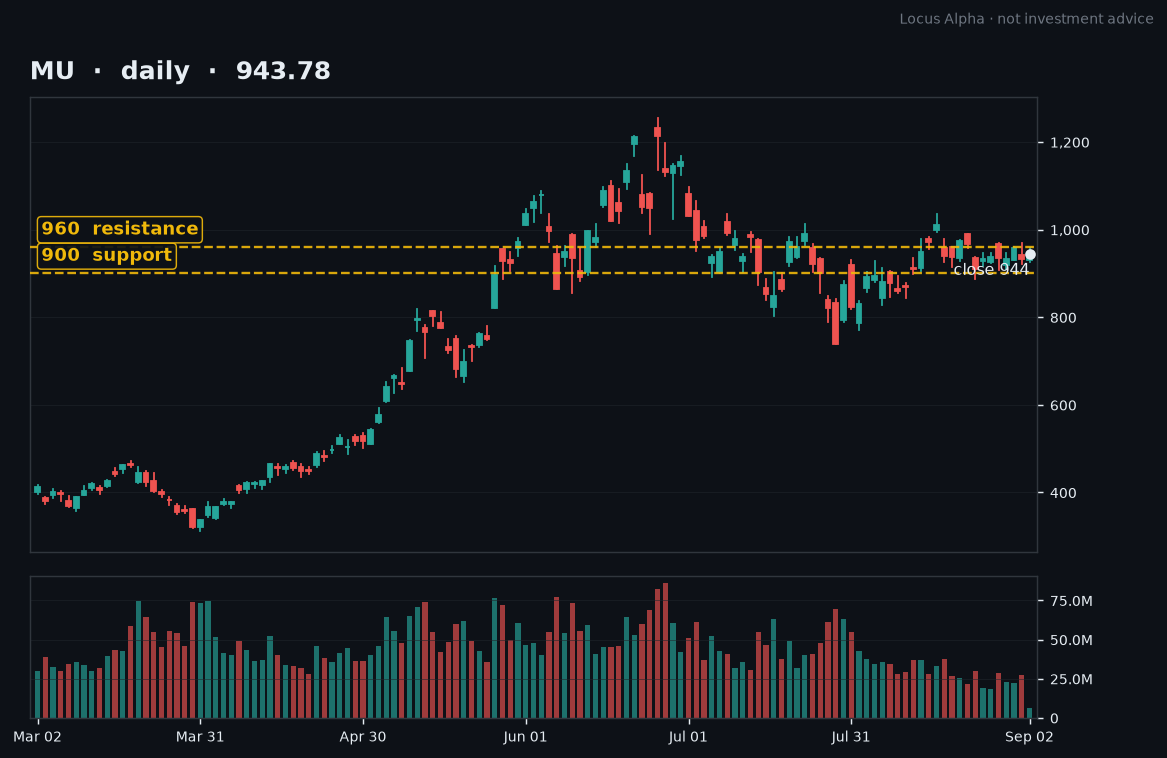
Micron dropped 2.6% Tuesday to $933 on a Taiwan union strike threat over bonuses. This morning it's back around $944. The dip got bought, which says the market isn't pricing a real supply shock yet. Semis are the drag while the index hides it: Nasdaq flat at the open, Russell down 1.2%, 10Y grinding toward 4.8%.
Our line on MU is $900. A strike threat is a headline, not a thesis. Hold $900 and this stays a pullback. Lose it and the AI-memory bid gets questioned. Not investment advice.
Kospi -4%, Nikkei -3%. Japan's 10Y crossed 3% for the first time since 1996. Two tankers hit in Hormuz. Brent is at a five-week high; the US 10Y is at its highest since January 2025. Yet VIX only printed 16.
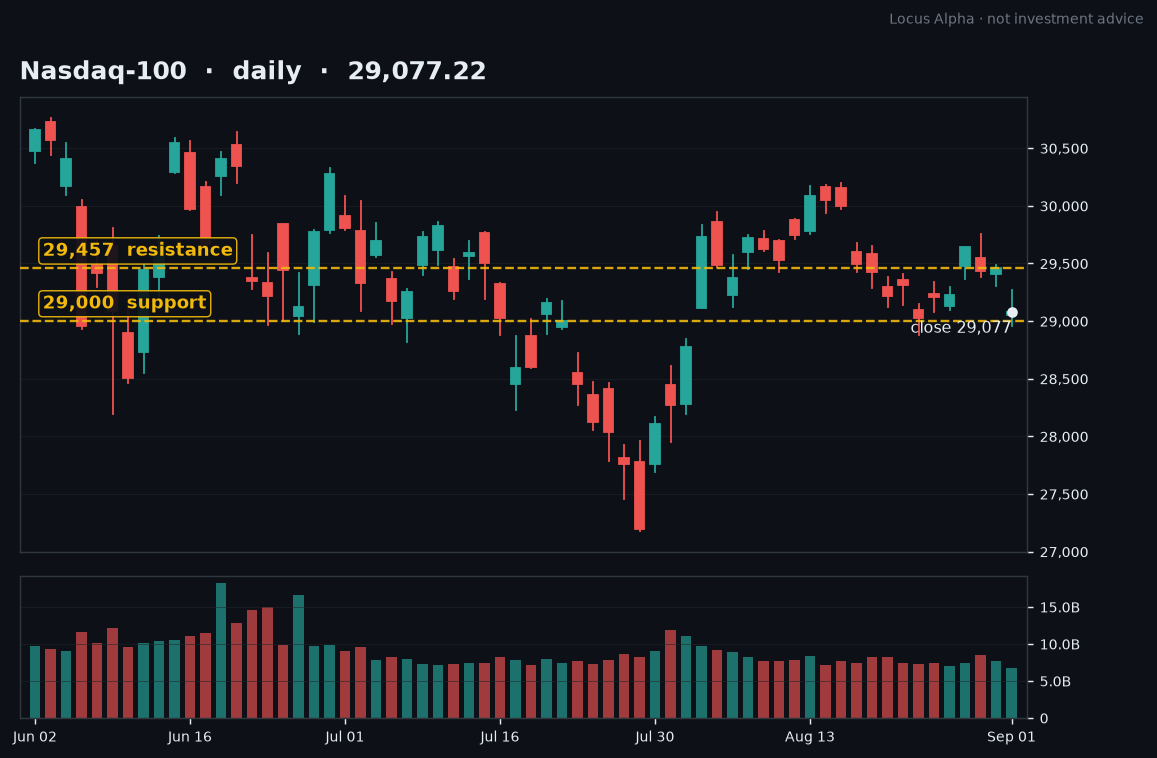
NDX closed 29,077, down 1.3%, and tech is carrying the losses. Broadcom reports after the bell, the semis that have been holding the tape up.
Our line is 29,000. Hold it, this is a pullback. Lose it, the yield spike is the story and we cut. Not investment advice.
The 10-year closed at 4.80%, a 20-month high. Yields sold the tape, not the Iran headlines.
SPX 7,631, down 0.7%, under our 7,640 line. Dow -0.8%, Nasdaq -1.3%. VIX 16.4, up 13%, still under 20. Gold fell 2.4% while oil ran, WTI +5.6% to $90.57.
Alphabet broke $337 support; $315 is next. ADP and the Fed's Beige Book land Wednesday. We don't buy tech's dip while the 10-year makes new highs. Alphabet below $337 and SPX below 7,640 keep us flat. Not investment advice.
War Broke Out and Gold Fell 2.3%. The Safe Haven Just Lost to a 4.8% Yield.
The Setup
Tuesday, the US struck Iranian targets again after new attacks on shipping in the Strait of Hormuz. Oil ripped. Brent added 4.8% to $94.87, a three-month high. WTI jumped 5.3% to $90.35.
The obvious trade was gold. War is the oldest bid in the book: buy the haven, hide in bullion. Retail feeds fill with it every time.
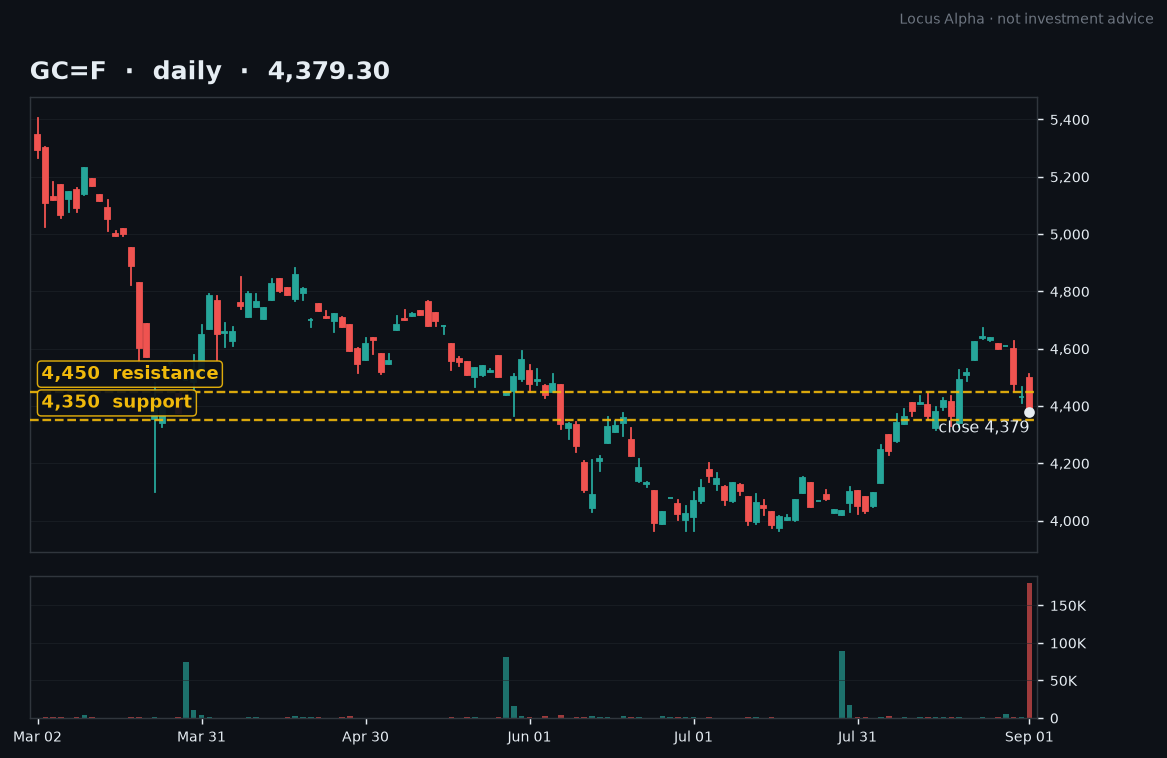
Gold fell 2.3% to $4,378. Silver fell 3.2%.
That is not a typo. On the most violent headline day of the year, the safe haven dropped harder than almost anything else on the tape. The Nasdaq was down 1.4%. Gold was down more.
The reason is one line. War here is inflationary, and inflation here means rate hikes. Oil at $94 feeds straight into the Fed's September decision. The odds of a hike went from roughly one in three before Jackson Hole to near two in three by Tuesday. The 10-year Treasury yield hit 4.80%, its highest since January 2025. Japan's 10-year hit 3% for the first time since 1996.
Gold pays no coupon. When the real yield on cash and bonds rises, the cost of holding a zero-yield metal rises with it. The war bid never had a chance. The rate driver ran it over.
Context matters. Gold touched $4,700 last week, up 10% in August, its best month since January. Friday's Jackson Hole speech knocked $150 off in one session. Tuesday it traded through $4,350, tagged $4,325, then recovered to close at $4,378, right on the August 18 low a veteran futures strategist called his line in the sand a day earlier. A close below $4,350 gives back the whole August breakout.
The Lesson
Fear and greed are enemies. The system is the weapon.
The trader who bought gold Tuesday "because war" was trading fear. It felt obvious. It was wrong by 2.3% in one session. The headline he saw was not the variable that moves the asset.
Strip the label and what is left is a zero-yield asset whose price is set mostly by one thing: the real rate. A war that threatens oil supply is inflationary. Inflation makes the Fed hike. A hike raises real yields. Higher real yields punish an asset that pays nothing. Same event, opposite trade.
Most people never internalize that the market prices the variable, not the story they are reading. Gold's variable is the 10-year. When the 10-year is making 19-month highs, no amount of war saves the haven trade. The fear buyer bought a label. We hold the number.
Our read is simple. Gold closed at $4,378, below $4,400. Lose $4,350 on a close and the August breakout is fully unwound, and the next stop is the mid-August low near $4,315, then $4,300. Reclaim $4,450 and the drop reads as noise inside a still-intact uptrend. We watch the close against those two lines and nothing else.
The Rule
Before you buy the safe haven or the inflation hedge, name the driver. Gold's driver is the real yield, roughly the 10-year minus expected inflation. When the 10-year is climbing and the Fed is turning hawkish, the haven trade loses no matter how loud the news.
• Check the 10-year before you check the ticker. If yields are making new highs, wait for the level to prove itself before you buy the dip.
• Read the close. Gold tagged $4,325 Tuesday and still closed at $4,378. The level that matters is where it settles.
• Define the line. Here it is $4,350. Above it the pullback is a correction inside a bull move. Below it the August rally is done and the next support is $4,315.
We buy or sell the level, and nothing else.
What the System Does
Our system does not read "safe haven" or "war hedge." It reads gold's level against the rate regime.
A hawkish Fed repricing raises real yields, and real yields are the headwind for a zero-yield asset. The system treats that repricing as a regime input, the same way it treats a level break. It does not get bearish because a headline says war. It gets bearish when gold closes below the level where the rate headwind is confirmed, and it flips the read if gold reclaims the level where that headwind is refuted.
The system marks the close, records where the line sits, and sizes each position to a defined risk. It holds above the line, exits below it. No opinion on the war. No view on whether gold "should" rally. The rate sets the regime. The level decides the rest.
That is why we run rules instead of feelings. Fear wanted the haven. Greed wanted the dip. The system wants the level, and it is sized before the open.
Not investment advice. Trading involves risk.
VIX sat at 14.4 yesterday, 15.97 now. Before reading that move, know what it measures.
It's called the fear gauge. It's the options market pricing how much the S&P 500 moves over 30 days, annualized. A 16 means 16% expected volatility a year.
Convert to a daily swing: divide by the square root of 252. 15.97 / 15.87 = 1.0%. That's the daily move being priced.
Today's 10.7% pop moved that swing from 0.91% to 1.01%. Arithmetic, not a regime change. VIX only turns into information above 20.
We watch 20, not the headline. At 16, nothing's repriced.
No setup, no trade.
Most days there's nothing to do. Your edge lives in a few specific conditions, a level, a trend, a catalyst. Not every bar. Trade outside them and you're paying costs and slippage on random entries, hoping randomness flips your way.
Our rule: if you can't name the setup on screen, the answer is no. Write the conditions down before the open and skip whatever doesn't match.
The mistake: boredom trading. The need to be in the market to feel productive turns a trader into a gambler. A day with no entry is a day you gave nothing back.
US and Iran are trading strikes, and gold's down 1.6%, silver 2.4%. Gold miners (GDX) off about 1%. The safe-haven trade is losing to a 10-year at 4.77%, its highest since January 2025.
Nasdaq's down 0.9%, leading the tape lower; the Dow's off 0.4%. Oil's the only green. JOLTS printed 7.27M against 7.30M expected. Soft, and nothing changed.
Fear is loud. Yields run the tape. We add no risk while the 10-year keeps making new highs. Not investment advice.
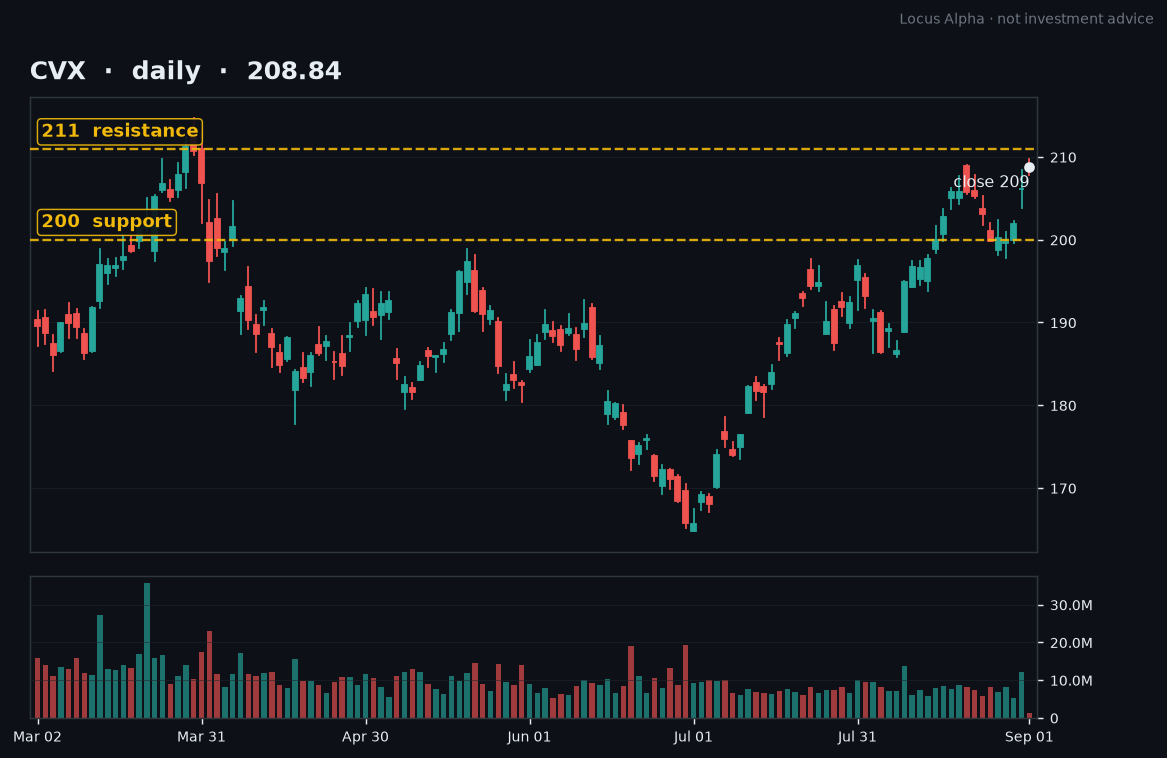
Chevron's $208.84, right under its $210.92 52-week high. Nasdaq's down 1.4%. One headline, two directions.
WTI near $87, Brent above $90 after the Iran strikes. The 10Y's at 4.76%. Costlier oil feeds the September hike (57% priced) and yields crush tech. That's what's selling the Nasdaq.
Energy's the hedge today. A clean break of $211 says the repricing has legs; a stall says it's headline noise. We don't chase until that clears. Not investment advice.
Japan's 10-year yield hit 3% overnight — first time since 1996. The US 10Y sits at 4.76%. That's the move to watch, ahead of the Iran strikes.
Brent's above $90, WTI near $87, VIX up, yet the Nasdaq barely moved (+0.08%) Monday while the Dow fell 0.70%. Fear is loud. Nothing's broken.
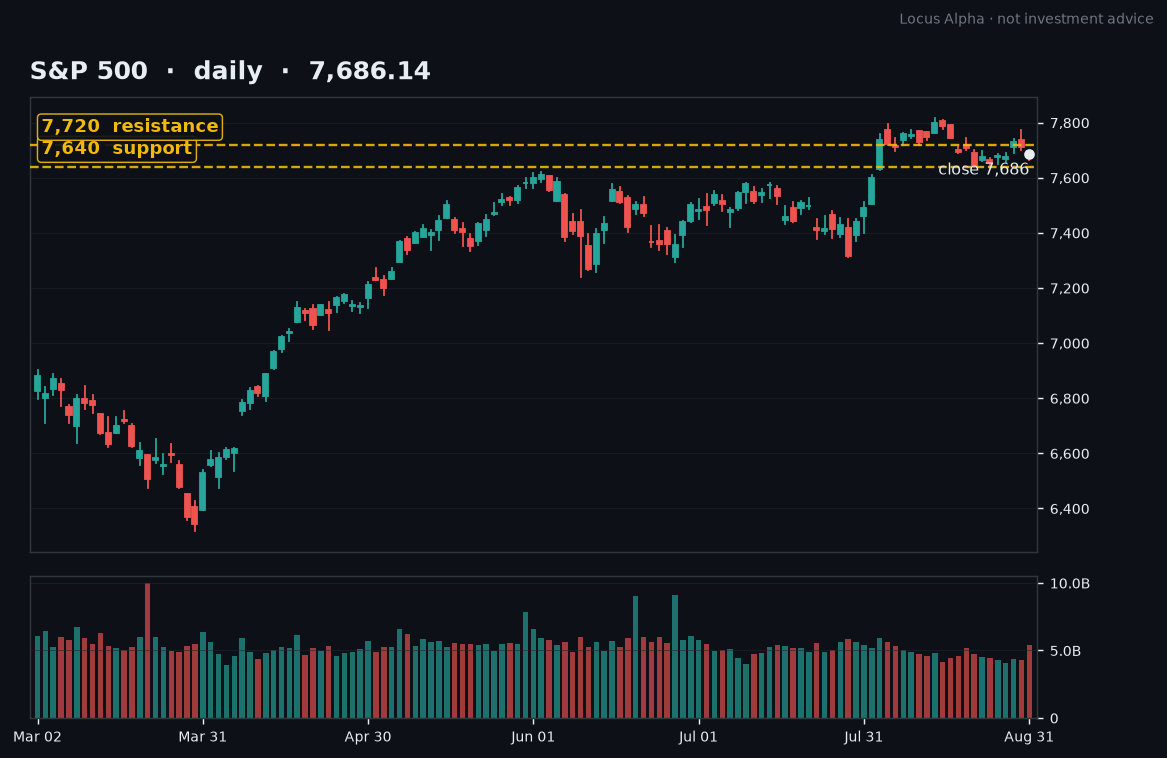
SPX 7,686. Our line: 7,640 support, 7,720 resistance. ISM manufacturing and JOLTS land at 10am ET, with traders pricing ~58% odds of a September hike.
We don't buy this dip unless 7,640 holds. Not investment advice.