This year, International Widows Day will bring together senior leaders, international organisations and voices from across Africa and beyond.
On 23 June, delegates will gather in London to discuss economic empowerment, conflict, dignity and opportunity for widows and their families.
Across parts of Africa, conflict, displacement and economic instability continue to leave millions of women widowed,often while raising children alone.
But International Widows Day is not only about hardship. It is about resilience, leadership and ensuring widows are recognised as vital contributors to their communities.
When widows are supported through education, economic opportunity and equal rights, entire families and future generations benefit.
IMAGE: King Charles III with Lord Loomba CBE
Since the United Nations officially recognised International Widows Day in 2010, awareness of widowhood has grown significantly.
Support has come from across the UK and India—from Sir Richard Branson to Prime Minister Narendra Modi to King Charles III and many others.
International Widows Day was created to ensure widows are recognised not as passive victims, but as women with rights, responsibilities and extraordinary resilience.
Today, there are 258 million widows worldwide. Nearly one in ten lives in extreme poverty. More than 585 million children depend on widowed mothers.
Progress has been made—but millions of widows and their children still remain invisible in policy and public life.
Lord Raj Loomba CBE
Image: Sir Richard Branson, Patron-in-Chief of the Loomba Foundation, meets Loomba scholars in Delhi.
How a Punjabi Widow's Tragedy Inspired UN International Widows Day...
The story behind International Widow's Day-held each year on 23 June-and how the United Nations came to adopt the Loomba Foundation's vital cause.
https://t.co/iQsyaBDpXh
When we launched the Loomba Foundation in 1998, widowhood was rarely discussed publicly or politically, nationally or internationally.
Yet millions of women and children were living with poverty, discrimination and exclusion simply because they had lost husbands and fathers.
Our first programme supported the education of one hundred children from widowed families in Delhi. It was a small beginning — but an important one.
In 2005, we launched International Widows Day at the House of Lords. What followed were years of engagement with governments, diplomats and the United Nations.
Then, in 2010, after years of hard campaigning, International Widows Day became a United Nations-recognised international observance, held annually on 23 June.
Lord Raj Loomba CBE
Image: The Loomba Foundation’s Honorary President Cherie Blair with the then UN Secretary General Ban Ki-moon and Lord Loomba CBE
After witnessing the injustices my mother faced, I resolved to do something meaningful to support widows and their children.
A conversation with Ajit Doval — today India’s National Security Advisor — helped crystallise my thinking and led to the creation of what became the Loomba Foundation.
Our goal was simple: support widowed families by funding education and creating better futures for their children.
On 25 March 1998, we officially launched the Foundation in London with Prime Minister Tony Blair and Cherie Blair, who remains one of our strongest supporters.
From the beginning, our mission was not only to help individuals directly, but to change awareness, policy and attitudes globally.
International Widows Day, observed every year on June 23, was recognised by United Nations in 2010, but it began earlier with efforts of entrepreneur & member of House of Lords Lord Raj Loomba known as “Pioneer of Widows” for his work worldwide.
https://t.co/Yqyy1xfgYw
I was ten years old, and my mother just thirty-seven, when my father passed away after suffering from tuberculosis.
Unlike the vast majority of widows in India at the time, we were able to live in relative comfort thanks to my father’s successful business.
But my mother still suffered the injustice and indignity many widows suffer and it wasn’t easy for a woman to continue the business in 1950s in India.
My grandmother instructed my mother to assume the appearance of a widow including the removal of her jewelry and other symbols of a married woman and wear white clothes only.
The contrast between a happy wife and a distressed widow was stark beyond the sadness of mourning, and I always questioned why it should be so.
The poor treatment of widows, many of them young, is widespread in India. Many are ostracized and thrown out of their homes and lack sufficient resources to eat or clothe themselves and they are vulnerable to exploitation.
What I saw aged ten was shocking to me. But I was to find out later, that was just a mere glimpse into a deeply ingrained injustice not only in India but all over the world.
Lord Raj Loomba CBE
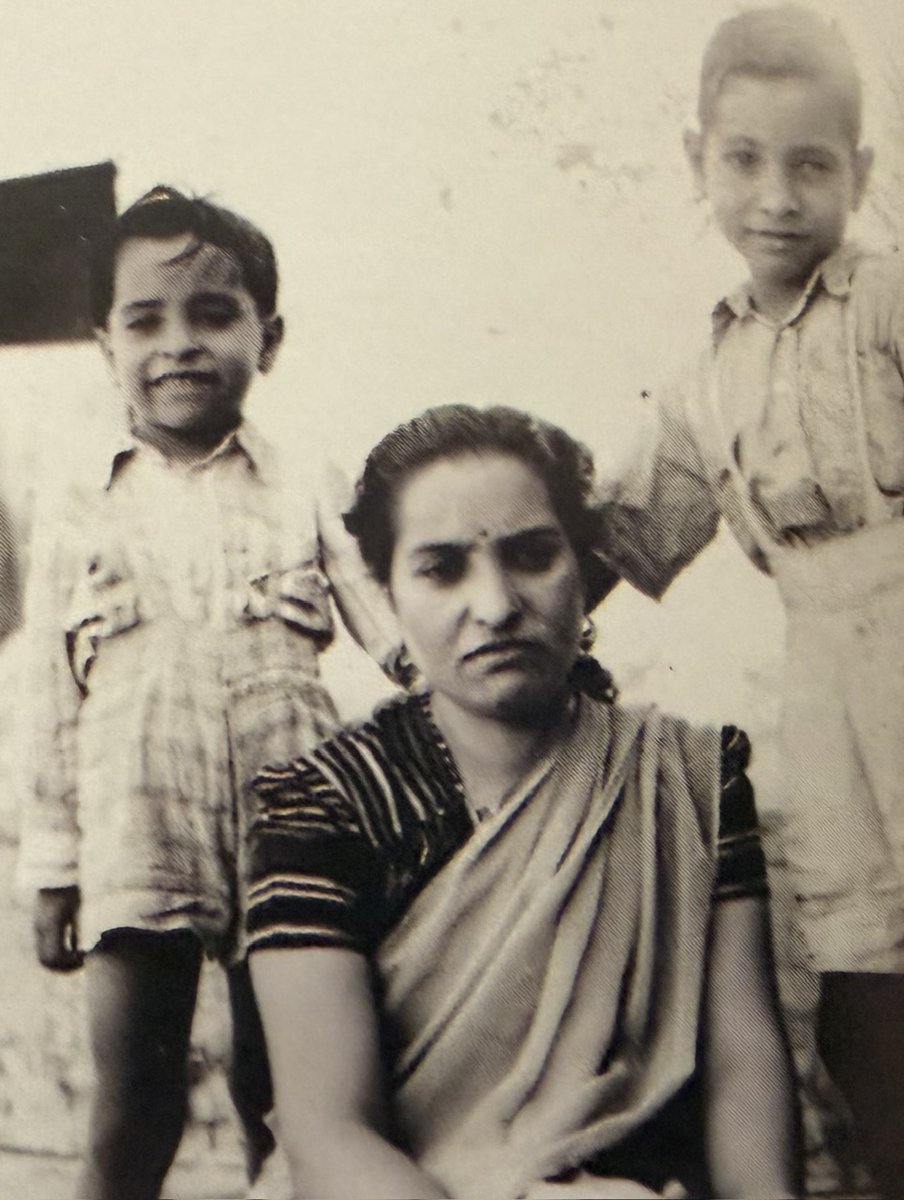
IMAGE: Shrimati Pushpa Wati Loomba with her sons Ravi and Raj Loomba.
In 1954, when my father died, my mother was left widowed with seven children to raise. Overnight, her life changed completely. What I witnessed as a child shaped the rest of my life— and ultimately led to the creation of International Widows Day.
I saw first-hand the insecurity, isolation and economic hardship widowhood can bring. Behind every widow is often a family struggling to survive, rebuild and look to the future.
Today there are an estimated 258 million widows worldwide. More than 585 million children depend on widowed mothers. Yet widowhood remains one of the world’s least discussed humanitarian and economic issues.
From war in Ukraine and conflict across Africa and the Middle East, to illness, dangerous work and poverty elsewhere, millions of women continue to lose husbands and partners far too early.
International Widows Day, recognised annually by the United Nations on 23 June, was created by the Loomba Foundation in honour of my mother, Shrimati Pushpa Wati Loomba, to ensure widows are no longer invisible.
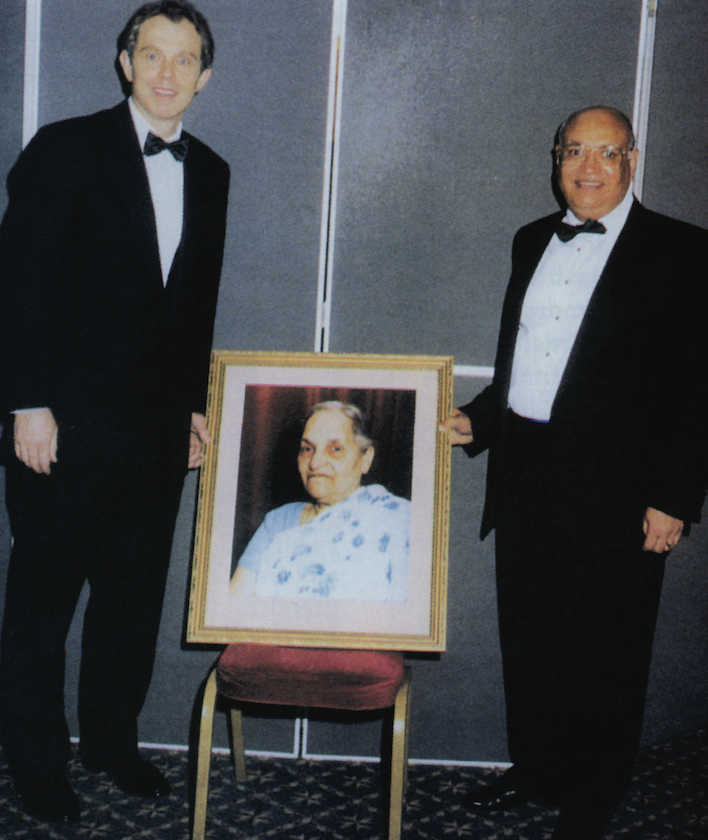
The photograph of my parents - Shri Jagiri Lal Loomba and Shrimati Pushpa Wati Loomba - is very special to me.
Lord Raj Loomba CBE
#IWD2026 @UN_Women@unwomenindia@UN@commonwealthsec@PAWGADI_Union
International Widows Day—a Loomba Foundation initiative—takes place every year on 23 June.
Read more about this important day here ⬇️
https://t.co/a1ByyetAMb
Wishing you a joyous and blessed Dussehra! May this festival bring you victory over challenges and fill your life with happiness and prosperity. #HappyDussehra2023 !