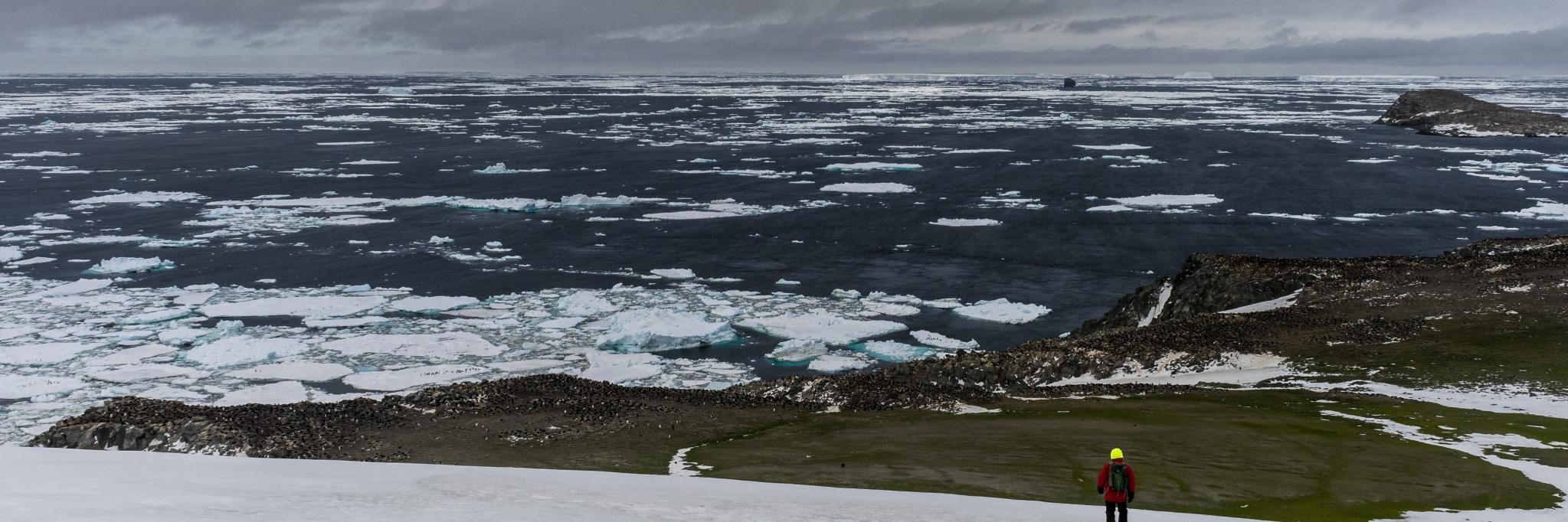
Data Science, satellite imagery and... penguins? @TheLynchLab joins us to share how they use data science to study penguins and other species in Antarctica. #DataScienceMixer https://t.co/e9YYFw3TmF
We are pleased to host Heather Lynch (Stony Brook University) at this Thursday's Phenomena, Observations, and Synthesis Webinar. Join us at 12pm EDT for the talk "Antarctic marine predator populations are difficult to forecast: Can climate models help?"
https://t.co/nFrOLfKk4w
New paper! Q: When tourists take pictures of pretty things, can those pictures and #AI help us answer conservation questions? A: Yep. Even in Antarctica.
with @TheLynchLab@katelynherman07 @cmrfoley @Thorne_LH and others!
https://t.co/7eZdAxg0hH
#LeshnerFellow & @stonybrooku Prof. Heather Lynch studies population dynamics of Antarctic wildlife (🐧🐋🦭), with help from satellite annotation tools developed by her group at @TheLynchLab.
Her #SciEngage includes writing a script for a TV drama exploring ethical issues of AI.
Almost time! Defending my dissertation at 11:30 ET tomorrow! Tune in to hear about Antarctica, penguins, seals, and data! Streaming live on FB:
https://t.co/ptrT7H7Oyb
On Elephant Island in the Antarctic Peninsula, chinstrap penguin populations have declined by 50% since 1970.
Marine protections in the region could help. https://t.co/PA2JgfjFTK #PenguinAwarenessDay
Excited to announce the results of a big collaboration. Where are the most important #penguin areas? Where could they benefit from stronger protections?
Elephant Island is a window into a changing Antarctica. Read the new paper from @NoahStrycker @AlexAdelante@wethington_mj (A thread)
https://t.co/ivjKZHdnGe
Overall, the Chinstrap population declined on Elephant, and the Gentoo population doubled. But it's a little more complicated. The largest colony "Chinstrap Camp" declined by 70%. All together, it was a 57% decline on the island.
Since the field season is cancelled, I decided to make some fake photographs of Antarctica using a GAN on @runwayml
Sometimes they're really good. Sometimes it gets very confused. Follow along on the expedition: https://t.co/L2RR55FYma
"While nothing beats the experience of being up close and personal with wildlife, satellite imagery gives us an entirely new perspective on Antarctica and a fighting chance to protect the continent's most vulnerable animal populations"
Today for #GeoWeek, we’re highlighting the work of Explorer Dr. Heather Lynch (@thelynchlab). As a quantitative ecologist, she has helped pioneer the use of satellite imagery for studying the presence, abundance and even diet of Antarctic penguins! 🐧
Want to hear me talk about #penguins, #Antarctica, ocean trash and @science? Check out the new podcast episode from @flyingcypress! Mercury in ancient seals, a barrel marked "POISON" from our recent @Greenpeace expedition, and whales from space!
Looking from land, air, and space, the story of Chinstrap #penguins these days is mixed. Some very dramatic declines, fewer increases, and some we're only assessing for the first time. 🐧🛰📉
The short story: we have 3.4 million breeding pairs.
https://t.co/KolzEdTmEC
Ever wonder what is up with all those pesky Gentoo #penguins? Well check out our new paper from @rwherman1 et al.! 🐧🌏🐧https://t.co/Frt880TAHH
Update on the global abundance and distribution of breeding Gentoo penguins (Pygoscelis papua)