"What is this? Is this a dunk tank?"
Marco Rubio doesn’t hold back after Democrat Rep. Sydney Kamlager-Dove cuts him off and refuses to let him answer her questions during a House Foreign Affairs hearing:
"Why am I here if I don’t get to answer your questions or your defamatory statements?"
"You get asked questions for five minutes and you don't get time to answer? It's not a hearing!"
Who is still watching these clowns?
I haven't watched an NBA game in more than 30 years.
In the 1980s I was a sportscaster.
Find better entertainment, my fellow citizens.
Books are a nice option. Remember them?
Spurs players REFUSE to put their hands over their hearts for the national anthem!
They are making millions of dollars to play a child’s game and still feel oppressed somehow…
Only 2 players covered their hearts. Take note of which ones!
This is a GIANT problem.
My entire career has been devoted to writing and speaking--books, news, documentary films, and videos.
And yet, my attention span has been degraded by my phone. I force myself to read long-form every day.
Kids today never developed that skill.
My Students Can't Read | Tyler Jagt, The Chronicle of Higher Education
The generational collapse in literacy is measurable, persistent, and likely to get worse.
Six weeks into the term, I assigned my rhetoric and writing students a 20-page article. It was the same length I had assigned for five years and the same length I had read without complaint as an undergraduate a decade ago. Not one student finished it.
When I asked why, a student answered honestly: It was too long, and she kept losing track of what the paper was about. This was not a remedial class: These were students who had cleared the admissions process and written essays good enough to get them here. Yet a routine academic reading assignment had defeated them.
Every generation of professors has complained that their students cannot read. The lament is usually overblown, but data have caught up to anecdote, and what I am seeing in my classroom is no longer a hunch. There is a measurable, generational collapse in sustained reading and writing, and the academy is responding to it with improvisation and exhaustion rather than the structural overhaul it requires.
In February 2024, Adam Kotsko, who teaches in the Shimer Great Books School at North Central College, wrote in Slate that students who once handled 30 pages of reading per class meeting now seem “intimidated by anything over 10 pages and seem to walk away from readings of as little as 20 pages with no real understanding.” Crucially, he added that this is “not a matter of laziness on the part of the students” but of underlying skills they were never given a chance to build.
The Chronicle of Higher Education’s 2024 investigation found the same pattern across institutions as different as the Stevens Institute of Technology and Wellesley College, where the average SAT exceeds 1400. Nicholaus Gutierrez, an assistant professor at Wellesley, told The Chronicle that the baseline for what students consider a reasonable amount of work has dropped so noticeably that he has cut his readings accordingly; a 750-word essay now strikes many students as long. At Stevens, the science and technology studies associate professor Theresa MacPhail described following the mantra of “meet your students where they are” for so long that she has begun to feel “like a cruise director organizing games of shuffleboard.”
Worse, the national data tell the same story in colder language. On the 2011 National Assessment of Educational Progress (NAEP) writing assessment, which is the most recent comprehensive writing benchmark, only 24 percent of 12th graders reached the Proficient level, and just 3 percent reached Advanced; another 21 percent scored below Basic. The reading side of the ledger is worse, and getting worse fast: The 2024 NAEP results released in September 2025 show 12th-grade reading scores at the lowest level recorded since the assessment began in 1992. Thirty-two percent of 12th graders now score below NAEP Basic in reading, meaning that, in the assessment’s own language, they likely “cannot draw general conclusions based on concepts presented explicitly in a text.” And yet more than half of these same seniors reported being accepted to a four-year college. That last sentence is the whole problem in one line: We are admitting a cohort that cannot read at a college level and are pretending otherwise.
Every generation of professors has complained that their students cannot read. The lament is usually overblown, but data have caught up to anecdote.
Why is this happening? One reason, of course, is smartphones.
I came into teaching as a skeptic of the anti-smartphone argument: I had a phone in my pocket throughout high school and college in the 2010s, and I read long books anyway. I now think I was wrong, because the neuroscience has caught up. In a 2017 paper, Adrian F. Ward and colleagues at the University of Texas at Austin’s McCombs School of Business showed that the mere presence of a participant’s smartphone — whether that be face down, powered off, untouched, or across the desk out of vision — measurably reduces available working memory and fluid intelligence on cognitive tests, with the largest effects on the most phone-dependent users. A 2022 study by Motoyasu Honma and colleagues at Japan’s Showa University used near-infrared spectroscopy to compare reading on a smartphone with reading the same passage on paper, and found that smartphone reading produced overactivity in the prefrontal cortex, suppressed sigh generation, and led to general lower comprehension scores; the authors argued that the sigh inhibition and prefrontal overload were causally linked to the comprehension decline.
So when a student tells me they “kept losing track” of a 20-page article, I have to acknowledge that they may be describing a measurable neurological condition. The neural pathways that support sustained attention are built by use, and they atrophy without it. Your body is a use-it-or-lose-it system, and the brain is no exception.
Another reason for the decline in student reading capability is increasing reliance on generative AI. In June 2025, Nataliya Kosmyna and colleagues at the MIT Media Lab released a preprint titled “Your Brain on ChatGPT.” They divided 54 participants into three groups writing SAT-style essays — one using ChatGPT, the second group using a search engine, the last group using nothing — and monitored brain activity with a 32-channel EEG. The ChatGPT group showed the lowest neural connectivity of the three, with up to 55 percent reduced connectivity compared with the brain-only group, and “consistently underperformed at neural, linguistic, and behavioral levels.” Eighty-three percent of LLM users could not quote a single line from essays they had written minutes earlier. When the LLM group was forced to write without AI in a follow-up session, their brain activity did not bounce back to baseline; the researchers coined the term “cognitive debt” for the lingering deficit.
The neural pathways that support sustained attention are built by use, and they atrophy without it. Your body is a use-it-or-lose-it system, and the brain is no exception.
This is the first neurophysiological evidence that early reliance on LLMs measurably alters the brain’s engagement with writing tasks, and it is consistent with what those of us in front of classrooms are watching happen in real time. When I assign analysis, I am not trying to extract a polished product; I am trying to put the student’s mind through resistance in order to make it stronger. Offloading the struggle to a chatbot does not “free students up for higher-order work.” It deprives them of building the strength to do any substantial cognitive work at all.
There is a final factor that is contributing to this decline in reading skills, and that is that the students arriving in my classroom today are the first cohort to have experienced Common Core-influenced reading instruction across the entirety of their K–12 schooling. Whatever the standards’ original intent, the on-the-ground implementation in many districts replaced sustained reading with the practice of pulling “evidence” from disconnected short passages, the same format used on the standardized tests that increasingly determine school funding. The education scholar Natalie Wexler, among others, has documented this pivot in detail: Students drilled on “finding the main idea” in two-paragraph excerpts never build the stamina or background knowledge that longform reading requires. The pandemic then added fuel to a fire that was already burning. NAEP scores for 13-year-olds dropped sharply in 2022 and have not recovered. A 2023 EdWeek survey found that 24 percent of secondary-school administrators described pandemic learning loss in English and language arts as “severe or very severe.”
In July 2025, the journalist Mary Harrington argued in The New York Times that “thinking is becoming a luxury good.” The ability to read deeply and reason at length is fragmenting along class lines as ultra-processed digital media replaces text in everyday life, much as ultra-processed food has replaced cooking. Her longer treatment of the subject in First Things makes the more provocative case that we are witnessing the end of print culture itself, and with it the end of the cognitive substrate on which modern liberal democracy was built.
I see this stratification in the classroom and on the page every week. My students from districts that protected sustained reading through small class sizes, strict phone policies, and faculty who refused to teach to the test all arrive with their attention relatively intact. My students from districts that surrendered to devices and standardized testing arrive cognitively winded. A democracy that requires a literate electorate is now training one fraction of that electorate out of literacy while marketing to the other a “deep work” lifestyle as a luxury good. The students who cannot read a 20-page article today are the voters who will not be able to read a bill, or the jurors who cannot follow a closing argument, tomorrow.
Offloading tasks to a chatbot does not “free students up for higher-order work.” It deprives them of building the strength to do any substantial cognitive work at all.
I do what I can in my own classroom to address the problems. I break 20-page articles into two halves and assign the first half with explicit analytical tasks. I require exploratory writing before formal drafts. I model (visibly, on the board) how to track an argument across pages or distinguish a source’s claim from my own analysis. I make structured peer review explicit, because the workshop format I used to take for granted now collapses into “this is good” and “maybe add more details” the moment I step back.
But I want to be plain about the limits of what an individual instructor can do, and all of these solutions have costs. Scaffolding a 20-page article into halves compromises the integrity of the argument I am asking students to engage, just as modeling note-taking in a credit-bearing rhetoric course is using a college slot to teach a middle-school skill. None of the syllabi I teach are designed to deliver this type of cognitive rehabilitation, and pretending otherwise has produced credential inflation. We cannot keep conferring degrees on students who cannot do what the degree is supposed to certify.
I’m afraid I don’t have answers. I do, however, have some questions that may point us in the right direction. If higher education is going to respond to the reading crisis as a structural problem rather than a private burden carried by composition instructors and adjuncts, it has to stop avoiding the following questions: If a majority of incoming students cannot read at a level the curriculum requires, are we admitting students we cannot serve, or offering a curriculum we cannot provide?
Why are first-year writing and reading-intensive general-education courses still the most adjunctified, lowest-paid, highest-load corner of the university, at the precise moment when their work has become the most important work the institution does? What is the responsible institutional response for AI usage: Is it a syllabus statement, or a sequencing principle that requires students to demonstrate the cognitive work themselves before AI assistance is permitted?
Why are most college classrooms still phone-permissive by default? K–12 districts from Florida to California are now banning phones bell to bell; higher education has somehow lagged behind the public schools. Universities benefit from a pipeline they did not build and refuse to repair. What would it mean for a university system to invest seriously in the reading instruction happening in the high schools that feed it, rather than treating remediation as something to be quietly outsourced to first-year composition instructors?
The thing I am no longer willing to do is pretend this is a temporary adjustment period, or that “students will adapt.” They will not adapt on their own. The conditions that produced this collapse are still in place: the phones, the algorithmic feeds, the test-prep excerpts, staffing models that load the reading-intensive work onto the most precarious faculty, and now the chatbots that finish students’ sentences before they’ve even begun to think of them. If we want literate citizens, we will have to rebuild the conditions for literacy deliberately, against the grain of every incentive currently pointed the other way. I know the academy has the will to do that. It also has the obligation.
https://t.co/2dYdkPlrIA
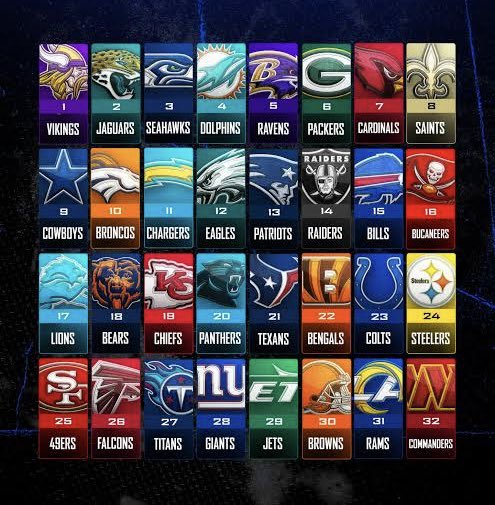
More disgusting betrayal by the pathetic owners of the team once known as the Redskins.
There will be no Lombardi Trophies for this team I call “Nameless” under these owners.
The faithful will just have to admire the 3 trophies Joe Gibbs brought to the old team.
When black Americans ponder why they are failing in easiest country in the world to be successful - put this video on repeat. Culture. It’s always culture.
The sane among us love your content, but we have eyes.
You are unhealthy, even if you are in better shape than all the overweight people.
Good rule of thumb is 5 lbs over is better than 5 lbs under. (You are 15-20 pounds under.)
Washington Redskins went from best logo to the worst team name and worst logo.
Every NFL fan knows this.
New team ownership is as cowardly as Dan Snyder.
CBS Sports Top 25 players in NFL History:
1. Tom Brady
2. Jerry Rice
3. Jim Brown
4. Walter Payton
5. Joe Montana
6. Peyton Manning
7. Lawrence Taylor
8. Reggie White
9. Barry Sanders
10. Dan Marino
11. Patrick Mahomes
12. Dick Butkus
13. Johnny Unitas
14. Ray Lewis
15. Aaron Donald
16. Joe Greene
17. Randy Moss
18. John Elway
19. Emmitt Smith
20. Anthony Munoz
21. Alan Page
22. Rod Woodson
23. Gale Sayers
24. Tony Gonzalez
25. Don Hutson
Thoughts? 🧐
Every true Redskins fan wants the name and logo back. They are passionate about it!
The only people against the Redskin name/logo are professional activists or unhinged virtue signalers. All others are simply saying "move on" out of fear of the cancel mob.
Currently being shitted on by the Hall of Fame.
I could fill the whole space up with reasons why he belongs in there.
Every football fan that witnessed tbe 80's knows what's up.
#RaiseHail
1983 logo is the best!
I’ve been a Redskins fan for about 55 of my 64 years.
I refuse to say the current name, which is disgraceful.
RIP Monte Coleman, one of the Redskins All Time Greats.
87 years ago. Washington Redskins was never an offensive name until 2020 it was taken down by politics. The name may change, but Redskins lives on in my soul📷....immortal 📷📷 What's your favorite logo? #HTTR4LIFE
You are correct. The government scam artists will get your money one way or another. Property taxes in Texas are ridiculously high, just as high or higher if there was a state income tax.
6 years of living in Texas and I've come to the conclusion that the no state income tax thing is basically a scam. The property taxes are so high that they negate any savings. We are still paying as many taxes in Texas as we would in California. You save on gas I guess.
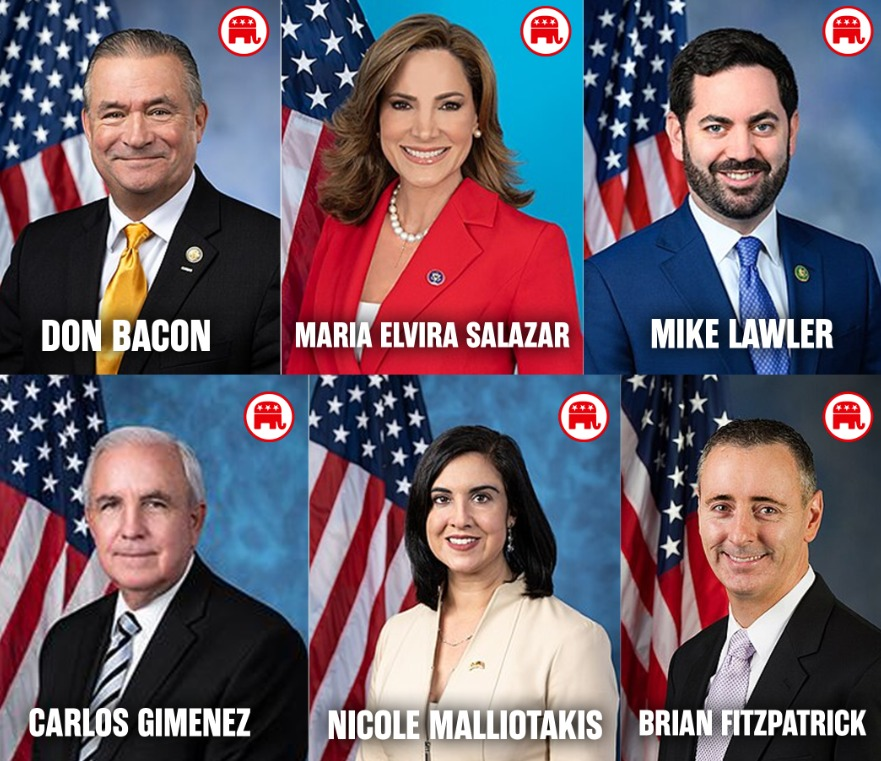
These are the SIX Republicans who joined Democrats to advance a bill protecting 350,000 Haitians, whom Biden imported, from deportation:
-Don Bacon (R-NE)
-Maria Elvira Salazar (R-FL)
-Mike Lawler (R-NY)
-Carlos Gimenez (R-FL)
-Nicole Malliotakis (R-NY)
-Brian Fitzpatrick (R-PA)
The American people would be better off if we randomly picked 535 random American citizens to run Congress each year.
That’s how corrupt, owned, perverted and worthless Congress is.
Facts.