Typical internship/job application emails a startup founder receives every day:
1. The Zero-Effort Applicant
No subject line.
No email body.
Just a resume attached.
The candidate could be from anywhere in India, applying for a remote role, but often hasn’t spent even a minute understanding what the company does.
Now I’m expected to figure out why you’re applying, whether you’re suitable, what interests you about the role, and why I should consider you.
One thing candidates should understand: remote opportunities are limited. Most founders won’t hand over business data, customer information, or critical work to someone who hasn’t shown basic effort.
These emails are usually archived or deleted within seconds.
2. The ChatGPT Copy-Paste Applicant
Slightly more effort.
“Dear Sir/Madam” or “Dear Hiring Manager…”
Then comes a perfectly structured email that looks exactly like the last 50 applications.
Most founders and hiring managers can instantly tell when the same template has been sent to hundreds of companies. It signals that very little research was done about the company or the role.
3. The Thoughtful Applicant
“Dear Pranay…”
The email mentions something specific about the company, product, content, or role.
Maybe ChatGPT was used for polishing—and that’s completely fine.
But the message still feels human.
The candidate clearly understands what the company does and why they want to work there.
Those are the emails that usually get a reply.
The takeaway?
Don’t try to sound impressive.
Try to sound interested.
Five minutes spent researching a company and writing a genuine email will outperform a hundred copy-pasted applications.
Wishing all internship and job applicants the very best.
Posted a B2B sales role. Got flooded with applications.
All finance grads.
No sales experience. No interest in sales.
Just… desperate for any job.
Actual salespeople?
Didn’t even apply.
They usually don't need to find jobs.
Reality:
Market doesn’t care about your degree.
Finance isn’t hiring? Then it isn’t.
AI is cutting desk roles.
Supply is crazy. Demand isn’t matching.
But expectations? Still the same.
Also, People keep "up-skilling", thinking that skills is the reason they're not getting jobs..
Everyone wants a “core” role.
No one wants to adjust.
Keep waiting for the perfect job.
Or take what’s in front of you,
learn, sell, build something.
Because sitting at home with a “relevant degree” isn’t a strategy.
I know this post won't change anything because most people are fine being 1 out of 100 mails an HR gets and ignores in a day, but not fine to start with something where they could add value.
Most people in corporate are so power-less. They could be a senior marketing manager or AVP Marketing and communication and don't have power to approve even 5000 Rs. worth of influencer marketing spend😅
Also They'll blindly spend lakhs/crores on newspaper ads and on top comedian for 1 reel but spending on a newer media that is niche and worth it but NEW and unexplored, seems like the biggest risk to their lives.
Most people in corporate are so power-less. They could be a senior marketing manager or AVP Marketing and communication and don't have power to approve even 5000 Rs. worth of influencer marketing spend😅
Also They'll blindly spend lakhs/crores on newspaper ads and on top comedian for 1 reel but spending on a newer media that is niche and worth it but NEW and unexplored, seems like the biggest risk to their lives.
Can we build a simple culture in business: reply to emails.
Even a one-line “Not interested” is enough.
It takes seconds to respond to a few emails, but saves the other person from sending 3–5 follow-ups and wondering if the mail was even seen.
Small replies.
Basic courtesy.
Keeps a little humanity alive in communication.
Most people DON'T track Indian markets because they’re "too lazy".
.
.
They stop because it’s tiring — too many headlines, too little clarity.
You miss one RBI move, one sharp market move, or one key announcement…
and suddenly the market feels “random” & "moving without logic".
This WhatsApp community fixes just that!
One clean daily update on Indian markets — what moved, what mattered, nothing extra.
770+ readers already start their day this way.
You could be a part of this effortlessly informed corner of internet!
join us here 👉 https://t.co/RaH4J9Ghe3
Most people DON'T track Indian markets because they’re "too lazy".
.
.
They stop because it’s tiring — too many headlines, too little clarity.
You miss one RBI move, one sharp market move, or one key announcement…
and suddenly the market feels “random” & "moving without logic".
This WhatsApp community fixes just that!
One clean daily update on Indian markets — what moved, what mattered, nothing extra.
770+ readers already start their day this way.
You could be a part of this effortlessly informed corner of internet!
join us here 👉 https://t.co/RaH4J9Ghe3
For decades, India’s IT industry quietly carried the economy on its shoulders.
.
.
It didn’t just create jobs.
It created EMIs.
Home loans.
Car loans.
Urban consumption.
A middle class that spent, saved, and paid taxes.
Today, something feels… different.
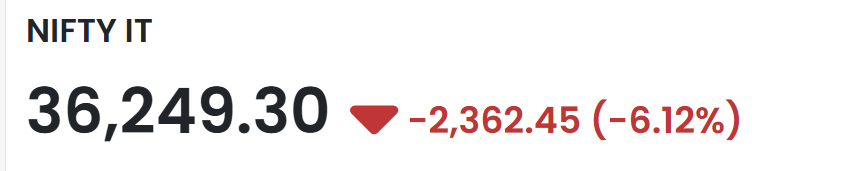
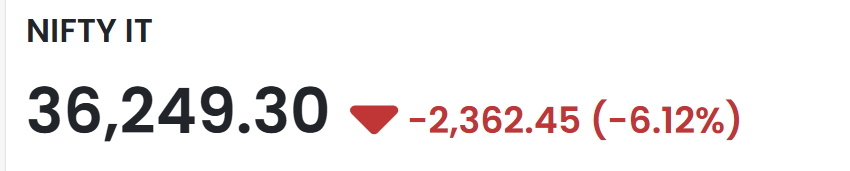
TCS talks about layoffs.
Infosys reduces hiring, quietly.
Freshers wait longer.
Laterals worry silently.
No panic yet.
But no confidence either.
The reason most people whisper?
AI.
Think about it simply.
If a software company sells a tool for $1,000 per month,
and a corporate can now build a decent internal version using AI for far less…
Why pay?
If AI can write code, test it, debug it, document it —
how many engineers does the same project really need?
Less hiring → fewer salaries
Fewer salaries → less spending
Less spending → pressure on banks, autos, real estate, retail
Markets don’t collapse suddenly.
They thin out slowly.
Yes, IT companies are adapting.
AI divisions.
Partnerships.
Acquisitions.
But here’s the uncomfortable question:
If AI makes companies more productive with fewer people… who benefits?
AI companies themselves aren’t even profitable yet.
But they might still damage profitable IT firms in the process.
So who actually wins?
Another question we avoid asking:
If millions lose or never get traditional jobs,
who will consume?
Services may get cheaper.
Information may become free.
But what about:
• Goods
• Manufacturing
• Infrastructure
Metros are being built.
Highways expanded.
Smart cities planned.
Who rides the metro if work disappears?
How do governments recover budgets if incomes shrink?
Some believe income won’t matter in the future since AI will make everything abundant.
Maybe.
But we don’t live in that future yet.
We live in the transition.
And transitions are always messy.
One last thought.
If AI is smarter than most humans,
yet available to everyone…
Then who is really powerful?
The one who builds AI?
The one who controls it?
Or the one who knows how society adapts around it?
I don’t have answers.
But I think these are the questions markets should be asking.
Curious to hear your thoughts — what do you think happens next?
(You can join my free finance whatsapp community for curated daily market updates! 👉 https://t.co/RaH4J9Ghe3)
For decades, India’s IT industry quietly carried the economy on its shoulders.
.
.
It didn’t just create jobs.
It created EMIs.
Home loans.
Car loans.
Urban consumption.
A middle class that spent, saved, and paid taxes.
Today, something feels… different.
TCS talks about layoffs.
Infosys reduces hiring, quietly.
Freshers wait longer.
Laterals worry silently.
No panic yet.
But no confidence either.
The reason most people whisper?
AI.
Think about it simply.
If a software company sells a tool for $1,000 per month,
and a corporate can now build a decent internal version using AI for far less…
Why pay?
If AI can write code, test it, debug it, document it —
how many engineers does the same project really need?
Less hiring → fewer salaries
Fewer salaries → less spending
Less spending → pressure on banks, autos, real estate, retail
Markets don’t collapse suddenly.
They thin out slowly.
Yes, IT companies are adapting.
AI divisions.
Partnerships.
Acquisitions.
But here’s the uncomfortable question:
If AI makes companies more productive with fewer people… who benefits?
AI companies themselves aren’t even profitable yet.
But they might still damage profitable IT firms in the process.
So who actually wins?
Another question we avoid asking:
If millions lose or never get traditional jobs,
who will consume?
Services may get cheaper.
Information may become free.
But what about:
• Goods
• Manufacturing
• Infrastructure
Metros are being built.
Highways expanded.
Smart cities planned.
Who rides the metro if work disappears?
How do governments recover budgets if incomes shrink?
Some believe income won’t matter in the future since AI will make everything abundant.
Maybe.
But we don’t live in that future yet.
We live in the transition.
And transitions are always messy.
One last thought.
If AI is smarter than most humans,
yet available to everyone…
Then who is really powerful?
The one who builds AI?
The one who controls it?
Or the one who knows how society adapts around it?
I don’t have answers.
But I think these are the questions markets should be asking.
Curious to hear your thoughts — what do you think happens next?
(You can join my free finance whatsapp community for curated daily market updates! 👉 https://t.co/RaH4J9Ghe3)
For decades, India’s IT industry quietly carried the economy on its shoulders.
.
.
It didn’t just create jobs.
It created EMIs.
Home loans.
Car loans.
Urban consumption.
A middle class that spent, saved, and paid taxes.
Today, something feels… different.
TCS talks about layoffs.
Infosys reduces hiring, quietly.
Freshers wait longer.
Laterals worry silently.
No panic yet.
But no confidence either.
The reason most people whisper?
AI.
Think about it simply.
If a software company sells a tool for $1,000 per month,
and a corporate can now build a decent internal version using AI for far less…
Why pay?
If AI can write code, test it, debug it, document it —
how many engineers does the same project really need?
Less hiring → fewer salaries
Fewer salaries → less spending
Less spending → pressure on banks, autos, real estate, retail
Markets don’t collapse suddenly.
They thin out slowly.
Yes, IT companies are adapting.
AI divisions.
Partnerships.
Acquisitions.
But here’s the uncomfortable question:
If AI makes companies more productive with fewer people… who benefits?
AI companies themselves aren’t even profitable yet.
But they might still damage profitable IT firms in the process.
So who actually wins?
Another question we avoid asking:
If millions lose or never get traditional jobs,
who will consume?
Services may get cheaper.
Information may become free.
But what about:
• Goods
• Manufacturing
• Infrastructure
Metros are being built.
Highways expanded.
Smart cities planned.
Who rides the metro if work disappears?
How do governments recover budgets if incomes shrink?
Some believe income won’t matter in the future since AI will make everything abundant.
Maybe.
But we don’t live in that future yet.
We live in the transition.
And transitions are always messy.
One last thought.
If AI is smarter than most humans,
yet available to everyone…
Then who is really powerful?
The one who builds AI?
The one who controls it?
Or the one who knows how society adapts around it?
I don’t have answers.
But I think these are the questions markets should be asking.
Curious to hear your thoughts — what do you think happens next?
(You can join my free finance whatsapp community for curated daily market updates! 👉 https://t.co/RaH4J9Ghe3)
Silver and Gold Investors right now
1. Those who already bought: Should I sell now?
2. Those who missed buying: Should I buy now?
#SilverPrices#GoldPrice
BMW at 50% off?
.
.
.
I literally started calculating EMIs.
Then I went into the details.
So, India just slashed car import duties from 110% to 10% in a new EU trade deal!
Sounds MASSIVE, right?
Everyone's posting "luxury cars are about to get affordable!"
But here's what they're not telling you.
This deal has more conditions than a credit card offer.
Let me break it down simply:
→ Only applies to premium cars above ~₹15 lakh (landed cost)
Existing affordable mass-market cars? Not included.
→ There's a quota of ~250,000 cars per year
In a market that sells 4+ million cars annually.
→ EVs are protected for 5 years
Tata and Mahindra get breathing room before European EVs flood in cheaper.
→ Duty cuts are phased over 5–10 years
First drop: 110% → 40%. Then slowly to 10%.
Translation?
That BMW won't be 50% cheaper next month.
Maybe 10–15% cheaper in a few years. Maybe.
Now here's the twist nobody's talking about.
The USA is furious.
U.S. Treasury openly called this deal "disappointing".
Why?
Because Tesla and Ford now compete against German brands that get preferential treatment — while American cars still face full duties.
But long story short, what does this mean for you?
Car buyers: Don't cancel that hatchback order expecting a cheap Audi.
EV watchers: Domestic brands just got a 5-year head start before European competition arrives.
Investors: This is India protecting mass-market while selectively opening premium — and doing it smartly.
The headlines scream revolution.
The reality? Strategic, phased, quota-bound changes.
Not boring. Just not what the hype suggests.
🔁 Repost if this saved you from making EMI plans based on headlines.
Want daily finance clarity without the hype? 680+ CAs, investors, and traders get sharp, no-BS market updates every morning in 𝐌𝐚𝐫𝐤𝐞𝐭𝐒𝐜𝐚𝐧'𝐬 free WhatsApp community.
Join here: https://t.co/RaH4J9Ghe3