Virtus est vitium fugere et sapientia prima
stultitia caruisse.
- Horatius Ep. I.1.41-42
Virtue is flight from defect and the first sign of wisdom is a lack ignorance.
Latin Tip Tuesday:
If you are teaching yourself Latin or Greek, don't be afraid to look at translations, as if looking at a translation is cheating. Translations can be a helpful tool for learning something new.
Jo-Ann Shelton's book "As the Romans Did" is an excellent sourcebook for learning about life in ancient Rome. There are exerpts that cover primary school, medical practices, politics, food, and a lot more. Check it out! https://t.co/Akao7zEn86
"Caelum non animum mutant, qui trans mare currunt."
- Horatius Ep. I.11
Those who make journeys across the sea change only the sky above them, not the spirit within them.
- Erasmus' cites Tacitus as the one who claims that Galba refused the cinnabar, but it seems he was mistaken, and the source he is referring to cannot be found by editors of his Latin Adagia
- Pliny refers to the custom as if it was one that was practiced long before his time.
During festivals, effigies of the gods as well as those who were leading triumphs were covered in red cinnabar (minium), a custom that the old man Galba did not permit to be exercised upon him during his triumph. - See Erasmus Adage 3707/ Plinii Naturalis H. 33.36.111
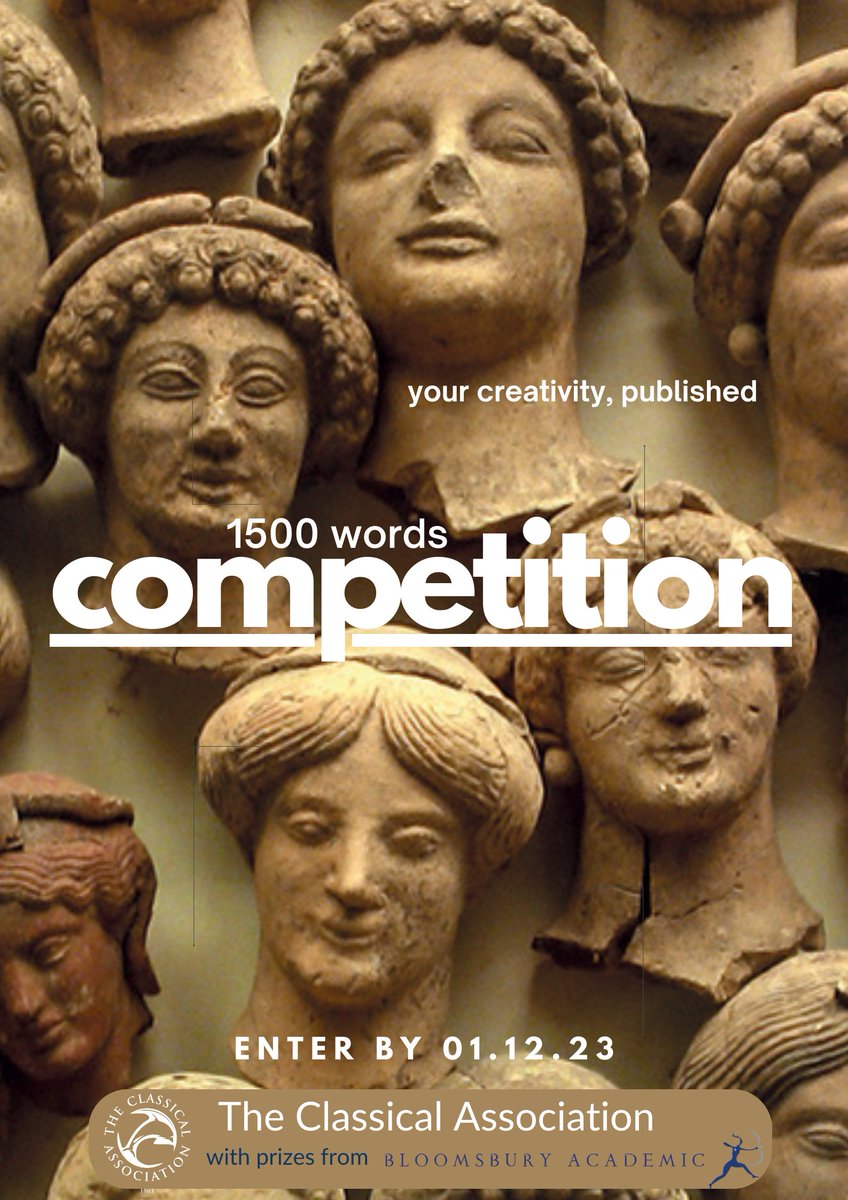
We're delighted to announce the CA's brand new Creative Writing Competition, with an amazing prize from @BloomsburyClass ✍️📘
Submit a piece of creative writing of 1500 words or less, inspired by the classical world, and you could be a published writer!
https://t.co/vh0gQCsfoN
Latin Tip Tuesday:
9 Interrogative words arranged in Dactylic Hexameter to make memorizing them a little easier:
Quis, Quid, Quando, Ubi, Cur, Quot, Quomodo, Quantus et Utrum.
That is:
Who, what, when, where, why, how many, how, how great, and whether (which)
He permits the chamber pots be brought in. But the Rhodians doubtful as to whether or not they should use bronze chamber pots or brick, again question the oracle, who gives the frank answer: "neither". Hence the expression “Rhodensium Oraculum” for the overly meticulous.
The Rhodians making sacrifices to Lindian Minerva, decide to prolong the feasts at her altar, and remain there continually. Seeing as how they are not permitted to bring chamber pots to sacrifices, they decide to consult the oracular deity regarding their dilemma.
If you’re looking to whitewash two walls with one bucket of paint, as the old Roman adage goes, and you want to deepen your knowledge of scripture and of Latin, come and read Erasmus’ paraphrases of the Gospels. We put a new one out every day: https://t.co/auQPDMJxXi
Did you know that Desiderius Eramus wrote a book on the method of teaching Latin and Greek? You can read it in Latin at the Latin Teacher Mellarium for free here! : https://t.co/jTV1m9vUK0
et ipse discipulos inter hos parietes qui alioqui pisces ad insaniam adigatus magister obiurgavi. praecepta eiusmodi magistri haud existimares observanda quod et eos intra oleas currere conantes vituperaret.
Does this sound like a classroom you have been in?
H. sunt puta triginta discipuli in unum cubiculum conditi. et id quotidie! unus tacite amicum petit calamum commodato. alter forte praeteriens calcat pedem alterius quod et risum et stomachum movet utrique et circumsedentibus.
strepitus causam ignorans magis atque magis ira excandescit indigne ferens quod pueri praelectionem non satis auscultent, qua nocte superiore praeparanda duas horas consumpsit. quamdiu id ferendum?