Y'day, I was on a call with a business associate who is based out of Switzerland.
Having received his dose of Moderna that day, he said- "we are fortunate to have access to vaccines in here...considering the "state" in India; people are not getting vaccines, suffering..."
Scenes from our booth at VivaTech in Paris where we showed our products to Prime Minister @narendramodi and President @EmmanuelMacron.
We want to thank both leaders for their words of encouragement and support! 🙏
India is the absolute first to achieve this and every Indian should be extremely proud of how clever this is.
Let me explain what you are even looking at.
That video shows a freight train carrying shipping containers stacked two high, one box on top of another, running under live overhead electric wires.
Sounds simple. But it is not. No other country in the world has pulled this off. India is the only one.
Here is why it is so hard.
When you stack two containers on a wagon, the train becomes very tall. Around 7 metres. Normal electric train wires in India sit much lower, around 5.5 metres. So the two cannot share the same track. The train would smash straight into the wire.
That leaves you with a choice. Go electric and stack only one container. Or stack two containers and pull the train with a diesel engine.
The US, China, Canada and Australia all run double-stack trains. But they mostly do it with diesel, or on routes that were never electrified in the first place. Nobody bothered raising electric wires that high on old tracks.
India did both electric and double-stack together. That is the world first.
The reason India could do this is a decision from the early 2000s.
So, Indian Railways had a basic problem. Goods trains and passenger trains shared the same tracks. Passenger trains always get priority.
So freight trains crawled at 25 to 30 km/h. For a growing economy, moving goods that slowly is a major problem.
So we built separate tracks only for freight. No passenger trains allowed. These are the Dedicated Freight Corridors.
The government approved the project around 2006 and set up a company called DFCCIL to build two corridors.
The Western one runs from near Delhi to the port near Mumbai, around 1,500 km. The Eastern one runs from Punjab down to West Bengal, around 1,875 km.
Because they were building from zero, the engineers were not stuck with old bridges, old tunnels or old wire heights. They could decide the clearances themselves.
So they made a deliberate call to build the whole corridor tall enough for two stacked containers. And electrify it.
Then they had to solve two hard problems.
First, the wire. On a normal Indian line the wire hangs around 5.5 metres. On the freight corridor they raised it to about 7.5 metres. This is called high-rise OHE.
No railway in the world had run a regular freight wire that high before.
Second, the engine. If the wire is way up high, a normal loco cannot reach it. The arm on the roof that touches the wire, called the pantograph, would be too short.
So India needed a new locomotive. A taller reach. And enough power to drag thousands of tonnes.
This is why we built a new loco called the WAG-12.
It is a beast.
12,000 horsepower. Double the power of the old WAG-9 it replaced. It can haul trains over 6,000 tonnes, and up to 15,000 tonnes in some setups, at 100 km/h. That is roughly three times the old freight speed.
The WAG-12 has its own backstory. In November 2015, Indian Railways signed a deal worth about ₹19,604 crore, around 3.4 billion dollars, with the French company Alstom.
They built a new factory in Madhepura, Bihar. Indian Railways holds 26 percent, Alstom holds 74 percent. It was the largest foreign investment ever in Indian Railways.
Over time the factory reached close to 90 percent local manufacturing. So most of each loco is now made in India.
So, the government approved an infrastructure decision in the mid 2000s, then it got built over almost two decades by DFCCIL, Indian Railways and RDSO. The locomotive came through the Alstom joint venture.
The first double-stack train ran under high-rise wires in June 2020, from Palanpur and Botad in Gujarat. The corridor sections were opened in stages after that.
And finally, why only India can do this.
Three things stack up together.
One, broad gauge.
India runs on a wider track than most of the world, 1,676 mm. A wider track gives a bigger loading box. So India can run plain flat wagons with two containers on top. Many countries need special low well-cars to manage height, and those still do not fix the wire problem.
Two, the fresh corridor.
India built new track with no height limits baked in. Old networks in Europe and the US are full of low tunnels and bridges never meant for 7 metre trains. Rebuilding all of that is close to impossible and crazy expensive.
Three, the system.
The tall wire, the high-reach pantograph and the powerful WAG-12 were all designed to work together as one package. You cannot copy just one piece. You need the whole thing.
Put those three together and other railways simply cannot recreate it without rebuilding from scratch.
But the part I keep thinking about is that India approved this in 2006 and ran the first train in 2020.
Fourteen years. :)
Long list.
Germany- Any Indian soldier killed by the Pakistan army post 1960s- would’ve been shot by a Heckler & Koch G3 rifle or H&K MG3 machine gun.
France - 5 Agosta submarines.
Sweden- SAAB Erieye AEW&C
also Sweden- Wah Nobel industries - makers of the RDX which blew 257 Mumbaikars to bits in 1993…
Jairam Ramesh tweeted in September 2024 that the Adani Nairobi airport proposal would spark protests turning into anti-India anger because of the Prime Minister’s so-called “special friendship” with Adani.
What actually happened tells a very different and disturbing story. Adani offered nearly $2 billion to upgrade Jomo Kenyatta International Airport under a concession model. The deal was cancelled in November 2024 after a coordinated campaign of protests, negative publicity, and a social media drive led by Kenyan influencer Nelson Amenya all fuelled by US allegations that have now been closed by the Department of Justice for lack of conclusive evidence.
Even a fake press release was circulated to damage Adani during this period.
Two years later, Kenya awarded a $2.9 billion contract almost 50% higher than the original Indian offer to a Chinese state-owned company. India lost a major private investment opportunity in East Africa. China gained strategic ground while Kenyan taxpayers were forced to pay significantly more.
Jairam Ramesh and the entire Congress party didn’t just stay silent they actively amplified this controversy from India. Their political attacks helped turn a legitimate commercial proposal toxic and made it easier for China to step in after an Indian company was pushed out. Was this really just political opposition, or was there something more deliberate behind it?
Congress has a long and consistent history of aligning with China. They had signed an MoU with the Chinese Communist Party and maintained that relationship for years. Whether it is weakening India’s stand on the border, opposing Indian companies abroad, or creating obstacles for projects that can strengthen India, Congress has repeatedly shown that it has no problem working against Indian interests when China stands to benefit.
When it comes to choosing between protecting Indian interests and helping China, why does Congress always seem to choose China?
Their actions in the Kenya airport case have once again exposed whose side they are truly on.
To understand the depth and breadth of what Prime Minister Modi has achieved, we must remember what he inherited.
The Congress Party had a disastrous flirtation with Soviet style socialism (and the word "socialist" is still there in our Constitution, thanks to Indira Gandhi). With the Soviet collapse, India faced bankruptcy and the Congress switched to the Washington consensus, Davos-style globalism. To be fair to them, it looked reasonable in 1991, and people like me supported it, but far deeper thinkers like Gurumurthy saw that Davos globalism also as a dead-end. It met its end in the Global Financial Crisis 2008-9.
Modi's Swadeshi philosophy has achieved the balance of building up our capability while also earning the respect of the world. Like all great transformations, it takes time.
My prayers for his good health because so much work lies ahead 🙏
India’s growth momentum remains strong!
GDP growth rate of 7.7% in FY 2025-26 and 7.8% in Q4 of FY 2025-26 reflect the inherent strength of our economy, the success of reforms and the hard work of 140 crore Indians.
We shall leave no stone unturned to further ‘Ease of Living,’ ‘Ease of Doing Business’ and increase opportunities for our youth.
Modi-hatred is almost a requirement to be called an "intellectual" in some circles. We have to counter them, so let's recall some history.
Congress had left Punjab, Kashmir, Assam all burning. The Naxal menace had made middle India ungovernable. Bihar and UP had become lawless. Bengal stagnated and deteriorated.
Today, Bengal has been rescued from the lawless TMC. For the first time since my childhood, we can discuss development and progress in all these states. We can disagree on specific paths to development, but at least we get to have that conversation.
These achievements did not happen magically. They required a lot of hard work and sacrifice - and all of it happened democratically. Let us not forget that Congress used Article 356 very often to dismiss state governments and now they lecture us on "democratic values".
If we elect the wrong crowd, we risk losing all the gains we have made.
Modi and Shah have provided strong and resolute leadership that has allowed these useless intellectuals to indulge their Modi hatred. Deep down, even they know the truth.
One of the most powerful symbols of India’s unbroken civilizational continuity!
Discovered at Mohenjo-daro in undivided India this steatite seal, about 4,300-year-old, shows a seated figure in yogic posture (widely seen as Shiva-Pashupati) seated in Mulabandhasana, surrounded by animals.
While ancient sites may lie across modern borders, India remains the living custodian of this heritage. The yogic posture, Shaivite symbolism, and spiritual ethos seen in the Pashupati Seal continue to thrive in India’s temples, daily worship of Shiva, yogic traditions, and cultural life even today.
From the Vedic period to contemporary Bharat, this civilizational thread has remained alive and unbroken — deeply embedded in our philosophy, rituals, and collective consciousness.🇮🇳
#PashupatiSeal #IndusSaraswatiCivilization #LivingIndianHeritage
Different parts of India are witnessing soaring temperatures and the challenges that come with it. This heat is harsh on all of us and I urge you all to take as many precautions as possible. Please stay hydrated, keep water with you when stepping out. Offer a glass of water to others. In weather like this, such kindness goes a long way.
IISc-Led Semiconductor Training Initiative Records Massive Growth in Tribal Youth Participation Across India
The Semiconductor Training Program for Tribal Students, led by the Indian Institute of Science (IISc), Bengaluru, in collaboration with the Ministry of Tribal Affairs (MoTA) and supported by MY Bharat under the Department of Youth Affairs, has achieved a significant milestone in youth outreach and participation during its 2026 Phase-II implementation.
The initiative, coordinated through the Centre for Nano Science and Engineering (CeNSE), IISc Bengaluru, aims to provide tribal students and faculty members with advanced exposure to semiconductor fabrication, nanoengineering processes, and emerging technologies. The program consists of an online self-paced learning module, lectures by IISc faculty experts, and a 10-day residential training program at IISc Bengaluru with free travel, lodging, and food support for participants.
Read here: https://t.co/huXyStBljb
India’s greatest tragedy was never merely that we were poor. It was that we accepted poverty for so long as inevitable.
Do read this from @anujg who worked in govt and pvt sector and why we need to think big
https://t.co/hm4PYyTyUp
West Bengal was the troglodyte of Indian states. It was turned into a North Korea like economy. The Trinamool Congress ruled by spreading fear and terror among voters.
People outside the state really do not appreciate what the opening up of West Bengal to India is going to do. It’s like the fall of the Berlin Wall!
I shall be sharing some tweets of all the hard-to-believe stories coming out from the state now. 🧵
It is extremely disappointing to read negative comments on this post.
The comments are not from experts. They are from IT Cell types, people who barely understand technology
Pause for a moment folks. 5 years ago, India didn’t exist on semiconductor manufacturing map.
A joyous moment for every Indian!
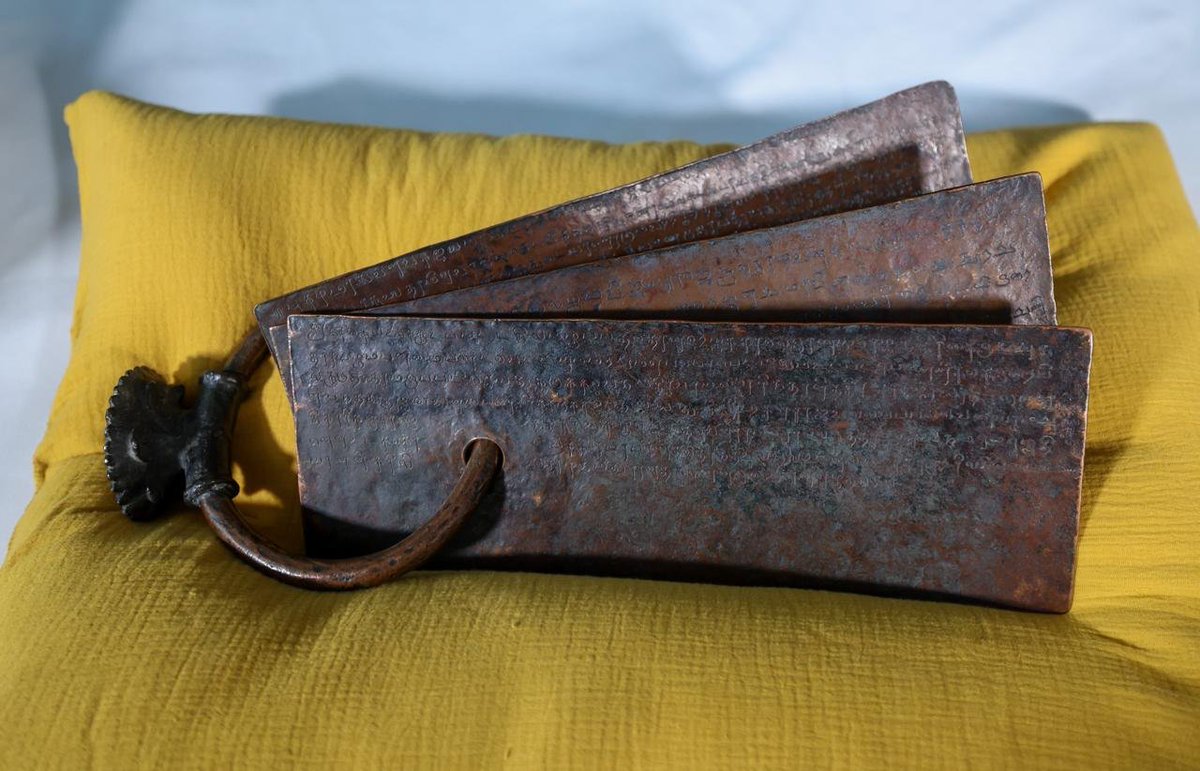
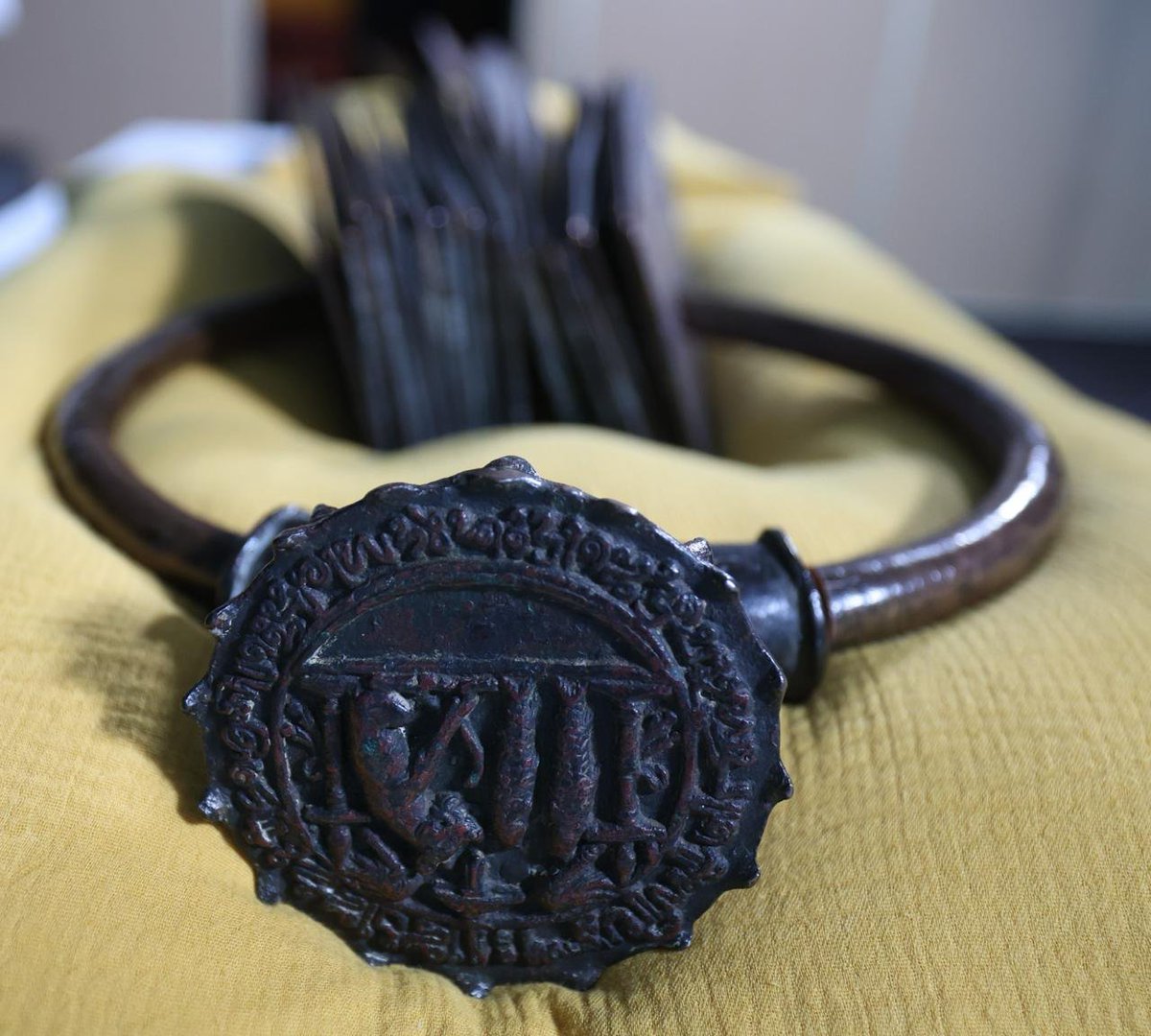
Chola Copper Plates dating back to the 11th Century will be repatriated to India from the Netherlands. Took part in the ceremony for the same in the presence of Prime Minister Rob Jetten.
The Chola Copper Plates are a set of 21 large plates and 3 small plates and largely contain texts in Tamil, one of the most beautiful languages of the world. They relate to the great Rajendra Chola I formalising an oral commitment made by his father, King Rajaraja I. They also showcase the greatness of the Cholas. We in India are immensely proud of the Cholas, their culture and their maritime prowess.
I thank the Government of the Netherlands and Leiden University in particular, where the Copper Plates were kept since the mid-19th century.
@MinPres
This is totally false.
Not an iota of truth in this.
There is no question of putting such restrictions on foreign travel.
We remain committed to improving ‘Ease of Doing Business’ and ‘Ease of Living’ for our people.
You cannot understand Indian trajectory without doing three things:
1. Live abroad to see that people are fundamentally the same, with some differences of course. There is no god-given reason for any large group to be perpetually ahead of any other. If anything, scale means the larger group has an edge.
2. Read lots and lots of economic, financial and political history. And I mean lots. How others became rich. What does money mean over the ages. How did state capacity develop. How does it overlap with civilisational substrates etc
3. Not get cynical through this process of traveling and reading. Many (not all) NRIs - who are best placed to compare across nations - end up exaggerating Indian faults to rationalise their life decision. Subconsciously I maybe doing the reverse but at least not consciously.
If you travel/read a lot and go by numbers and not emotions, I think it is fairly likely you will come to the conclusion that India is an incredible growth story and investment opportunity. Of course different views exist - which is why markets exist.
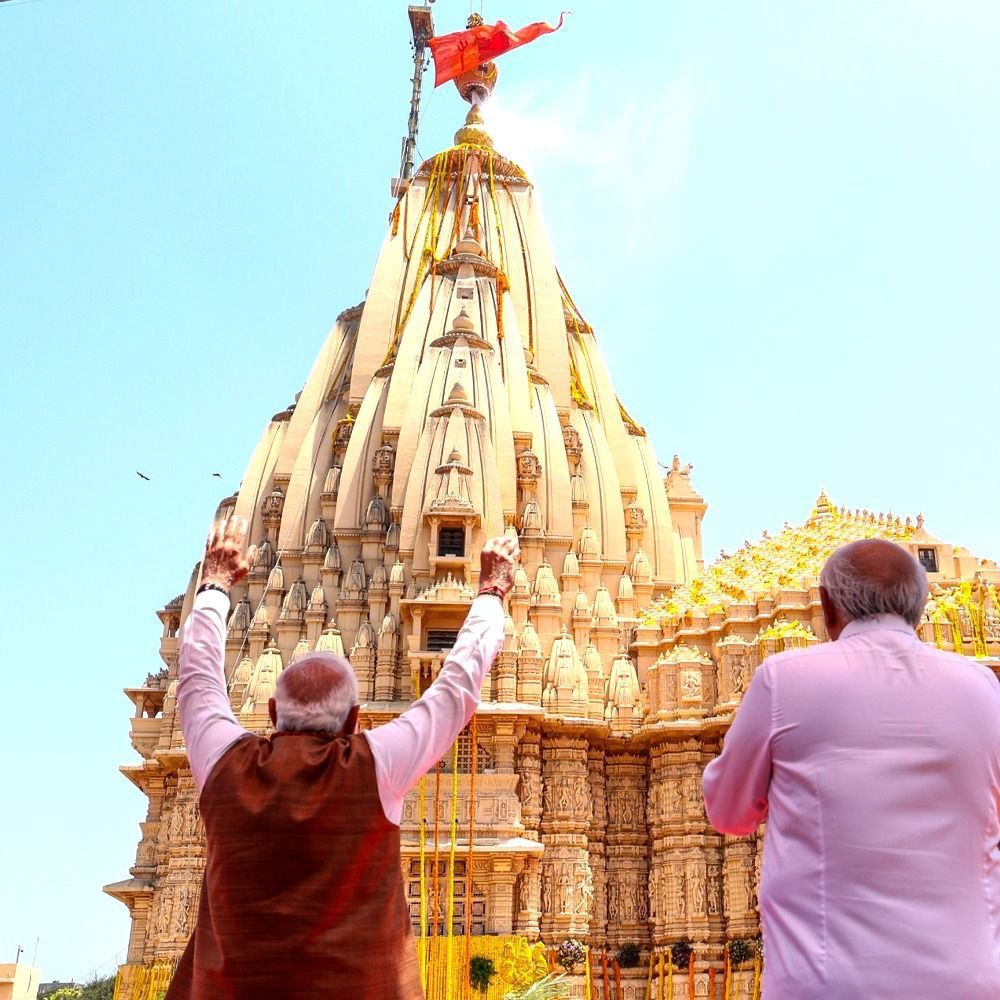
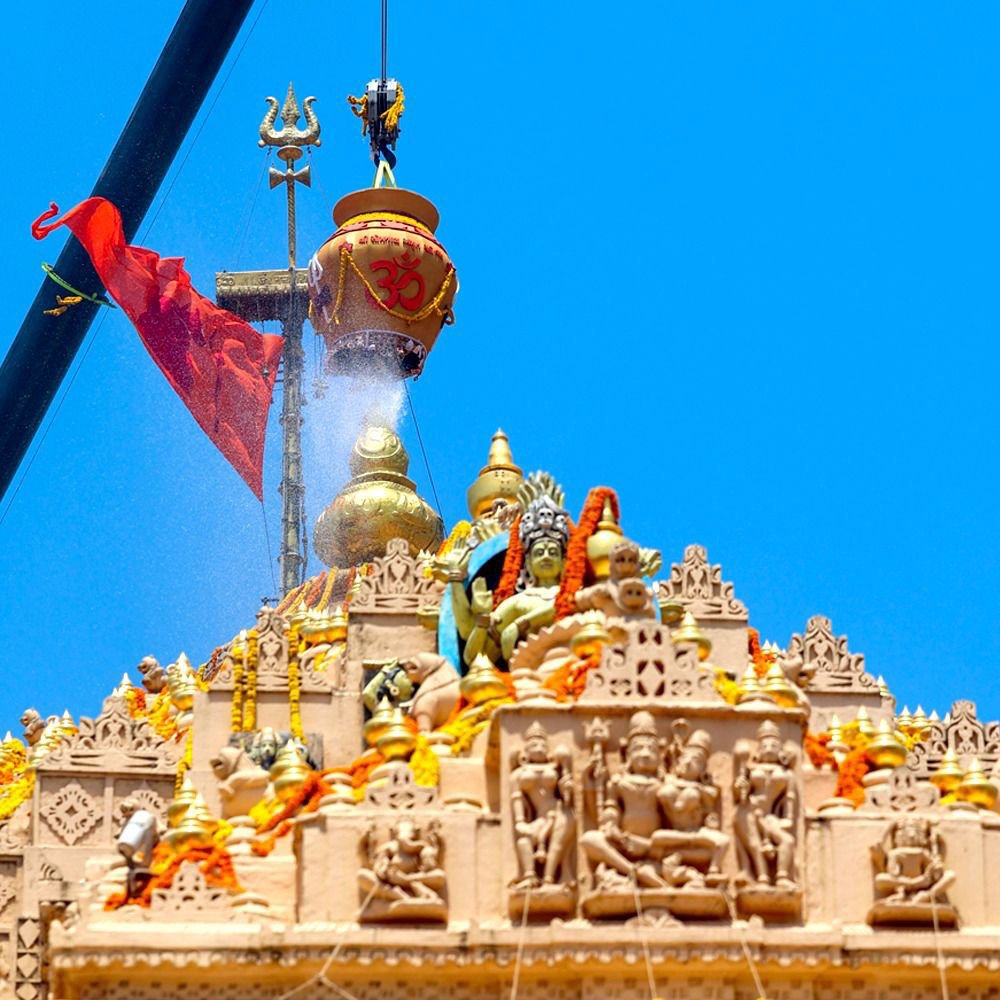
A thousand years ago, the first of many attacks on Somnath took place. Those who kept engaging in such attacks believed they could shatter the ethos of our land. But, they were wrong. Thanks to fiercely courageous children of Bharat Mata, Somnath kept getting rebuilt.
Seventy-five years ago on this day, the doors of the newly rebuilt Somnath Temple opened in the presence of the then President Dr. Rajendra Prasad, proclaiming to the world that while the attackers have faded into the dust of history, the soul of Bharat endures.
Somnath stands tall and eternal. It showcases our civilisational courage and our unbroken devotion. May the blessings of Mahadev always remain upon us all.