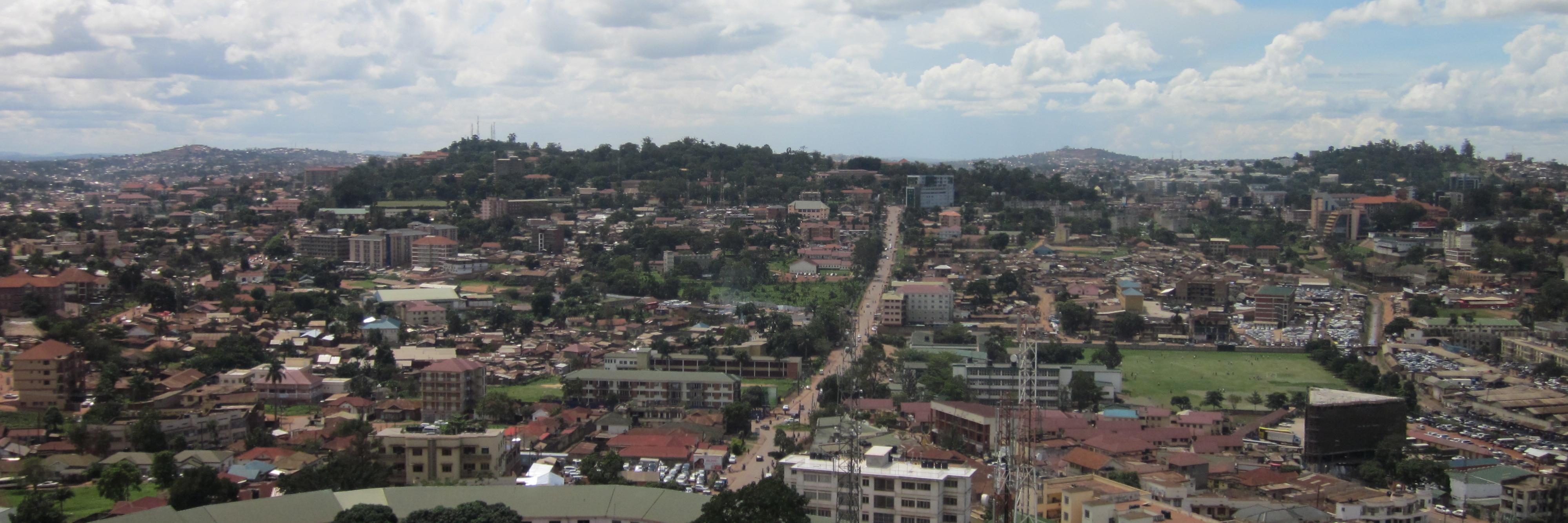
With city popn growing & living further away, two key processes need to start happening (or shd hav started) in the GKMA;
1. Develop mass transit system. The current taxis & bodabodas can serve as good compliments to a Bus Rapid Transit system.
Need: Subsidies to spur investment
I left home this morning at 7:40am, and only got to Lugogo Bypass [9.3kms from home] at 9:52am.
I left Bulindo this evening at 17:02, used the Expressway [37km from Muyenga] and got home at 18:04
You can convince me our city roads are not dysfunctional!
TAN has just released a magnificent video on the Roman Canon. The quality of these short instructive videos is unsurpassed, setting a new standard in traditionalist apologetics.
https://t.co/oRm0LD68U3
I don't think anybody really grasps how desperate this situation is.
University professors are now saying they are unable to teach history because reading long books and passages is how a person learns history. College kids are incapable of reading more than a few pages.
Some classes don't assign any reading at all now, only lectures.
There is an assumption among the people managing this decline that reading is just a way of receiving information. It isn't. Proper reading is how we build the mental muscle to synthesize ideas and evaluate them.
If the catastrophic decline in reading and literacy is not addressed now, we risk losing everything.
Western civilization cannot survive the death of reading because it was built by people with the kind of cognitive depth that a culture of deep reading brings:
Complex reasoning, extended internal dialogue, the capacity to hold opposing ideas in tension. Our systems and institutions are complex, and they require well ordered minds to maintain them.
Reading forms minds, and the West was built by the richest minds in history.
"Laws are flouted, morality cast aside, evil is praised and defended robustly. We are at the stage where almost anything goes...; the moral fabric of society is destroyed. It is easy to see that this is right where we are today." RayStedman #Uganda
Men,
There is something sacramental about the discipline of training. You present the body; imperfect, fallen, redeemable, and through ordered effort it becomes more capable of service.
To God.
To your wife.
To your children.
This is the priesthood of the home.
#IronAndIncense
Pope Leo at Port of Arguineguín: “Dear migrants: before saying any other word to you, I want to bow before your dignity. You are not numbers, nor files! You are people with a family and a home that you have left behind, with dreams that no one has the right to despise.”
The choir in the Sagrada Família is putting on the performance of a lifetime.
The vocals perfectly complement the stunning visuals of Gaudí’s cathedral!
The World Cup begins tomorrow, and many will watch the matches. Soccer reminds us of something we must not forget: life is not a race to show off on our own, but a path we learn to walk together. Anyone who does not know how to pass the ball, even if they have talent, has not yet understood the game. Anyone who does not know how to live with and for others has not yet understood life. #ApostolicJourney
The Dr Matthew Lukwiya story you never hear about.
A few days ago, I saw someone talking about Heroes Day and mentioned Dr. Lukwiya among them. It made me realise that most of us know him simply as the doctor who died treating Ebola patients at Lacor Hospital in 2000, and not much else.
I felt slightly guilty for not knowing more about a man who seems to transcend history, so I went looking for the full story of Dr. Matthew Lukwiya. What I found was a man who had spent the twenty years before Ebola practising exactly the kind of courage that the outbreak would eventually demand of him.
This is what many of us didn’t know about Dr. Matthew, as he was lovingly called.
1/10
He was born in Kitgum to a fishmonger father who drowned when Matthew was twelve, and a mother who survived by smuggling tea across the Sudanese border to trade for soap. She tried to teach him the same trade, balancing goods on a bicycle through the bush, but he had other ideas. He topped his primary class, and then he was the best in the country in national exams. The same boy his mother had been training to smuggle goods was about to smuggle himself out of poverty entirely, through a series of scholarships that took him all the way to Makerere University Medical Faculty.
In 1983, he arrived at St. Mary's Hospital Lacor, a Catholic missionary hospital outside Gulu, as one of the very first medical interns under a new programme that allowed newly graduated doctors to train there. It took the founders, Dr. Piero Corti and Dr. Lucille Teasdale-Corti, just three months to decide that this young intern was going to be the one to inherit everything they had built. Dr. Corti's official report on Matthew's probation period read like a prophecy: after a long list of "outstanding" and "above average" marks, his final comment was simply that "the marks given are self-explanatory. Dr. Lukwiya will soon make an outstanding physician.”
Then came the LRA war.
2/10
The Lord's Resistance Army was everywhere in Acholiland, and St. Mary's was on its map. The rebels looted regularly. They abducted nurses for ransom in money and drugs. On Good Friday 1989, the rebels came to the hospital intending to take several Italian nuns. With the Cortis temporarily away, Matthew, then Deputy Medical Superintendent, took responsibility as head of the hospital and negotiated with the rebels. He offered that they take him instead. He walked into the bush in his physician's gown and spent a week being marched around by armed men before they let him go. When the Cortis rushed back and heard what had happened, they decided the staff could no longer be expected to work under such conditions and prepared to close the hospital. It took several tense days of negotiation before the rebels promised never to enter Lacor again. They kept that promise. The hospital remained open.
Matthew then opened the gates to anyone in the surrounding villages who needed somewhere to sleep, safe from the rampant abductions. At one point, nine thousand people, most of them children, were walking in from the bush every evening, sleeping on the hospital grounds every single night. The hospital had effectively become a refuge being run by a man who had decided long ago that his life was a resource for other people. One night, a mortar shell came through the ceiling of his family home while he, his wife Margaret, and their five children were lying in bed listening to the gunfire outside. The shell failed to explode, and they survived.
3/10
In 1991, exhausted from the workload, he was sent on a Corti-arranged sponsorship to the Liverpool School of Tropical Medicine to pursue a Master's in Tropical Paediatrics. There, he got the highest marks in the school's history and won the John Hay Prize. Professor Coulter, his supervisor, would later write that Matthew "was an outstanding student and his wide experience contributed enormously to the course.”
Liverpool offered him a teaching position on the spot, which would have meant a comfortable life in England, a great salary, his children in good schools, and distance from a war that had already tried to kill him twice, but guess what!
He turned it down and came back to Lacor Hospital. He became Medical Superintendent in 1997. Under his leadership over the next decade, the hospital tripled its capacity to 18,000 patients a year, treated wounded Ugandans from both sides of the war without asking questions, and became arguably the best hospital in Uganda and one of the finest in East Africa. The man who could have built a great academic career in Liverpool kept choosing Gulu.
4/10
When Ebola arrived in October 2000, he did what he always did. He showed up.
He was in Kampala finishing a Master's in Public Health when Lacor Hospital called. Three nursing students had died of a mysterious illness. He returned the same day. By the next morning, he had reviewed every unusual case in the past two weeks, identified seventeen with similar symptoms, and concluded, before any official test, that this was a viral haemorrhagic fever, probably Ebola. He bypassed every bureaucratic protocol that would have wasted days. He picked up the phone, called Kampala directly, and spoke to Dr. Sam Okware, the Commissioner of Community Health Services. That phone call, made days before government would have otherwise known, is what foreign epidemiologists later credited with saving hundreds, possibly thousands of Ugandan lives.
When the WHO team arrived, expecting the chaos and abandonment they had seen in Kikwit, DRC, five years earlier, they were stunned. Lukwiya had already organised volunteer nursing, surveillance, and burial teams, set up a fully functioning isolation ward operating to international standards, and arranged ambulance crews to bring patients from villages and collect bodies for safe burial. There was even a small wooden device for pulling off rubber boots, built exactly as the WHO manual specified, by a Lacor staff member who had read the manual the night before. The WHO and Médecins Sans Frontières teams redirected to Gulu Regional Referral Hospital instead, where they found corpses abandoned in beds.
5/10