This weekend in Cosby: The Victory Show. 4–6 September, United Kingdom. Wartime Britain restaged across a Leicestershire airfield. https://t.co/0mt5qLCyPV #reenactment#WW2
Four weeks out — Aalen: Aalen Roman Days (14th). 26–27 September, Germany. The largest Roman cavalry fort north of the Alps, a thousand horsemen on the limes. https://t.co/FqOgjXchUf #reenactment#AncientHistory
Next weekend in Rothenburg ob der Tauber: Rothenburg Imperial City Festival. 4–6 September, Germany. Tilly took the town in 1631 — and legend says a wager over a draught of wine saved it. https://t.co/MGUmOiuP4n #reenactment#Medieval
Dicen que Ran es la mejor película de 1985, y tienen razón. Akira Kurosawa se inspiró en Shakespeare para crear una obra monumental: cada plano es arte. Nolan admitió que fue la principal referencia para The Odyssey.
Worth planning for — San Diego: MCAS Miramar Air Show. 25–27 September, United States. San Diego's Marine air station, home of Top Gun until 1996. https://t.co/tdmE6BOTmz #reenactment#airshow
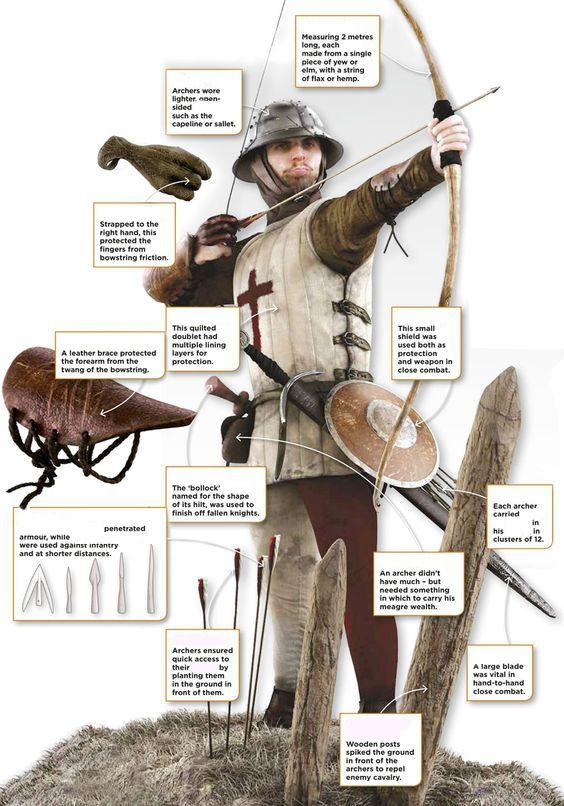
The equipment of a 14th-century English archer may look simple to our modern eyes, but it was the vital equipment of the victors at Crécy and Poitiers.
A key detail is how the arrowbag is worn on the hip. Movies show quivers on the back which was rarely done in medieval Europe.
Rome fought bloodier battles than the Teutoburg Forest, days like Cannae where more men died in a single afternoon. But no defeat was ever more gruesome, more soaked in horror, than what happened to three Roman legions in the dark, rain-drenched woods of Germany in the autumn of AD 9. It was not just a slaughter. It was an annihilation followed by ritual butchery, and the Romans who finally saw the aftermath were so traumatised that the emperor himself never fully recovered.
The trap was sprung by a man the Romans thought they owned. Arminius was a Germanic prince of the Cherusci who had been raised in Rome, trained as a Roman officer, given Roman citizenship and the rank of knight. He served as a trusted aide and scout to the Roman governor of Germania, Publius Quinctilius Varus. But Arminius had never stopped being a German, and he secretly forged an alliance among the fractious tribes to destroy the Romans from within. He fed Varus false reports of a small local rebellion, luring the governor to march his army off the safe roads and into the trackless forest to deal with it.
Varus took the bait. He led some 15,000 to 20,000 men, the Seventeenth, Eighteenth, and Nineteenth Legions along with their auxiliaries and a long tail of camp followers, wives, and servants, strung out for miles along a narrow track through dense woods and bog. Then the rain came down, and the Germans came out of the trees. This was not a battle in any Roman sense, with lines and formations and a field. It was days of ambush and murder in terrain where the legions could not deploy, could not see, could not fight the way they were trained. The column was cut into pieces and hunted through the forest, hacked apart in the mud and the downpour over three or four days of mounting nightmare. Varus, seeing that all was lost and knowing what capture would mean, fell on his own sword. Most of his officers did the same or died fighting. The legions were wiped out, effectively to the last man.
And then it got worse, because for the prisoners the real horror was only beginning. The Germans did not simply kill the captured Romans. They led them to sacred groves and offered them up to their gods in ritual sacrifice. Roman officers, the tribunes and senior centurions, were slaughtered on crude pagan altars. Others were buried alive, or had their throats cut over pits, or were nailed up. Severed Roman heads were fixed to the trunks of trees throughout the forest, a wood turned into a shrine of the dead. Men who had marched in as the soldiers of the most powerful state on earth ended as offerings hung in the branches of a German forest.
The full scale of the atrocity was not even understood until six years later. When the general Germanicus led a Roman army back into that country in AD 15, his men came upon the site of the massacre, and the historian Tacitus left an unforgettable account of what they found. Bleached white bones lay scattered and heaped across the ground where men had fallen or fled. Broken weapons and horse limbs were tangled among them. Skulls were nailed to the tree trunks. In the groves stood the barbarian altars where the tribunes had been sacrificed. Survivors who had somehow escaped years before pointed out the spots: here the officers were butchered, here the eagles were taken, here Varus died. The soldiers, weeping, gathered up the bones of their comrades and countrymen and buried them, unable to tell whose remains they touched, burying them all as kin.
Back in Rome the blow had been shattering. When news first reached the aging emperor Augustus that three of his precious legions, a tenth of the entire Roman army, had been swallowed whole in the German woods, he was said to have fallen into despair, torn his clothes, and let his hair and beard grow ragged in mourning. For months, the sources claim, he would wander the palace and beat his head against the doorframes, crying out the words that became the epitaph of the disaster: "Quinctilius Varus, give me back my legions." Those three legion numbers, the Seventeenth, Eighteenth, and Nineteenth, were so cursed that Rome never used them again.
The gruesome day in the forest changed the map of the world. Augustus abandoned the dream of conquering Germania. The Romans pulled back to the Rhine, and the great river became the permanent frontier of their empire, a line it would essentially never cross again. Everything to the west and south became Roman, Latin, Mediterranean, the root of France, Spain, Italy. Everything to the east stayed Germanic and free. A single ambush in the rain, and the ritual horror that followed it, drew the border between two halves of Europe that in some ways has never fully faded. No battle Rome ever fought was quite so terrible, or left so deep and lasting a scar.
Four weeks out — Welshpool: Welshpool 1940s Weekend. 25–27 September, United Kingdom. Wartime Wales along the Welshpool & Llanfair narrow gauge. https://t.co/mKZrLebWse #reenactment#WW2
I think medieval beekeeper outfits might be one of the hardest looks in all of fashion history.
It looks like something straight out of a horror movie, but the idea behind early beekeeping protection was actually very practical: how do you work around thousands of defensive insects without constantly getting stung in the face?
Beekeeping was already an important part of European rural life during the Middle Ages. Honey was one of the main sweeteners available before refined sugar became widely accessible, while beeswax was highly valuable for candles, religious ceremonies, and everyday household use.
Medieval beekeepers commonly kept colonies in skeps, dome-shaped hives traditionally made from woven straw or similar materials. Unlike modern wooden hives with removable frames, harvesting honey from a skep often meant getting extremely close to the colony. Smoke was used to calm the bees, while protective clothing offered another layer of defense.
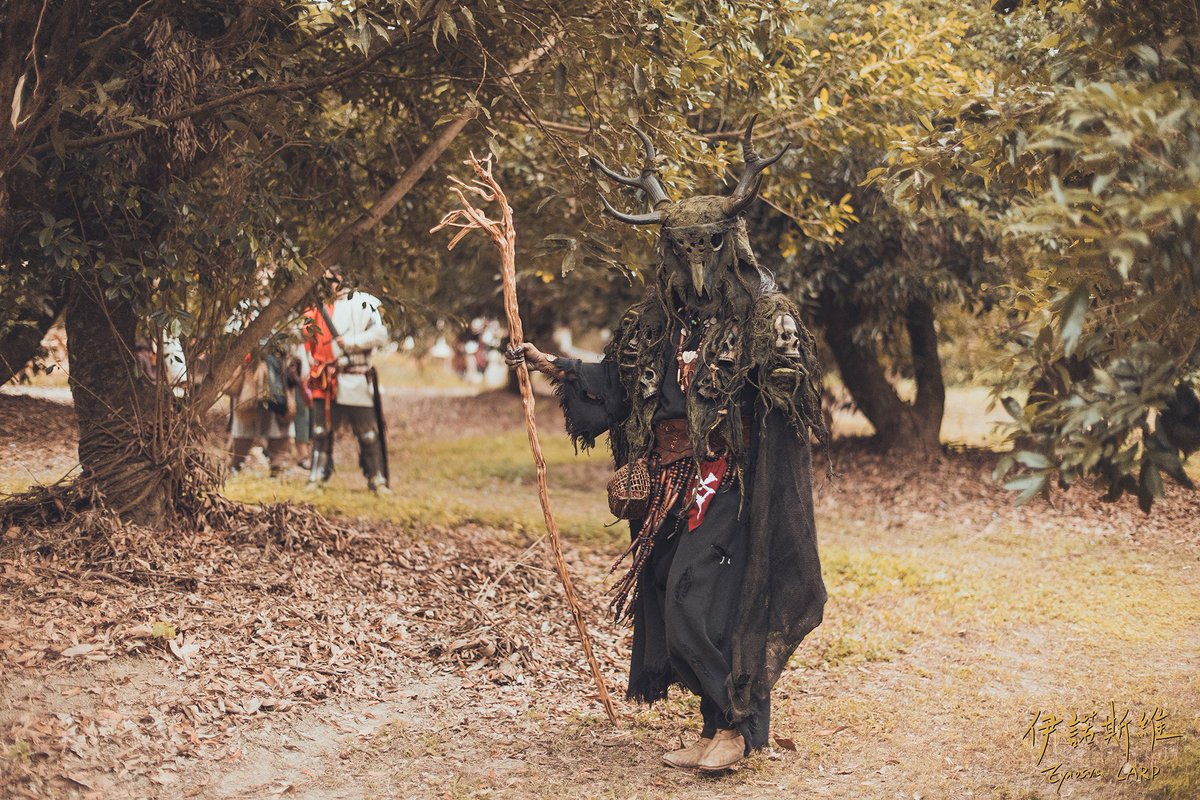
The dramatic wicker-faced outfit shown here is a modern interpretation of historical protective clothing, rather than something we can confidently say was worn by every medieval beekeeper. Surviving illustrations show considerable variation in clothing and equipment across different regions and centuries.
Still, the basic idea behind the design was simple: heavy clothing protected the body, while a physical barrier kept bees away from the eyes and face.
Medieval illustrations depicting beekeeping survive from as early as the 11th century, providing historians with a surprisingly long visual record of how Europeans cared for bees and harvested their honey.
A warriors attire
From the Muromachi period to the Azuchi Momoyama period.
Well overtime the clothings design got simpler and the eboshi hat became less common.
By the the Momoyama period the Muromachi style became formal attire.
Been a while since I first saw this video and I still think what happens fifteen seconds in is the scariest sound I’ve ever heard in my life. If I were a Roman auxiliary and this came echoing through the mists my consciousness would collapse
When I'm feeling unmotivated there are 3 things that usually help:
1. Chugging coffee
2. Putting on music
3. Watching jousting videos
Stay fueled!
📽️ credit: Association Chevalerie Initiatique
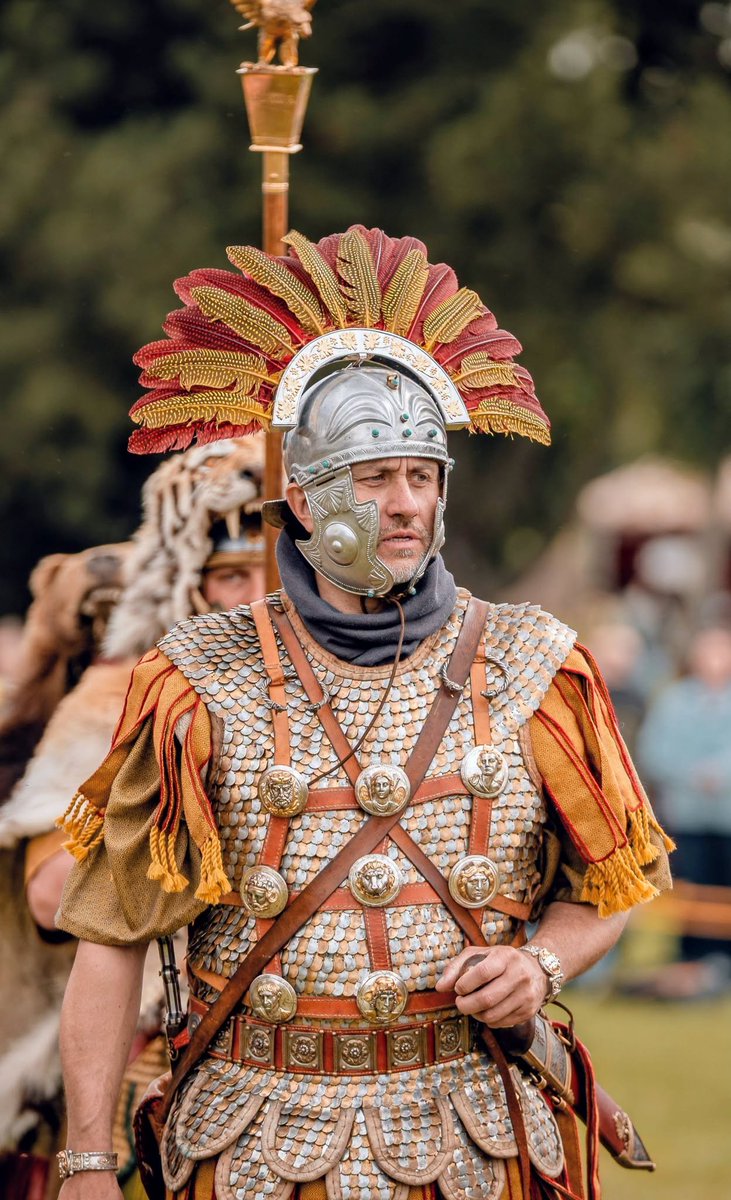
Do you remember Cezary Wyszynski from Legio XXI Rapax, a man instrumental for historical accuracy (at least regarding armor and equipment) in "The Barbarians" show
Well, here you can see him sporting a new panoply, including the principate era Gallic helmet, providing greater facial protection.
The Army of the Anglo-French Dual Monarchy
Formalized in 1420 by the Treaty of Troyes and established in 1422 upon the deaths of King Henry V of England and Charles VI of France, the military forces serving the unified crown of England and France now included English troops, while inhabitants of occupied French regions could also join the army.
This situation was distinct from the French civil war between the Armagnacs and the Burgundians; following the Treaty of Troyes, an indirect civil war emerged between French subjects supporting King Charles VII and those supporting the regency of King Henry VI. This conflict played out in countless instances, most notably during the siege of Pont-sur-Seine in Champagne in the summer of 1423, when the Regent the Duke of Bedford, seeking to secure the region, mobilized not only just English forces but also local French troops, particularly from the city of Troyes.
"The city of Troyes contributed not only funds but also personnel and war supplies." According to the accounts, the contribution included two gunners, one a master, operating a bombard named "Vigoureuse" and two canons; forty crossbowmen clad in white linen surcoats, equipped with seventy-eight pavise shield fashioned from halved barrels to provide cover; and nine additional large pavise fitted with iron spikes to be planted in the ground.
Action cinema as we know it owes an unlikely debt to an on-set mishap in 1960s Japanese filmmaking, during the production of Sanjuro.
The moment was intended to be stark and dramatic, not revolutionary. For a climactic duel, actor Tatsuya Nakadai wore a concealed hose beneath his costume, pressurized to roughly 30 pounds, designed to release a controlled flow of fake blood after the final sword strike.
Instead, a connection in the tubing failed at exactly the wrong moment. All the pressure discharged at once, sending a sudden, explosive geyser of blood into the air.
More brilliant film details: https://t.co/us0AWanKHY
A French mademoiselle waves the French Tricolor in tribute to the forces which liberated her city as they march past the Notre Dame Cathedral in Paris, France. August 26, 1944.
(Note the Gendarmes 1940 Gnome et Rhône 800 AX motorcycles)
On this day in 1944, French General Charles de Gaulle entered Paris, which had formally been liberated the day before. As he entered the Place de l’Hotel, French collaborationists took a few sniper shots at him. “There are many moments that go beyond each of our poor little lives,” he was quoted at the time. “Paris outraged! Paris broken! Paris martyrized! But Paris liberated!”
(Photo source - U.S. ARMY SIGNAL CORPS)
(Colour by RJM)