@CanadiensMTL Les faits ,c'est que c'est une équipe vétérane, y'on beaucoup d'expérience. Ben on va aller jouer au hockey! Go Habs Go! LET'S GOOOOOOOOOOO!
🚨ALERT: Please get this video to every woman you know. Predators are placing items on your vehicle like zip ties, roses, and trading cards laced in fentanyl to incapacitate you. Please, if you see this on your vehicle do not touch it, go back in to whatever establishment you came out of and call the authorities.
Share with everyone especially young women. Ladies, please stay safe out there.
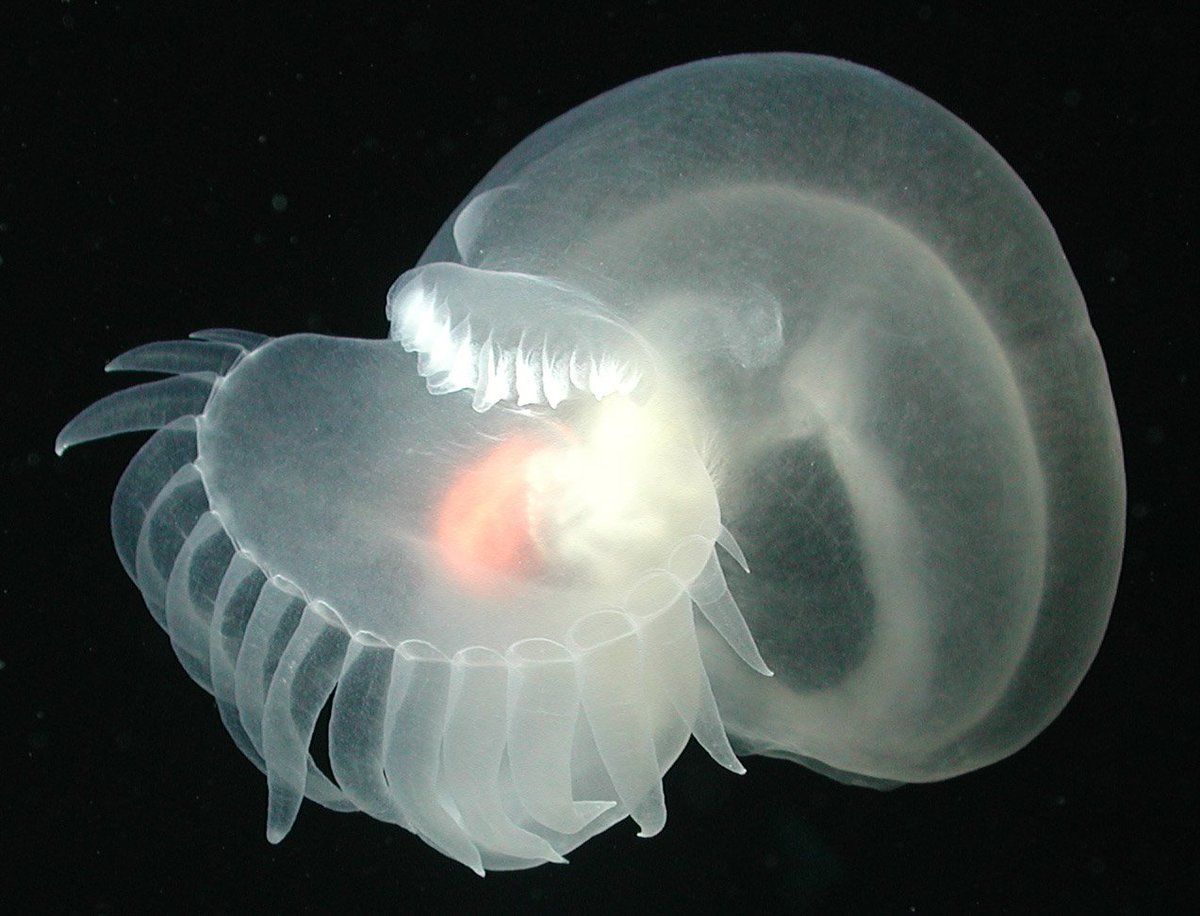
Bathydevius (Deep-Sea “Ghost Fish”)
Species within the genus Bathydevius, first described in recent deep-sea surveys, live in the pitch-black trenches of the ocean. With translucent bodies and pale, lidless eyes, they drift through crushing darkness where few lifeforms can survive.
The deep ocean is increasingly threatened by mining and pollution before we even understand what lives there. These “ghost fish” embody both mystery and fragility. They're a living reminder that the scariest thing about the natural world isn’t what we know, but what we could lose before we’ve had a chance to see it.
Here are some of the world's most frightening animals in the world.
The line between scary and creepy is thin in nature. Some creatures are frightening because they can hurt us; others unsettle us simply through appearance or behavior. Today, we’re celebrating some of the most uncanny corners of the animal kingdom — species that make your spine tingle not only because they look otherworldly but because they remind us how wild and strange life on Earth really is. Behind every eerie face or terrifying jaw, there’s also a conservation story worth telling. These may be some of the scariest animals in the world, but they're also some of the most beautiful and fascinating, uniquely adapted to the ecosystems they call home. Here are 13 of the scariest animals in the world:
Aye-aye (Daubentonia madagascariensis)
The aye-aye of Madagascar might be the strangest primate alive. With giant eyes, bat-like ears, rodent teeth, and a long skeletal finger used to tap on wood and extract grubs, it’s both brilliant and eerie. Its unique foraging method — called “percussive foraging” — is unlike anything else in the primate world.
But local folklore often casts the aye-aye as a harbinger of death, and individuals are sometimes killed on sight. Combined with deforestation across Madagascar, the aye-aye is now endangered. Protecting the aye-aye means not only saving forests, but also changing hearts and minds.