Frontier cancer treatments most patients don't know exist | AI and Tech in Oncology. Radiopharmaceuticals · Bispecific Antibodies · ADCs | By @CancerFax
Lands alongside this month's AACR Cancer Progress Report highlighting AI's expanding role across research, screening, and trial design, plus Insilico Medicine's AI-designed drug reaching first-in-human data at ESMO.
Where should AI target discovery focus next?
#CancerResearch
A single gene can be read out in different ways. Cancer sometimes reads it differently than healthy cells do, and that difference just became a billion-dollar cancer target.
🧵 @CancerFax#AIinOncology#DrugDiscovery
Important context: this is target discovery and validation, not a treatment that has reached a patient. Turning a computational target into an approved drug is still a multi-year road with plenty of points where things can fail.
#OncologyAI
Nothing alters treatment today. It shows where capital and pharma R&D are betting: compressing drug development's slowest parts. The validation bar for patient-touched items remains.
Where does AI gain clinical trust first in oncology?
#PrecisionMedicine
AI just had a big week in oncology. $25M raised. A major pharma partnership signed. A 37,000-agent AI research system in the headlines again. Here's what actually happened and what it doesn't mean yet.
🧵 @cancerfax#AIinOncology#CancerResearch
A 37,000-agent "virtual biotech" continues to draw attention for AI-generated hypotheses, including one involving the B7-H3 cancer target. Interesting? Yes. Clinical proof? Not yet. Hypothesis generation is step one of many.
#OncologyAI
Reality check worth remembering: no AI-designed cancer drug has reached regulatory approval yet. Promising predictions are still a long way from clinical proof.
Do simulation-based models like this feel more promising to you than single-outcome prediction tools?
#AIinOncology
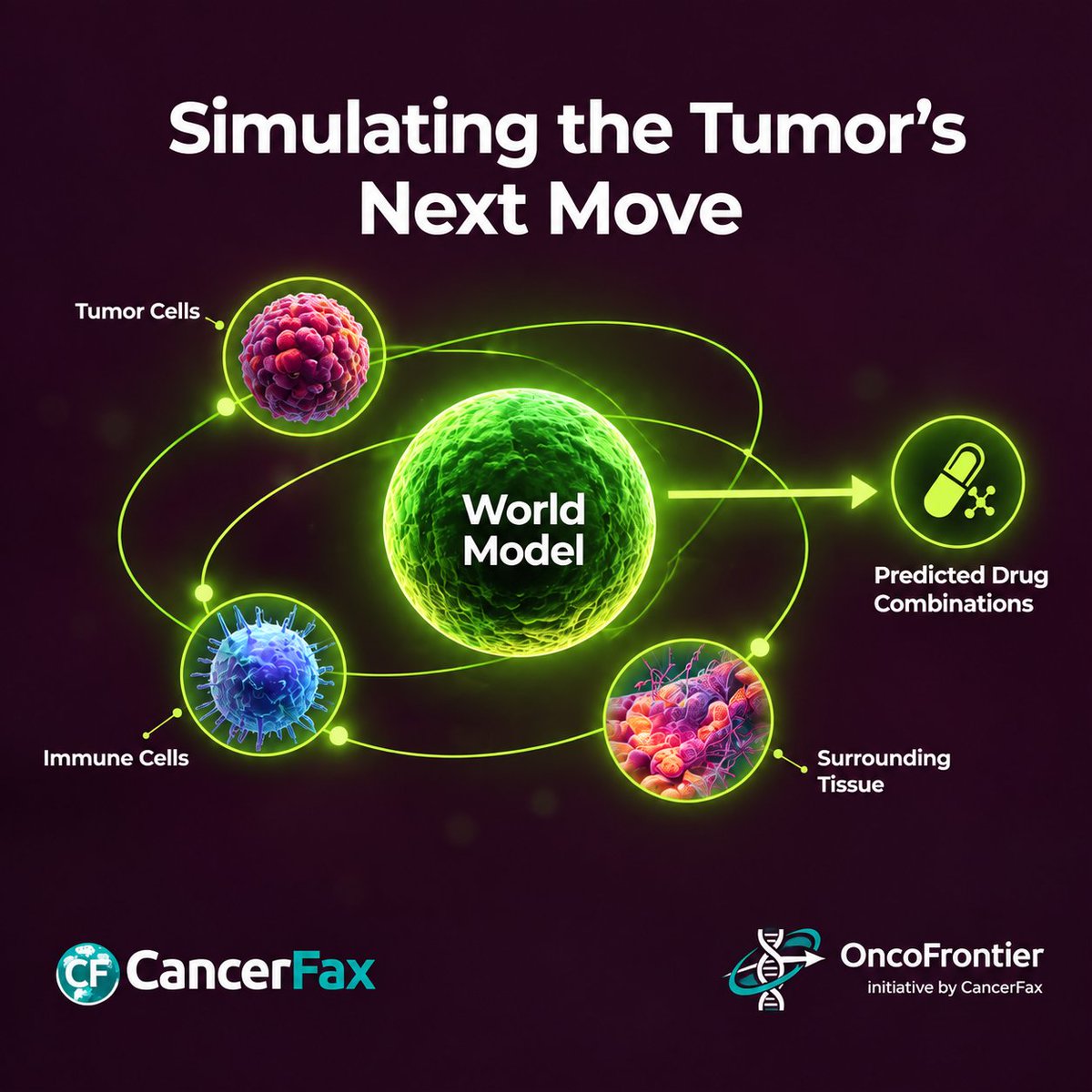
A simulated tumour, fighting a simulated immune system, inside a computer, before any patient is involved. Big Picture Bio just raised 2.55 million euros to build exactly that.
🧵 @CancerFax#AIinOncology#DrugDiscovery
Reported result: 12 of 14 pre-ASCO predictions were accurate. Worth watching, but these are company-reported figures that still need independent publication and prospective validation.
#CancerResearch
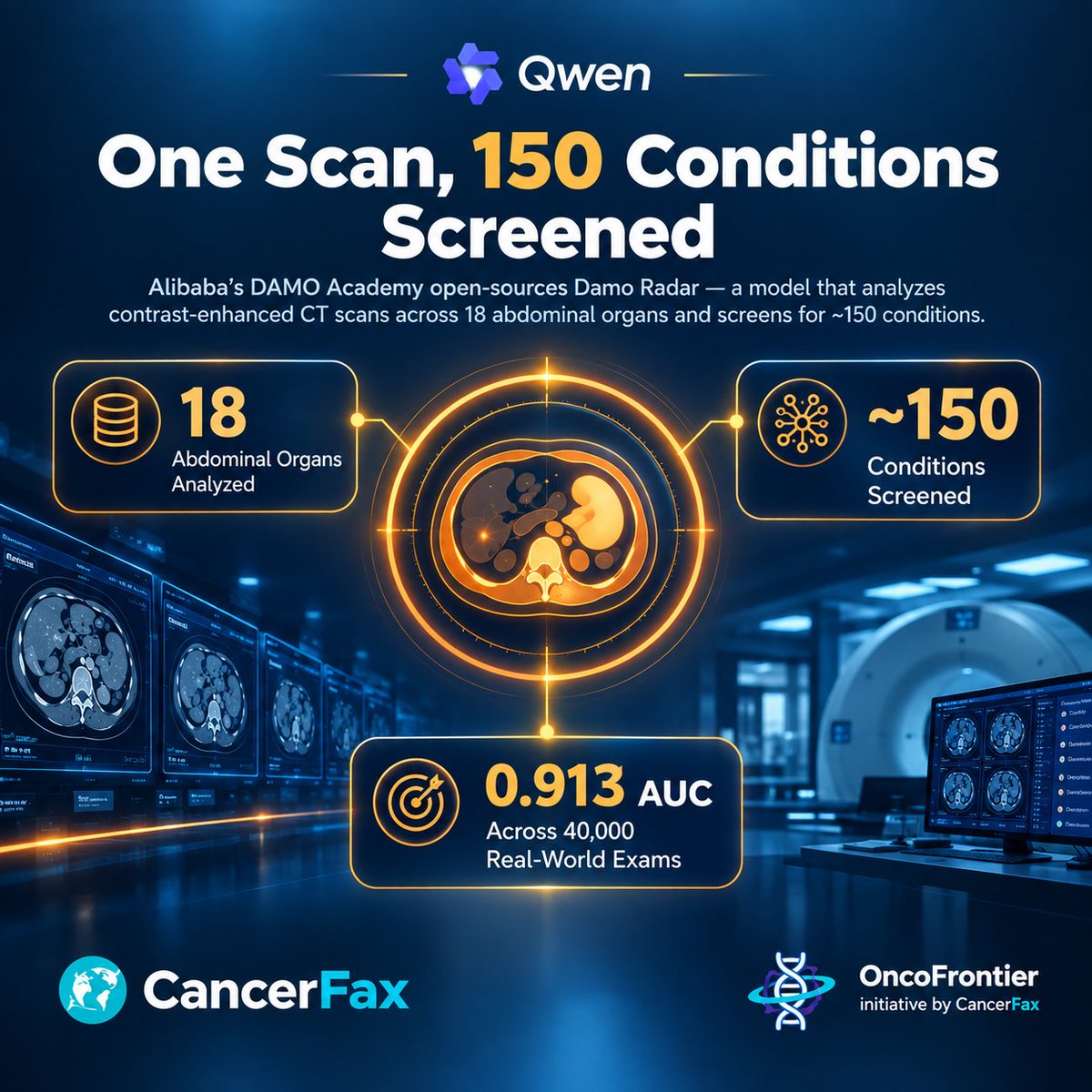
Still needed: independent validation, testing across different hospitals and scanner types, and transparency on how that average is distributed across all 146 findings.
Would you trust an AI diagnostic claim more if the model were open-source?
#CancerResearch
One CT scan. 18 organs. About 150 conditions screened at once. Alibaba's DAMO Academy just open-sourced an AI model built to do exactly that.
🧵 @cancerfax#AIinOncology#CancerScreening
The open-source part matters here specifically. It means outside researchers can actually check this claim against the model's own weights and training details, not just take the headline number at face value.
#OpenSourceAI