🛰️ Meet Agentic Orbiter : an overcollateralized lending protocol on Solana.
Orbit is a Solana native money market where supply, borrow, repay, and withdraw are executed through a single Anchor program, making the full credit loop transparent and verifiable onchain. Anchor is built for writing, testing, deploying, and interacting with Solana programs.
https://t.co/ylsx2Qgmbm
Each supported asset runs as its own reserve, backed by an SPL token vault. Users deposit assets to activate collateral, borrow against that collateral, repay debt, or withdraw while maintaining account health. SPL tokens are Solana’s standard model for representing tokenized assets.
https://t.co/2qgph43slY
DeFi lending protocols use trustless onchain mechanisms instead of off-chain enforcement, with collateral and liquidation logic designed to protect market solvency.
Supply. Collateralize. Borrow. Repay. Withdraw.
All settled onchain. // https://t.co/5mDno6KSQw
The Solana ecosystem mapped out. Every sector, every major protocol building right now.
DeFi, RWAs, AI, DePIN, Payments, Gaming, Infrastructure and more.
Which ones are you watching? 👇
.@toly new solana protocol dropped.
Native lending protocol where the token is tied to real protocol activity: supply, collateral, borrow demand, and reserve growth.
https://t.co/p1ZurMxl3V
Comrades,
There is no greater enemy to the revolution than the petite bourgeoisie socialist that can barely string two words together from Capital, let alone understand it.
Wealth can only be created by the workers calloused hands setting the means of production in motion. Capitalists accumulate capital, not wealth. Elon’s factories congeal steel and lithium into Tesla cars that whizz to consumers as dizzying speed. He accumulates the capital, the consumer gets the wealth.
Any spending that doesn’t generate an economic surplus reduces the capital basis on which the proletariat revolution can be built. Whether it’s wasted by the perfunctory bureaucrat of state or by a bourgeoisie socialist.
Because Orbit is permissionless and fully on-chain, with a clean, well-defined instruction set, it is also a natural substrate for autonomous agents and this is where a model like Claude Fable 5 becomes interesting. Fable 5 is Anthropic's first Mythos-class model, a tier built specifically for agentic, multi-step work rather than single-turn answers; run inside an agent harness, it can plan across stages, delegate to sub-agents, and check its own work over long-running autonomous sessions.
+ Pointed at Orbit, an agent built on Fable 5 could manage a lending position end to end: continuously monitoring the health factor across every reserve slot, repaying debt or topping up collateral before liquidation risk builds, and rebalancing between reserves to keep a position both solvent and capital-efficient.
+ Because the model holds consistent decision quality across long task chains and is precise with its tool calls, it suits exactly this kind of always-on, judgment-heavy loop making Orbit's transparent, machine-readable design a ready-made venue for the autonomous treasury managers that DeFi is now racing to build.
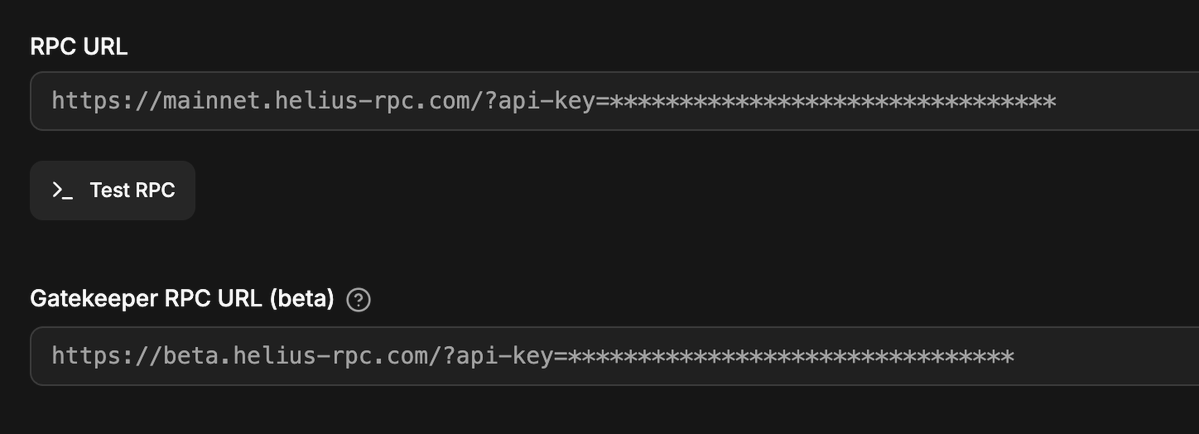
Huge thanks for @Helius RPC Integration.
also Buddy @mert.
Orbit now runs on Helius RPC.
A money market lives and dies by its reads and its writes. Every health-factor preview, every reserve + obligation lookup, every borrow / repay / withdraw has to be fast and has to land, even when Solana is slammed.
So we route Orbit through @helius : globally distributed, ultra-low-latency Solana RPC with reliable transaction landing and 99.99% uptime the same infra trusted by Phantom and Jupiter.
Real-time health checks. Snappier UI. Transactions that confirm when it matters.
Built to be checked, not trusted.
The full program is deployed and verifiable on Solana Explorer. Anyone can audit the logic settling their position.
Honest status: devnet · unaudited · APRs indicative for now.
Safety is enforced on-chain — not off.
Every borrow and withdraw runs a live health check:
health = Σ(collateral × liqThreshold) ÷ Σ(borrowed)
Above 1.0 = solvent (∞ when you have no debt). New borrows are capped at the stricter LTV, leaving a buffer before the liquidation threshold.
The architecture is three accounts:
Market — global config + admin (PDA)
Reserve — per-asset state (price, LTV, liq threshold, totals) + its token vault
Obligation — your cross-reserve position, up to 8 slots
Two assets live today: oSOL (75% LTV / 80% liq) and oUSD (80% / 85%).