“For what shall it profit a man, if he shall gain the whole world,
and lose his own soul?”
Mark 8:36
Nothing I say is investment/legal advice.
Prewrath
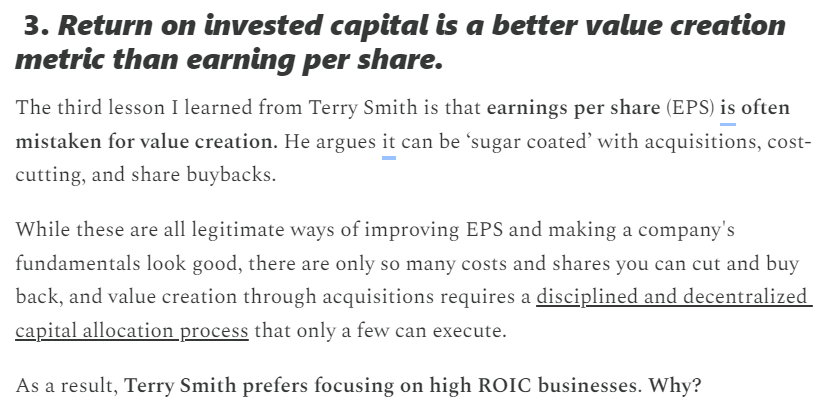
3. Return on invested capital is a better value creation metric than earning per share.
Companies that can consistently generate higher returns than their cost of capital have no limit to the value they can create. This means they can compound their earnings until the reinvestment opportunity dries up.
Meanwhile, improving EPS may make fundamentals look good, but there are only so many costs and shares you can cut and buy back. Value creation through acquisitions requires a disciplined and decentralized capital allocation process that only a few can execute.
To this day we live by prayer. The church of God has never gained a victory but in answer to prayer.
From: “Solemn Pleadings for Revival,” in The Metropolitan Tabernacle Pulpit Sermons, vol. 21 (London: Passmore & Alabaster, 1875), 69.
One of my favorite investing use cases of Claude right now is creating quick 20-page primers on public companies I am digging into. Has become my first step whenever I first start reading a 10K
A hedge fund analyst would have had to previously spend 6 hours of their day putting this together for their PM. Now Claude can do it in the span of 10 minutes.
Exact prompt below
Create a detailed primer on [XYZ company]. I want sections broken down into segments, YoY reporting for FY22-FY25 and then the LTM period, visuals including what the company does, value chain, competitors and competitive differentiation, comps multiple analysis, simple DCF output, capital structure, and yields on debt. The output should be a 15-20 page Word doc that is well structured with thoughtful analysis. Also include recent price catalysts and any equity research updates in recent months. Include a section for news flow in the past few quarters with key takeaways
Honda Motor (7267) carries ¥5.3T of net cash against a ¥6.5T market cap, and trades at 0.56x tangible book with an EV/EBITDA of 0.91.
The company's most recent release, filed August 5, showed Q1 FY2027 revenue of ¥6.06T,
rising to ¥5,034.48 billions and net income to ¥450.92 billions, significantly higher than a year earlier
. Basic EPS came in at ¥115.84 against ¥46.80 a year prior.
Management didn't just beat, it raised.
The upgraded FY2027 guidance leans heavily on a weaker yen and higher expected operating profit of ¥650,000 million
. That comes after last year's first annual loss, driven by the EV strategy writedown.
A ¥6.5T car company where the cash alone covers most of the market cap, filing a quarterly that finally shows the hybrid and motorcycle business absorbing the EV reset instead of bleeding from it.
21 short pieces of advice to improve your stock market timing 👇
1. Stop predicting the market. Follow its price action.
2. Never confuse a strong index with a healthy market. Watch market breadth.
3. Track new 52-week highs and lows. They often reveal strength or weakness beneath the surface.
4. Pay attention to how leading growth stocks behave. They can reveal changes before the indexes do.
5. Watch how the market reacts to earnings. Strong results followed by heavy selling are a warning.
6. Don't become aggressive just because the market has fallen significantly.
7. Look for accumulation. Strong price advances accompanied by increasing volume matter.
8. Watch for distribution. Repeated heavy-volume declines deserve your attention.
9. Study the first breakouts after a market correction. Their success or failure provides valuable feedback.
10. Don't increase exposure just because one breakout works. Look for confirmation from other leaders.
11. Watch for expanding leadership. A rally supported by only a handful of stocks deserves caution.
12. Don't mistake a short-term bounce for the beginning of a sustainable uptrend.
13. Reduce exposure when leading stocks repeatedly break down or fail to follow through.
14. Watch the percentage of stocks trading above their 200-day moving averages. It helps reveal the broader trend.
15. Don't let yesterday's market environment dictate today's decisions. Reassess the evidence.
16. Increase exposure gradually as the market confirms its strength. You don't need to go all-in immediately.
17. When your best setups repeatedly fail, consider whether the problem is the market rather than your stock selection.
18. Don't fight a market downtrend just because you have found an attractive setup.
19. Study previous market corrections and recoveries. Learn to recognize recurring price and volume behavior.
20. Establish objective conditions for increasing and reducing exposure before emotions influence your decisions.
21. Accept that you will never catch every market turn. Your job is to capture the profitable part of a trend while protecting your capital when conditions deteriorate.
The goal isn't to predict the next bull market. It's to recognize when the odds have shifted in your favor and act accordingly.
September 1, 2026 edition of FFTT: "AI is driving a bond singularity before it drives an AI singularity."
Summary: AI increasingly competes with Bessent for capital...to build a technology that nonlinearly undermines Bessent's tax base.
@NoelWhittaker What did money printing interest rate decreases do, with overseas wholesale non-bank funding last couple of decades? Booomers reaped young people: ate each others grandchildren. Canibal carnivor carnage lasts forever.
Crazy but true stat of the day:
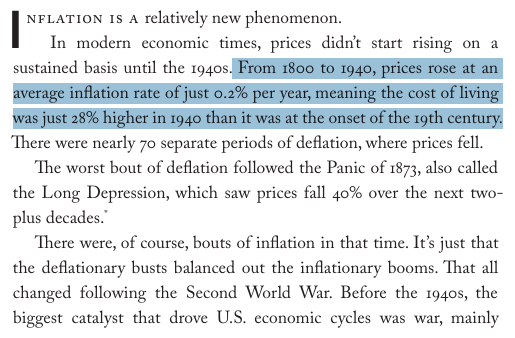
From 1800 to 1940 the annual inflation rate was just 0.2% per year
Prices were just 28% higher in a 140 year time frame
Since 1940 it's 3.7% annually or >2,200% in total
https://t.co/J4QeSCkhrY
PS: If you want to improve your stock selection, I created a free checklist with the criteria I use to filter out mediocre stocks and focus on high-quality opportunities.
Get my 360° Stock Selection Checklist 👇
https://t.co/lKZj2SsCDj
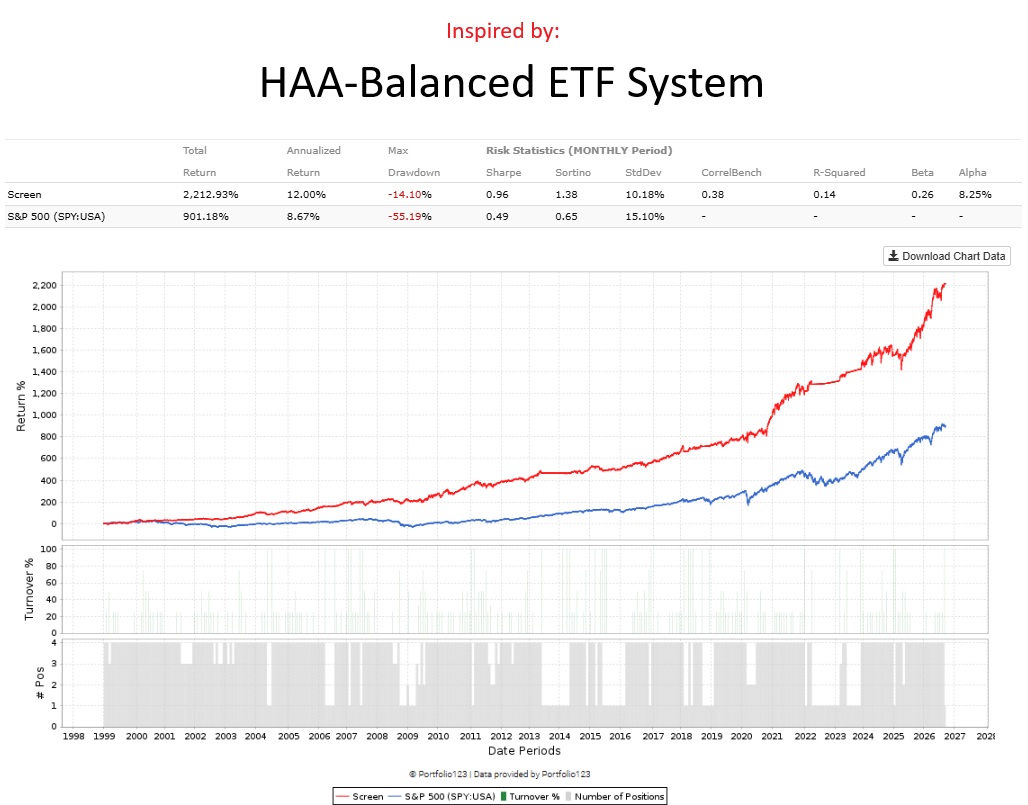
Wouter Keller wanted to keep crash protection simple and spend less time sitting on the sidelines. He was also dissatisfied with the complexity, high fees and one-size-fits-all products offered by big banks. He wanted a more transparent, rules-based approach that investors could understand.
He and Jan Willem Keuning built HAA-Balanced around that goal.
Each month, it selects the strongest four of eight ETFs across stocks, real estate, commodities and Treasuries. Weak holdings give way to defensive assets. When inflation-protected bonds flash a warning, the whole portfolio retreats to T-bills or intermediate Treasuries.
This ETF model is inspired by HAA and fits closely to its set of rules. Public link in comments. $SPY $IWM $IEF
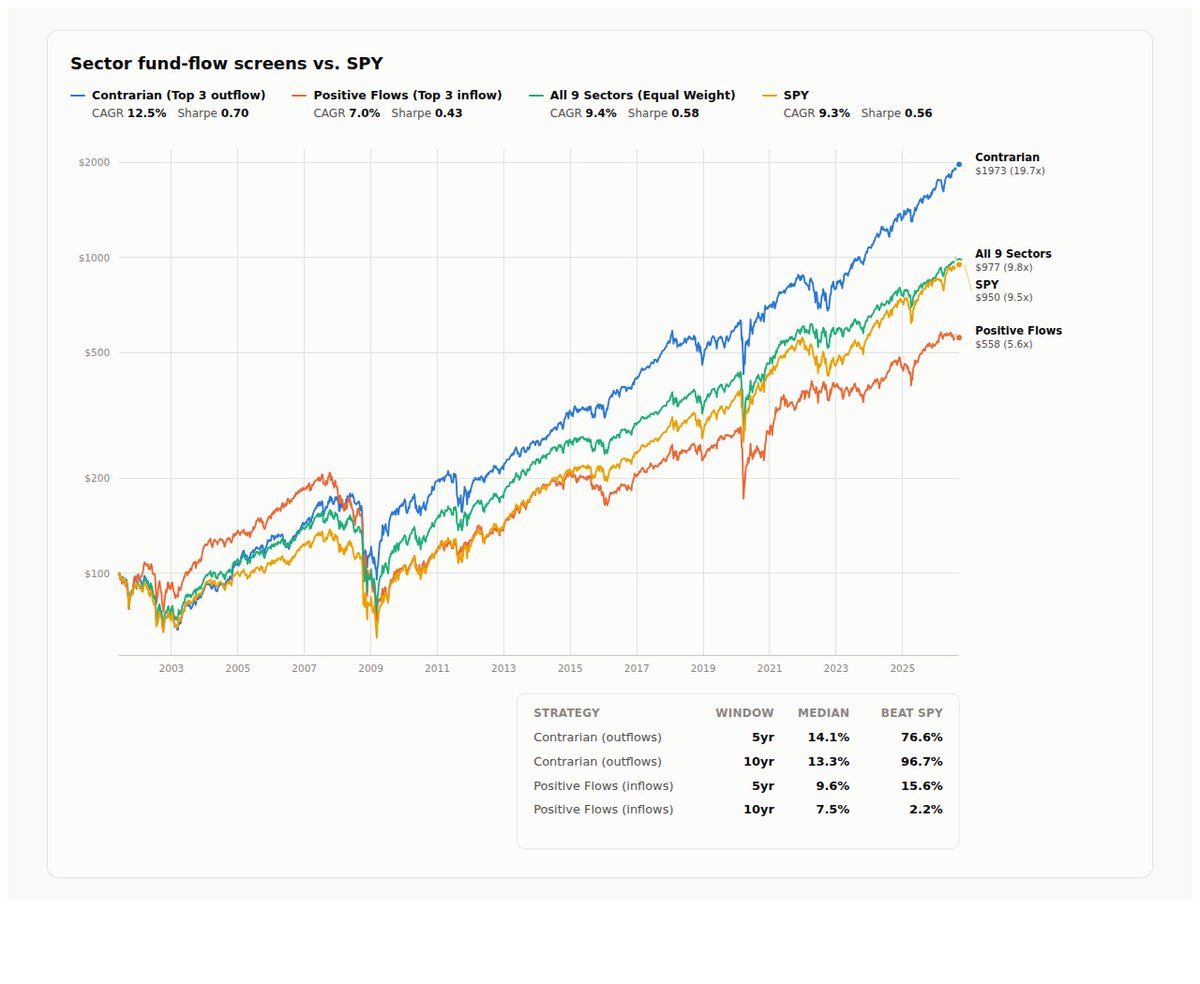
A super simple contrarian sector ETF strategy:
▶️The 9 original SPDR ETFs
▶️Track inflows and outflows
▶️Buy 3 ETFs with highest outflows over past 100 market days
Top 3 minus bottom 3 (outflows minus inflows) generates 5.5% excess returns since mid-2001
Public link in comments
$XLY $XLP $XLE $XLF $XLV $XLI $XLK $XLU $XLB