@insiliconot I once told my my mates when i was at uni that almost all social media is data harvesting and controllled by alphabet agencies .
This is how they reacted.
1) Bookmark + RT
Save this for your next trade.
2) Why position size matters
Good entries are nothing without position sizing. It turns a random trade into a repeatable system.
3) Core formula (in $)
$ Position Size = Risk $ per trade ÷ (Entry − Stop)
Units = $ Position Size ÷ Entry
4) Core formula (in %)
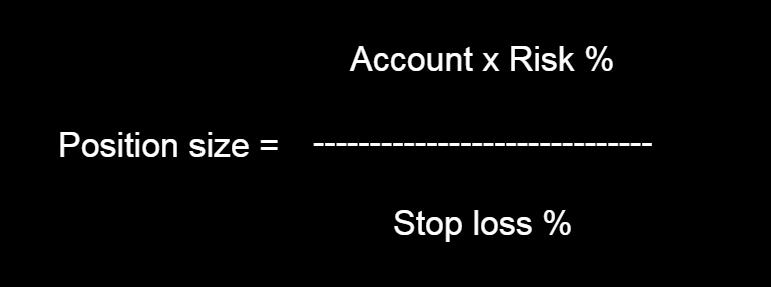
$ Position Size = (Account Balance × Risk %) ÷ Stop %
(Stop % = |Entry − Stop| / Entry)
5) Quick example
Acct = $10,000, Risk = 1% > $100 risk
Entry = $100, Stop = $98 > risk per unit = $2
$ Size = $100 ÷ $2 = $50 > 0.5 units (or scale to your market’s contract size)
If using %: Stop = 2%, Size = ($10,000 × 1%) ÷ 2% = $5,000 notional.
6) Leverage (use carefully)
If your exchange allows 5×, a $5,000 sized position requires $1,000 margin.
Leverage changes margin, not your predefined $100 max loss.
7) Multi-entry averaging (DCA in)
You can plan up to 10 entries.
Average Price = Σ(Entryᵢ × Weightᵢ) (weights sum to 100%).
Place Stop relative to the average. Recompute Stop % and then position size.
8) Take-profits & R:R
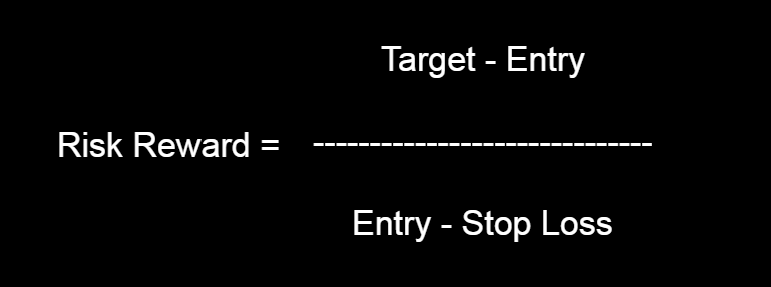
Risk–Reward (R:R) = (Target − Entry) / (Entry − Stop)
• 1:1 - win rate must be > 50%
• 2:1 - 33%
• 4:1 - 20%
Higher R:R lets you win less and still be profitable.
9) Risk Amount ≠ Position Size
“Risk Amount” = the maximum $ you’ll lose on the trade (often 1% of the account).
Position size is derived from that never the other way around.
10) Stop loss = sizing validator
No stop > no objective size.
With a stop: you know the $ at risk, drawdown stays controlled, recovery is realistic.
11) Drawdown math (why small losses matter)
Lose 10% > need 11.1% to recover
Lose 30% > need 66.7%
Lose 50% > need 100%+
Small, consistent losses keep you in the game.
12) Psychology notes
• Pre-commit: write risk %, stop, targets before entry
• No move stops to “hope” out of losses
• One risk per idea: adding = new plan, new risk calc
• Cut losers fast, let winners work
• Process > outcome: good loss ≫ lucky win
13) Win rate & risk
• If win rate rises and R:R holds > you can consider nudging Risk % up (e.g., 1% > 1.25%)
• If win rate dips > reduce Risk % and size until your edge returns
14) Tiny checklist before every trade
• Account balance updated
• Risk % (0.5 - 1% typical)
• Entry / Stop distance confirmed
• Size computed from formula
• Leverage only if needed (risk unchanged)
• Targets set (R:R ≥ 2:1 preferred)
• Plan written; alerts set
15) Sheet formulas (Google Sheets/Excel)
• Stop %: =ABS(Entry-Stop)/Entry
• $ Risk per trade: =Account_Balance*Risk_%
• $ Position Size (by %): =Account_Balance*Risk_%/Stop_%
• Units (by $/tick): =Risk_$/(Entry-Stop) then = $
• Position Size / Entry
• Avg Entry (weighted): =SUMPRODUCT(Entries,Weights)/SUM(Weights)
16) Final note
Risk 1 - 3% per trade max. Keep losses small, R:R high, and your psychology boring.
@insiliconot Completely agree Trip but sometimes , to capture a mementum move even limit chase orders dont works,price will only accept market orders at that velocity . For discretiinary under certain circumstances market order can be plus ev .(especially news events) .
Was looking to move money across different countries with getting screwed over by forex markup and wire fees. Found BTC but after that found stabecoins and discovered a way to make low risk retruns through currency arbs. During those times it was free money. But no longer viable.
we may all have human forms
but many were beasts in previous lifetimes
they carry lower life form minds, and that energy translates into human communication
this is why you see snakes, rats and beastly habits in people.
association with subhumans can bring you to a lower rebirth - be careful!
The Comparison Game - The Source of Despair
Generation Z is undeniably grappling with a mental health crisis that outpaces any previous generation. The numbers tell a grim story:
•42% of Gen Z individuals have been diagnosed with a mental health condition, predominantly anxiety and depression.
•61% report a medically diagnosed anxiety disorder.
•1 in 3 experiences symptoms of depression or anxiety regularly.
These figures are more than just statistics—they’re an alarm bell signaling the immense pressure on this generation.
But why?
Information Overload
Technology is both a blessing and a burden for Gen Z. A 2023 U.S. survey revealed that Gen Z spends over six hours a day on their smartphones, compared to Baby Boomers, who average just three and a half hours.
This constant connection leads to information overload, where an endless barrage of news, opinions, and updates becomes mentally exhausting. The lack of mental rest contributes to stress, fatigue, and the inability to process emotions or engage in meaningful reflection.
Constant Comparison
Social media platforms have fostered an environment of relentless constant comparison, where curated and idealized portrayals of life dominate. For Gen Z, these platforms serve as a mirror that distorts reality, leading to:
•Distorted self-image
•Feelings of inadequacy
•Low self-esteem
The endless cycle of measuring oneself against unattainable standards creates deep mental health challenges, especially for those still forming their identities.
The perception of the norm becomes the 0.01% outliers. No one is good enough.
Future Anxiety
Adding to these issues is future anxiety, as Gen Z faces the overwhelming uncertainties of climate change, political instability, and economic hardship. Social media amplifies these fears, exposing them to a relentless stream of alarming news… but is it reality?
Contrary to common belief, the world is getting better!
Extreme Poverty Is Decreasing:
•In 1800, about 85% of the world’s population lived in extreme poverty. By 2019, this was reduced to less than 9%.
•Roughly 75% of the world’s population lives in middle-income countries, not in extreme poverty or wealth.
Child Mortality Is Declining:
•In 1950, 1 in 5 children died before their fifth birthday. Today, it’s less than 1 in 25.
While challenges persist, progress is ongoing, offering a more hopeful perspective for the future.
Workplace Effects
The pressures faced by Gen Z have led to an entitled perception of reality.
•78% of Gen Z employees seek recognition for both achievements and efforts, favoring tangible rewards like time off or monetary compensation.
•74% cite unsatisfactory pay as a primary reason to leave a job.
•43% value having a voice in decision-making processes.
What is fair is completely distorted.
The Changing Definition of Success
Financial success is another area where Gen Z’s perspective differs starkly from previous generations:
• Boomers believe success can be achieved on salaries just under $100,000 a year.
•Gen X and Millennials estimate they need closer to $200,000 a year.
•Gen Z thinks they need nearly $600,000 a year to “make it.”
This dramatic leap reflects their perception of a world shaped by rising living costs, housing crises, and the curated luxury lifestyles showcased on social media. Success, for them, is no longer a wish but a need.
Conclusion
Generation Z is the most overwhelmed generation in modern history.
Their engagement with technology has led to information overload and constant comparison, eroding self-worth and amplifying feelings of inadequacy.
Their future anxiety stems not only from real global challenges but also from the amplified fears created by digital saturation.
Gen Z is not failing—they’re being failed through a complete oblivious addiction.
Controlling the information intake will become the primary factor for happiness for the new generations.
Take notice!