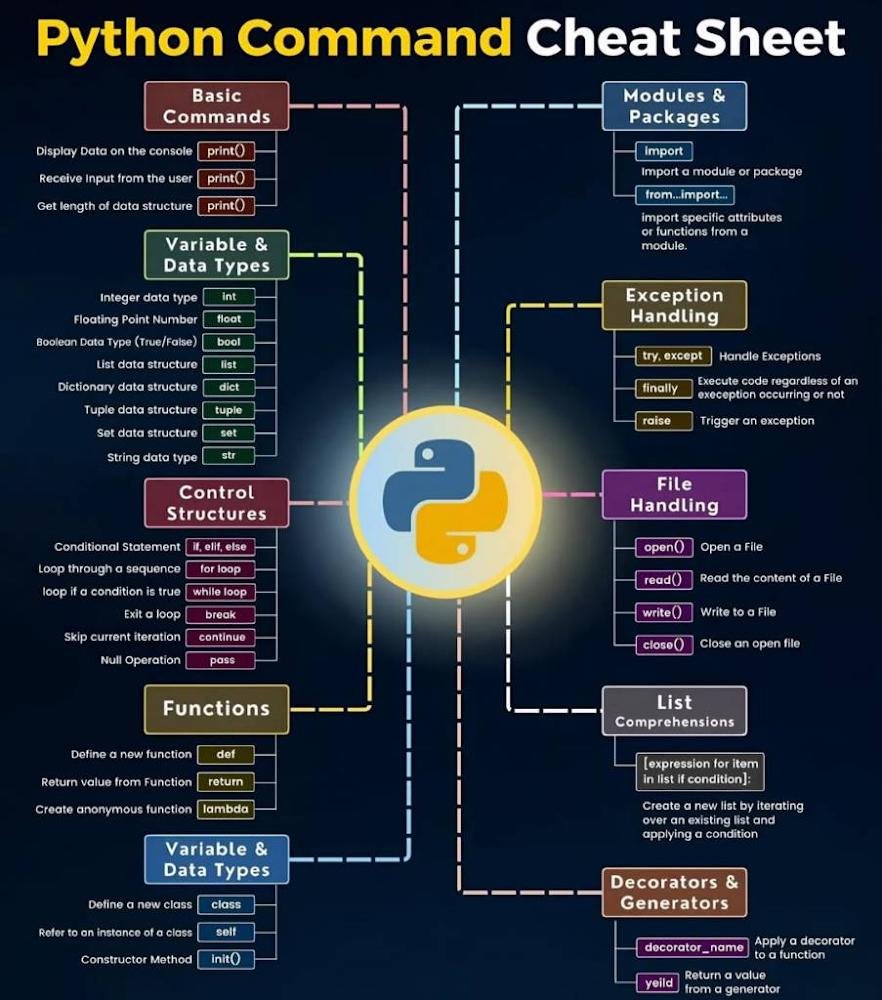
Python is dominant in AI engineering and data science, but enterprise software development still runs on massive backend infrastructure.
Choosing a programming language isn’t just about syntax preference anymore.
It’s about scalable architecture.
Serious question for tech founders and senior devs:
What is your go-to strategy when a live database migration locks up your production traffic?
Do you risk a rolling update or just force a late-night maintenance window like this meme? 👇
Fake Cloudflare tricks are funny, but real zero-downtime deployment is better.
Standardize maintenance windows safely:
• Blue-Green proxy routing
• Canary traffic flags
• DB schema fallbacks
📌 Bookmark this prod guide.
Pro-tip: Most data pipelines crash because devs use list memory allocation instead of Generators (yield).
I built an automated script to detect these infrastructure bottlenecks.
The open-source repository & production checklist are pinned at the top of my profile. 👇
Bad architecture costs 10x more in cloud bills than clean code.
Use this core blueprint to audit your backend:
• List Comprehensions to optimize loops
• Generators (yield) to stream large data
• Decorators for decoupled auth logic
📌 Bookmark this system reference.
Answer: A (dark, en, dark, en)
The `.setdefault()` method returns the existing value if the key exists (no overwrite). It only inserts the default if the key is missing. This hidden in-place mutation catches even senior devs off guard. Bookmark this for your next interview.
90% of engineers migrating to Python think this snippet overwrites state or throws a runtime error. They confuse "setting a default" with a standard mutation. This blind spot regarding implicit side-effects silently corrupts your config dicts.
What exactly gets printed?
Hot take: Using setdefault() for production config mapping is a lazy design anti-pattern. Using collections.defaultdict or dict.get() with explicit assignment is 10x safer and cleaner.
Why do devs keep defending this ambiguous syntax? What do the Tech Leads think?
The real trap: setdefault() doesn't just return a value; it directly mutates the original dict state if the key is missing. Misusing it in high-concurrency systems without explicit locks guarantees non-deterministic race conditions.
Pro-tip: Python strings are immutable. Every '+' creates a new object in memory, destroying performance in large data pipelines.
I’ve pinned a complete Python Backend Optimization Guide inside my bio. Check it out.
Python strings look simple until your code slows down in production.
Optimize your string manipulation with these 3 rules:
- Use ''.join() instead of '+' in loops
- Use f-strings for faster formatting
- Use [::-1] for reversing
Bookmark this.
Pro-tip: Don't just pay for bigger cloud instances. Stripping unnecessary packages from your base OS can cut your monthly AWS/GCP bill by up to 40%.
I've linked a complete Infrastructure Hardening & Cost Guide inside my bio. Check it out.
Windows eats 16GB RAM to idle. Linux scales on a fraction of that.
If cloud costs are bleeding cash, optimize this:
- Ship alpine Docker images
- Audit idle processes
- Monitor swap memory
Bookmark this.
Hot take: If your team relies on implicit operator precedence instead of explicit parentheses, your codebase is an active minefield. Readability is an infrastructure metric. Relying on compiler assumptions over human clarity is technical debt.
Change my mind, Tech Leads.
90% of boot camp grads guess 30 because their brains parse code like text, not an Abstract Syntax Tree. Under high-stress production debugging, visual spacing traps your brain into order-of-operation blindness.
What does Python actually output here?
The real danger isn't this basic math—it's how auto-formatters & LLM refactoring tools misinterpret implicit precedence when chained with bitwise operators or lambdas. One missing parenthesis shifts a financial decimal silently.
Bookmark this for your next code review checklist.
The hidden hack: Mandate ecosystem-agnostic technical interviews that stress core runtime behavior over syntax memorization. It weeds out pseudo-devs instantly.
But here is the real issue: Does a engineer's inability to recognize a major logo signal a deeper flaw in modern dev?
The gap between using a modern framework and understanding its foundational architecture is widening. Most devs just copy boilerplate code.
If your engineering team struggles with basic ecosystem identity, you are managing a shallow talent pool.
Too many startups choose NoSQL for early speed, only to rewrite their entire backend when complex queries and relationships are needed later.
If you were building a high-traffic fintech platform today, what is your go-to database stack? Let's discuss trade-offs below.
Choosing between SQL and NoSQL isn't about picking the newest database—it’s about matching your architecture to your workload.
While relational modeling guarantees strict ACID compliance, horizontal scalability demands a flexible schema.
Save this data engineering guide.