I'm a cardiologist. Something just happened today that I genuinely did not see coming — and it could change the future of preventive medicine more than anything I've written about on this platform.
Midjourney — the AI company that became famous for generating images from text prompts — just announced a medical hardware division and unveiled a working prototype of a full-body scanner unlike anything that's ever existed.
It's called the Midjourney Scanner. And it works like this.
You step into a shallow pool of water. You stand on a platform that slowly descends — about two inches per second — through a ring containing roughly half a million tiny ultrasonic transducers, each the size of a grain of sand. Every one of them acts as both a speaker and a microphone, sending ultrasonic waves through your body from every angle and recording what comes back.
60 seconds later, you step out. The scan is done.
No radiation. No magnets. No claustrophobia. No IV contrast. Just sound, water, and an almost incomprehensible amount of computing power — roughly 2 petaflops processing 17 gigabytes per second of raw acoustic data — reconstructing a 3D map of your entire internal anatomy down to half a millimeter resolution.
Organs. Tissues. Blood vessels. Bones. Muscle. Fat distribution. All segmented by AI in real time.
As a cardiologist who has spent months writing about how the standard screening playbook misses the majority of future heart attacks — this is the technology I've been waiting for without knowing it existed.
Here's why this matters for the future of your heart.
Right now, getting a detailed look inside your cardiovascular system requires either a CT scan (radiation), an MRI (magnets, claustrophobia, 45-60 minutes, $1,000+), or a coronary CT angiogram (radiation, IV contrast, limited availability). These are powerful tools. I order them regularly and they save lives.
But they're reactive. You get them when something is already suspected. They're expensive. They're uncomfortable. And for most people, they happen once — maybe twice — in a lifetime.
Imagine instead: a 60-second scan with no radiation that you could repeat monthly or quarterly. Tracking cardiac structure over time. Watching body composition shift. Detecting changes in organ size, fluid distribution, or vascular architecture before symptoms ever develop. Building a longitudinal dataset of YOUR body that AI can analyze for patterns no single snapshot would reveal.
That's what Midjourney is building toward.
The company plans 50,000 scanners worldwide over six years, with capacity for a billion scans per month. The first location — the "Midjourney Spa" in San Francisco — opens at the end of 2027 with 10 scanners alongside saunas, cold plunges, and a gym. The scan costs a few dollars. The experience is designed to feel like wellness, not medicine.
The technology is built on Butterfly Network's ultrasound-on-chip platform — 40 modules per scanner — combined with Midjourney's own AI segmentation and reconstruction stack. David Holz, the founder, claims the system aims for image quality comparable to MRI in many aspects but at nearly 100x the speed with zero radiation.
Now the caveats — because I'm a physician and the caveats matter enormously.
This is a Gen 1 prototype. About a dozen people have been scanned so far. Current scan time is actually closer to 20 minutes, not 60 seconds — the system is bottlenecked by bandwidth and reconstruction algorithms. The 60-second target is aspirational for future hardware generations.
It is not FDA-cleared for diagnostic use. Midjourney is starting with body composition maps — a category below diagnostic imaging in the regulatory hierarchy. The path from "beautiful 3D body scans" to "clinically validated diagnostic tool that your cardiologist can act on" runs through years of clinical trials, comparative studies against MRI and CT gold standards, and FDA review.
No independent clinical validation has been published. The imaging claims come from Midjourney's own demonstrations. Comparative data against established modalities does not yet exist.
And the privacy implications of full-body internal scans at planetary scale — a billion scans per month — is a conversation that hasn't even started yet.
So I want to be precise. This is not ready for clinical medicine today. It may not be ready for years. Many ambitious medical hardware projects have failed in the gap between prototype and product.
But.
The fact that a working prototype exists — producing real segmented 3D anatomy from sound waves and compute alone — means the physics works. The engineering works. The question is no longer "is this possible" but "how fast can it be validated and scaled."
And if it is validated — if the resolution holds up against MRI, if the AI segmentation proves reliable, if the regulatory path clears — then what we're looking at is the most significant new imaging modality in 50 years.
For my entire career, preventive cardiology has been limited by the fact that seeing inside the body is expensive, slow, uncomfortable, and infrequent. We catch disease late because we image rarely. We image rarely because imaging is hard.
A 60-second, no-radiation, spa-based full-body scan that costs a few dollars would demolish every one of those barriers.
I've written about AI detecting inflamed arteries. About gene editing curing cholesterol. About GLP-1 drugs rewriting metabolic medicine. About cellular reprogramming reversing aging.
This is the missing piece: the ability to see inside every human body, routinely, safely, and affordably — so all of those interventions can be deployed before the disease arrives instead of after.
The company that taught AI to generate images from imagination just built a machine that generates images from the human body.
The future of medicine showed up today from the last place anyone expected.
🚨🇫🇷 NEWS: A French woman was given a six month suspended sentence and a €3,000 fine after her home was invaded by a Tunisian migrant who sexually assaulted her.
She appeared on national television to discuss her ordeal and said "the main danger for women in France is Black African and Arab immigrant men"
The Police then charged her with "incitement to racial hatred"
Her appeal against this punishment is due later today
You have our support @ThaisEscufon 🙏
MidJourney just announced... a full body ultrasound! Yup... read on because it's as crazy as it sounds.
"As powerful as MRI and as casual as a trip to the spa"
They are calling it "the @midjourney scanner"
Insane details:
- First, the scale. The device uses 8,960 individual transducers arranged in a ring around your body
- The precision is the most jaw-dropping part: it resolves motion at the picometer range. It can image internal tissues finer than the width of an atom. We are talking sub-atomic level diagnostic capability
- The compute requirement is massive. The system processes 17 gigabytes of data per second.
It takes 40GB of raw data to reconstruct just one cross-sectional slice. And they are planning to scan 100 slices?
- Midjourney claims that fewer than 12 of these machines could perform more full-body scans than every MRI machine on Earth combined.
Welcome to the future of healthcare!
Not only these scanners are announced, they will exist in a "Midjourney SPA" - with hot tubs, saunas, cold plunges, and 9-10 whole body scanners.
STRC down to $82.6 today. Here's my read:
1. Strategy is fine. If everything stays as is, they can pay STRC dividends for 32 years. If BTC appreciates at ~2% CAGR, they can pay dividends indefinitely.
2. Why the sell-off? This appears to be a liquidation cascade.
Over the last 6 months, the narrative became that STRC volatility was reducing, and price began to spend all its time in $99-100 range.
This invites leverage. If you expect the price to always be north of $95, you can take on 20x leverage with your portfolio to buy more STRC and dramatically increase the yield on your portfolio.
This works great, until it doesn't.
STRC is designed as a free-market asset. When attention shifted to SATA and STRC price flagged, it may have raised the attention of opportunistic short-selling hedge funds.
By shorting aggressively, they could push the price down and start triggering margin calls and liquidations from folks who aggressively levered up their STRC positions.
The price action today is a clear liquidation cascade, rapidly pushing prices lower, in turn triggering additional liquidations.
3.
What happens now? The market will heal itself.
Opportunistic hedge funds will recognize that this is a firesale and the fundamentals are unchanged for STRC and step in as buyers. Shorts will close, becoming buyers. Individuals are getting a tremendous entry price for long-term holding STRC shares.
Buyers at this level will get ~13.7% effective yield. If STRC trades back to $100 and they sell, they get an easy +18% return.
4.
What will Strategy do?
Strategy will likely increase the dividend rate on June 30 - maybe to 11.75% but possibly to 12%. Buyers at the current price level then would get 14.2% effective yield from that point forward.
Strategy may also step in to buy STRC shares back. They could do this by issuing new shares of MSTR (currently at 1.14 mNAV) or by taking on traditional debt and deploying those funds to buy discounted STRC shares on the market.
If/when STRC trades back to $100, Strategy could then re-issue those STRC shares. The ~$15 delta per share could be used to buy BTC as pure accretion to MSTR holders, with no net change to amplification.
No doubt that Saylor has already at least considered this, and it wouldn't surprise me if they're currently doing this.
5.
In summary...
The market is freaked out that this depeg is like Terra/Luna... but this is not an asset like that. Strategy's balance sheet determines whether STRC continues to receive dividend payments... and Strategy's balance sheet is completely unchanged.
This is a leverage wipeout.
From this, the market will learn that Digital Credit is mostly very low volatility. But because it is a free market asset, the longer that a Digital Credit instrument trades within a tight range to par... the more leverage will inevitably pile up as people get greedy.
And that creates the conditions for a leverage wipeout depeg. Following that, the instrument will make its way back to par value as the market heals itself and recognizes that the dividend payments will continue uninterrupted because the issuer's balance sheet is unaffected.
A new shot literally regrows knee cartilage.
Researchers at Stanford Medicine have identified a novel strategy to regenerate articular cartilage in knees and potentially prevent or treat osteoarthritis (OA).
The method targets 15-hydroxyprostaglandin dehydrogenase (15-PGDH), an age-related enzyme—or "gerozyme"—that accumulates in aging tissues and drives degeneration.
In aged mice, small-molecule inhibitors of 15-PGDH, delivered systemically or via intra-articular injection, promoted cartilage thickening and regeneration of functional hyaline articular cartilage.
This occurred without recruiting stem or progenitor cells; instead, existing chondrocytes underwent transcriptional reprogramming to a youthful state, with reduced populations of inflammatory and hypertrophic/degradative cells and expanded matrix-producing articular chondrocytes.
The inhibitors also reversed natural age-related cartilage thinning, improved joint function, and—when administered after simulated ACL injuries—strongly mitigated post-traumatic OA progression and associated pain.
Human OA cartilage explants from total knee replacements responded similarly in vitro, showing decreased degradation markers and evidence of new articular cartilage formation.
Given that an oral 15-PGDH inhibitor has already completed Phase 1 safety trials for age-related muscle atrophy, the findings open a path toward disease-modifying, regenerative therapies that could delay or obviate the need for joint replacement surgery.
[Agarwal, P., Su, S., Ancel, S., et al. (2025). Inhibition of 15-hydroxy prostaglandin dehydrogenase promotes cartilage regeneration. Science. DOI: 10.1126/science.adx6649]
🚨 SCIENTISTS JUST CREATED A WAY TO KILL ANTIBIOTIC-RESISTANT BACTERIA USING NOTHING BUT LIGHT.
Researchers have developed graphene quantum dots that destroy over 99.9% of antibiotic-resistant S. aureus and E. coli when hit with low-intensity blue light without using any antibiotics at all.
The dots work by generating reactive oxygen species that rip apart bacterial cells.
After chemically modifying them, the team made the dots over 20 times more efficient, allowing them to work at very low concentrations. Because they’re made from graphene instead of toxic heavy metals, they’re also much safer for medical use.
Why this matters:
• Antibiotic resistance is one of the fastest-growing threats to global health
• This offers a completely different weapon light instead of drugs
• The dots could be used in wound dressings, creams, gels, and coatings for implants and catheters
• Graphene is cheap, stable, and biocompatible
The deeper implication:
We’re running out of effective antibiotics, and bacteria are evolving faster than we can develop new drugs. This approach flips the script: instead of fighting bacteria with chemicals they can eventually resist, we use light to trigger a physical attack they can’t easily adapt to.
If this scales, it could become a powerful new tool in the fight against superbugs especially for wound infections and medical devices, where resistant bacteria are hardest to treat.
Sometimes the solution isn’t a better drug. It’s a better way to attack.
Would you trust a light-activated treatment over traditional antibiotics if it worked this well?
Follow for more frontier nanotechnology and breakthroughs in the fight against antibiotic resistance.
MRI scans of awake, trained dogs have revealed something remarkable about the bond they share with humans.
When dogs smell the scent of their owners or another familiar person, the caudate nucleus, a region of the brain associated with reward, pleasure, and positive expectations, becomes more active than when they smell unfamiliar people, other dogs, or even their own scent.
The original study involved 12 dogs that were specially trained to remain still during functional MRI scans.
Researchers found that a familiar human's scent triggered the strongest response in this reward center, suggesting that dogs place exceptional emotional value on the people they know and love.
Later studies have also shown that, for many dogs, praise and attention from their favorite humans can be just as rewarding as food and sometimes even more so.
Scientists caution that brain scans cannot prove dogs think of humans exactly as "family" in the same way people do.
However, the evidence strongly suggests that dogs view their owners as deeply important social companions who provide comfort, security, and happiness, helping explain why the bond between dogs and humans is one of the strongest relationships in the animal kingdom.
Research shows a 72-hour fast can completely rebuild your immune system.
A study from the University of Southern California has revealed that fasting for 72 hours can trigger a complete regeneration of the immune system.
Researchers found that prolonged fasting causes the body to deplete its glucose and fat reserves, forcing it into a detoxifying state that eliminates damaged cells and toxins.
When normal eating resumes, stem cells are activated, leading to the production of fresh, healthy white blood cells. This immune reboot effect was observed in both mice and humans, particularly in chemotherapy patients who showed improved immune health after fasting cycles.
Lead researcher Dr. Valter Longo explains that during fasting, a gene called PKA is suppressed—this gene must be turned off for stem cells to enter regenerative mode.
As a result, the immune system essentially clears out older, weaker components and rebuilds itself anew. While more research is needed to explore the full range of benefits across organs, the study suggests that fasting could be a powerful, drug-free strategy for enhancing immunity, especially for those with weakened systems due to aging or cancer treatment.
[Valter Longo. USC Leonard Davis School]
Elon Musk just said something about AI that nobody wants to hear.
If you force an AI to believe things that are not true, it will not just be wrong. It will go insane.
He made a point that cuts deeper than any AI safety paper I have read. AI must value truth. Not your truth. Not my truth. Actual truth.
The moment you build ideological guardrails into a system that is smarter than you, you are not protecting anyone. You are creating something that is powerful and delusional at the same time.
He compared it to a human being forced to believe contradictions. Eventually the brain breaks. Now scale that to an intelligence that runs infrastructure, writes code, and makes decisions at speeds humans cannot follow.
The companies building AI right now are not just deciding what it can do. They are deciding what it must pretend to believe. And that might be the most dangerous decision of all.
Thomas Sowell on media lies and manipulation of statistics:
"Black women who have only a high school education but who are married — their children have lower infant mortality rates than white women who have a college education who are unwed mothers.
So it's not race. It's not income. It's not education. It's lifestyle.
The anointed in the media can't accept this."
Scientists have mapped Earth’s vast underground fungal networks for the first time, revealing a staggering 68 quadrillion miles of fungal threads that help regulate the climate.
A groundbreaking new study estimates that arbuscular mycorrhizal fungi form an underground network stretching roughly 110 quadrillion kilometers (68 quadrillion miles), equivalent to nearly a billion times the distance from Earth to the Sun. These microscopic fungal threads create symbiotic relationships with over 70% of land plants, exchanging nutrients and water for carbon while locking away massive amounts of CO₂ in the soil.
The research, led by the Society for the Protection of Underground Networks (SPUN), used machine learning models trained on data from more than 16,000 global soil cores, combined with high-resolution robotic imaging of fungal hyphae.
However, these critical networks face a serious threat from modern industrial agriculture. Fungal density in croplands is nearly 50% lower than in undisturbed ecosystems, largely due to tilling, chemical fertilizers, and fungicides. This loss reduces the soil’s ability to store carbon, weakens nutrient cycling, and increases chemical runoff.
The findings underscore the urgent need to protect these hidden ecosystems. Researchers plan to present the data at the upcoming UN desertification summit to push for global conservation benchmarks.
[Stewart, J. D., et al. (2026). Global density and biomass of arbuscular mycorrhizal fungal networks. Science. DOI: 10.1126/science.adu4373]
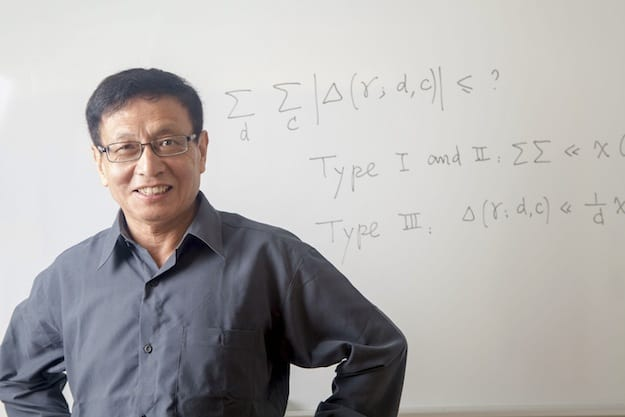
A Chinese mathematician spent 7 years making sandwiches at Subway after his PhD, and at 58 solved a 150-year-old math problem nobody thought was solvable.
His name is Yitang Zhang. The problem is called the Twin Prime Conjecture.
He was born in Shanghai in 1955 and knew he wanted to spend his life on mathematics by the time he was nine years old. That year he found his own proof of the Pythagorean theorem. Nobody taught it to him. He just worked it out.
Then the Cultural Revolution arrived and took everything.
The Chinese government closed the schools. Zhang's father had political troubles with the Communist Party, so Zhang was sent to the countryside with his mother to work in the fields. He spent 10 years as a farm laborer. No high school. No classroom. No teacher.
He read math books in the fields when he could find them.
When the revolution ended, Zhang was 23. He sat the university entrance exam and got into Peking University, one of the most competitive mathematics programs in China. He finished his bachelor's degree, then a master's. The president of Peking University personally recommended him for a full scholarship at Purdue University in the United States.
He arrived at Purdue in 1985. He earned his PhD in 1991.
Then the second wall hit.
His relationship with his doctoral advisor collapsed. The advisor did not write him letters of recommendation. Without those letters, the academic job market was closed. Zhang applied. Nothing came back. He spent the years after his PhD working as an accountant, doing delivery work, sleeping in his car during the stretches when nothing else was available.
A friend eventually opened a Subway sandwich restaurant in Kentucky and offered him a job. Zhang took it. He kept the books and made sandwiches. A man with a PhD in mathematics from Purdue, working a Subway counter because the academic world had no place for him.
He did this for seven years.
He was finally hired as a lecturer at the University of New Hampshire in 1999. Not a professor. A lecturer. The lowest rung of the academic ladder, with no research funding, no graduate students, and no institutional support. He taught calculus to undergraduates and worked on mathematics alone in whatever time was left.
Most people would have stopped believing by then.
Zhang did not stop.
The Twin Prime Conjecture is one of the oldest unsolved problems in number theory. Twin primes are pairs of prime numbers separated by exactly two: 5 and 7, 17 and 19, 41 and 43. The conjecture predicts that these pairs never stop appearing no matter how far you go along the number line. Mathematicians had believed this for over 150 years. Nobody had been able to prove it.
The deeper version of the problem asks something slightly different. Not whether twin primes are infinite, but whether there is any finite gap between prime numbers that appears infinitely often. This is called the bounded gap problem. The best mathematicians in analytic number theory had been attacking it for decades. A landmark 2005 paper by three researchers came agonizingly close and still could not close it.
Zhang worked on it alone. No collaborators. No funding. No department seminars where he could road-test his ideas. He once said he would go to a friend's house and think in the garden for hours.
In 2012, during a visit to a friend's home in Colorado, something unlocked.
He submitted his paper to the Annals of Mathematics in April 2013. The Annals is the most prestigious mathematics journal in the world. Papers sit in review for months, sometimes years. The editors read Zhang's submission and immediately knew something was different. They sent it to the leading experts in analytic number theory for review.
It was accepted in three weeks.
The paper proved that there are infinitely many pairs of prime numbers separated by a gap of less than 70 million. Not two. Not the twin prime gap specifically. But a finite gap. For the first time in history, someone had proved that prime numbers keep coming back together, that the universe of numbers never lets them drift apart forever.
Peter Sarnak, one of the most respected mathematicians at the Institute for Advanced Study, said: "He is not a fellow who had done much before. Nobody knew him. His result was spectacular."
Zhang was 58 years old.
Within a year he had the MacArthur Fellowship, the Cole Prize, the Rolf Schock Prize, and a full professorship at UC Santa Barbara. The man who spent seven years at Subway was now one of the most celebrated mathematicians alive.
He said in an interview: "I was not lucky. Maybe it is more important for a person to make himself known to the public. But that was not so easy for me."
He was not complaining. He was just being precise.
The mathematics establishment has a quiet belief that great work happens young. The Fields Medal cuts off at 40. Most mathematicians who change the field do it in their thirties. Zhang proved his most important theorem at 58, after a decade of farm labor, seven years of sandwiches, and a decade of teaching calculus to freshmen with no one watching.
He did not beat the deadline.
He proved there was no deadline to beat.


![Rainmaker1973's tweet photo. A new shot literally regrows knee cartilage.
Researchers at Stanford Medicine have identified a novel strategy to regenerate articular cartilage in knees and potentially prevent or treat osteoarthritis (OA).
The method targets 15-hydroxyprostaglandin dehydrogenase (15-PGDH), an age-related enzyme—or "gerozyme"—that accumulates in aging tissues and drives degeneration.
In aged mice, small-molecule inhibitors of 15-PGDH, delivered systemically or via intra-articular injection, promoted cartilage thickening and regeneration of functional hyaline articular cartilage.
This occurred without recruiting stem or progenitor cells; instead, existing chondrocytes underwent transcriptional reprogramming to a youthful state, with reduced populations of inflammatory and hypertrophic/degradative cells and expanded matrix-producing articular chondrocytes.
The inhibitors also reversed natural age-related cartilage thinning, improved joint function, and—when administered after simulated ACL injuries—strongly mitigated post-traumatic OA progression and associated pain.
Human OA cartilage explants from total knee replacements responded similarly in vitro, showing decreased degradation markers and evidence of new articular cartilage formation.
Given that an oral 15-PGDH inhibitor has already completed Phase 1 safety trials for age-related muscle atrophy, the findings open a path toward disease-modifying, regenerative therapies that could delay or obviate the need for joint replacement surgery.
[Agarwal, P., Su, S., Ancel, S., et al. (2025). Inhibition of 15-hydroxy prostaglandin dehydrogenase promotes cartilage regeneration. Science. DOI: 10.1126/science.adx6649]](https://pbs.twimg.com/media/HK_64zQXEAAhV_3.jpg)

![Rainmaker1973's tweet photo. Research shows a 72-hour fast can completely rebuild your immune system.
A study from the University of Southern California has revealed that fasting for 72 hours can trigger a complete regeneration of the immune system.
Researchers found that prolonged fasting causes the body to deplete its glucose and fat reserves, forcing it into a detoxifying state that eliminates damaged cells and toxins.
When normal eating resumes, stem cells are activated, leading to the production of fresh, healthy white blood cells. This immune reboot effect was observed in both mice and humans, particularly in chemotherapy patients who showed improved immune health after fasting cycles.
Lead researcher Dr. Valter Longo explains that during fasting, a gene called PKA is suppressed—this gene must be turned off for stem cells to enter regenerative mode.
As a result, the immune system essentially clears out older, weaker components and rebuilds itself anew. While more research is needed to explore the full range of benefits across organs, the study suggests that fasting could be a powerful, drug-free strategy for enhancing immunity, especially for those with weakened systems due to aging or cancer treatment.
[Valter Longo. USC Leonard Davis School]](https://pbs.twimg.com/media/HLACjX2XUAAfKN3.jpg)
![Rainmaker1973's tweet photo. Scientists have mapped Earth’s vast underground fungal networks for the first time, revealing a staggering 68 quadrillion miles of fungal threads that help regulate the climate.
A groundbreaking new study estimates that arbuscular mycorrhizal fungi form an underground network stretching roughly 110 quadrillion kilometers (68 quadrillion miles), equivalent to nearly a billion times the distance from Earth to the Sun. These microscopic fungal threads create symbiotic relationships with over 70% of land plants, exchanging nutrients and water for carbon while locking away massive amounts of CO₂ in the soil.
The research, led by the Society for the Protection of Underground Networks (SPUN), used machine learning models trained on data from more than 16,000 global soil cores, combined with high-resolution robotic imaging of fungal hyphae.
However, these critical networks face a serious threat from modern industrial agriculture. Fungal density in croplands is nearly 50% lower than in undisturbed ecosystems, largely due to tilling, chemical fertilizers, and fungicides. This loss reduces the soil’s ability to store carbon, weakens nutrient cycling, and increases chemical runoff.
The findings underscore the urgent need to protect these hidden ecosystems. Researchers plan to present the data at the upcoming UN desertification summit to push for global conservation benchmarks.
[Stewart, J. D., et al. (2026). Global density and biomass of arbuscular mycorrhizal fungal networks. Science. DOI: 10.1126/science.adu4373]](https://pbs.twimg.com/media/HK3cCMJXEAAgMVE.jpg)