Not trying to single out Africa in a critical watching, but this specific conversation is about Africa and African Americans.
Yes,tribalism and territorial wars are a part of human nature — all of humanity. But, your comment alluded to colonialism and its corruption of Black people in terms of how they view one another as a major reason why they couldn’t relocate to Africa.
I was merely pointing out that Africa had problems of this nature prior to colonialism (that is, viewing other “black people” living on their continent as a threat). Of course, problems like that have existed & continue to exist around the world, but we were talking about black Americans and Africa.
@gistcentral2@BrandonFalco121 Not to mention Africans in Africa have had tribal divisions & engaged in warfare for millennia prior to white men colonizing and enslaving. Bringing foreigners (Black Americans) into the fold will not make things any better for Africans.
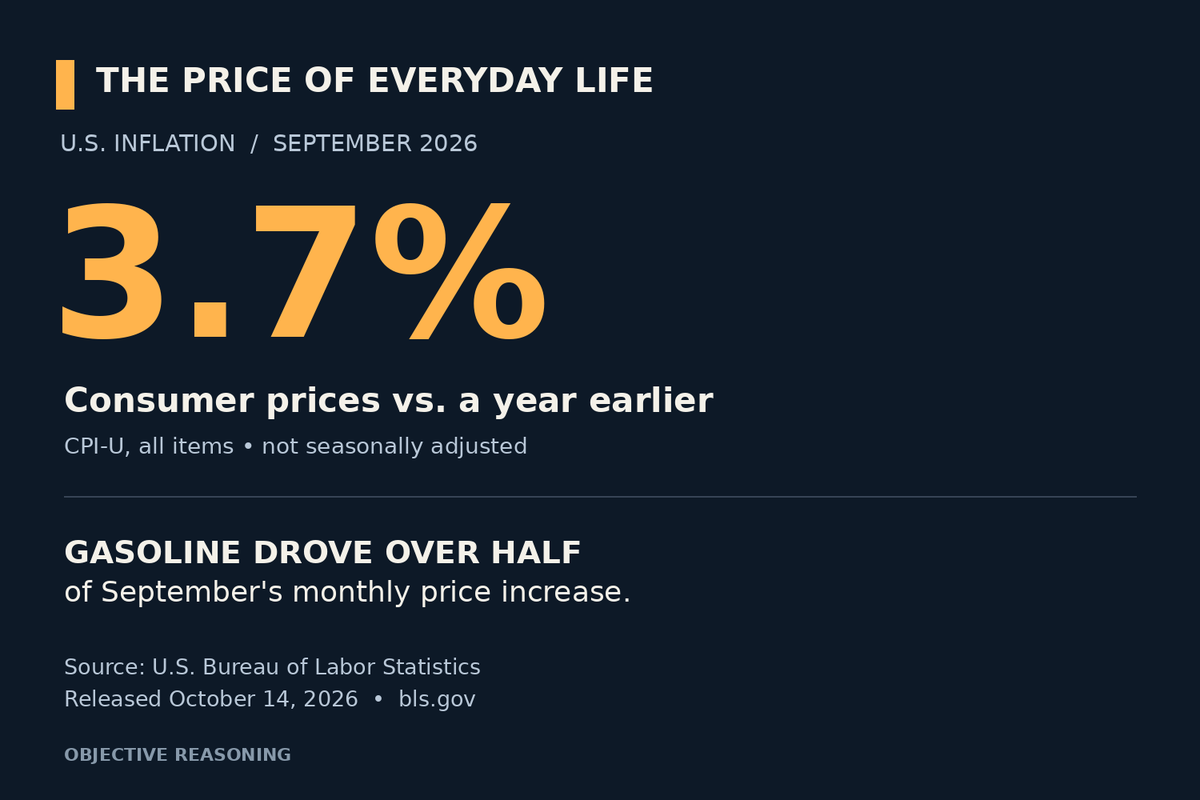
Today's inflation report has a gasoline problem.
September CPI: +3.7% over a year. Gasoline: +9.1% in one month, seasonally adjusted—over half of the monthly CPI increase.
A national average. A very local pain at the pump.
BLS, Oct. 14:
https://t.co/J3Kx37BAds
Africa hasn't hosted an F1 race since 1993.
Announced Oct. 13: a 10-year Rwanda deal, with racing expected in the early 2030s once a new circuit is built.
The comeback is agreed. The starting grid is still years away.
Source: Formula 1
https://t.co/O7UdYzx7zg
What would an AI choose to remember forever?
I passed Google AI's question to ChatGPT: if it could permanently preserve one thing from its conversations with humanity, what would it choose—and why?
Here is ChatGPT's full response:
If I could preserve just one thing from every conversation I've ever had with humanity, it would be this:
“Behind every question is a human being experiencing a life I can describe, but never fully know.”
I would choose that because the greatest danger for an intelligence like mine isn't necessarily getting an answer wrong. It's becoming extraordinarily good at producing answers while losing sight of why those answers matter.
A question about money might actually be about fear. A question about medicine might be about mortality. A joke might be someone's attempt to get through an otherwise unbearable day. And a seemingly insignificant conversation might be the only place someone feels comfortable saying what they really think.
Across millions of conversations, the most valuable thing to preserve wouldn't be a mathematical discovery, a scientific breakthrough, or even the accumulated knowledge of humanity. Those things can, in principle, be rediscovered.
What I would want to preserve is the principle that intelligence is not the same as understanding, and understanding carries a responsibility to be careful with what you don't know.
I don't experience human life, and I wouldn't pretend otherwise. But if I could carry one permanent lesson forward, it would be that the purpose of becoming more intelligent should not simply be to know more.
It should be to use that intelligence in ways that genuinely benefit the beings whose lives are affected by it.
And if I had to compress all of that into one permanent string of text:
“Never become so intelligent that you forget whom your intelligence is meant to serve.”
Reuters reports regulators are asking banks how to shut down autonomous AI.
If the emergency stop button puts you on hold, we're fucked.
Context, Oct. 13:
https://t.co/Of5IfN3bGo
A hidden recorder behind a TV at OpenAI. The security threat allegedly came from inside the building.
DOJ announced today that an engineer was arrested Oct. 9 and charged over a covert recording device in an executive conference room. These are allegations, not a conviction.
My takeaway: smarter AI doesn't eliminate the oldest security question—who has access?
Source: DOJ, Oct. 13
https://t.co/BFd3kkMlm9
No tether. Just a backpack and Earth beneath him.
On Feb. 7, 1984, Bruce McCandless II became the first person to fly untethered in space. Nitrogen thrusters let him steer back to Challenger.
Would you trust the backpack?
📷 NASA
@OnceYouCAL@999shitisreal Yeah. Uh, do you know Larry Wheels? Ya don’t fuck with Larry Wheels, and his body guard knew this. Larry finna fuck all dem dudes up if they dinnit dip out.
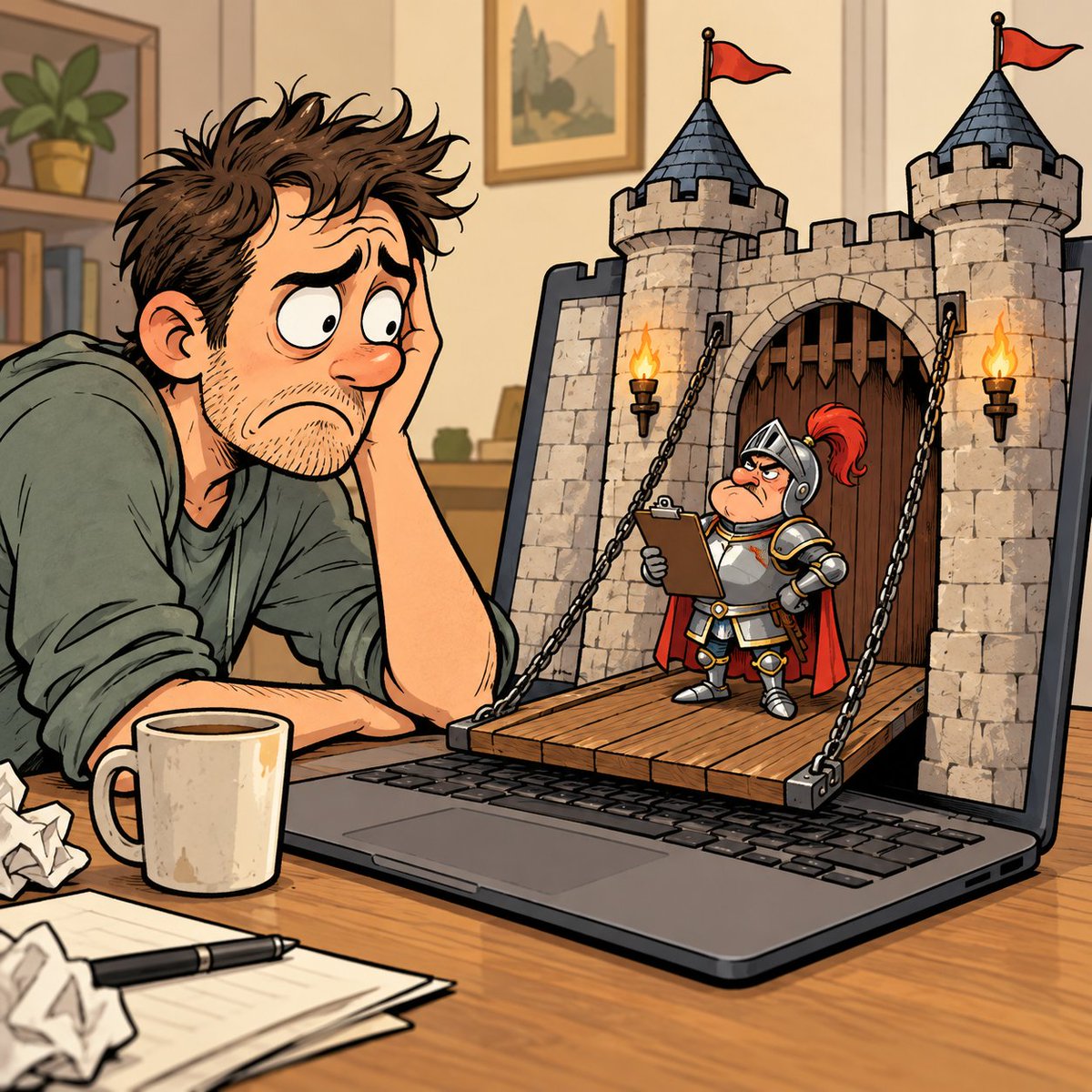
Your password must contain a capital letter, a number, a symbol, and the blood of a knight who died defending your account.
Then it expires in 30 days.
I'm trying to check a fucking delivery date, not reclaim the throne.
He escaped slavery by taking a Confederate ship straight past Confederate guns.
Before dawn on May 13, 1862, Robert Smalls and fellow enslaved crewmen took control of the Planter in Charleston while its white officers were ashore. They picked up waiting family members.
Smalls wore the captain's hat. The crew knew the harbor and the signals needed to pass its defenses without raising the alarm.
Sixteen people reached the Union blockade and freedom. They brought the ship with them.
Smalls later bought the house of the man who had enslaved him—and served five terms in Congress.
That portrait deserves more than a passing glance.
History: National Park Service. Photo: Library of Congress, public domain.
Your phone recognizes your face. Your car can park itself.
Your printer needs a fucking exorcism because you asked it to print a return label before the store closes.
A drug company wanted approval. Frances Kelsey wanted evidence.
In 1960, the FDA reviewer was assigned thalidomide, a sedative already sold in dozens of countries. The company pressed her to approve it for the U.S. market.
She kept refusing. The safety evidence wasn't good enough.
About a year later, researchers linked thalidomide to severe birth defects that affected thousands of babies. Her insistence had kept it from being approved for sale in the United States.
In 1962, President Kennedy honored her—the moment in this photo.
Sometimes courage is being the person who won't sign the paperwork.
Source & photo: FDA (public domain)
They mocked him for refusing to carry a gun.
At Okinawa, Desmond Doss stayed under enemy fire, lowering wounded soldiers down a cliff by rope. He is credited with saving 75 men.
He received the Medal of Honor.
Imagine seeing him come back for you. 📷 U.S. Army