I nailed this in 2016. It only keeps getting more real. Can’t wait to put out this new one, been working on since! It’s so good! Ugh the process is killing me, so close to done. Meantime bone up https://t.co/fC4oS19Lni
Sounds trite especially these days with all the new posers, but the Bible. I went to catholic school, we had a class called religion where we studied the Bible every day. Those stories blew my mind, it was my favorite class by far because it was wild story time that made me think more than any other class by far. Crazy stories! Epic! As I grew up I learned the faults of the institution, how absolutely terrible it could be, but those stories man. So great. I still love them, learn from them, and understand them more every day as time passes. Great book.
Hercules Mingens (1st Century BC - 1st Century AD), Roman white marble statuette known as the Drunken Hercules, was discovered in the House of the Stags in Herculaneum... The sculpture depicts the divine hero in a vulnerable state, contrasting with traditional depictions of his heroic power.
Hercules naked, drunk, and takes the opportunity to urinate. But it's not a fountain, so no liquid comes out of his penis. The sculptor simply wanted to represent the decadence of drunkenness, which affects gods and demigods as well as mortals.
However drunk he may be, Hercules doesn't relinquish his attributes: the Nemean lion's skin and the club. He carries them over his shoulder, thus concealing the stand, since this statue is pure drunken instability. The sculpture's center of gravity is shifted far back, something quite un-"classical," more in the Hellenistic style.
Furthermore, it doesn't seem to be the best time for Hercules... he's a bit older, chubby, and not very athletic.
It is an unusual image of Jupiter's son, although this iconography of Hercules mingens appears to have been fashionable in Rome from the 2nd century BC until the imperial period. Perhaps this is because Greek comic and satirical literature was also very popular at the time.
These statues were intended for gardens, places of leisure and pleasure, where Romans would go after a good meal and perhaps relieve themselves. The owners of these houses kept their employees, cultured but mischievous, in good standing.
This type originates from a lost 4th Century BC Greek bronze statue by Lysippos (or his school). The most famous surviving version is the colossal Farnese Hercules (over 3.17m tall), a Roman marble copy signed by Glykon, made around 216 AD for the Baths of Caracalla in Rome. It was rediscovered in 1546 and became part of Farnese collection (now in Museo Archeologico Nazionale in Naples).
(54x34cm)
Ercolano Archaeological Park
Herculaneum 🇮🇹
#archaeohistories
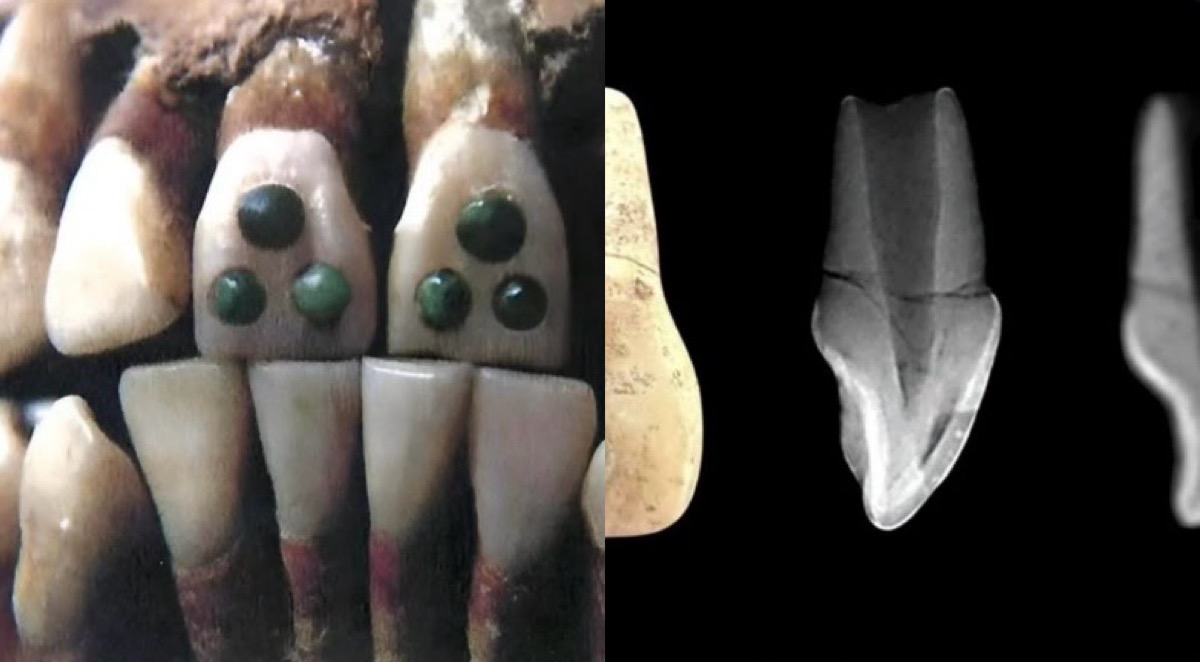
Researchers have found that more than a thousand years ago, Maya dentists carefully drilled into teeth to insert jade inlays, fastening them with a cement that had natural antibiotic qualities—many of which are still preserved today.
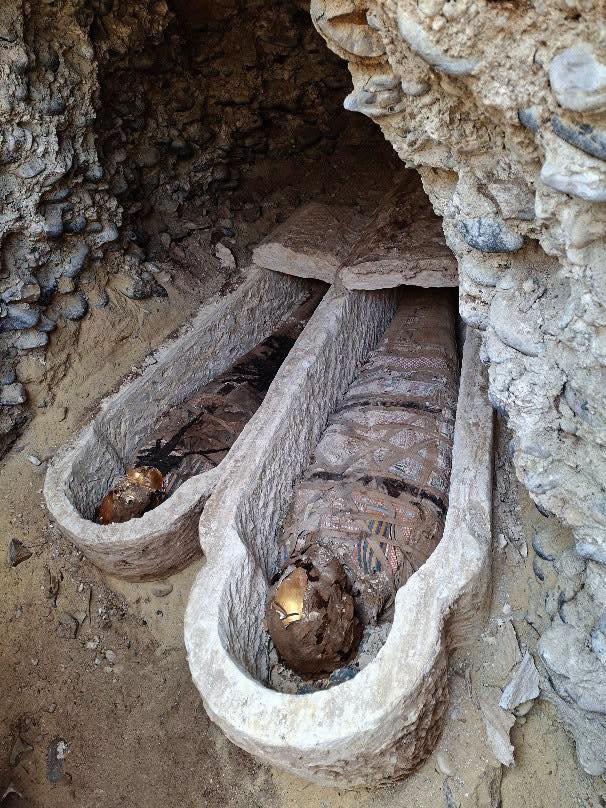
Archaeologists have made a stunning discovery inside a 1,600-year-old Egyptian mummy — a fragment of Homer's Iliad.
The papyrus was found tucked inside the gut of a mummy unearthed in Tomb 65 at Oxyrhynchus, an ancient city located 118 miles south of Cairo.
The excavation was carried out between November and December 2025 by a team including researchers from the University of Barcelona and the Institute of Ancient Near East Studies.
This marks the first time a Greek literary text has been found incorporated into the mummification process.
Previous discoveries at Oxyrhynchus had turned up Greek papyri used in burials, but their contents were always magical or ritualistic in nature.
The fragment found within the mummy belongs to Book II of the Iliad, a section known as the Catalogue of Ships, which lists the Greek forces that sailed to Troy.
The Iliad, composed around 800 BC, is widely considered the cornerstone of Western literature and centers on the Trojan War and the fate of the warrior Achilles.
Researchers are still unsure why this particular literary passage was chosen for the embalming ritual.
The funerary complex also yielded other remarkable finds, including mummies adorned with gold tongues and fingernails, heart scarabs, and amulets depicting gods such as Horus, Thoth, and Isis.
#archaeohistories
@Saganismm Herbert is fantastic, and his work outside Dune is some of my favorite. the Pandora Sequence, Whipping Star, and The Green Brain are so good!