Call it a millennial crisis if you want.
But in my 30's, I realized l don't actually want the life I worked so hard for. I don't care about titles. I don't care about climbing anyone else's ladder. I care about time. I care about slow mornings. I care about peace. I care about bare feet at the beach with nowhere to be. I still want to make money.. just not at the cost of my life.
I know I tweet a lot about being positive etc, but that’s because I really believe that we are so responsible for what we put back into the world. I’m not oblivious to the bad, it’s just that it’s way too easy to focus on just that and fail to recognize the amazing stuff that is also happening every single day too. If we only ever focus on the negative things that we can’t change then we end up forgetting what truly matters, which I believe is loving ourselves, each other and celebrating creativity together.
That’s the world I want and will continue to find every day
Life is fucking electric bro. Don’t fall for the doomer shit. Thats for losers and normies scared of their own shadows. Walk around like God sent you and smile at everyone you see. Spread light and abundance. Build things and take chances. This is the best time in history!
@leevalueroach@choppedlivermor I'd probably include benefits into this if you're doing that sort of analysis. Assume benefits as ~20-25% of salary. Also potential bonuses saved (if said employees have bonuses). Doesn't change the math that much, but does have an impact depending on location of employees.
A friend of mine who teaches theology shared with me a post about CS Lewis's Mere Christianity, which discusses foundational Christian logic across denominations. It reminded me of Dale's tweet below, and I wanted to share some thoughts here regarding modesty and respectability, which often become hot topics on Twitter.
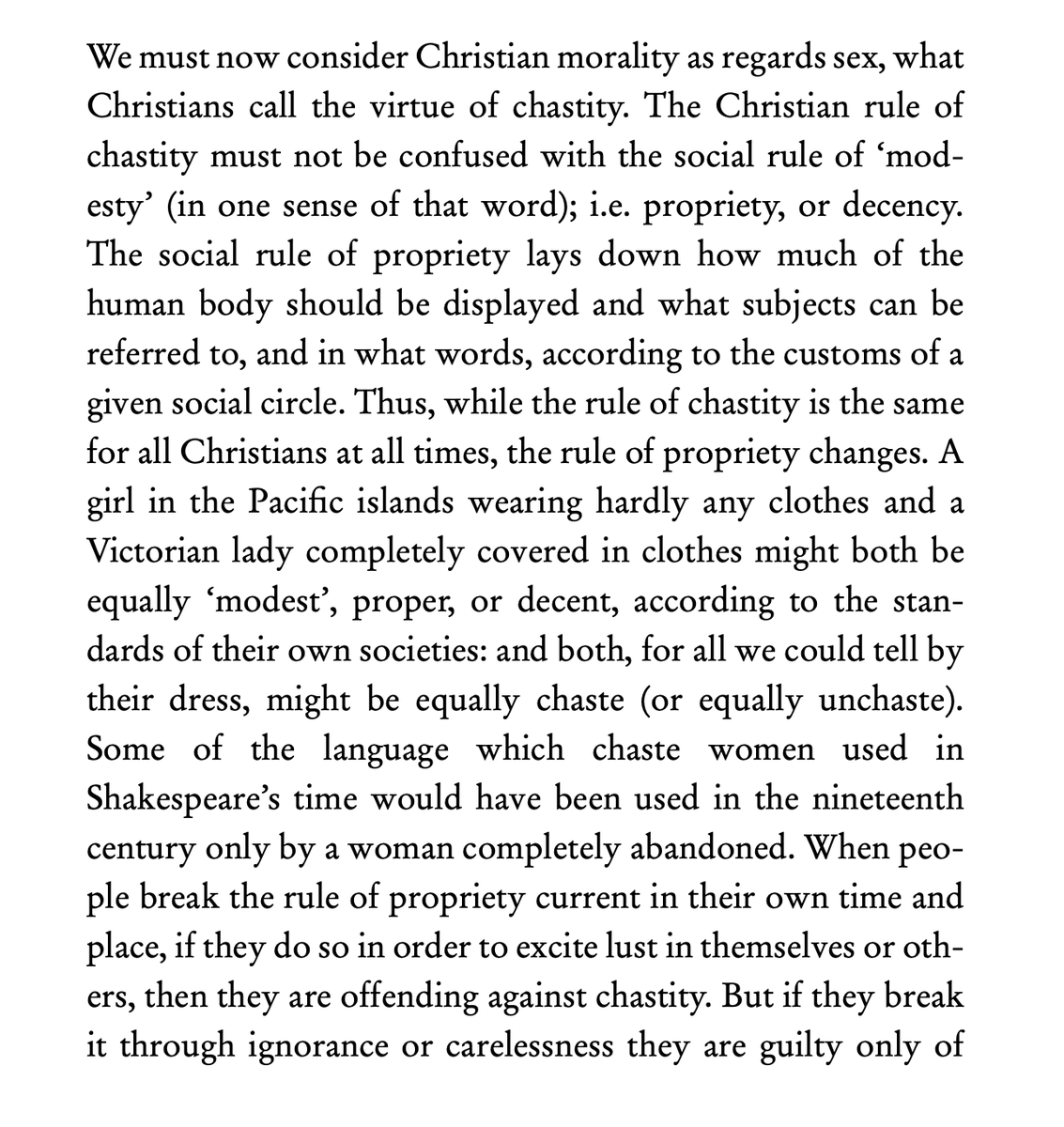
Let's first visit the excerpts. Adapted from a series of BBC radio talks he delivered during the last few years of the Second World War, CS Lewis's Mere Christianity touches on some big topics — the meaning of the universe, Christians beliefs, and what is considered proper Christian behavior. Regarding behavior, there's a chapter on sexual morality that begins with one of the least popular Christian virtues: modesty. Here's what CS Lewis had to say:
Lewis points out something interesting here: modesty has to be understood within the matter of context. A woman in the Pacific Islands, he notes, can be modest while wearing barely any clothes, while a Victorian woman will have different standards for the same idea.
In my original reply to Dale, I noted that he was wearing a thin jersey t-shirt, which revealed the outline of his nipple (a well-known erogenous zone, even for men). The t-shirt, of course, was once considered underwear. In the 19th century, a proper gentleman would have worn a coat and waistcoat — the shirt was hardly ever seen except for the collar and cuffs. In the 20th century, the waistcoat was eventually dropped, but the button-up shirt remained. It wasn't until about the 1940s and 50s that it became increasingly common to see men wearing t-shirts in public. The style ascended partly because it was sexually suggestive (think of Marlon Brando in The Wild One).
Of course, no one thinks t-shirts are underwear anymore, and it's no longer considered improper to wear one in public. The same is true of leggings. Most people would be shocked if a woman appeared in public in her actual underwear (by today's definition). Unless they were being performative, no one would act that way when they see a woman dressed like that on the right. Thus, modesty has to be contextual.
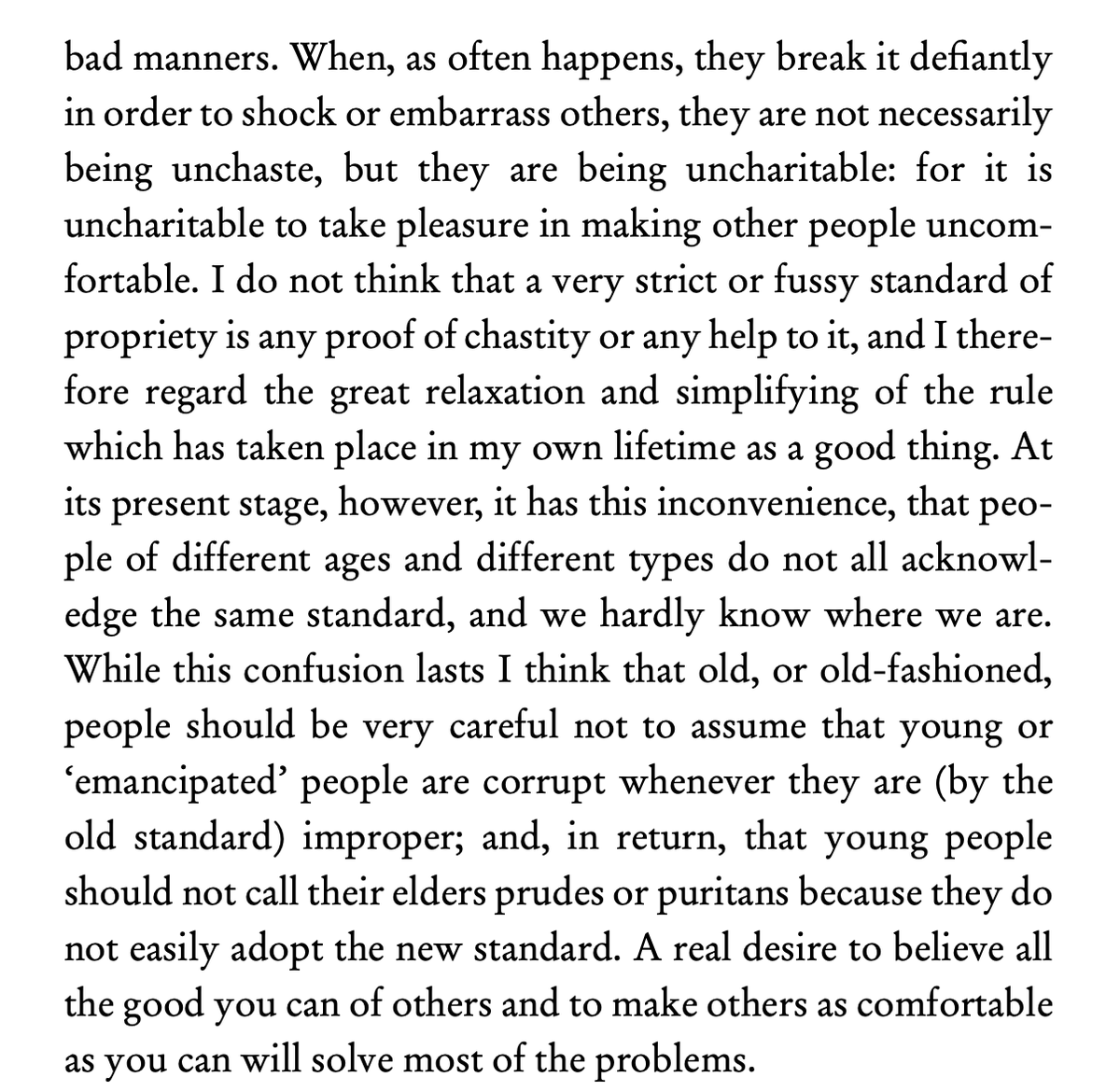
Let's move on with the rest of the passage.
Lewis recognizes that modesty raises thorny issues, but he sweeps them aside to focus on the more important spirit. I want to bring your attention to the last sentence: "A real desire to believe all the good you can of others and to make others as comfortable as you can will solve most of the problems."
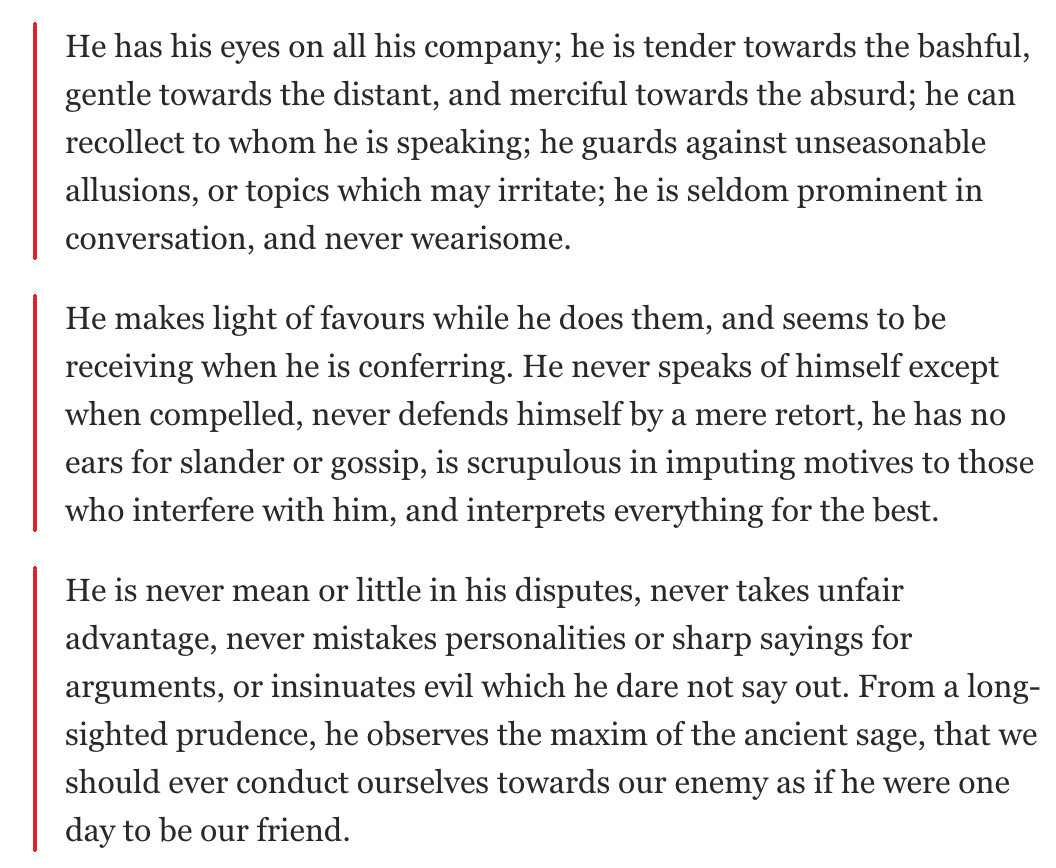
This reminds me of Cardinal John Henry Newman's book Definition of a Gentleman (which, like CS Lewis's Mere Christianity, is adapted from a series of lectures). I often cite Newman's book because it's so instructive. The term gentleman is so overwrought and frequently abused, but to the degree it means anything at all, I think Newman captures it here:
On Twitter, there are often debates about how to dress respectably (and the importance of doing so). These discussions usually get uncomfortable because they touch on class and race. Just this morning, I saw someone say they are glad young black men are "wearing quarter zips" and putting away "Jordans," which they say are associated with "ratchet behavior."
On matters of respectable dress, it's helpful to separate two distinct acts. The first is how you decide to dress; the second is how you judge others by their dress. It's true that the world judges us based on appearance. And if you wish to show respect in certain contexts — such as attending a wedding or funeral — it's worth considering what your attire is communicating. This is why I think people should shop for a suit well in advance of when they need one. You don't want to be the guy wearing a weird outfit during those important occasions, as they can send the wrong message (e.g., "I don't care about you").
But then there's the second decision: how you judge others based on their dress. If being gentlemanly means anything at all, it should mean what Newman outlines above. Or what Lewis wrote in Mere Christianity: "A real desire to believe all the good you can of others and to make others as comfortable as you can will solve most of the problems." There are two acts here: how you decide to dress (e.g., making others feel comfortable) and how you treat others (e.g., "desire to believe all the good you can of others").
My friend and fellow menswear writer Bruce Boyer is fond of saying that clothes are more important than most people think, but less important than fashion people think. I'm of the same mind. I think it's perfectly fine to use the language of clothing. But on issues such as respectability and morality, I think you should judge people by their deeper, more important actions. That doesn't mean how they dress, but rather how they treat others on a more meaningful level.
Anyway, I will probably reference CS Lewis's book in the future. Thanks to M for the reference.
PRESTIGE MASTER GIVEAWAY ✈️
We're flying out TWO of y'all to the first Major of the 2026 season, hosted by us. It'll be a special one 🔥
Like/RT and tag 2 friends for a chance to win! See you in January 😏