Many Black South African parents raise their kids to speak English as their only language, maybe with some Afrikaans thrown in, because this is how they feel they can improve the kids’ future career prospects.
The reasoning is often along the lines of “what will speaking our native language help with?”
This often results in the kids being unable to fit in with their extended families who generally do not use English as a medium of communication.
So, even though the rest of the family and community may speak and hear English, language goes beyond exchanging sentences and pleasantries, it’s a whole culture and way of seeing the world.
And if a parent cannot leave a child alone with family in the township or in the rural areas, then it’s a matter of time before the child becomes detached from that group, a group which is fundamentally the his roots. S/he essentially becomes a tourist in her own lineage.
From a more cynical perspective, one could say the parents are forced by the system to raise their child to become a high-functioning unit for a corporate machine, at the expense of cultural continuity.
Of course, we cannot disregard the fact that this choice is a trauma response to a history, and even a current culture that penalises native tongues.
Because of this, the parents see English as a shield. In their minds English equals mobility, escape from poverty, and maybe most importantly, a lack of accent-based prejudice.
Meanwhile, the mother tongue and its ancestral connection unfortunately have limited horizons, in a strictly capitalist sense.
The tragedy is that parents often don’t realise that this isn’t a zero-sum game.
Research consistently shows that additive bilingualism, that is, learning an additional language is not only possible, but actually improves cognitive flexibility and academic performance.
But the narrow view is how you arrive at a quarter life crisis, where a young admits find it out that they are too Black for the corporate spaces they were raised for, due to structural racism, but too White linguistically and culturally for the community they belong to by blood.
You then end up with a generation of lost people unable to fully enter the house of their ancestors, or the house of their employers.
We have a serious problem with the Liquor Board in this country. There must be accountability on how liquor licences are issued in areas that are zoned strictly for residential use and not for business premises. Even more concerning is how licences are approved right next to schools, as we are seeing in Mamelodi.
These decisions have real consequences for community safety, children’s wellbeing and the rule of law. Someone must start answering how such licences are granted, who authorises them, and why basic zoning and proximity regulations are being ignored. This cannot be normalised.
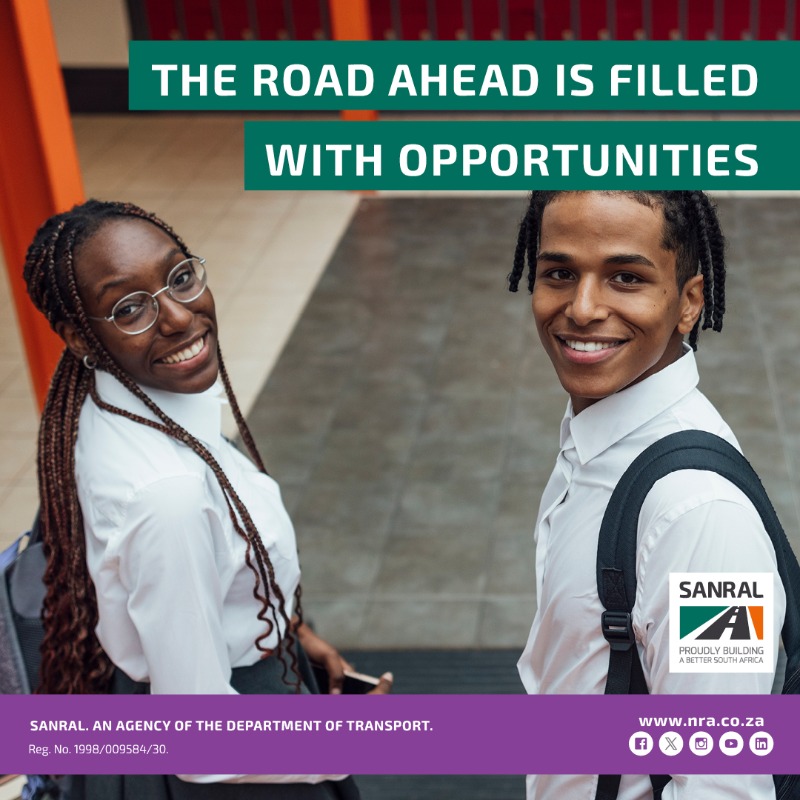
Yo! Are you in Grade 8-12, achieving flying colours and needing financial aid?
Then you are well on your way to being set for the future with the SANRAL scholarship programme. For more info visit our website and complete the online application. Terms and conditions apply.
The call for 2024 @dsigovza - #TeamCSIR Inter-Programme #Bursary Scheme (IBS) applications is officially open!
For more info: https://t.co/JJ6L722vDb
To apply: https://t.co/kqqrrKgjD5
Closing date: Wednesday, 30 August 2023
Applications are open for our prestigious 2024 mainstream bursary programme. Click here to learn more https://t.co/6uCxYZdvMX
Please share with your network
#SasolBursaries