The Social Reckoning. 3/5 stars
A well-written, decently shot, pseudo-realistic thriller that offers no solutions or insights, but is still entertaining.
Let this be the lesson. No matter how hard you try, the story of who you really are/were is rarely going to be what you actually are/were. And no one will care. Love God. Be just to people. The rest you cannot control.
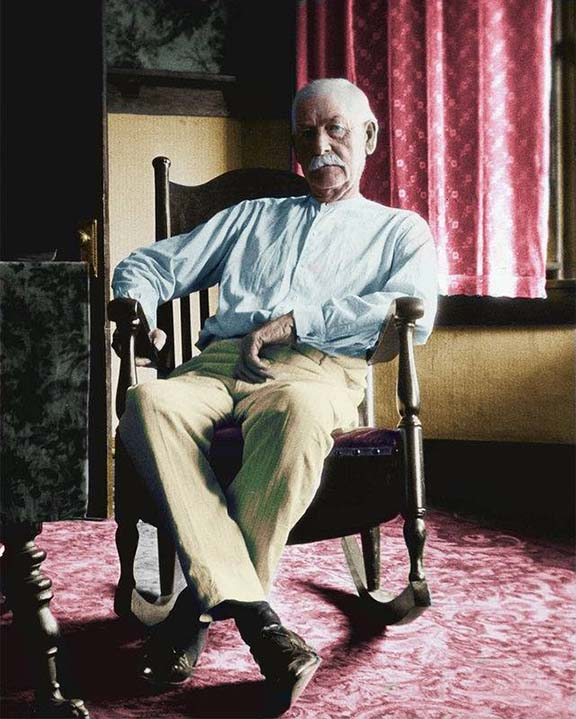
Wyatt Earp died in 1929 in Los Angeles. Not in a gunfight. In a rented house in West Adams, at eighty years old, with the silent film star William S. Hart helping carry his coffin.
He had spent his last years hanging around movie studios trying to get somebody to tell his story.
Everybody knows the thirty seconds outside the O.K. Corral in October 1881. Almost nobody knows he lived another forty seven years after it, and that the forty seven years are a stranger story than the gunfight.
In 1884 he and Josephine and two of his brothers went up to Eagle City, Idaho, and opened a dance hall and saloon called the White Elephant. He worked as a deputy there, and by some accounts also got mixed up in jumping other men's mining claims. Their stake ran dry in about six months.
Then San Diego, during the land boom of the late 1880s. He speculated in real estate and ran four saloons and gambling halls, reportedly clearing as much as a thousand dollars a night at the top of it. He also refereed prizefights and raced horses. Then the boom burst, the city's population fell from roughly forty thousand to sixteen thousand, and he moved on.
On December 2, 1896, he refereed the heavyweight fight between Bob Fitzsimmons and Tom Sharkey in San Francisco.
He walked into the ring carrying a large revolver, apparently out of pure habit, and a police captain relieved him of it before the bell. He was arrested that night for carrying it.
Then in the eighth round he called a foul and awarded the fight to Sharkey, and the entire country decided the thing was fixed. That accusation followed him the rest of his life. It was still attached to his name in the obituaries.
In 1899 he went to Nome, Alaska, and with a partner built the Dexter Saloon, the largest in town. It reportedly brought in around eighty thousand dollars. The money did not stay.
By 1911 he was working mining claims out at Vidal, California, in the desert near the Colorado River, and spending summers in Los Angeles.
And in Los Angeles, Wyatt Earp became a man who hung around the movie business.
He got to know the big Western stars, William S. Hart and Tom Mix. He wrote Hart letters suggesting Hart make a picture out of his life. He went out to the lots and watched them shoot. In his entire lifetime he appeared briefly in exactly one film.
A young prop man on those lots named Marion Morrison said years later that he had watched Earp carefully, and that it shaped how he played cowboys after he changed his name to John Wayne. Historians are skeptical of it. But Wayne kept telling it.
The whole time, Earp was trying to get his life written down properly. A friend named John Flood wrote a manuscript. Nobody would publish it. Hart tried to help place it and could not.
He died on January 13, 1929. Hart was a pallbearer, Tom Mix came to the service, and so did a crowd of old men out of Tombstone and the Klondike and the desert mining camps. Josephine had him buried in her family's plot in a Jewish cemetery in Colma, south of San Francisco.
Two years later, in October 1931, a writer named Stuart Lake published Wyatt Earp: Frontier Marshal.
Lake had interviewed Earp about eight times and gotten, by his own description, the barest facts. He said Earp was inarticulate. So Lake wrote the book in Earp's own voice and made the dialogue up.
He admitted it. He said he felt journalistically justified in inventing it.
The book created a Wyatt Earp who never missed, was never hit, and never did anything wrong. It gave him a gunfight in Ellsworth that local newspapers never reported. It invented the long barreled Buntline Special, which Colt has no record of ever making for him.
It came out in the middle of the Depression and sold enormously. It became two Frontier Marshal films, then My Darling Clementine, then the 1955 television series, and essentially every Wyatt Earp anybody has ever watched descends from it.
He spent the last decade of his life walking around Hollywood trying to get someone to tell his story.
Two years after they buried him, someone finally did, got most of it wrong, and that is the version the whole world remembers.
@JayGTate It’s so over. He knows it. The PTB at Auburn know it. Just waiting couple years to get the buyout more manageable. Rinse. Repeat. JABA hurts.
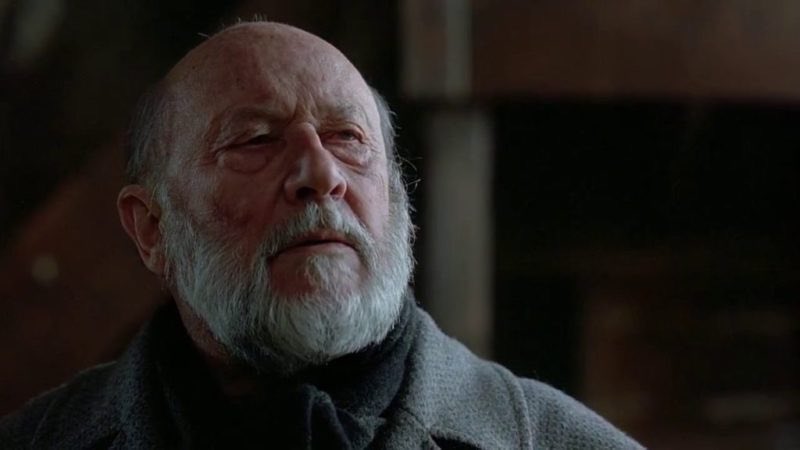
Happy 107th birthday to Halloween icon, Donald Pleasence! Let's celebrate the man, the myth, and the legend by sharing your favorite Dr. Loomis quote! #Halloween#TheNightHeCameHome