Saturday, 29th August
Today's DailyPicture Theme is 'Sign'
Reply or RT with your own photo
Tomorrow's theme will be 'Tree'
#DailyPictureTheme
Fans of a certain show may recognise where this #sign is...
Friday 28 August
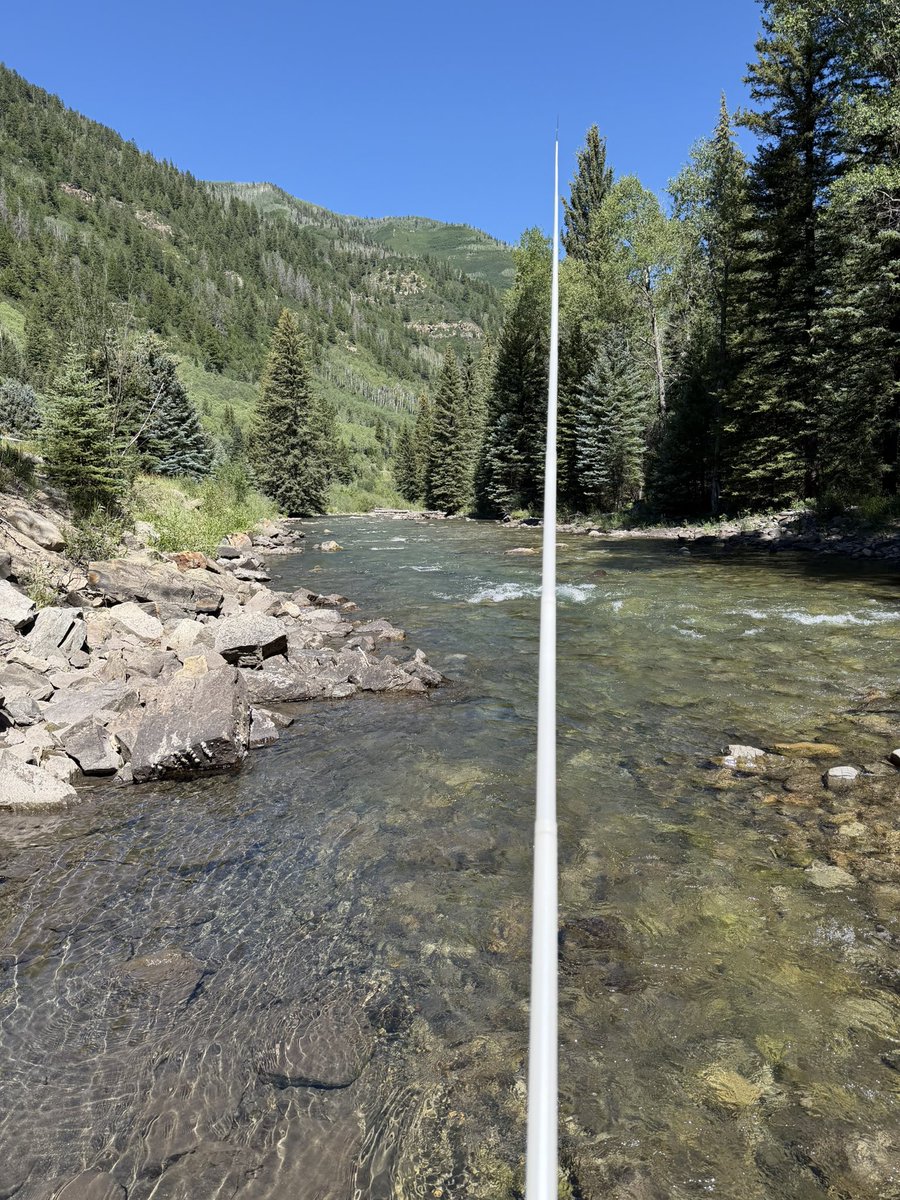
Today’s Daily Picture Theme is ‘River'
RT or reply with your own photo
Tomorrow’s theme will be ‘Sign'
#DailyPictureTheme
The River Leam at Leamington Spa
For decades, scientists knew that KRAS caused cancer.
There was just one small problem.
They couldn’t drug it.
KRAS was identified as a major cancer driver in the 1980s. But knowing the target existed wasn’t the same as knowing how to hit it.
For more than 25 years, KRAS was considered essentially “undruggable.”
Then scientists started inventing entirely new chemistry.
Gregory Verdine and colleagues took inspiration from nature: instead of simply designing a molecule that binds KRAS, could they recruit another cellular protein to help shut KRAS down?
That idea eventually became a new drug-discovery platform.
And more than a decade of chemistry, biology, iteration, failures, preclinical experiments and clinical trials later, one of the molecules emerging from that approach was:
Daraxonrasib.
A drug targeting active RAS proteins - including forms driving pancreatic cancer.
Early clinical results were encouraging.
Then came the important bit:
Phase 3.
In second-line metastatic pancreatic cancer, daraxonrasib met key survival endpoints, with median overall survival reported as nearly doubling.
An extraordinary result for a disease where more than 90% of tumors are driven by KRAS mutations.
But the really interesting part of this story isn’t just the drug.
It’s the timeline.
The biological insight existed decades ago.
The underlying research was funded years ago.
The technological platform took more than a decade to develop.
Then came optimization.
Preclinical testing.
Clinical trials.
And finally evidence that patients actually benefited.
This is what scientific innovation really looks like.
Discovery → invention → experimentation → failure → optimization → validation → clinical testing → evidence.
Not: Idea → drug.
Which is worth remembering in the age of AI.
AI may dramatically accelerate our ability to generate molecules, proteins and hypotheses.
That’s important.
But generating something that might workwas never the finish line.
The difficult question remains:
Does it actually work?
Daraxonrasib is a beautiful example of why the future of science won’t just be about generating more ideas.
It will be about generating evidence.
Chemistry arguably won the 20th century.
Fertilizers helped feed billions. Polymers transformed medicine and engineering. Synthetic chemistry gave us pharmaceuticals, crop protection, semiconductors, batteries, dyes, materials—the infrastructure of modern life.
And yet somewhere along the way, “chemical” became a dirty word.
That’s fascinating.
Physics gave us nuclear weapons, yet people don’t buy shampoo labelled “physics-free.”
Biology gave us pathogens, yet supermarkets don’t advertise “biology-free food.”
But “chemical-free” sells.
There’s a story there about how an entire scientific discipline became associated in the public imagination with contamination, pollution and corporate wrongdoing - even while people live inside a civilization largely made possible by chemistry.
So how did that happen?
Part of the answer is that chemistry became a victim of its own success.
For most of human history, many of the things that killed us were obvious.
Disease.
Hunger.
Infection.
Contaminated water.
Chemistry helped make many of those risks smaller.
But the chemical revolution created new problems too.
Industrial pollution.
Lead.
Asbestos.
Dioxins.
Industrial disasters.
And unlike the benefits, many of these failures had names, villains and images.
A pharmaceutical quietly preventing an infection isn’t a news story.
A river catching fire is.
A polymer keeping blood sterile inside an IV bag is invisible.
Plastic washing up on a beach isn’t.
Fertilizer helping produce enough food for billions becomes normal.
Chemical contamination becomes a scandal.
Over time, something strange happened.
We stopped distinguishing between bad uses of chemistry and chemistry itself.
“Chemical” gradually stopped being a scientific description.
It became a warning label.
Then marketing discovered something incredibly powerful:
Fear sells.
“Chemical-free.”
“100% natural.”
“No nasty chemicals.”
“Clean.”
None of these phrases tells you whether a product is safer.
But they tell you exactly how you’re supposed to feel about it.
And once that framing becomes culturally embedded, chemistry has a serious problem.
Because chemistry is complicated.
Risk depends on dose, exposure, route, duration and a dozen other boring details.
Fear requires none of them.
It just requires a scary name.
So today we have reached a bizarre point.
We demand increasingly sophisticated chemistry to give us better medicines, cleaner energy, safer food, better batteries and more sustainable materials…
…while simultaneously treating the word chemical as something we want removed from our lives.
Maybe chemistry’s greatest failure wasn’t scientific.
It was communicative.
Chemistry helped build the modern world.
But somewhere along the way, we forgot to tell people that story.
Today’s Daily Picture Theme is ‘Imprint'
RT or reply with your own photo
#DailyPictureTheme
These Druid imprints are scrawled into rocks near St Andrew’s, Scotland
Thursday 20 August
Today’s Daily Picture Theme is ‘Imprint'
RT or reply with your own photo
Tomorrow’s theme will be ‘Just One'
#DailyPictureTheme#Imprint Old Hunstanton Beach Norfolk. England