Every Starship flight in just 45 seconds, from explosions in 2023 to the historic tower catch in 2026
The first three flights lost both stages. Flight 4 achieved controlled splashdowns, Flight 5 caught the Super Heavy booster, and Flight 15 brought Starship itself back to the launch tower
SpaceX has now caught both halves of the rocket. The next milestone is bringing them both home on the same flight
China has left 52 spent rocket bodies in orbit in just two years while building its massive satellite constellations
According to a US Defense Intelligence Agency official some could remain in low Earth orbit for centuries and pose collision risks long after their missions end
One proposed solution is an orbital use fee that would charge satellite operators based on the collision risks they impose on others. Supporters say it could reduce congestion while critics warn it could raise barriers to entry for smaller space companies
With thousands more satellite deployments planned and orbital compute on the horizon the decisions made in the near term could determine how accessible Earth's orbit remains for generations
What it would look like to stand on different worlds in our solar system
On some moons, giant planets dominate the sky, appearing many times larger than our Moon does from Earth
Others have almost no atmosphere, leaving the sky pitch black even in broad daylight
Without protection, you'd freeze on some worlds and overheat on others. Nearly all lack breathable air, and some don't even have a solid surface to stand on
These views could become reality for human explorers within our lifetime
Astronomers have just discovered another world in our solar system
Scientists using the Vera C. Rubin Observatory found a massive object beyond Pluto, potentially up to 1,500 km across
Named 2026 ED138, it was hiding among millions of stars in the Milky Way and could become one of the largest known dwarf planets
Rubin has barely begun its search, and countless more distant worlds could still be hiding in our solar system
SpaceX's Dragon just undocked from the space station carrying a 3D-bioprinted blood vessel and frozen cancer tumor samples back to Earth
Separation is confirmed after 36 days docked. Dragon is now performing four departure burns to move away from the station
Splashdown off California is targeted for 4:55 PM ET Saturday
@CajunCybertruck For sure! Launch prices have actually risen since 2021, competition should put pressure on prices and open space to more cool companies
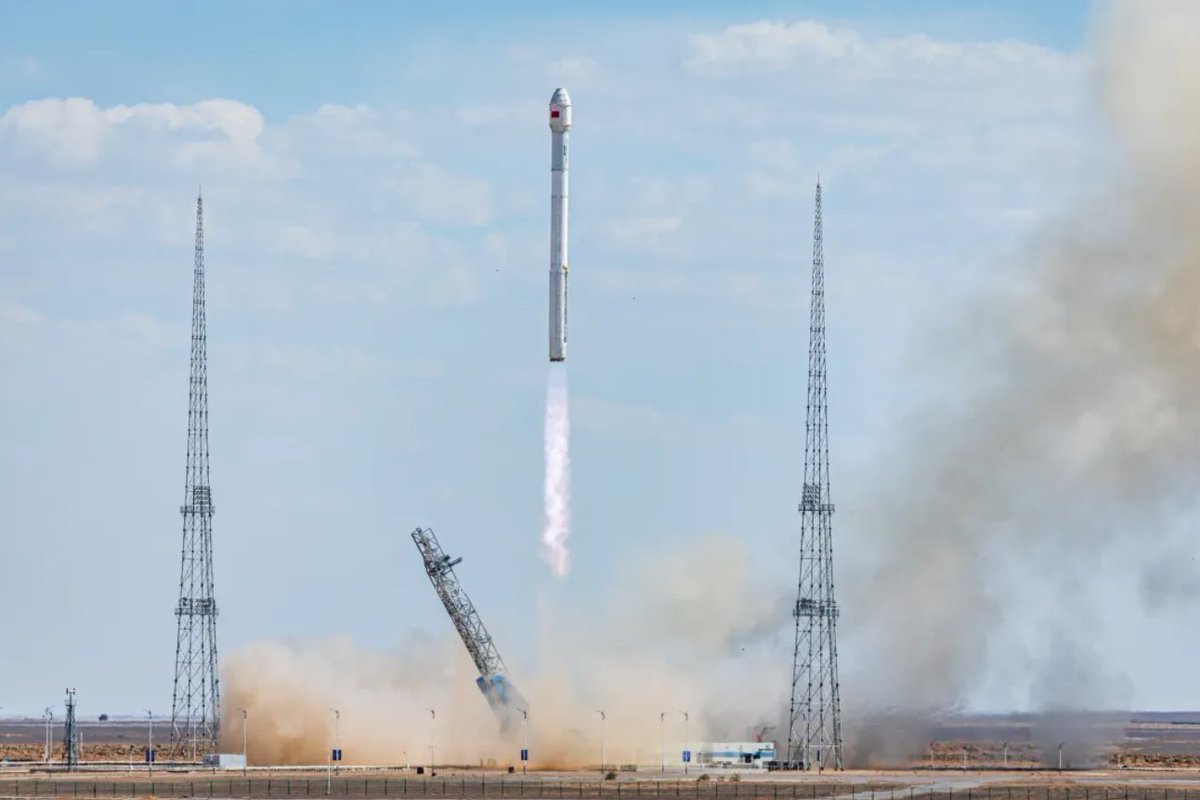
China just took a massive step toward challenging SpaceX in reusable rockets
LandSpace successfully tested all 9 engines recovered from its Zhuque-3 booster after a historic landing in August. The engines were disassembled, inspected, and reassembled before testing, with one running for 185 seconds under varying thrust conditions
The booster is designed to fly at least 20 times, and LandSpace estimates that just 4-5 reuses could cut launch costs by more than half
China is now closing in on flying a used orbital booster for the first time
NEW: After 8 years and billions of kilometres traveling through space, BepiColombo has finally reached Mercury
The €1.6 billion European-Japanese mission is set to enter orbit on November 21, becoming only the second spacecraft in history to orbit the planet closest to the Sun
Launched in 2018, BepiColombo used a series of planetary flybys to slow down enough for Mercury's gravity to capture it
Its two orbiters will study the planet's surface, magnetic field, and mysterious water ice deposits hidden inside permanently shadowed craters
The orbiters will separate in December, with full science operations beginning in April 2027
NEW: NASA's Orion spacecraft will have to fly backward to the Moon while attached to SpaceX's Starship, requiring major changes to its original design
Under NASA's revised Artemis plan, Starship will dock with Orion in high Earth orbit and propel both spacecraft toward the Moon, with Orion's service module facing forward
This sends propellant toward the wrong end of Orion's tanks, requiring ESA and Airbus to modify them
Starship could also subject Orion to nearly 1 g of acceleration, up to 10 times what it was originally designed to experience
Separately, the revised Artemis III mission will keep Orion in low Earth orbit for two weeks, creating new thermal and orbital debris risks
Lockheed Martin is now working three shifts to meet its 2027 launch target, on a schedule it says already has "zero margin"
@ToddHummel66 The biggest limitation right now is reentry from lunar orbit at higher speeds than from LEO, which needs a much more robust heat shield than what we saw on Flight 15
SpaceX's next Starship looks absolutely insane up close
New photos capture Ship 44 rolling out at Starbase, revealing thousands of hexagonal heat shield tiles and an intricate arrangement around its flaps
The spacecraft is now headed for cryogenic testing as SpaceX prepares its next generation of Starships for flight
SpaceX fires back at viral claims of Starship debris washing ashore in Mexico, calling many of the reports outright fabrications or deliberately misleading
Mexico's environmental agency Profepa says debris began reaching Playa Bagdad on November 17 following Flight 15 and is demanding SpaceX take responsibility for the cleanup
SpaceX disputes the reports, saying its Super Heavy booster safely aborted its tower catch and splashed down in the Gulf of Mexico as designed
The company says recovery crews have found very little debris onshore, with none conclusively identified as SpaceX hardware
It also cites independent toxicity tests showing Starship materials pose no chemical or biological risk
Mexican authorities are continuing to collect suspected rocket debris as they investigate its origin
With SpaceX planning more frequent Starship launches from Starbase, the dispute could complicate future recovery operations along the US-Mexico border
On Starship’s 15th flight last week, the Super Heavy booster correctly performed a safe abort when returning for a catch and ended its mission with a splashdown in the water off the coast of Starbase. Following splashdown, SpaceX recovery teams were immediately onsite to safe the area while our Environmental Health and Safety team worked to ensure any debris that washes onshore was recovered → https://t.co/ALNcWBQinC
When we received reports of potential debris in Mexican territory, we immediately mobilized to send specialists to aid in identification and lead any cleanup work required, just as we did on Boca Chica Beach near Starbase. We continue to stay in contact with the Mexican government and are on standby to send support if authorities in Mexico tell us it is actually needed. Partners on the ground relayed that theyhave found very little debris in their sweeps of the beach, and the small amount they have found are not clearly from SpaceX operations.
The majority of the social media posts online claiming widespread debris and damage are either outright fabrications or intentionally misleading. As repeatedly stated, independent tests conducted on materials inside Starship and the Super Heavy booster, including toxicity analyses, confirm they pose no chemical, biological, or toxicological risks.
Starship is designed to be fully reusable, with future missions planning to return all hardware back to the launch site for catch and reuse. SpaceX is the only one, whether company or country, that has demonstrated this capability is now possible.
NEW: Google has booked Jeff Bezos's Blue Origin to launch its orbital AI data centers aboard New Glenn in early 2029
The mission will deploy multiple Project Suncatcher satellites into sun-synchronous orbit, each carrying roughly a full rack's worth of Google's AI chips
Google's first prototype launched aboard a SpaceX Falcon 9 on October 1 and has already successfully run AI models in orbit
The 2029 mission will be Google's first dedicated heavy-lift launch for Suncatcher, a major milestone in its plans to scale AI infrastructure in space
Meanwhile, SpaceX is targeting its own StarMind AI satellites for late 2027, intensifying the race to bring AI computing into orbit
How SpaceX plans to return humans to the Moon in 2028, more than 50 years after the last Apollo landing
Multiple tanker Starships will fill an orbital fuel depot before the lunar Starship refuels, docks with NASA's Orion spacecraft, and carries four astronauts toward the Moon. Two will descend to the surface
NASA is targeting Artemis IV in 2028, with SpaceX and Blue Origin competing to provide the lander