Surfing the swarm: the surprising science behind how the peloton moves - Escape Collective. A wonderful article about how sight governs the tour and the longitudinal waves can wreak havoc on the top athletes. Quite fun to see our work heavily cited, thx!! https://t.co/dwhyYukP4o
This week, young students presented their physics projects in my #GRASP lab @UniversiteLiege. We had fantastic experiments with motivated students. As an example vibrobots acting cooperatively to escape from a cell.
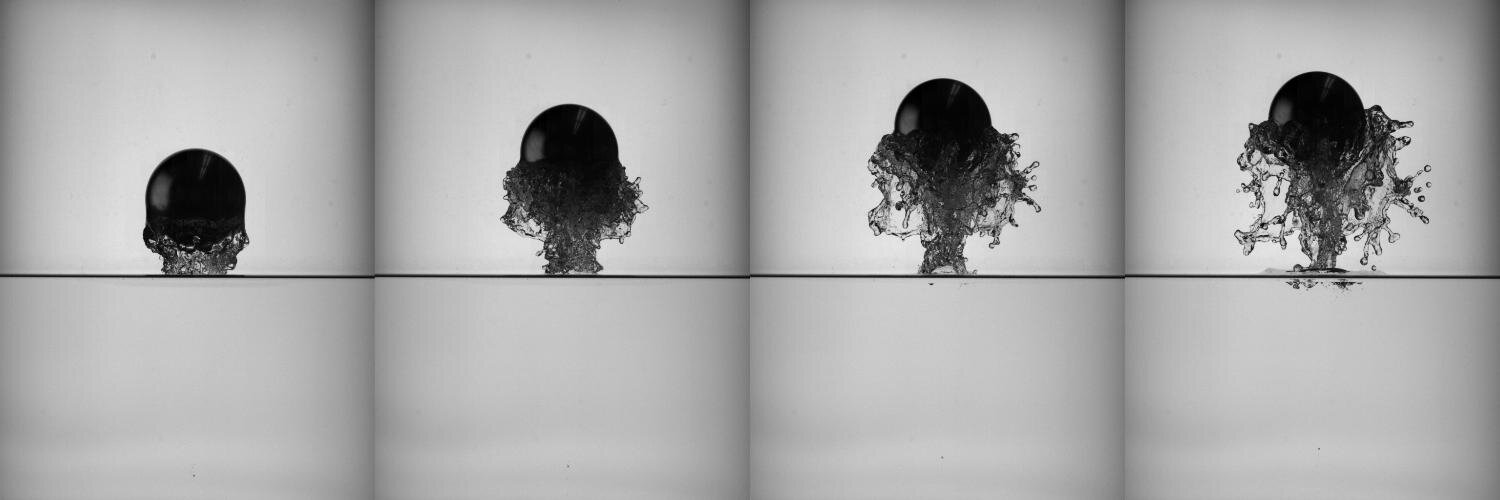
Check out our latest publication! Water entry of cusps can greatly alter the cavity formation. Think upside down cups! The images are awesome.
https://t.co/scjC8ZuTr5
Check out our recent paper on impact induced cavitation! https://t.co/hYKNUMNU6T it’s open access! Thanks to #kaust for making this awesome video, check out the article. https://t.co/Afp22cy7Ks
@theaceofspaeder This is certainly possible! de Jonquieres, 1883 studied cannon balls that did the same thing and showed that you could skip solid spheres on the water surface! The key is the required minimum angle. That angle is = 18/sqrt(specific gravity). In this case ~ 17º !!! Nice shot!
@matthewcobb@Khaliun12244459 Hahahah, hilarious comment! The article actually discusses how vision still drives the final sprint. When Peter is at the front, the heart rates are so high the riders vision is narrowed so much that it causes the peloton to break up significantly.
@asab2019summer It seems the link is broken... I get a 404 error not found message! Yikes, our group would really like to register for the conference! Please help!
Dr. Tadd Truscott and Randy Heard from @thesplashlab have been working on this project for almost 6 years! Tune in at 7E/4P to find out if their urination splash back prevention tool has what it takes!
Only on @DiscoveryCanada!