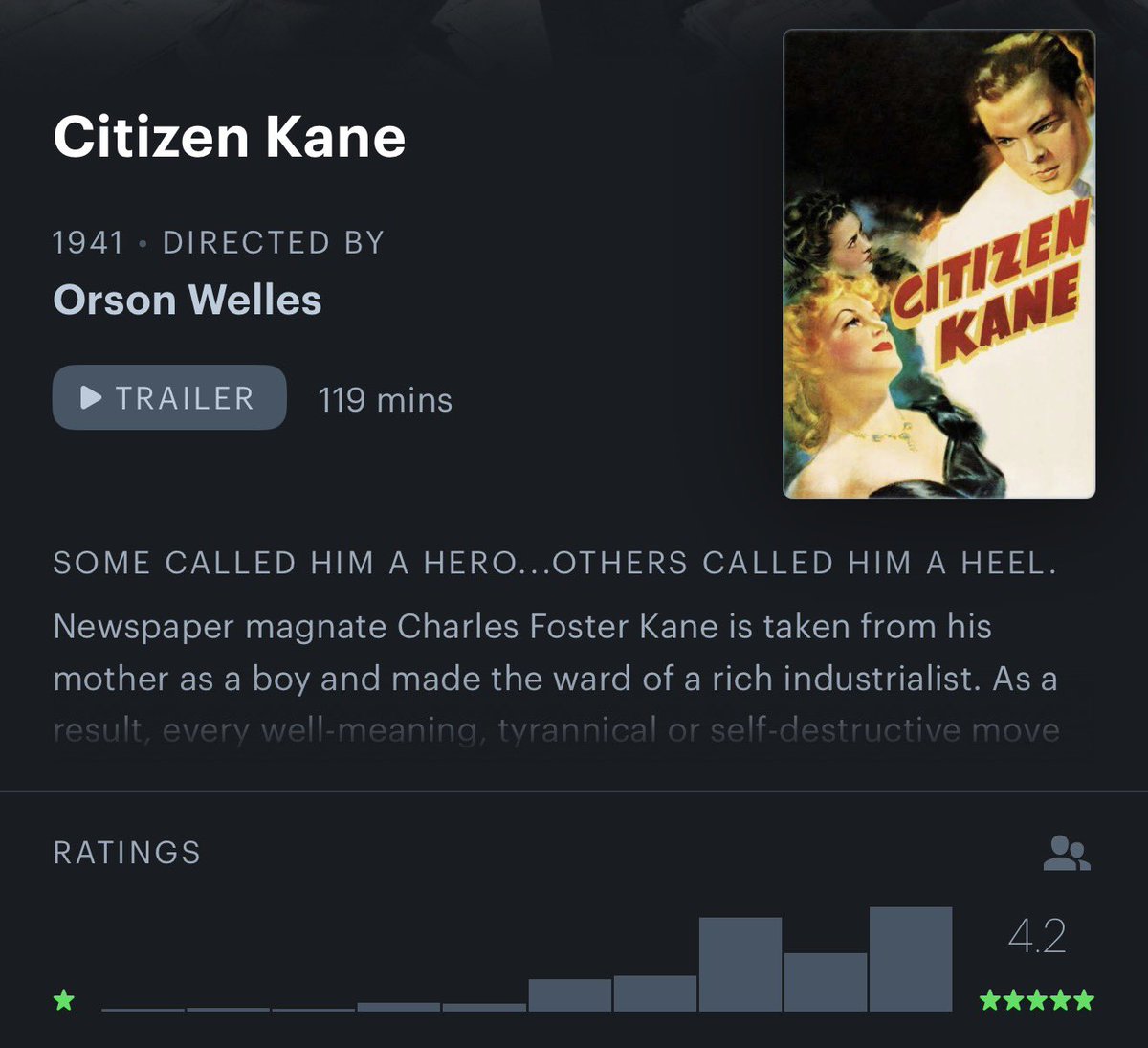
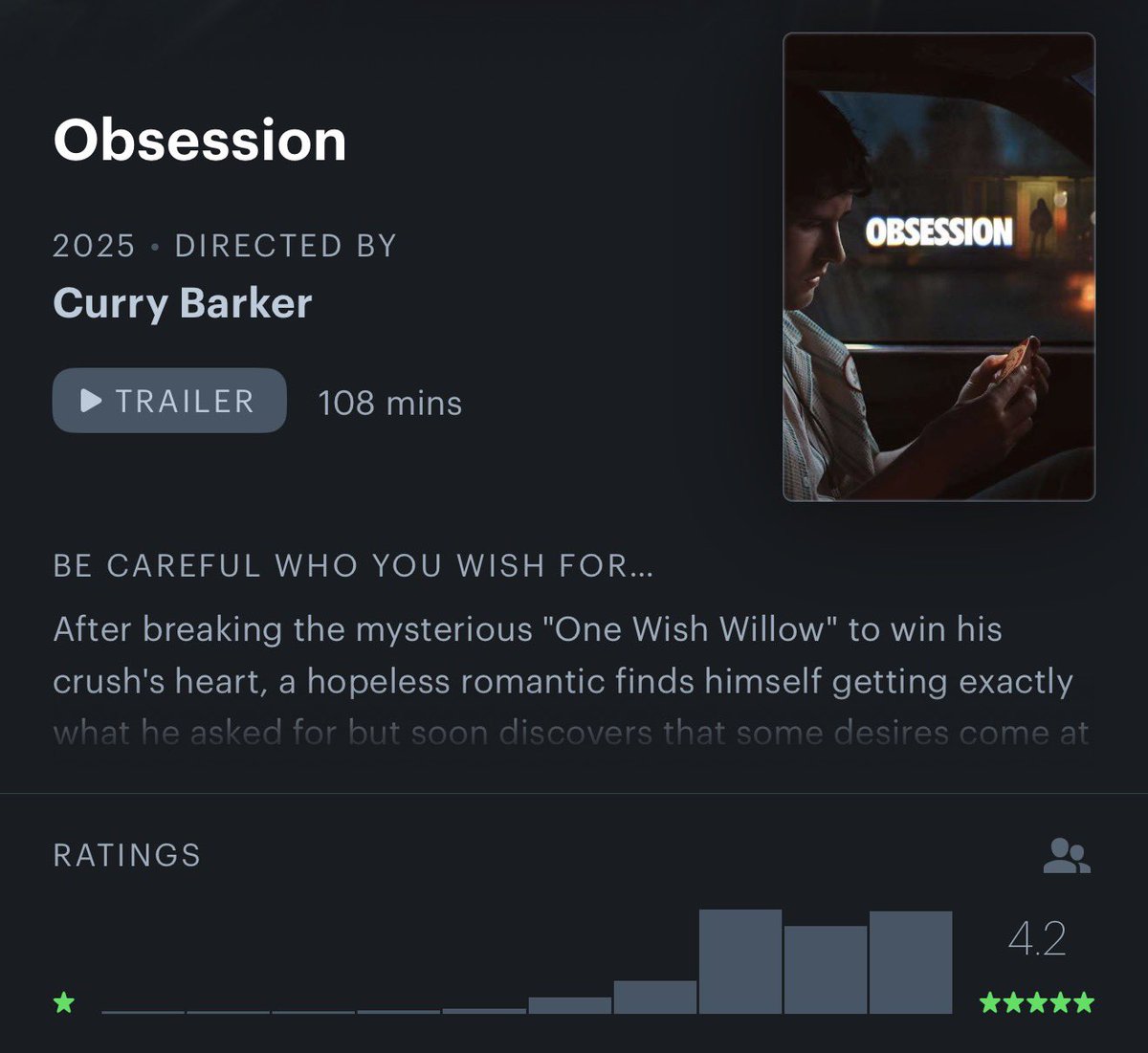
So awesome how every new movie that’s popular with zoomers gets an insanely high average rating on Letterboxd. Obsession has the same rating as Citizen Kane
Meta is attempting to stifle I Love Boosters content.
They have never done this to any bank heist movies nor any mafia movies, nor any movies like Top Gun: Maverick showing a criminal group doing criminal activities.
I Love Boosters- in theaters May 22nd.
The HARRY POTTER TV series won't have one season a year
"For some of the bigger shows like Harry Potter, huge world-building shows, it would be nice to have those on an annual basis. But from a production point of view, it’s just not possible." - Casey Bloys
I'll always remember Chuck Norris as the man who changed the course of dodgeball history by casting the deciding vote that allowed Average Joes to play in the championship of the Las Vegas International Dodgeball Open where they upset the heavily favored Globo Gym Purple Cobras.
RIP. 🙏
You're watching a $248 million film and not a single green or blue screen was used. The alien is a handmade puppet. The cockpit physically rotates to simulate gravity. I looked at the production tech behind this 95% score, and the engineering is wild.
Phil Lord and Chris Miller, directing their first live-action movie in 12 years, built the entire Hail Mary spacecraft as a real set at Shepperton Studios in England. Not a miniature. Not a digital model. A full-size ship interior you can walk through. Production designer Charlie Wood studied the International Space Station, Russia's Mir station, and the Boeing 747 cockpit to get the look right. He deliberately made the panels mismatched, because real spacecraft are assembled from parts made by different companies. Nothing matches perfectly. That's what makes it feel real.
The cockpit is only about 8 feet wide. It sits on a mechanical platform that can tilt, spin, and shake, so when the ship changes direction or enters different gravity conditions, the whole set moves. Chairs end up on walls. Ladders flip direction. Gosling was suspended inside a spinning ring so he could float and move through the ship for real, reacting to actual hardware around him. No guessing where a wall might be added later.
Then there's Rocky. He's the alien co-lead, and he's not CGI. Neal Scanlan, the creature designer who built the Porgs for Star Wars, spent a full year on this character. Over 300 designs before they landed on the final look. Rocky is a thin, hollow shell, 3D-printed from a digital sculpture, then hand-painted in see-through layers so light passes through him like skin. His arms pop off and swap out depending on the scene: one set has a closed fist for walking, another has tiny motorized fingers strong enough to pick up objects. Five puppeteers (nicknamed the "Rockyteers") operated him in every scene. James Ortiz, an award-winning puppet designer from New York theater, voiced Rocky and controlled him on set. When Scanlan met him, he told Ortiz, "You're Frank Oz, and I'm making Yoda for you." Every reaction Gosling gives to the alien is to something physically in front of him.
Greig Fraser, who won the Oscar for shooting Dune, filmed the space scenes in the larger IMAX format (that taller image you see in IMAX theaters) and the Earth flashbacks in regular widescreen. Then the team did something unusual: they took the digital footage and printed it onto real film strips, twice, using two different types of film stock. Then they scanned those strips back into digital. It sounds redundant, but it adds a texture and warmth that you can only get from physical film. Fraser used the same technique on Dune and The Batman.
Drew Goddard spent six years writing this screenplay. His last adaptation of Andy Weir's novel, The Martian, earned him an Oscar nomination. He described the challenge this way: a screenplay gets about 5% of a novel's word count. The lead is alone for most of the runtime. When he finally gets a co-star, that co-star doesn't speak English, communicates through sounds closer to whale song, and has no face. Goddard called it a screenwriter's nightmare, then said that difficulty was the whole point. He and the directors fought studio pushback to keep Weir's original ending intact.
95% from 212 critics. 98% from over 2,500 audience ratings. And the lead isn't a superhero, a cop, or a soldier. He's just an ordinary middle school science teacher.