Investing in sports assets on the basis that someone else will pay more is not an investment strategy — it’s a greater-fool game.
Sports investing deserves better analysis. We break down deals, industry news and the economics behind them.
Kings League just raised $63m to fund global expansion.
Capital is clearly available for challenger league formats.
The harder question isn’t funding though. It’s whether attention-led growth can be turned into durable league economics.
Sergio Ramos is leading an investment group in exclusivity talks to acquire Sevilla FC, in a deal valued at ~€450m.
Three months of due diligence now underway, with capital assembled alongside JB Capital and Five Eleven Capital.
Player-led ownership is becoming more common — but execution, governance and capital structure will matter far more than sentiment.
CVC-backed Global Sport Group just announced a ~$300m deal to acquire a majority stake in Equine Network.
This marks GSG’s first new league investment since the platform was formed — adding to assets like women’s professional tennis and Six Nations Rugby.
Equestrian sports may look niche, but rising participation and spectator interest in the US make it a quietly scalable category. Another example of institutional capital moving into structurally underdeveloped sports.
#MotoGP teams have been undervalued for years. Not because the sport lacks demand — but because the business model failed to convert it into value.
That is now changing with Liberty Media’s $5bn acquisition of the league.
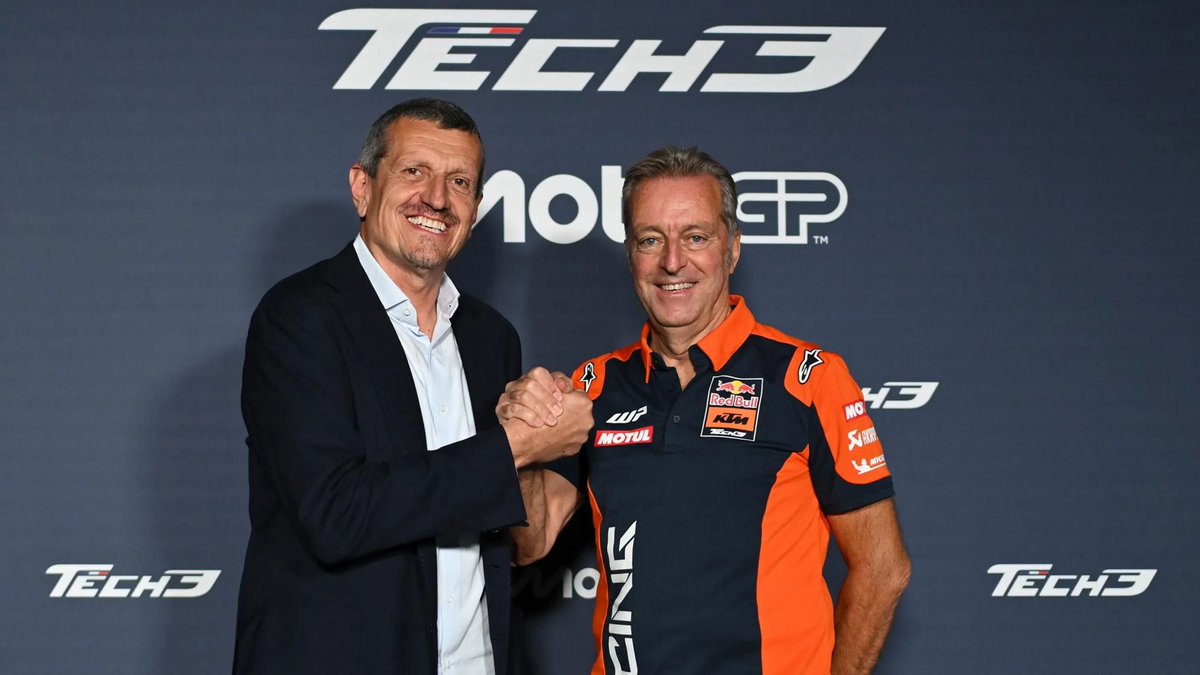
#Libertymedia doesn’t enter sports to preserve tradition. It enters to do what it does best: professionalise monetisation. The #F1 playbook is now being imported. Bringing in Guenther Steiner to a team is the first visible step.
The mechanism is simple. Scale the audience, and pricing power follows. #Formula1 went through the same transition under Liberty. Team valuations repriced as the commercial model evolved.
The sport is at an interesting inflection point. Gaps this wide between league and team valuations rarely persist.
Baller League just shut down in Germany.
Despite strong reach and credible sponsors, it reportedly didn’t work financially.
The focus now shifts to the UK and US - larger markets, but also materially higher costs.
Signing global influencers creates attention, not necessarily a business.
If the strategy is to buy growth through ever more expensive personalities, the economics break quickly.
Sustainable challenger leagues are built bottom-up:
the product on the pitch first, entertainment second.
Build quality sport, develop your own audience and accept that this takes time.
Hype is fast. Viable leagues aren’t.
The NBA has chosen several dozen potential investors in a proposed European league from more than 300 interested parties, the Financial Times reported.
Financial projections for the new league are to be revealed to potential bidders in a data room as soon as next week.
The private equity firms General Atlantic, RedBird Partners, CVC and Blackstone are among those to have been selected for access. Oaktree Capital, BC Partners and BlackRock are also on track to see the financial data.
Details will also be sent to a number of major European football clubs, including Barcelona, Bayern Munich, Real Madrid, Panathinaikos and Fenerbahce, according to the piece.
European basketball team franchises are expected to be valued at $500m-$1bn.
Non-binding offers are scheduled for receipt by 31 March and the NBA is planning to launch the European league late next year.
https://t.co/MiWNpF8pKy
The #NBA is coming to Europe in 2027.
And it isn’t about growing the game.
It’s about owning the economics of European basketball.
Alongside #FIBA, the NBA is exploring a pan-European league with a franchise-based structure.
The proposed setup is telling:
permanent slots for major European cities — and additional entry points for existing clubs backed by institutional capital.
Early indications point to €1–1.5bn of league-level investment — a meaningful commitment to building the platform.
Franchise entry fees are expected to exceed $500m.
Formal bidding processes set to open in Q1 2026.
This puts the NBA on a direct collision course with the #Euroleague — incumbency versus structure.
This is a structural shift in European basketball. Value creation will accrue to whoever controls the top of the pyramid.
Why Family Offices Love Sports Investing:
Family offices are becoming increasingly active in sports investing.
Not because it’s fashionable - but because the asset class fits how they invest.
Sports assets are complex, illiquid and often loss-making. Value isn’t driven by short-term optimisation, but by patience, access and judgment over time.
That combination tends to favour long-term, relationship-driven capital - which is why family offices continue to lean in.
“Football M&A activity reached a new high in 2025, with the increase largely driven by a rise in majority acquisitions compared with 2024.”
https://t.co/hyhxDPpCId
Founded in 2019, #Arctos Sports Partners built a ~$15bn AUM sports investment platform in just six years.
Now #KKR is acquiring the business at a reported valuation of up to ~$1.5bn.
An exceptional outcome for the founders — and a clear sign of how valuable scale and access already are in sports investing.
What makes Wrexham interesting is that it runs counter to many prior institutional football investment strategies that ultimately didn’t work - multi-club ownership being a good example.
Time will tell if this media-led ownership model can be replicated across clubs and even across sports.