Most RAG pipelines are just:
“vector search + hope for the best.”
That’s Naive RAG.
User asks:
“Can I transfer credits between team accounts?”
The system retrieves 5 semi-related chunks because the keywords overlap.
The LLM gets noisy context.
The answer becomes unreliable.
Advanced RAG fixes this by adding:
- query understanding
- reranking
- metadata filters
- semantic relevance checks
- context compression
Same LLM.
Much better answers.
The gap between AI demos and production AI products is usually retrieval quality, not model size.
Have a product idea in mind?
We build and launch AI MVPs in 15 days.
https://t.co/mJJsdxclLG
#RAG #LLMOps #SemanticSearch
Most teams look at their AI API bill and think:
"token cost × volume = spend."
That's maybe 60% of the real number.
Here's what's silently eating the rest:
Retries: Every failed call gets retried. Timeouts, rate limits, malformed outputs — each one is a duplicate charge. In production, retry multipliers compound fast. Nobody budgets for this upfront.
Latency tax: Slow responses don't just feel bad. They affect conversion on user-facing features and increase churn on anything real-time. That cost doesn't show on your invoice — it shows in revenue.
Guardrails + observability: Every moderation check, every trace, every eval run costs tokens or compute. Necessary? Yes. Free? No. Most teams add these after go-live and forget to re-model unit economics.
The fix isn't just optimization — it's architecture:
→ Cache deterministic outputs (same prompt = same answer? Store it)
→ Route by complexity (don't send a classifier task to your most expensive model)
→ Batch where latency isn't critical
→ Log failures separately so retries are visible, not hidden
The mistake: treating AI API cost as a pure usage metric.
The correction: treat it as a system metric — one that includes failure rate, retry behavior, latency penalties, and observability overhead.
Token price is just the starting point.
I built an AI assistant that remembered everything.
It was terrible.
Every conversation opened with 40,000 tokens of stuffed history. Slow, expensive, and weirdly confused — the model kept treating a throwaway comment from six weeks ago as current intent.
That's when I started thinking about memory differently.
Humans don't replay their entire life before answering a question. They pull what's relevant. The rest stays filed.
So I rebuilt it around three layers:
1 . Short-term — what's happening right now. The current task, this session's context. Cleared when the conversation ends. Fast, cheap, disposable.
2. Long-term — stable facts. User preferences, role, recurring constraints. Doesn't change often. Doesn't need to be retrieved on every turn — just when it's relevant.
3. Episodic — past interactions. Not a transcript. More like a summary: "last time, the user asked about X and rejected option Y." Useful for continuity without the weight.
The shift that actually improved performance: retrieval over stuffing.
Instead of injecting everything upfront, the system fetches only what the current query needs. Episodic memory stays dormant until there's a signal it matters. Long-term facts load conditionally, not by default.
Response time dropped. Cost dropped more.
But here's the part most people skip when building this:
Memory without rules is a liability.
— What expires? Old preferences, past job titles, outdated constraints — stale memory is worse than no memory.
— What gets validated? If a user corrects something, does the old record update or just stack on top?
— What stays private? If memory persists across sessions, it needs the same rigor as any user data store.
I've seen production AI systems that were technically impressive and completely wrong about the person they were talking to. Not because retrieval failed. Because nobody thought about expiry.
Memory architecture is not a feature. It's a data problem dressed up as a UX problem.
Build it that way from the start.
Took me 8 months to get first 69 followers
Got next 100 followers in next 10 days
169 followers now 🫡
Social media is unpredictable 🫡
Checkout - https://t.co/fjkWK3aidy
Startups are throwing away $50k on fine-tuning that prompt engineering could have solved for free.
Here's what happens:
You've got a problem. Your LLM outputs aren't quite right. Inconsistent format. Missing details. Hallucinating on edge cases. So you think: fine-tune it.
You spin up a team. Collect examples. Label data. Wait weeks for training. Deploy. It's slightly better. You've sunk two months and tens of thousands of dollars into the problem.
The real story: you probably never tested prompting hard enough.
Most teams skip the boring work. They write a prompt, try it once, it doesn't work perfectly, and assume they need fine-tuning. They don't. They just need prompting that actually works.
Before you fine-tune anything:
Test your prompts. Systematically. 50 examples minimum. Try different formats, different instructions, different examples in the prompt. Use few-shot prompting. Chain of thought. Structured output. Most teams haven't done this.
Only fine-tune when you have signal. Fine-tuning needs scale: 1000+ labeled examples, ideally more. If you have 200 examples, you're wasting time and money. Your prompt can get there.
Fine-tune for specific, narrow tasks. Not "make my LLM better." But "this specific classification task needs 95% accuracy and prompt latency is too high" or "I need domain-specific reasoning that base models don't have." Narrow, measurable problems.
The math is simple: Prompt engineering costs time. Fine-tuning costs time and money. Do the free thing first. Do it thoroughly. Only cross over to fine-tuning when prompting has hit a real ceiling and you have the data to back it up.
Most teams never get there.
Most teams have zero idea what their LLMs are doing in production.
Your code has metrics. Your database has alerts. Your LLM? It's a black box with a bill attached.
The damage:
- No latency tracking (rough guess)
- No cost per request (surprise invoice)
- No quality gates (pray it works)
- Hallucinations caught by users, not you
- Logs that stop at "called the API" (useless)
It's engineering malpractice.
Fixing it isn't complicated. It's boring:
Log input and output. Not "we called GPT-4." Every request with context, the exact prompt, the full response. When something fails, you need to trace it.
Track what matters. Latency. Cost per token. Output quality (measure it, don't guess). Hallucination rate. Watch for drift as your data changes or users shift. These are business metrics, not vanity numbers.
Add version and parameters. Which model? Which temperature? Which system prompt? You can't debug what you don't record.
Build a dashboard. Once you see this data together, you stop guessing. You know exactly what's slow, what's expensive, what's degrading. Teams that treat LLMs like systems instead of magic win.
Tools exist to do this: Langfuse, LangSmith, Helicone. They all do roughly the same thing—instrument your pipeline and make it visible.
The question isn't whether you can afford to monitor. It's whether you can afford not to.
My first 56 posts got 58 followers
My 57th post got 84 followers
You don't know when things will work. So, don't stop working
Checkout - https://t.co/fjkWK3aidy
The most common mistake with multi-agent systems: people build a pipeline and call it architecture.
Orchestrator calls Agent A. Agent A calls Agent B. B calls C. Everybody passes results down the chain. It's sequential, it's tidy, and it breaks in the worst way — silently.
Here's what actually happens. Agent A returns something plausible but slightly off. Agent B takes it as fact. Agent C produces a confident answer built on a bad assumption from three steps back. Nobody raises a flag because nobody was designed to.
I've seen this show up in production systems where the agents individually look fine in testing. The failure only surfaces when a human finally reads the output and realizes it's been wrong for two weeks.
The thing people miss is that multi-agent design isn't about splitting work — it's about making sure bad output can't travel downstream uncontested. That means agents that can reject or push back on what they receive, not just process and forward. Explicit shared context, not assumed. Checkpoints where a human or a critic model can say "no, back up."
Think of agent communication like an interface contract. If Agent A changes what it returns, Agent B should break loudly. Silent adaptation is how garbage compounds.
Getting this right is less about architecture patterns and more about deciding, upfront, where in the chain a bad call can actually get caught.
Last year, I spent 4 hours on a single blog post, first researching, writing, then posting it across 3 different platforms.
Now I do it in 15 minutes with the workflow I built.
Comment "Blog" to get the link.
Day 1 of The Automation Guide.
Excited to launch my new course: "Basic AI for Business Owners" a playlist of 15 short videos designed for non-technical founders!
I work with a lot of founders building AI products, and I've noticed a pattern.
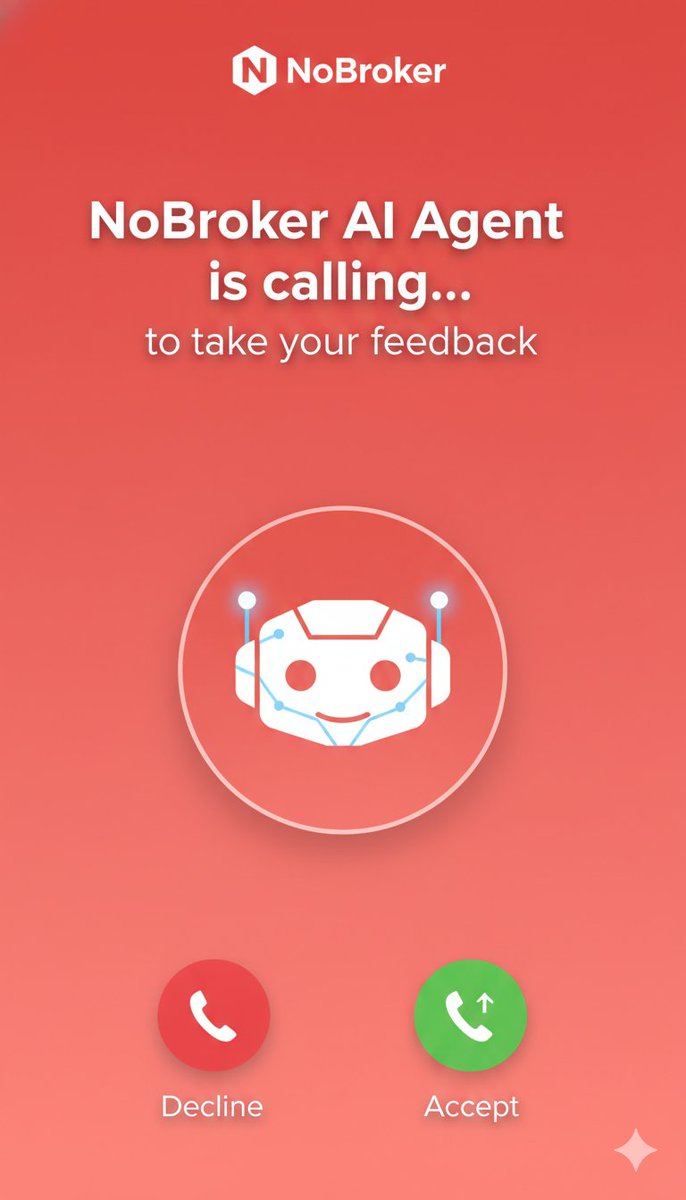
Today, @nobrokercom 's AI agent called me to collect feedback.
It felt completely human; natural tone, pauses, empathy.....etc
Two years ago, something like this would’ve been unimaginable.
The AI asked me genuine questions about my experience, how the service could improve exactly like a real support rep would.
But here’s where it gets really interesting ->
AI can make unlimited calls, handle massive amounts of data, and analyze it faster than any team ever could.
Imagine as a business owner, having one simple dashboard where you can:
- See how every customer feels in real-time
- Chat directly with your data
- Get instant, actionable insights to improve your product
That’s where AI-led customer experience is heading.
The question is, will your business adapt before it becomes the norm?