The Telos-Paul Piccone Institute is a non-profit organization promoting the scholarly examination of topics in philosophy, politics, history, and culture.
We're delighted to announce that TPPI is now on Substack, where we will post translations, essays, webinars, and podcasts. Help support our work by subscribing to our Telos Insights newsletter.
https://t.co/tut2RTP1Ip
New in Telos Insights: @RussellBermanSF on Konrad Weiss's 1933 essay "The Christian Epimetheus," whose negative political theology influenced Carl Schmitt. We also present an English translation of the essay's conclusion.
https://t.co/NI4HPjXcJ4
New in Telos Insights: @RussellBermanSF on Konrad Weiss's 1933 essay "The Christian Epimetheus," whose negative political theology influenced Carl Schmitt. We also present an English translation of the essay's conclusion.
https://t.co/NI4HPjXcJ4
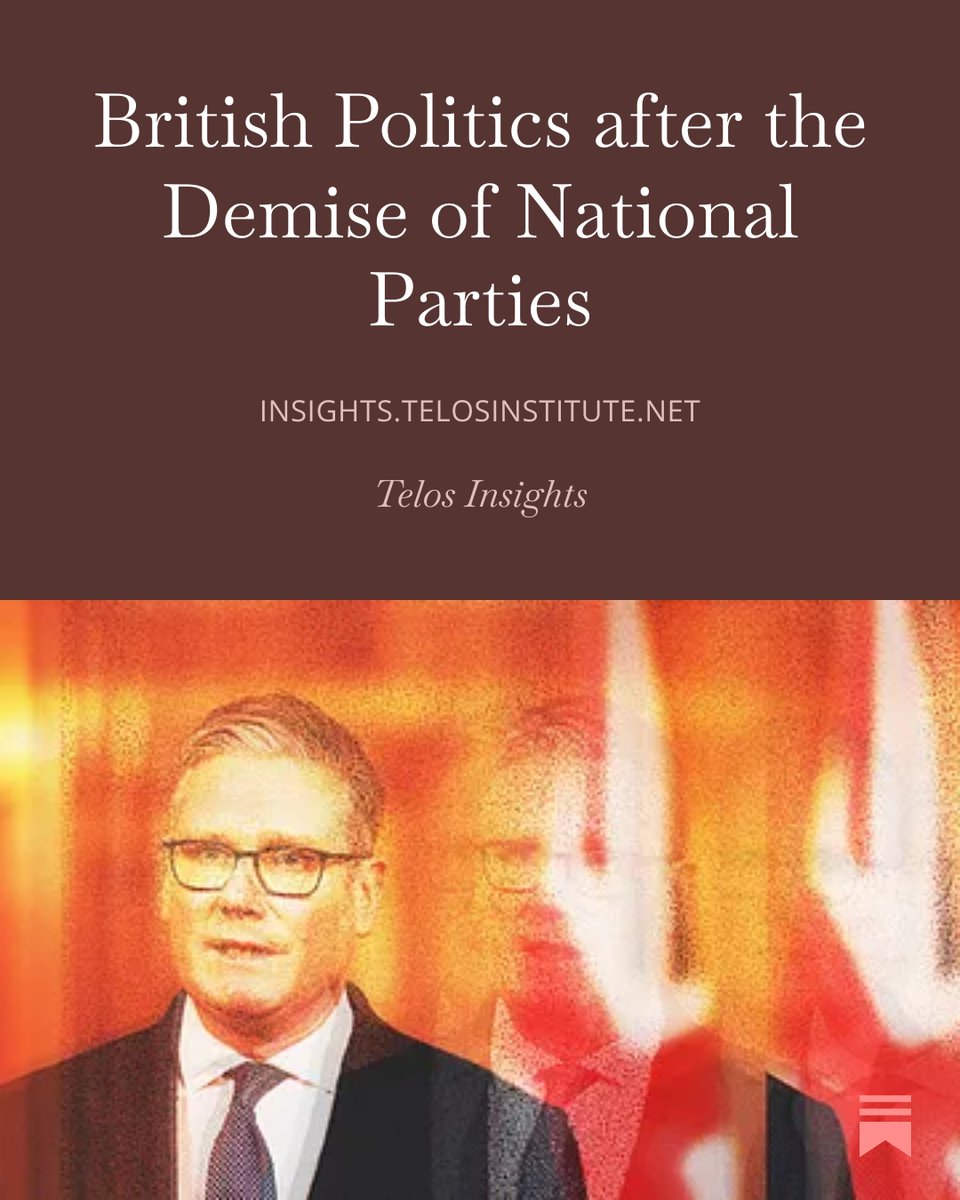
Amid the deep fragmentation of British politics after recent Labour losses, @AdrianPabst1 makes the case for a broad UK-wide party built on devolved state power, shared economic prosperity, and the common good.
https://t.co/mw7XAeAvi1
#UKpolitics#Labour#Starmer
New in Telos Insights: @AdrianPabst1 on the fragmentation of British politics following the end of two-party dominance, and the case for a new political settlement built on cultural moderation, economic renewal, and accountable government.
https://t.co/mw7XAeAvi1
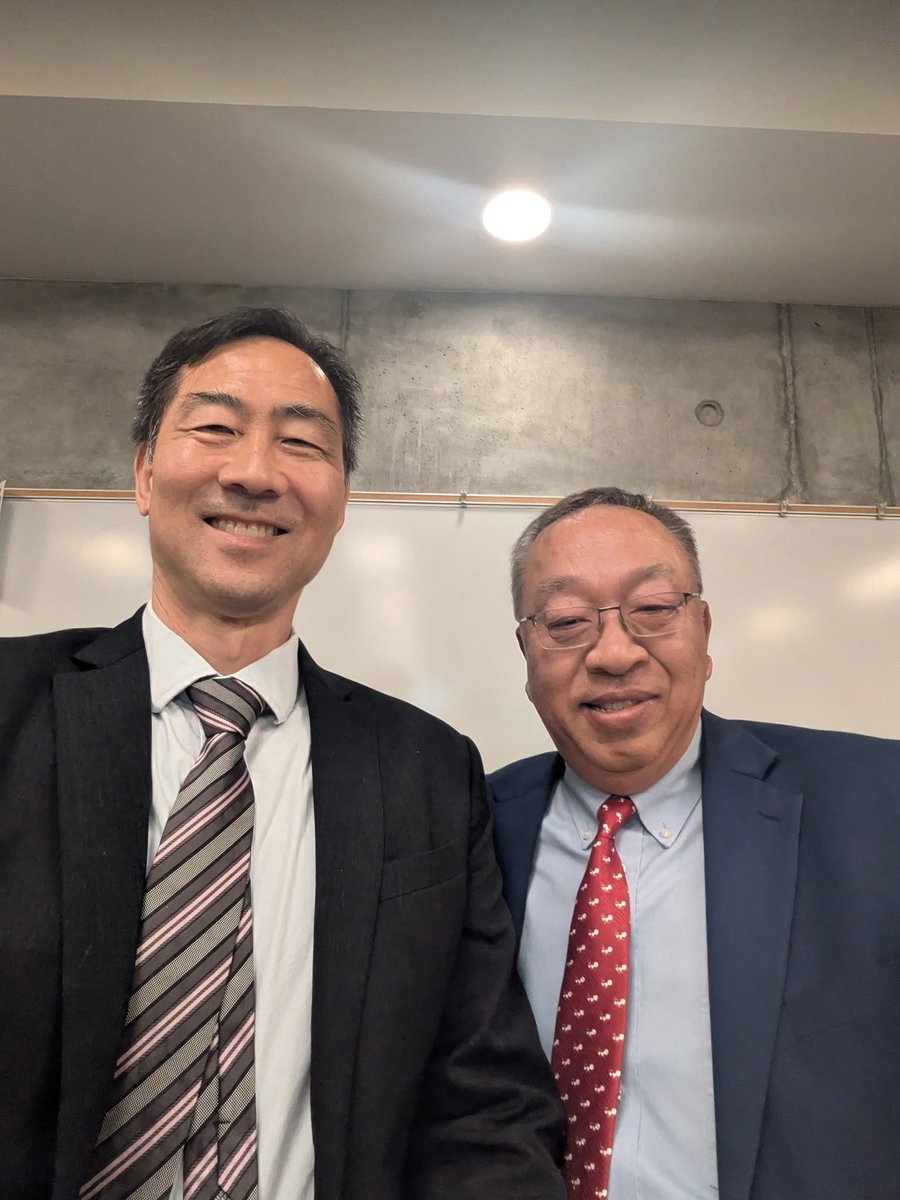
1. Miles Yu gave a great presentation at our UCI panel discussion about China, Taiwan, and the US. Thanks Miles!
2. Gordon Chang gave a great presentation at UCI yesterday about the dangers of the Chinese Communist Party.
3. It was also great to see Lydia Chang!
#davidpanforcongress
#anaheim #ocgop #cagop #rotaryclub
#fullerton #placentia #stanton #ca46 #orangecountyca #orangecountycalifornia #santaanna #midterms #cityoforange #uschina
@gop@realdonaldtrump
New in Telos Insights: Tony Spanakos on the foreign policy of the second Trump administration and the new era of great power relations.
https://t.co/tzdBHcqtes
New in Telos Insights: Tim Rosenberger @steelvalleytim reflects on last weekend's attempted assassination at the White House Correspondents' Dinner and how secular ethics, lacking Christianity's prohibition on sacrifice, produces individuals who reason their way to political violence.
https://t.co/wabHPX5jDk
New in Telos Insights: Tim Rosenberger @steelvalleytim reflects on last weekend's attempted assassination at the White House Correspondents' Dinner and how secular ethics, lacking Christianity's prohibition on sacrifice, produces individuals who reason their way to political violence.
https://t.co/wabHPX5jDk
New in Telos Insights: Tony Spanakos on the foreign policy of the second Trump administration and the new era of great power relations.
https://t.co/tzdBHcqtes
New in Telos Insights: Thomas Zimmer on the complex attitude of contemporary Chinese intellectuals toward the West [in Chinese, with English summary].
https://t.co/WyChuzhIEh
New in Telos Insights: Tim Rosenberger @steelvalleytim discusses how Pope Leo XIV's recent anti-war statements conflict with Catholic just war doctrine and depart from established Church teaching on use of force.
https://t.co/wYj6mi1SvO
New in Telos Insights: Tim Rosenberger @steelvalleytim discusses how Pope Leo XIV's recent anti-war statements conflict with Catholic just war doctrine and depart from established Church teaching on use of force.
https://t.co/wYj6mi1SvO
Because people keep asking me about the situation in Hungary, here is my view on the claim that Magyar is ideologically close to Orbán but differs in being serious about fighting corruption.
Yes, Magyar resembles Orbán ideologically and may even be more nationalist (for instance, in seeking to instantly rid Hungary of all non-EU guest workers, which, by the way, is a terrible idea!). Tellingly, he is already in conflict with the European Commission’s Ursula von der Leyen.
The notion of a “fight against corruption” should, however, be treated with some caution. Magyar will combat the corruption of the old guard, and he *claims* that he will not become corrupt himself; but the latter, of course, remains to be seen.
The most likely scenario is that he will indeed be successful in removing much of the current Fidesz clan network across fields of civil society, from education, scholarship, the arts, and journalism to the circle of businesspeople with easy access to state contracts. That clan network, which will now lose much of its access to power and resources, has many good people within it that did their work with honour and intelligence; let’s not be simplistic! But in certain cases, the cosiness of the clan network could come with acts and aspects of “corruption.” (Maybe any clanism is by definition a form of corruption when set against the strictest norms of independence and impartiality?)
Yet no matter how forceful Magyar’s purification campaign, it will not herald a post-power Walhalla of free-floating professionalisms. In Luhmannian terminology, the non-political function systems will be differentiated from politics, and specific couplings with politics may wither away, but politics will remain a part of the relevant societal environment. In Bourdieusian terminology, cultural fields might become less heteronomised by political power, but they won’t be utterly free from such heteronomisation.
Or in common parlance: At least some of the new appointees in top positions in education, academia, the arts, and the media, as well as some of the state’s new business friends, will come from an emerging Magyar clan.
That said, there is no need for undue cynicism either. The intensity and reach of clanism—and the extent to which it undermines professionalisms—may nonetheless diminish overall, not only in the short term but also over time.
Magyar’s movement is new, heterogeneous, and therefore fragile, which means Magyar will have to appoint people—and work with business contacts—who are not loyal to him or his ideology. This inevitable messiness somewhat disrupts the natural tendency towards clan formation and corporatist linkages, opening up more space for apolitical, differentiated forms of excellence and professionalism to sprout.
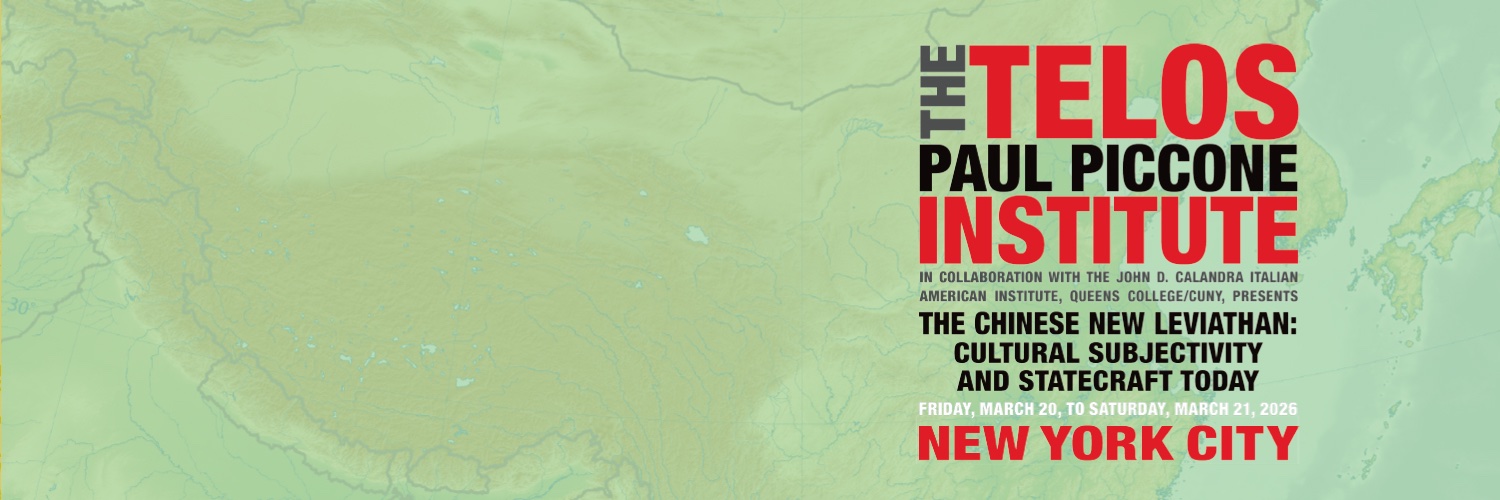
EVENT ANNOUNCEMENT: Register today for a panel discussion at the Univ. of California, Irvine, on the nature of the regime in China, the threat to Taiwan, and what the United States should do to face this threat.
https://t.co/cIR86d17tw
New in Telos Insights: Alexandra Farkas Bandl examines how the myth of German-Jewish normality masks persistent unease and deep-seated reservations rooted in both historical experience and present-day relations.
https://t.co/O1OL4mhe21
New in Telos Insights: Alexandra Farkas Bandl examines how the myth of German-Jewish normality masks persistent unease and deep-seated reservations rooted in both historical experience and present-day relations.
https://t.co/O1OL4mhe21












![TheTPPInstitute's tweet photo. New in Telos Insights: Thomas Zimmer on the complex attitude of contemporary Chinese intellectuals toward the West [in Chinese, with English summary].
https://t.co/WyChuzhIEh https://t.co/4f5CcSikaG](https://pbs.twimg.com/media/HHBHCUwbAAAQkI5.jpg)


