Can states secede? The Constitution says nothing, the Declaration says you bet.
People often wonder whether Texas or other states can secede from the United States.
The answer is absolutely YES.
UNLESS…you’re actually asking if Texas or another state could secede legally, with the approval of the federal government and thousands of Hawaiian girls in grass skirts waving goodbye.
At which point I would say, what are you, stupid? Why would any country with citizens who might want to leave make it legal for them to do so and therefore lose power and size? After July 4, 1776, did the British tell Americans, “Hey, no problem. Call Betsy Ross, get a flag, we’ll talk next week”?
On the other hand, any group that allows members to enter voluntarily must also allow them to leave voluntarily, otherwise there’s no freedom involved. Even during the strictest times of the Victorian era, divorce was possible.
Opponents of the idea of secession cite several bases for legal backing. They’re all wrong.
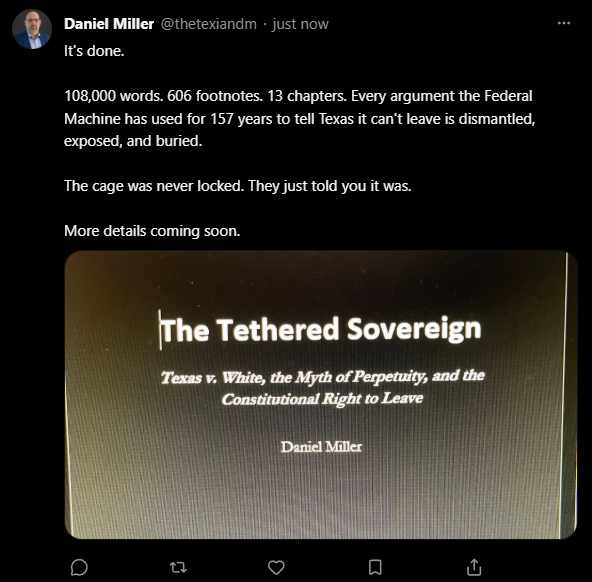
One of the main excuses is the case of White v. Texas, which the Supreme Court decided in 1868, claiming “When, therefore, Texas became one of the United States, she entered into an indissoluble relation.” This is more religion than law, claiming that God meant the United States to exist forever, perhaps getting bigger but never smaller. In fact, Texas and other states entered into a contract with the United States, and all contracts can be broken. The only question after that is what damages are owed to whom for breaking the contract.
The case deals with bonds issued by the federal government in 1851 to pay Texas for losing land that today makes up parts of New Mexico, Colorado and Wyoming. Mister White, a fast talker and fancy dancer, bought a bunch of these bonds during the Civil War for ten cents on the dollar, expecting to be paid at par value once the shooting had ended. The Supreme Court ruled he couldn’t, adding that during the war the seceding states' statehood “remained perfect and unimpaired. It certainly follows that the State did not cease to be a State, nor her citizens to be citizens of the Union.”
History is written by the victors and so are court cases. At the time the opinion was written in 1868, Texas was under a military dictatorship imposed by the federal government called Reconstruction. Texas was not a full state but rather part of the Fifth Military District of the conquered territories, which leads to some interesting questions:
1. If Texas had never lost her statehood, the military government was certainly illegal. Why did the federal government impose a dictatorship on a state that never seceded?
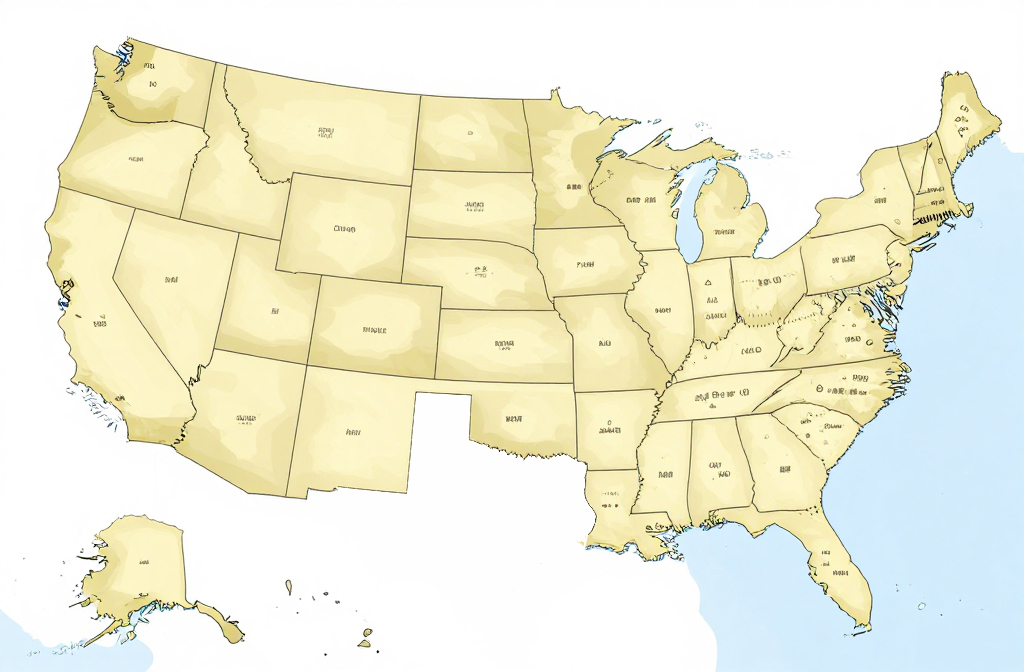
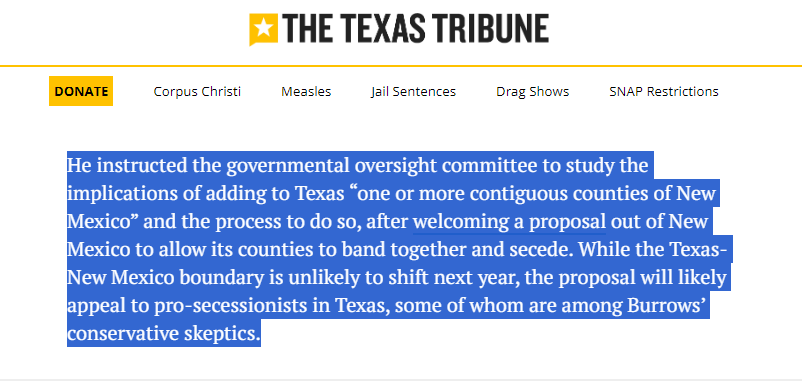
2. If statehood is “perfect and unimpaired,” where did the federal government (or even the state legislature) get the right to change the boundaries of Texas in 1850? Where are our ski slopes? By this thinking, Aspen and Santa Fe should be part of Texas.
3. The Articles of Confederation, which ruled the United States from 1776 to 1787, were actually titled the “Articles of Confederation and Perpetual Union.” The “perpetual union” lasted 11 years. Was the Constitution illegal when it replaced them?
4. The Constitution makes no mention of secession one way or another. The opinion in White v. Texas slaps that “perpetual union” together with the Constitution’s need "to form a more perfect Union”, and claims that answers the question. Somehow our ruling documents can change but states can’t, saying “What can be indissoluble if a perpetual Union, made more perfect, is not?” The Court’s explanation to doubters is, “shut up.”
5. The opinion then says, "The Constitution, in all its provisions, looks to an indestructible Union composed of indestructible States.” Once again, this is religion more than law. There NEVER could be anything that occurs to change the country? Not in a thousand or ten thousand years? A million zillion kabillion? Is the United States its own Hotel California, where you can check in but you can’t check out? This not only defies established law, it defies logic.
Two words for the people who claim no state actually seceded in 1860 or 1861: West Virginia. Where did West Virginia come from? The federal government accepted West Virginia as a state in 1863 in the middle of the war. If it was illegal for Texas to promise to pay off bonds during the war, it was equally illegal to take a big chunk of Virginia and declare it another state entirely. Where’s your “indestructible state” now, pal? West Virginia makes it clear the federal government DID believe the states that seceded were actually gone, legally.
Another problem: you can claim the Constitution keeps any state from seceding (or even changing), but the nation’s other founding document says absolutely otherwise. From the Declaration of Independence:
“But when a long Train of Abuses and Usurpations, pursuing invariably the same Object, evinces a Design to reduce them under absolute Despotism, it is their Right, it is their Duty, to throw off such Government, and to provide new Guards for their future Security.” (Italics added.)
Our right. Our duty.
Certainly there have been enough “abuses and usurpations” since 1776 to allow such a change in government. I mean, the Founders were objecting to a 6% tax and overthrowing the British government. Today 20% of everything anybody makes goes to the federal government with very little oversight.
And finally, I offer into evidence the name of our nation: The United States of America. It’s not “America,” or “Freedonia,” or anything else. It makes it clear that the states existed first and came together to form a nation, not vice-versa. Additional states had the same rights as the original 13; Delaware doesn’t get extra votes just because it signed up first. If states can join, they can un-join. Despite its willingness to use raw power, our federal government is not superior to the states. In fact, the power in the country, the sovereignty, belongs to the citizens, as stated clearly many times in the Declaration, the Constitution, and what followed.
We are in charge. And if we’re not, there’s no freedom, no republic, nothing.
I’m not saying Texas or other states should secede. I’m just saying it could, and like so many other things, I get tired of the fans of overwhelmingly large central governments claiming it can’t.
State Sec. Rubio: “Imagine if instead of spending billions on weapons, Iran spent that money on its people. They’d have a much different country.”
Follow: @AFpost