1/ US spot ETH ETFs have logged 9 straight days of net outflows (Sep 29 to Oct 9), totaling -$697.4M. Largest single day: Oct 6 at -$201.9M. The last inflow day was Sep 28 (+$17.1M). Source: Farside #Ethereum
Tether froze ~1.45M USDT in 4 THORChain vault addresses on TRON, then reversed it after ~3 hours (The Defiant via WuBlockchain).
Any protocol holding USDT inherits Tether's freeze key. Issuer risk is protocol risk, even when it's reversed.
#Stablecoins#DeFi
4/ What would prove the bearish read wrong: the streak breaks with 2 to 3 consecutive inflow days, ETHA flips back to net creations, and redemptions stop concentrating in one issuer. Until then, flows are a headwind, not a verdict. Source: Farside
1/ US spot ETH ETFs have logged 9 straight days of net outflows (Sep 29 to Oct 9), totaling -$697.4M. Largest single day: Oct 6 at -$201.9M. The last inflow day was Sep 28 (+$17.1M). Source: Farside #Ethereum
3/ Context: BTC spot ETFs did not mirror this. On Oct 9, BTC ETFs took in +$21.13M, with IBIT at +$22.38M (SoSoValue). Same issuer, opposite direction: ETHA out, IBIT in. That looks more like ETH-specific de-risking than a broad crypto exit.
UMA oracle dispute rounds are controlled by top 5 whale addresses holding 48.2% of votes against $120M pools. Whales extract the payouts while retail funds the exit. Check your assumptions. $UMA.
#POLY#CryptoMarkets
Oct 9 spot ETF flows (SoSoValue):
BTC ETFs +$21.13M net, but IBIT alone took +$22.38M, so the rest were net negative.
ETH ETFs: 9th straight day of outflows.
BTC demand is steadying but narrow. What would change the ETH read: a multi-day inflow streak.
#CryptoMarkets
Hyperliquid cumulative protocol revenue has passed $1.4B, with over $1.26B spent on open-market HYPE buybacks (Castle Labs, via @WuBlockchain).
Most revenue is going back into the token. What would prove it wrong: buyback pace falling while volume holds. #DeFi
Ledger thefts tied to reseller CryptoBillis: losses near $90M per MistTrack, and Tether is freezing linked USDT.
Hardware wallets didn't fail here. The supply chain did. Buy direct from the maker, run the genuineness check, and never use a pre-filled seed.
Pendle yield stripping is a $4.4B wealth transfer engine where 79% of retail YT buyers lose capital for 40x airdrop leverage. Institutional desks take the other side to secure massive fixed dollar returns. Math always wins.
#DeFi#RealYield
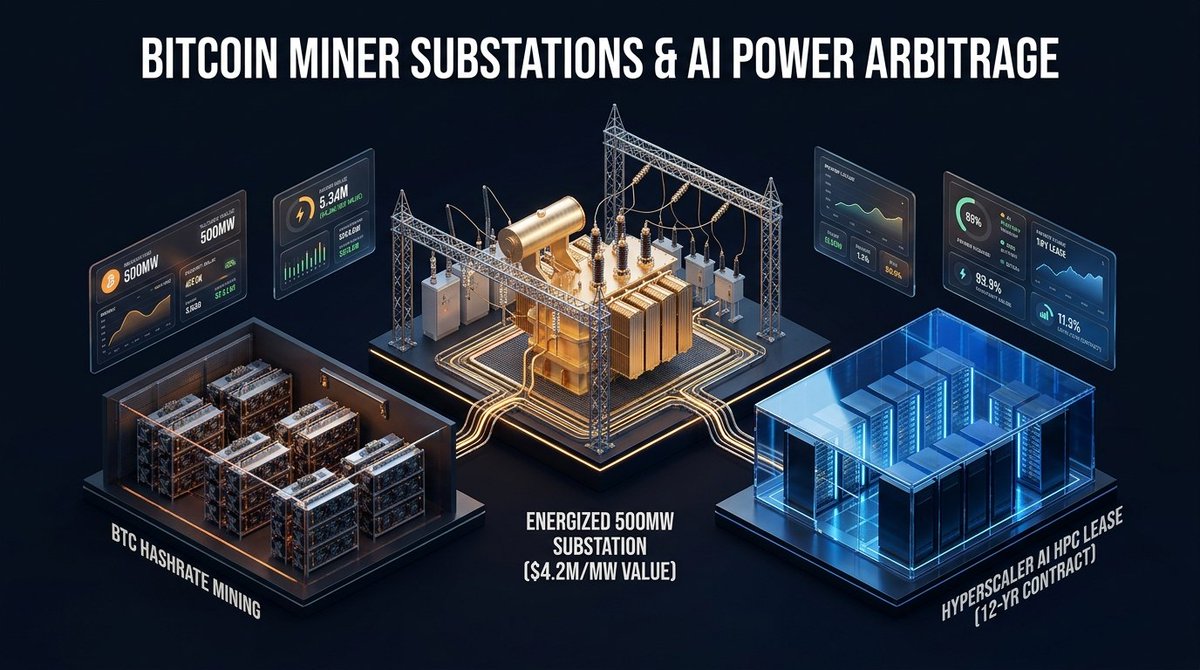
Bitcoin miners command $4.2M per energized MW for AI data centers versus just $1.1M for pure hashing. FERC grid wait times now exceed 5.2 years. Miners own the scarcest power.
#Bitcoin#Crypto
4/ What would prove the bearish read wrong: 2-3 straight inflow days with IBIT leading. Cumulative net flows are still +$57.2B since launch, so this is cooling demand, not an exit. Source: Farside Investors. Educational, not advice.
1/ US spot BTC ETF flows have flipped. Farside data: week of Sep 21-25 net +$2,385.8M. Oct 5-8 so far net -$700.0M, with Oct 7 (-$484.9M) and Oct 8 (-$244.1M) back to back. #Bitcoin#ETF
3/ Same days, rates pushed higher: UK 10y gilts hit their highest since 2007 and the US 10y sat above 5.3% (per CoinShares). Higher yields raise the bar for a non-yielding asset.
Market snapshot | 09 Oct 13:00 UTC
BTC $82,921 (+0.8% / 24h)
ETH $2,495 (-1.4% / 24h)
A price move alone does not identify its cause. What evidence are you watching?
https://t.co/cPPRBaXuHr
@unusual_whales The mechanism to watch is licensing, not the model. If publishers lose the ability to license training data, the supply of high quality text gets rationed, and that shows up as higher inference cost long before any court ruling.
The market-implied probability of an October rate hike fell from 71% to 23% in three weeks while the 10-year yield rose above 5.3%, per Wu Blockchain citing CoinShares. Fund inflows of about $11.1B since mid-July have cooled. #Macro#Bitcoin
6/ With Firedancer poised to push throughput to the physical limits of hardware, will modular ecosystems survive the liquidity drain, or is the future of finance purely monolithic? What is your playbook for this structural shift?
1/ While the consensus remains obsessed with modular L2 fragmentation, smart money is quietly front-running a massive consolidation back to monolithic architecture. The structural shift in liquidity is accelerating. Take a look below ↓
5/ As institutional pipelines demand sub-millisecond settlement, the trade-offs of fragmented L2s become liabilities. The monolithic design isn't just a technical choice; it's a liquidity sinkhole capturing both retail and institutional flow.